




Round Walnut Display Cabinet
A round walnut display cabinet brings the bold geometric lines and rich timber figuring of the 1930s straight into a modern interior.

Round Walnut Display Cabinet
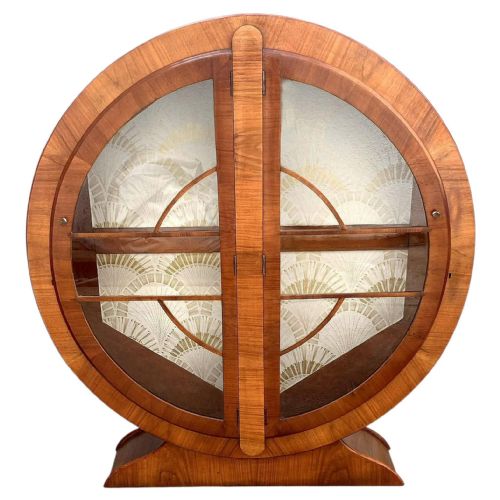
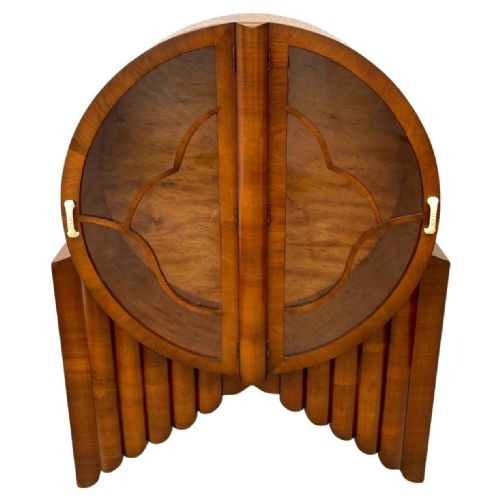
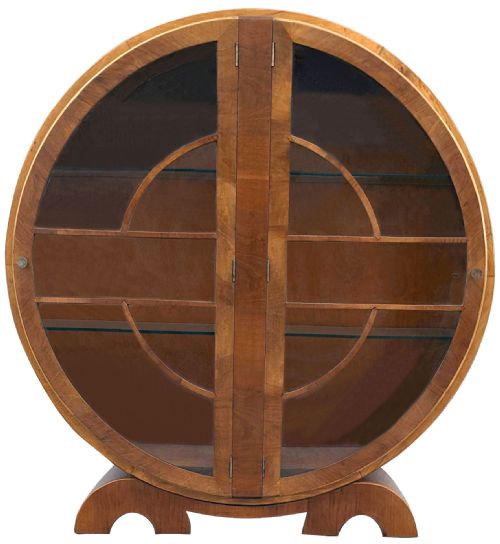
When you search for a round walnut display cabinet, you are looking at circular vitrines and china cabinets built during the Art Deco period around 1930. These pieces are designed to showcase treasured objects from every angle while taking up a striking footprint in a room.
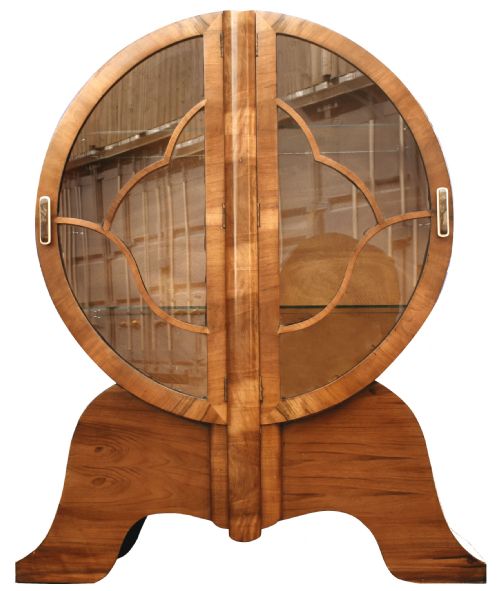
The version you are most likely to meet on this page is an English circular cabinet featuring walnut veneer, glass shelving and occasionally leaded glass panels. They often take distinctive silhouettes, including clove shapes or cylindrical rocket forms.
How they were made
Cabinet makers of the 1930s utilised walnut veneer and burr walnut over a solid carcass to create striking circular forms with mesmerising grain patterns. Figured timbers were carefully matched across the curved doors to produce symmetrical patterns.
Glazing was an essential component, incorporating clear glass panels alongside leaded sections to frame the contents. Brass and other metals were used for hardware, while internal fabric linings occasionally provided a soft backdrop for displayed items.
What varies in quality
The sophistication of the timber figuring distinguishes the finest examples from simpler pieces. Cabinets employing richly patterned burr walnut or figured walnut veneers display a far greater depth of visual texture than plain surfaces.
Architectural ambition also dictates quality, separating standard cylindrical vitrines from more complex clove-shaped or rocket cabinet designs. The integration of leaded glass and well-executed curved glazing bars demands high technical skill.
The Round Walnut Display Cabinet Glossary
- Burr walnut
- A growth deformity on a walnut tree that produces intricate, swirling grain patterns. Cabinet makers prized this timber for high-status Art Deco furniture fronts.
- Vitrine
- A glass-fronted display cabinet designed specifically for the viewing of porcelain, glass or small curiosities. These pieces rely on all-round visibility to highlight their contents.
- Walnut veneer
- A thin slice of superior walnut timber applied to a stable secondary wood carcass. This technique allowed makers to wrap sweeping curves without the timber splitting.
- Leaded glass
- Small panes of glass held together by strips of lead to form decorative geometric windows. This technique frequently appears in the doors of 1930s display cabinets.
Round Walnut Display Cabinet: Frequently Asked Questions
What fits inside a round display cabinet?
These circular cabinets suit porcelain, glassware and small sculptural objects that benefit from all-round visibility. The curved interior shelves naturally limit the depth of items you can display.
Most examples feature multiple glass tiers supported within the cylindrical frame. Smaller curiosities and slender ceramics sit most comfortably on these curved surfaces.
How do I date a walnut display cabinet?
The pieces matching this search sit firmly in the Art Deco period around 1930. Stylistic cues such as circular footprints, stepped details and prominent walnut veneers point directly to this era.
English examples from this decade often combine straightforward carcass construction with decorative leaded glass or curved timber doors. Examining the secondary woods and hinge types helps confirm the manufacturing era.
Where should I place a round cabinet?
A circular vitrine works particularly well in corners or as a freestanding room focal point. Because the glass panels permit light from multiple angles, placing the cabinet near a window enhances the display.
Ensure the piece has sufficient clearance so the curved door can swing open fully without obstruction. Positioning it away from direct sunlight protects the walnut veneer and any internal fabric linings from fading.
Are these cabinets purely English?
The evidence for these listings points to English manufacture during the 1930s. British workshops produced distinct circular and clove-shaped vitrines in walnut and occasionally maple.
These pieces reflect the broader European Art Deco movement while retaining distinct domestic cabinet-making characteristics of the interwar period.