




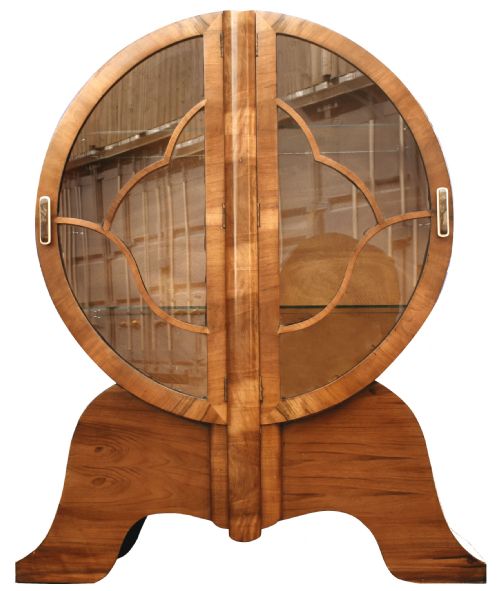


1930s Circular Vitrine
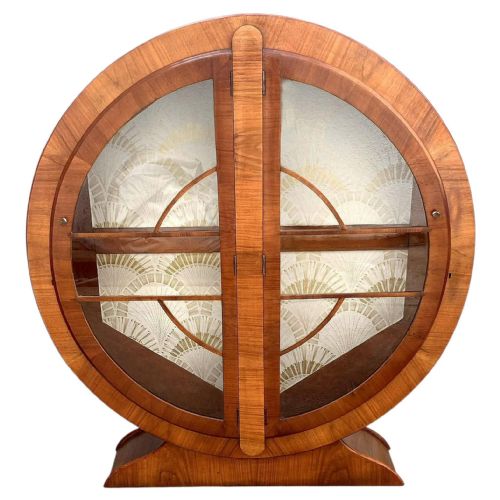
A 1930s circular vitrine offers sweeping curved glass and rich walnut timber to showcase treasured objects with undeniable geometric presence.

1930s Circular Vitrine
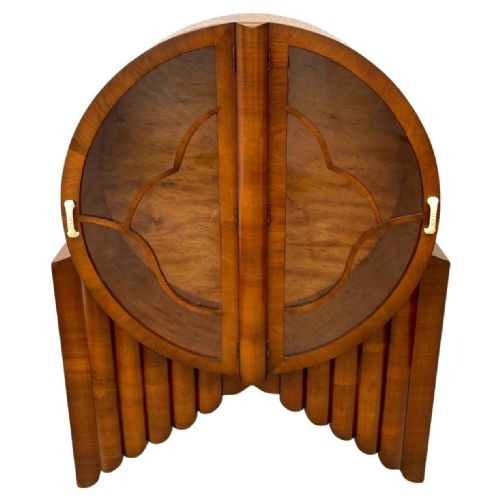
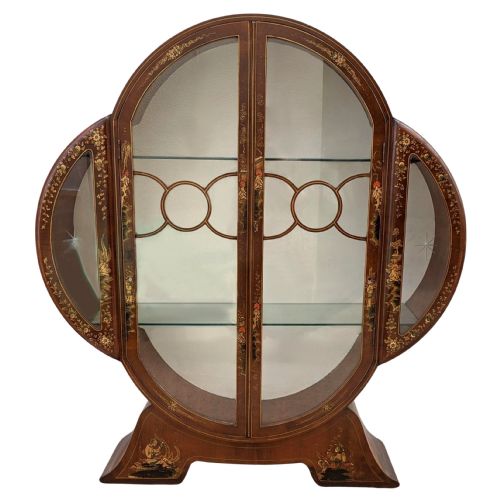
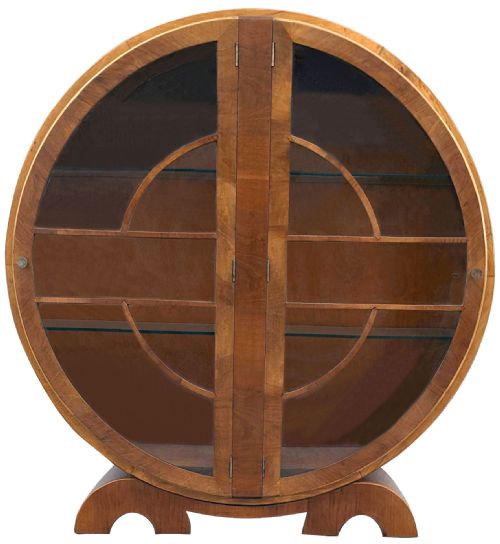
A 1930s circular vitrine is a specialised display cabinet designed during the Art Deco era to exhibit small objects, china and books within a curved silhouette. These pieces arrive in distinct forms, from traditional round models to clove shapes and rocket cabinets, each relying on a cylindrical or rounded footprint.
The version most commonly met on this page is the English walnut circular display cabinet dating from around 1930. These cabinets often integrate figured wood grains and glass panels to maximise light across the interior shelves.
How they were made
Cabinet makers constructed these pieces primarily using solid and veneered walnut, frequently selecting figured cuts to create striking surface patterns across the curved doors and panels. Golden oak and maple also appear alongside the dominant walnut framework to provide contrasting tones.
Glazing techniques involved curved glass held by lead or brass detailing, while touches of gold leaf occasionally accented the structural lines of the cabinet. Metal fittings and fabric linings completed the interior presentation of these display pieces.
Listings on this page concentrate entirely on the 1930 period, featuring walnut, oak, maple, brass, lead, glass and fabric within Art Deco display cabinets and bookcases.
What varies in quality
Quality rests heavily on the selection of timber veneers and the precision required to bend glass and wood into continuous circular forms. Cabinets featuring highly figured walnut grain and seamless joins demonstrate superior craftsmanship compared to simpler builds.
The sophistication of the silhouette defines the upper tier, where rocket or clove shapes demand advanced cabinet-making skill. Lesser examples rely on standard flat panels or simpler rectilinear frames while retaining a general Art Deco aesthetic.
The 1930s Circular Vitrine Glossary
- Vitrine
- A glass-fronted cabinet designed for displaying fine objects or curiosities. The term originates from the French word for glass.
- Art Deco
- A design style of the 1920s and 1930s characterised by streamlined forms, geometric patterns and modern materials. It influenced architecture, furniture and decorative arts globally.
- Figured walnut
- Timber cut from walnut trees in specific ways to reveal swirling, decorative grain patterns. Cabinet makers prized this wood for its visual depth on prominent surfaces.
- Leaded glass
- Small panes of glass held together by strips of lead to form decorative windows or cabinet doors. This technique allows for curved or patterned glazing designs.
- Rocket cabinet
- A colloquial term for a tall, tapered display cabinet from the Art Deco period that resembles the streamlined shape of a rocket. These pieces maximise vertical display space within a compact footprint.
1930s Circular Vitrine: Frequently Asked Questions
What is a 1930s circular vitrine used for?
These cabinets served primarily to display porcelain, silver, and small decorative items in domestic living spaces. The curved glass protected delicate objects from dust while allowing visibility from multiple angles.
Today, collectors utilise them in modern interiors to showcase similar collections or small sculptures where standard rectangular shelving might look too rigid.
How do I identify an Art Deco vitrine?
Art Deco vitrines display distinct geometric forms, symmetrical layouts, and curved silhouettes such as circles, rockets, or clove shapes. They avoid ornate Victorian carving in favour of sleek, clean lines.
Materials like figured walnut, polished brass, and leaded glass further point directly to the 1930s aesthetic.
Are all circular cabinets made from walnut?
Walnut is the most frequent timber found on these cabinets, particularly figured walnut and golden oak or maple appearing in select variations. Cabinet makers relied on these hardwoods to achieve deep colour tones and smooth curved surfaces.
Other metals like brass and lead contributed to the structural framing and decorative accents.
Where were these display cabinets manufactured?
Many of the pieces recorded here originate from English workshops operating during the height of the Art Deco period around 1930. English cabinet makers adopted continental European modernist trends and adapted them into practical domestic furniture.
Production methods combined traditional woodworking techniques with specialised glass-bending processes.