




Round Art Deco Vitrine
A round art deco vitrine commands attention in a room, offering a curved display for cherished items.

Round Art Deco Vitrine
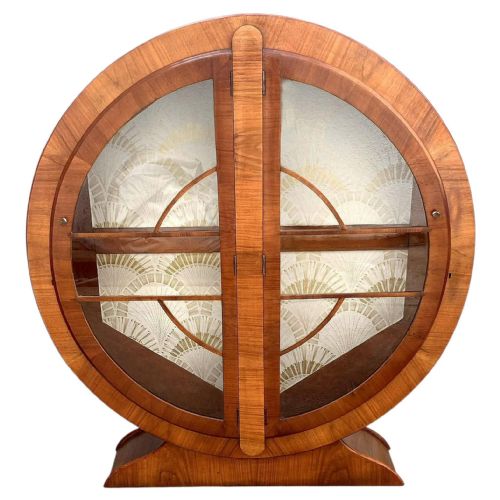
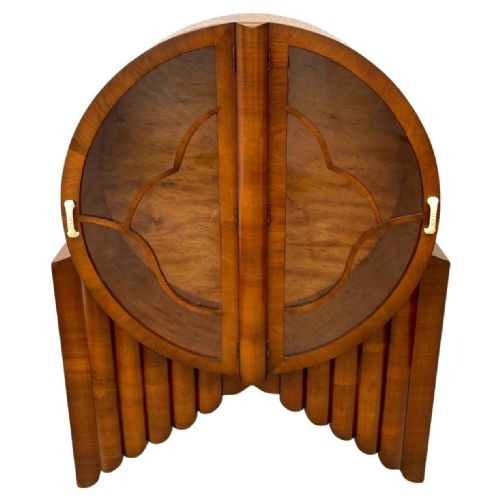
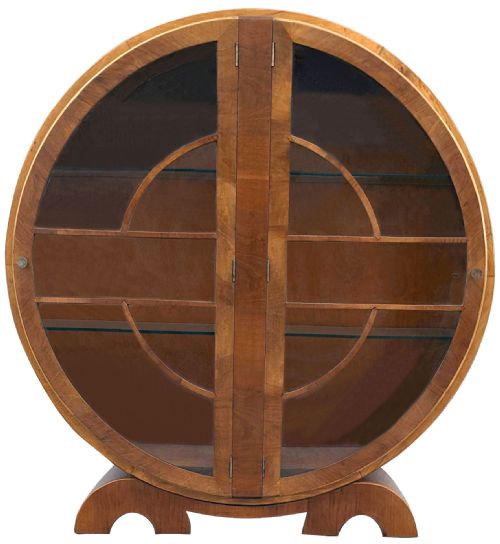
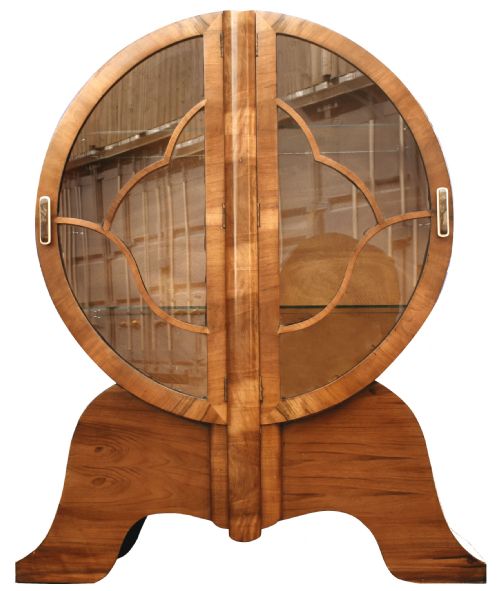
A round art deco vitrine is a circular display cabinet designed during the 1930s to showcase prized possessions through curved glass panels. These pieces take the form of circular, rocket, clove shaped, and figured cabinets.
The version most commonly met on this page is the English walnut circular display cabinet from around 1930. Walnut veneer and burr walnut dominate the selection, bringing rich grain patterns to these cylindrical forms.
How they were made
Cabinet makers utilised walnut veneer and burr walnut over solid framing to achieve the striking curved surfaces characteristic of the period. Skilled handling of wood grain created symmetrical patterns across the rounded doors and panels.
Glazing often involved lead and brass to secure the curved glass panes into place. Metal and fabric also appeared internally to line the shelves and frame the display areas.
One cabinet takes the distinct shape of a clove, proving that 1930s designers loved botanical geometry.
What varies in quality
The selection of veneer dictates the visual impact of the piece, with burr walnut and figured walnut sitting at the upper end of the scale. Grain matching across a curved circumference requires exceptional joinery skill.
Cabinet geometry and door alignment define the success of the circular form. Subtle variations in the complexity of the glazing, such as leaded glass work, separate standard models from more ambitious designs.
The Round Art Deco Vitrine Glossary
- Vitrine
- A glass-fronted display cabinet used for showcasing fine objects and china. These pieces rely on transparent panels to maximise visibility from multiple angles.
- Burr Walnut
- A highly figured wood grain obtained from walnut tree growths, prized for its swirling patterns. Cabinet makers utilised this timber to create dramatic visual surfaces.
- Leaded Glass
- Glass panes held together by strips of lead to form decorative windows within cabinet doors. This method accommodates curved fronts effectively.
Round Art Deco Vitrine: Frequently Asked Questions
Where were these cabinets made?
The examples on this page originate from English workshops operating around 1930.
British cabinet makers adapted continental modernism into distinctive circular forms using native and imported timbers.
How do I place one in a room?
A circular cabinet works well in corners or as a freestanding focal point due to its curved profile all round.
The glass panels allow light to pass through, making them suitable for brightening darker corners while displaying collections.
What materials are typical?
Walnut, burr walnut, and maple provide the primary wooden structures for these display cabinets.
Glass, brass, lead, and internal fabric linings complete the construction of the vitrines.