




Round Walnut Bookcase
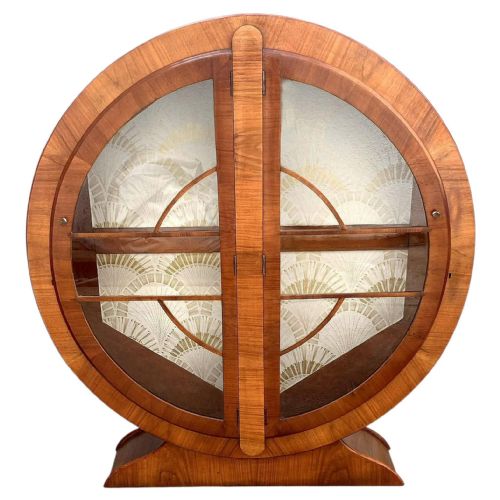
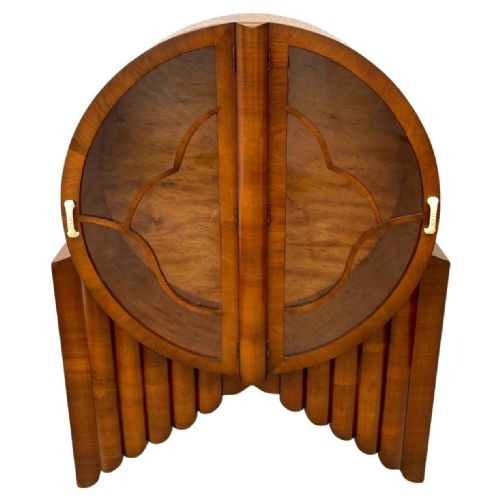
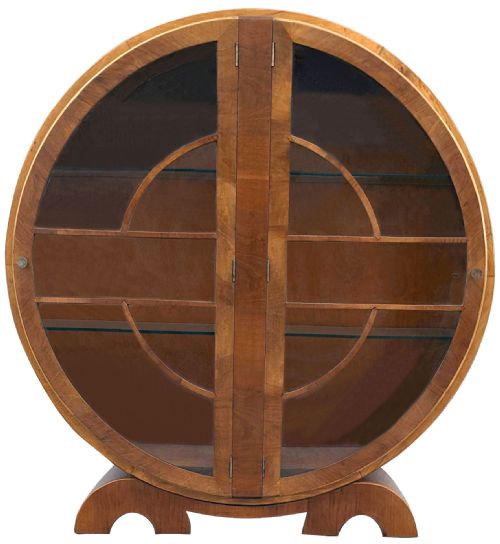
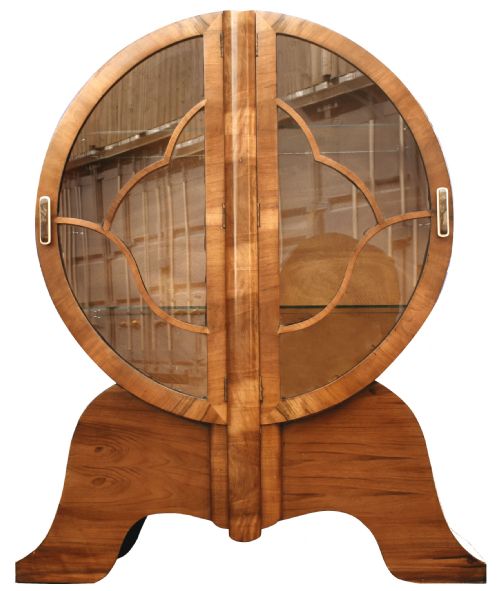
These round walnut bookcase pieces are striking Art Deco circular display cabinets and vitrines that bring bold geometry and rich grain to any room.
Round Walnut Bookcase
When you search for a round walnut bookcase, you encounter circular display cabinets and vitrines dating from the 1930s. These pieces serve primarily as showcase units for china and glassware rather than standard shelf storage for volumes.
English examples dominate the selection, heavily defined by the Art Deco style. The circular and rocket forms provide a strong vertical presence with curved silhouettes that contrast sharply with traditional rectilinear furniture.
How they were made
Cabinet makers utilised walnut and burr walnut veneers laid over solid timber frames to create sweeping grain patterns across the curved surfaces. Skilled marquetry and veneering techniques were essential to achieve seamless wraps around circular carcases.
Glazing typically involves leaded glass panels or large curved glass doors mounted with brass and metal hardware. The integration of glass and wood required precise joinery to maintain the structural integrity of the rounded forms.
What varies in quality
The choice of wood veneer dictates much of the visual impact, with figured burr walnut commanding attention for its intricate figuring compared to plainer walnut surfaces. The symmetry and book-matching of the grain across curved doors demonstrate the maker's skill.
Hardware details and the execution of leaded or curved glass elements separate standard production from superior pieces. The precision of the circular joinery and the condition of the delicate veneers determine the overall refinement.
The Round Walnut Bookcase Glossary
- Art Deco
- A design style of the 1920s and 1930s characterised by streamlined shapes, geometric forms, and modern materials. It rejects Victorian clutter in favour of bold visual rhythms.
- Burr Walnut
- A specialised wood cut from a tree growth or burl, yielding swirling, knotty patterns highly prized for decorative furniture veneers. It offers exceptional visual texture.
- Vitrine
- A glass-fronted cabinet designed for displaying fine objects, ceramics, or books. These pieces protect contents while offering all-around visibility.
- Veneer
- A thin layer of superior wood applied over a base of cheaper timber to give the appearance of solid luxury. This technique allows for elaborate geometric grain matching.
- Leaded Glass
- Glass panes held together by narrow strips of lead came to form decorative windows or cabinet doors. It adds traditional craft texture to modern furniture.
Round Walnut Bookcase: Frequently Asked Questions
What is a round walnut bookcase used for?
These circular cabinets function primarily as display vitrines for china, glassware, and decorative objects rather than heavy book storage. The glass panels keep items visible while protecting them from dust.
Their striking geometric presence makes them focal points in living rooms or studies, blending display capability with distinct Art Deco style.
How do I identify a 1930s piece?
Pieces from the 1930s typically feature characteristic Art Deco styling, including circular or rocket-shaped silhouettes and extensive use of walnut and burr walnut veneers. The construction relies on period joinery methods combined with leaded or curved glass.
Examining the interior construction, hardware, and veneer application helps confirm the manufacturing era and regional origin, often English.
Are these cabinets difficult to place in a room?
The curved footprint of a circular display cabinet requires deliberate placement to suit room layouts effectively. They work particularly well in corners or against flat walls where their rounded projection softens angular spaces.
Consider the swing clearance of the curved glass doors and ensure adequate lighting to appreciate the figured walnut grain and displayed items fully.
How do I care for walnut veneer surfaces?
Walnut veneer requires protection from direct sunlight and excessive moisture to prevent fading and lifting of the wood. Regular dusting with a soft, dry cloth maintains the finish without chemical buildup.
Applying a traditional beeswax polish occasionally helps nourish the wood and preserve the natural lustre of the burr walnut grain.