


Curved Walnut China Cabinet
A curved walnut china cabinet brings warmth and fluid line to a room, offering a generous glazed stage for treasured porcelain.
Curved Walnut China Cabinet
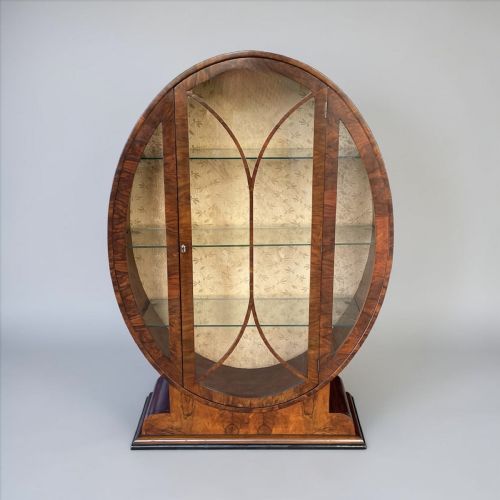
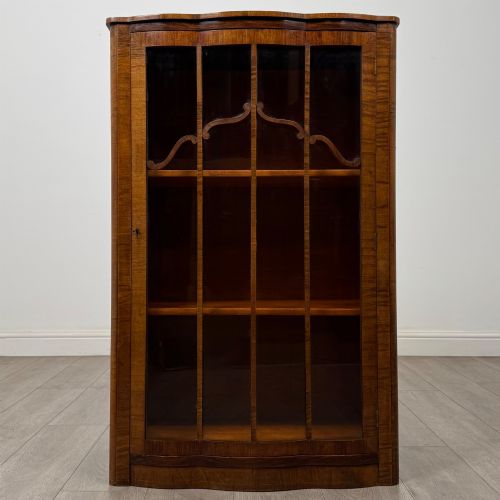
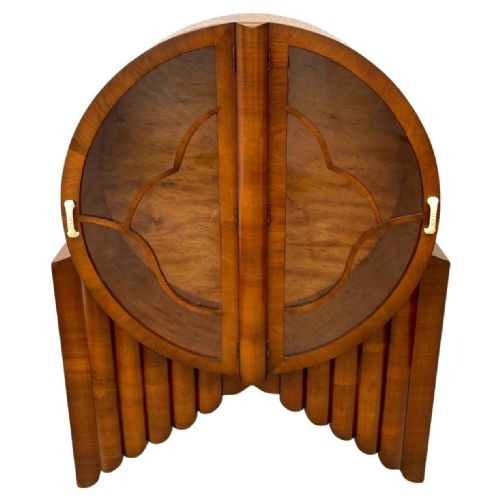
When you search for a curved walnut china cabinet, you are looking at glazed display furniture built to showcase porcelain and decorative objects behind shaped glass doors. These pieces combine rich timber grains with graceful rounded profiles designed to soften the corners of a room.
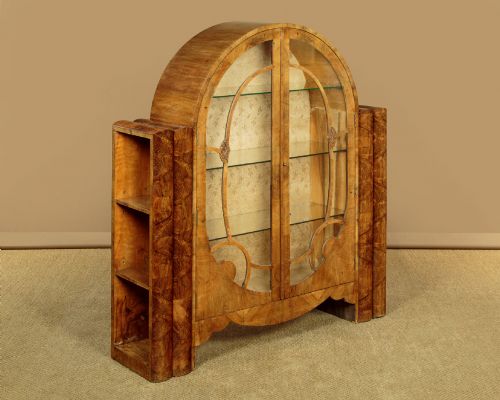
The versions you are most likely to meet on this page span the Victorian era, the Edwardian period, and the 1930s Art Deco movement. They appear in varied silhouettes, including circular, oval, bow front, and rocket shapes.
Origin details in the evidence show both English workshops and French cabinetmakers producing these vitrines. Pieces range from straightforward display cabinets to elaborate Revival styles carrying decorative metal mounts.
How they were made
Cabinetmakers built these vitrines using solid and veneered walnut, frequently selecting burr walnut, figured walnut, or kingwood for decorative surfaces with striking grain patterns. Marquetry inlay added further pattern to the timber bodies on specific French and nineteenth-century examples.
Glass panels were shaped to fit circular, oval, and serpentine frames, requiring precise glazing techniques to follow the curved profiles. Ormolu mounts and brass hardware provided metallic accents, fixed to the timber doors and mounts.
French pieces often incorporated Vernis Martin finishes, employing specialised decorative painting techniques on the cabinet surfaces. Internal shelving was constructed to support glass or fabric linings behind the primary display doors.
Listings on this page span the 19th Century, Edwardian period, and 1930s Art Deco era, utilising walnut, burr walnut, and glass.
What varies in quality
Quality rests in the selection of the wood veneers and the precision of the curves formed in both timber and glass. Cabinets utilising figured walnut or burr walnut display superior grain movement across their rounded fronts compared to plain surfaces.
The integration of decorative metalwork, such as chased ormolu mounts and brass details, separates standard production from finer cabinetmaking. Distinctive regional forms, including specific French revival styles and documented maker attribution, elevate the standing of an individual piece.
Maurice Adams
The Curved Walnut China Cabinet Glossary
- Vitrine
- A glazed display cabinet designed specifically for showing porcelain and small objects. These pieces often feature glass on multiple sides to maximise visibility.
- Ormolu
- Gilt bronze mounts applied as decorative ornaments to furniture. This technique was frequently utilised on nineteenth-century French pieces.
- Burr walnut
- A prized timber veneer showing swirling, knotty grain patterns formed from tree growths. It provides rich visual texture on cabinet doors and panels.
- Marquetry
- Inlaid patterns formed by fitting pieces of different woods and materials into a veneer ground. This technique creates pictorial or geometric decoration on cabinet surfaces.
Curved Walnut China Cabinet: Frequently Asked Questions
What is a curved walnut china cabinet?
A curved walnut china cabinet is a glazed display piece featuring rounded or shaped glass panels and timber framing made from walnut veneers. These cabinets were designed to hold porcelain and decorative objects while softening room corners.
They appear across various periods in the evidence, from nineteenth-century French revival pieces to 1930s Art Deco circular designs.
How do I style a curved cabinet?
Living with a curved vitrine involves placing it where natural light can strike the glazed panels and highlight the timber grain. The curved glass creates distinct sightlines from multiple angles within a room.
Keep the interior displays uncluttered to let the walnut frames and any ormolu mounts remain the visual focus.
How do I tell Victorian from Art Deco cabinets?
Victorian and nineteenth-century examples often lean towards French Rococo or Louis XV Revival styles, utilising marquetry inlay and ormolu mounts. They emphasise ornate decorative elements and traditional forms.
Art Deco cabinets from the 1930s favour clean geometric sweeps, seen in circular, oval, and clove shapes, relying heavily on figured walnut grain rather than applied metal ornament.
Were these cabinets made in England or France?
Both origins are represented in the evidence for these display cabinets. English examples include 1930s Art Deco rocket and cathedral vitrines alongside Edwardian pieces.
French pieces from the nineteenth century frequently feature Vernis Martin finishes, ormolu mounts, and serpentine fronts in the Louis style.