
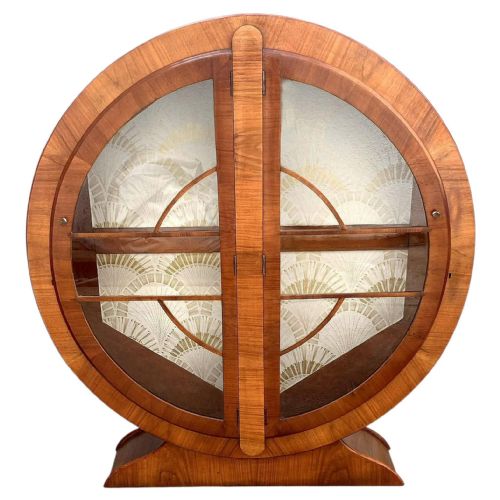
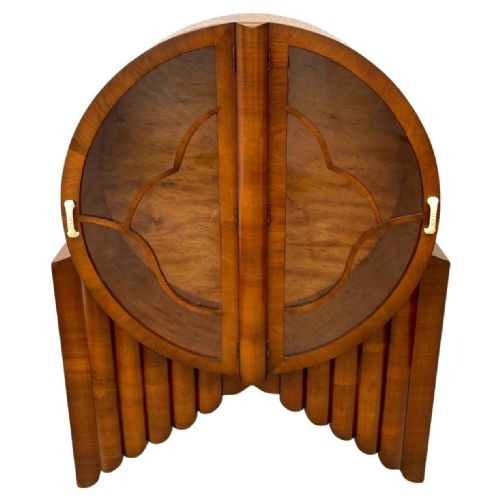


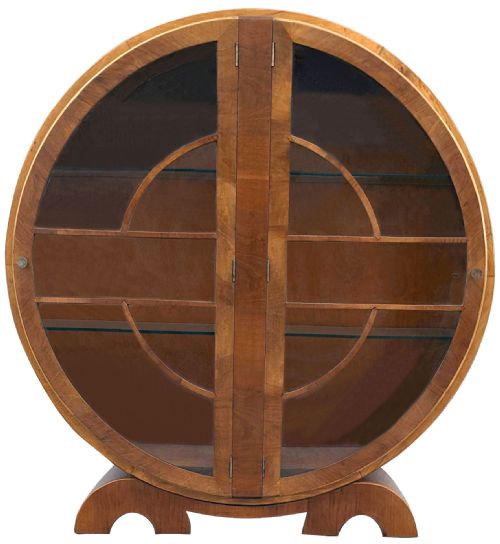

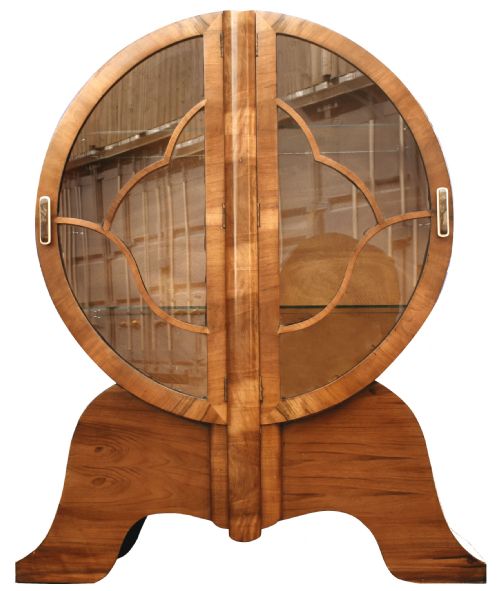

Round Glazed Vitrine
A round glazed vitrine is a curved display piece designed to show off treasured objects, and you will find striking examples here from the Art Deco period and Victorian era.
Round Glazed Vitrine
When you search for a round glazed vitrine, you are looking at specialised display furniture built to present objects from all angles through curved glass. These circular cabinets and display tables bring a distinct geometric presence to a room compared to flat-fronted alternatives.
How they were made
Cabinet makers utilised fine timbers such as walnut, maple and kingwood, often selecting figured veneers to create striking visual patterns across the curved surfaces. Brass mounts and lead details provide structural framing and decorative contrast against the polished wood.
Glass panels are curved to follow the circular framework of the cabinets, while interiors are sometimes lined with fabric or silk to create a soft backdrop for displayed items. Metal elements secure the glass and reinforce the delicate glazed doors.
Listings for this phrase feature materials including walnut, kingwood, brass, glass, maple, and silk across the Victorian period and nineteen thirty.
What varies in quality
The distinction between standard examples and finer pieces often lies in the selection of timber veneers and the precision of the curved glazing. Figured walnut and carefully matched grain patterns elevate the visual impact of a cabinet.
Construction details such as the integration of brass mounts, the smoothness of the rotating or hinged circular doors, and the quality of internal fabric linings differentiate the work of skilled makers from mass production.
The Round Glazed Vitrine Glossary
- Vitrine
- A glass-fronted cabinet designed for displaying fine objects or collections. These pieces rely on extensive glazing to maximise visibility from multiple angles.
- Bijouterie table
- A glass-topped display table intended for smaller valuables, jewellery, and curiosities. Victorian examples often incorporate intricate woodwork and brass framing.
- Figured walnut
- Timber cut from specific parts of the walnut tree to reveal complex, highly decorative grain patterns. Cabinet makers prized this material for prominent surfaces.
- Art Deco
- A design style spanning the early twentieth century characterised by sleek geometric forms and modern materials. Circular cabinets from this era favor clean, sweeping lines.
Round Glazed Vitrine: Frequently Asked Questions
What is a round glazed vitrine used for?
These cabinets serve as specialised display furniture for porcelain, small sculptures, and curated collections of curiosities. The glass enclosure protects delicate items from dust while offering a clear view from all sides.
In modern interiors, they function as focal points in reception rooms and hallways. Their curved glass softens the corners of a room while highlighting the objects stored inside.
How do I tell Art Deco and Victorian pieces apart?
Art Deco pieces from the nineteen thirties favor streamlined circular shapes, minimalist walnut veneers, and geometric simplicity. They avoid heavy ornamentation in favour of clean architectural lines.
Victorian pieces, such as mid-nineteenth-century bijouterie tables, often incorporate ornate brass mounts, French kingwood, and more traditional framing. The decorative detailing tends to be much more elaborate than later twentieth-century designs.
Where should I place a circular display cabinet?
A circular cabinet benefits from placement where light can pass through the glass panes and illuminate the interior contents. Corners and open wall spaces allow the curved form to be appreciated fully.
Avoid placing them in direct, harsh sunlight to protect any internal fabric linings and sensitive displayed items from fading. Ensure there is enough floor clearance around the curved doors for easy access.
How do I care for the glass and wood?
Clean the curved glass panels with a soft cloth and a gentle glass cleaner sprayed onto the cloth rather than directly onto the cabinet. This prevents moisture from seeping into the wooden framing.
Maintain the polished walnut or kingwood surfaces using a suitable furniture wax applied sparingly. Regular dusting prevents particle buildup in the intricate brass joints and hinges.