
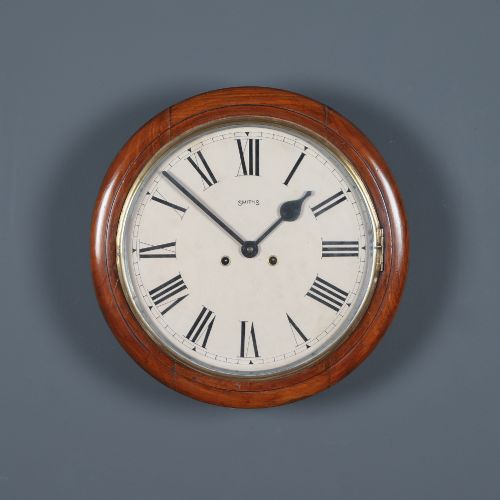
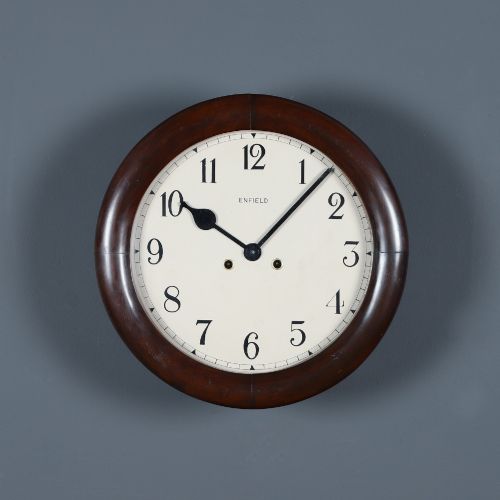
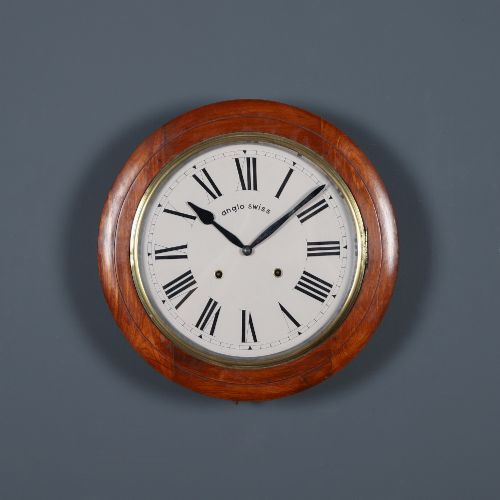
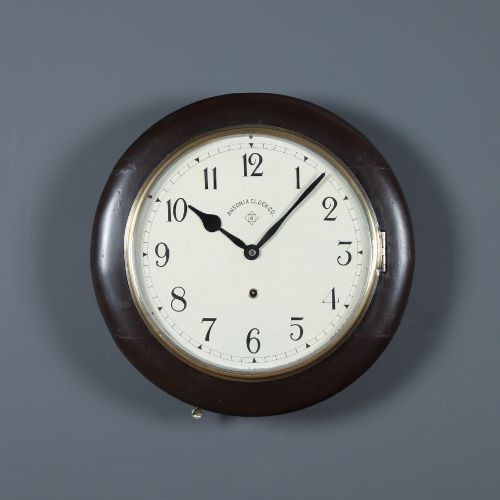


Round Wall Clock
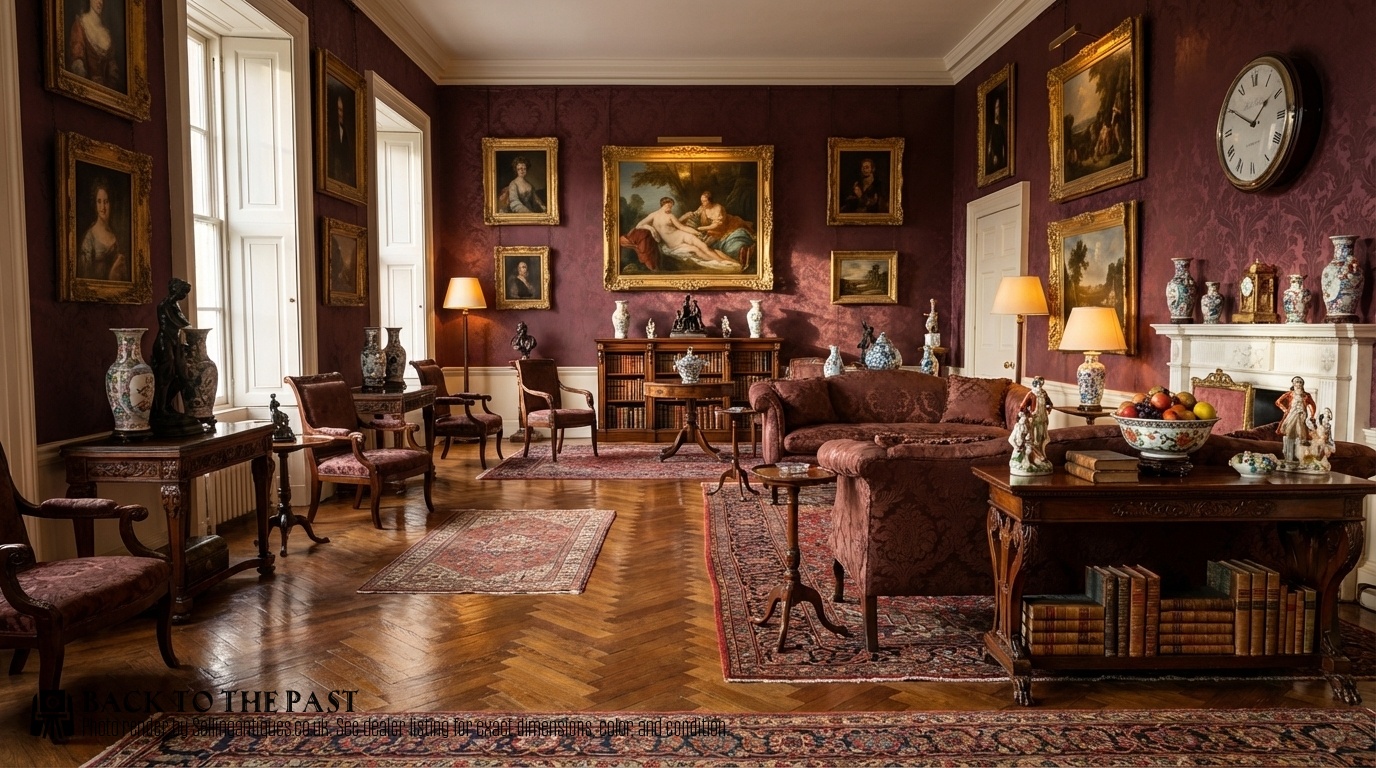
A round wall clock keeps time where people gather, bringing industrial purpose and traditional woodwork into everyday rooms.
Round Wall Clock
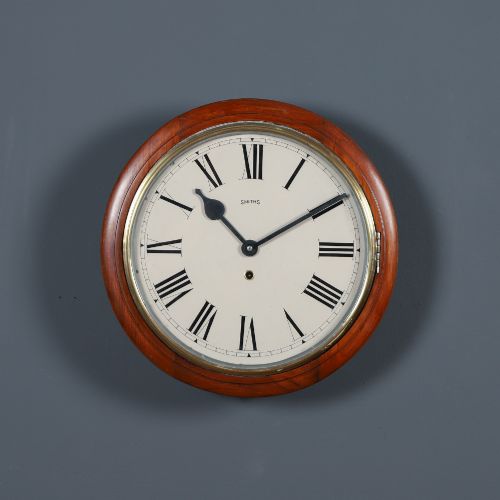
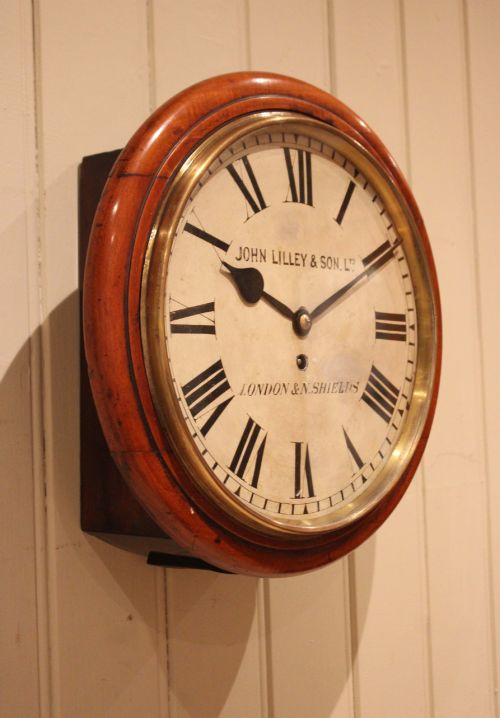
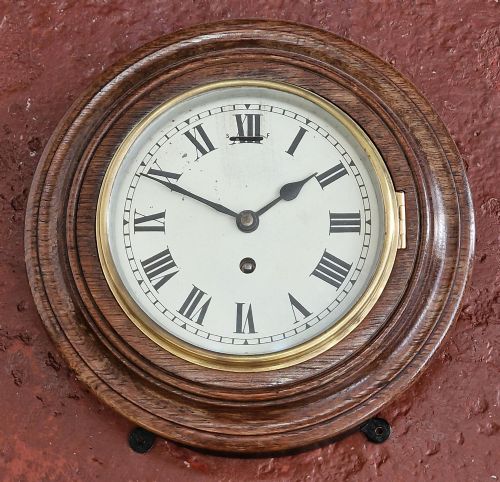
A round wall clock is a timekeeping piece designed to mount vertically, often featuring a circular dial face set within a wooden or metal surround. When you search for round wall clock, you encounter many examples originating from railway stations, schools, and offices alongside domestic models.
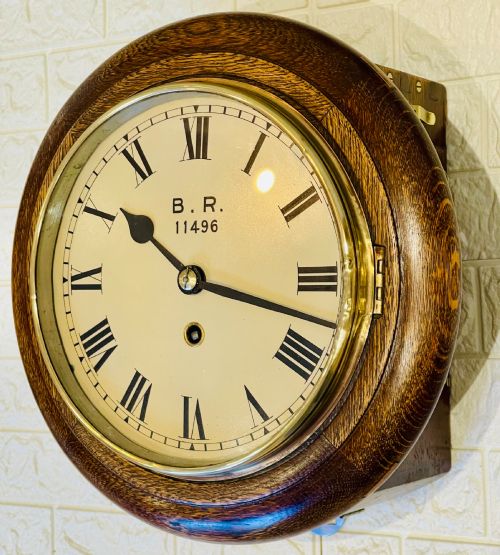
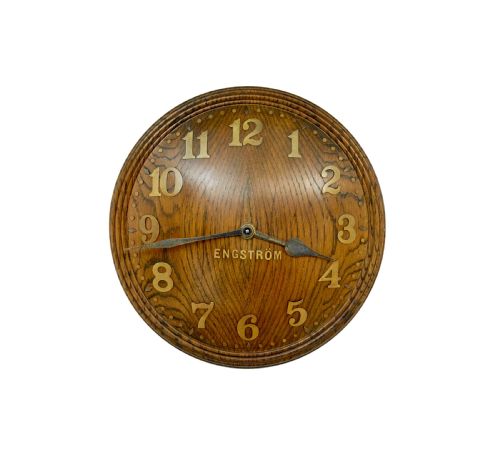
The pieces on this page span from the Victorian era through the Edwardian period and into the Art Deco and mid-century years. You will frequently find mahogany and oak cases housing traditional dials, recording decades of daily utility in public and private spaces.
Forms range from compact six-inch dials to oversized station timepieces equipped with fusee movements or striking mechanisms. These clocks combine functional design with regional history, carrying marks from makers, railways, and retailers across Britain.
How they were made
Cases are predominantly constructed from dense timbers like mahogany and oak, turned or joined into sturdy circular frames that protect the internal mechanism. Metal elements such as brass bezels, iron frames, and chrome details appear alongside glass covers to shield the painted or enamelled dial faces.
Clockmakers utilised reliable mechanical movements, notably fusee movements designed to maintain steady tension and accurate timekeeping as the mainspring wound down. Dials were carefully painted, papered, or enamelled with clear numerals, then fitted with dark metal hands for readability across large rooms.
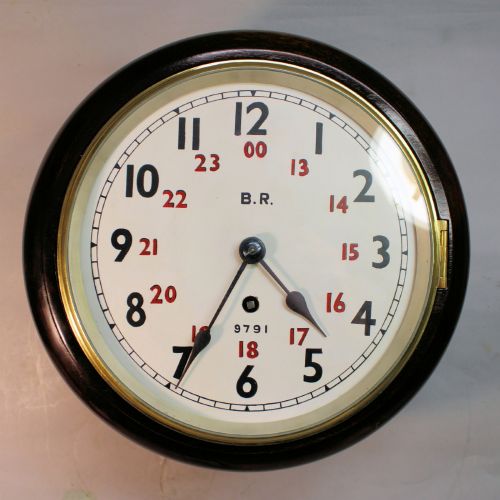
The selection includes pieces associated with railway networks such as L.N.E.R. and British Rail alongside factory and school clocks.
What varies in quality
Quality in a round wall clock rests on the precision of the internal movement, such as an original fusee setup, compared to simpler or later converted mechanisms. The choice of case timber and the crispness of carved or turned mahogany and oak details also set finer pieces apart.
Signatures on the dial or movement by established makers and retailers elevate a piece, connecting the clock to specific railway companies, institutions, or notable watchmakers. Condition of the original enamel or glass dial surface preserves the historical integrity and visual impact of the clock.
Smiths·Enfield·Ansonia·Anglo Swiss·Zenith·John Walker·Balbiani Brookley·Payne of Tunbridge Wells·Palmer and Co·Webster·John Mason Rotherham·Langellan Southsea
The Round Wall Clock Glossary
- Fusee
- A conical pulley connected to the mainspring by a chain or cord, designed to equalise the torque as the spring unwinds. This mechanism improves timekeeping accuracy in mechanical clocks.
- Dial
- The circular face of the clock where the numerals and minute markers are displayed. Dials are often made of painted wood, metal, or enamel under glass.
- Bezel
- The metal or wooden ring that holds the glass door or cover in place over the clock dial. It frequently hinges open to allow hand-setting and winding.
- Timepiece
- A clock mechanism that measures and indicates time without including striking or chiming trains. These clocks keep time silently.
- Drop-dial
- A clock case design where the circular dial sits above an extended lower wooden box or trunk, often housing a pendulum. This style is typical of many station and office clocks.
Round Wall Clock: Frequently Asked Questions
What is a fusee wall clock?
A fusee wall clock uses a specialised conical pulley and chain system to regulate power from the mainspring. This traditional mechanism ensures consistent force is delivered to the gear train as the clock runs.
Such movements are prized by collectors for their precision engineering and historical role in British railway and office timekeeping.
How do I wind an antique wall clock?
Antique mechanical wall clocks typically require a specialised key inserted into a small winding hole on the dial face. Turning the key winds the mainspring, storing energy to drive the movement.
Care must be taken not to overwind the spring, stopping as soon as resistance is felt to protect the internal components.
Where were station clocks used?
Station clocks were mounted prominently on platform walls, ticket offices, and waiting rooms to keep passengers and staff synchronized. They were built robustly to withstand heavy use, smoke, and vibration in busy transport hubs.
Many bear lettering or ciphers corresponding to specific railway companies and regional routes.
How do I date a round wall clock?
Dating these clocks involves examining the style of the wooden case, the materials used, and any lettering on the dial face. Victorian and Edwardian models often feature distinct mahogany surrounds, while later pieces adopt Art Deco oak or mid-century metal forms.
Maker signatures, retailer stamps, and movement types provide further clues to the decade of manufacture.