


Round Rosewood Table
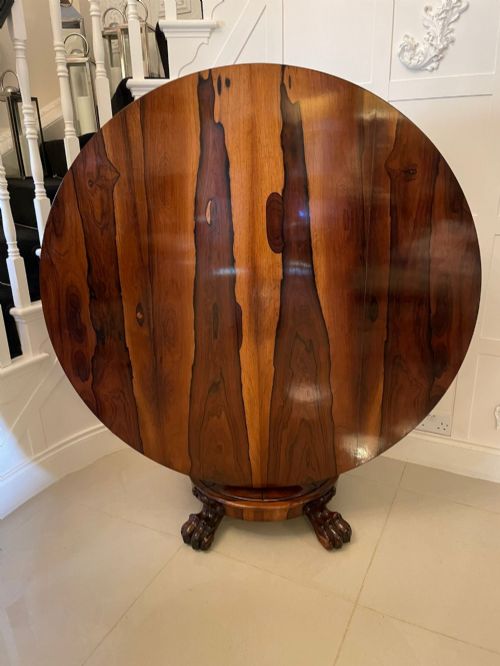
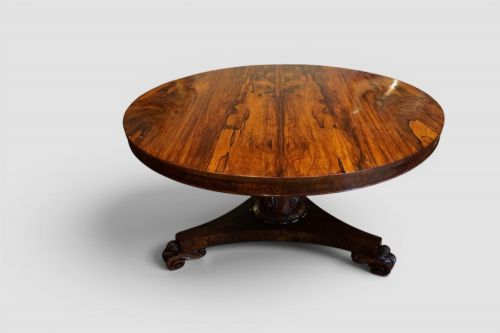
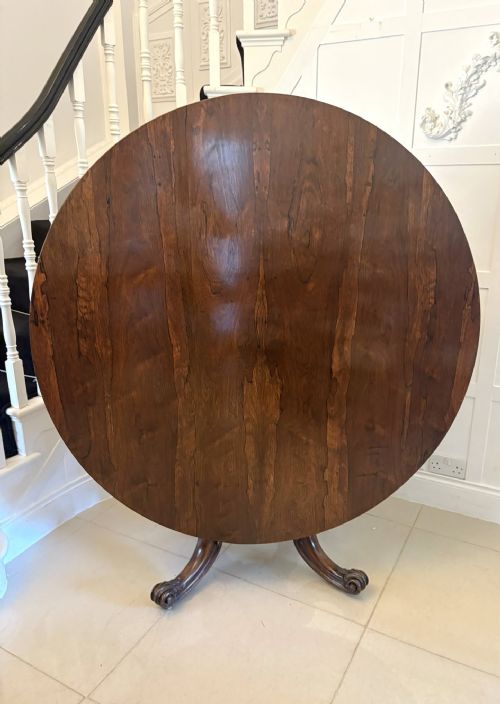
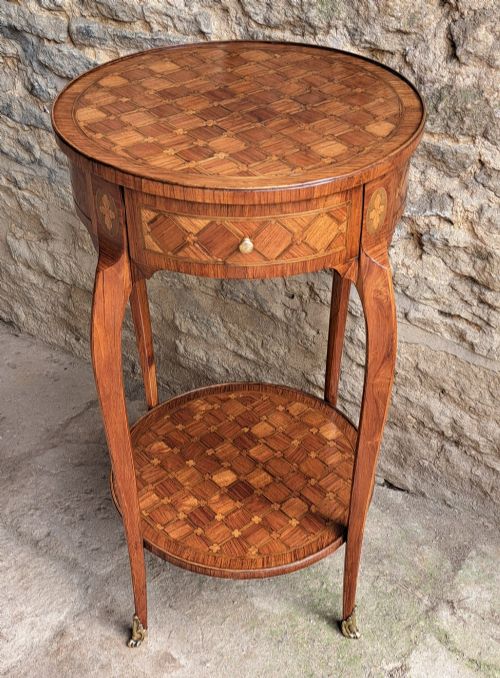
When you search for a round rosewood table, you seek a circular centrepiece combining dense tropical timber with robust nineteenth-century pedestals.

Round Rosewood Table
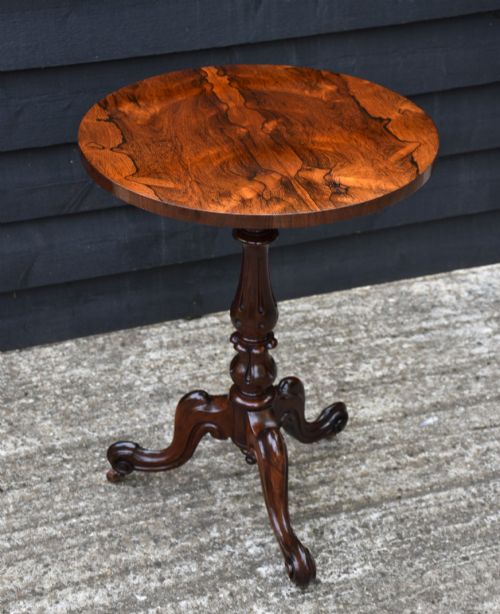
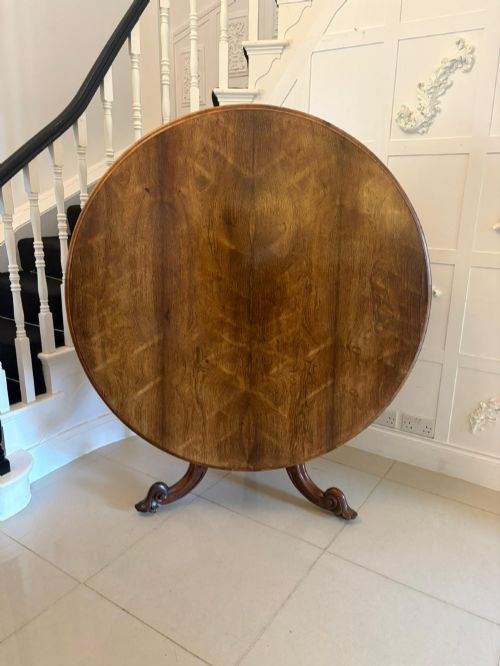
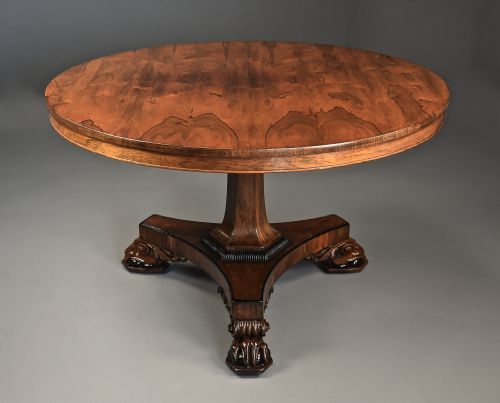
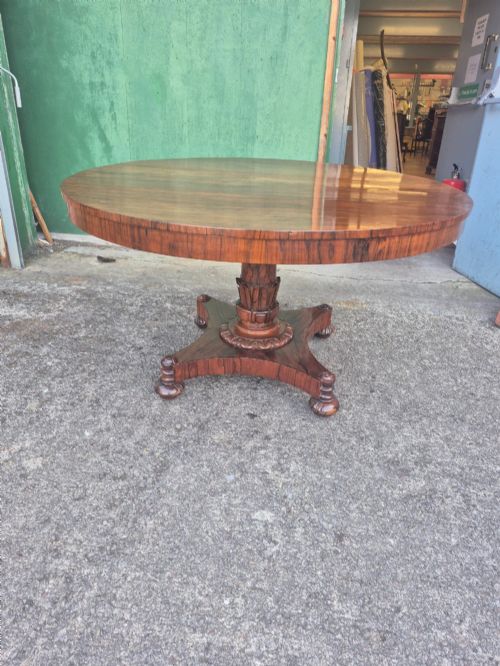
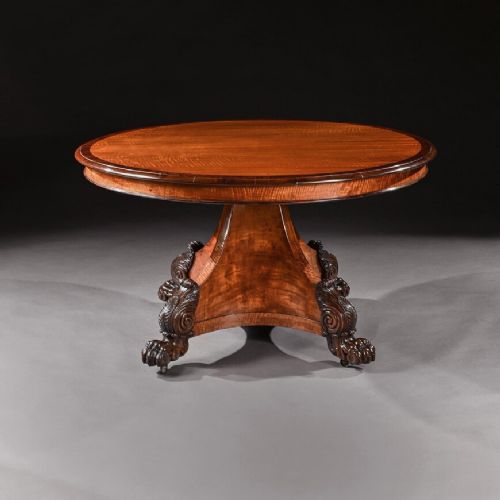
A round rosewood table primarily spans the Regency, William IV, and Victorian eras, taking the form of substantial dining pieces, breakfast tables, and smaller occasional furniture. These circular platforms rest predominantly on central pillars with triform or platform bases, often featuring tilt-top mechanisms for storage.
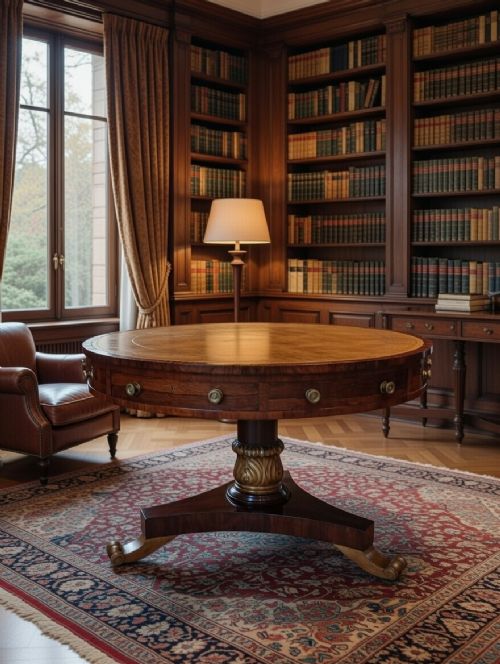
The domestic role of a round rosewood table shifted between formal dining, library use, and central display in grand rooms. Examples range from compact lamp tables to large country house dining tables exceeding four feet in diameter.
Quality and Execution
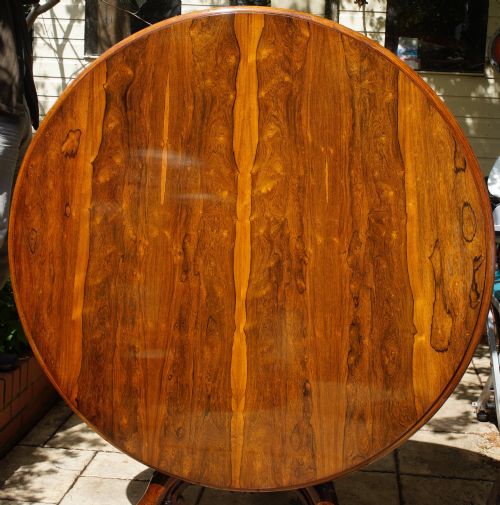
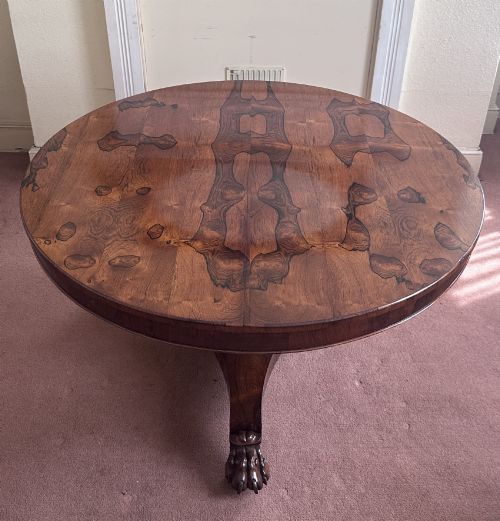
The distinction between tiers rests upon the choice of timber figure, the crispness of hand-carved details on the pedestal, and the structural integrity of the central column. Superior examples display seamless veneer matching across the circular top without visible splitting or shrinkage.
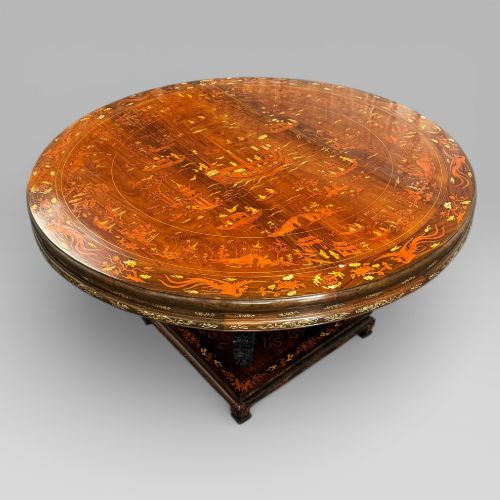
Refined pieces exhibit sophisticated secondary elements such as concealed brass castors, precise marquetry inlay, and robust tilting mechanisms that lock securely into the base.
Some nineteenth-century breakfast tables tilt vertically so completely that they double as unexpected room dividers when guests arrive unexpectedly.
Edwards & Roberts·Peters of Genoa·Gillows
The Round Rosewood Table Glossary
- Tilt-top
- A hinged tabletop mechanism allowing the surface to rotate vertically for storage against a wall when not in use. This clever design was common on nineteenth-century breakfast and centre tables.
- Triform base
- A three-sided supporting platform beneath the central pillar, often resting on lion paw feet or castors. It provides stability for heavy circular tables.
- Centre table
- A freestanding table designed to be viewed from all sides, placed in the middle of a room rather than against a wall. These often feature elaborate pedestal carving.
- Veneer
- A thin layer of figured rosewood applied over a secondary timber substrate to create decorative surfaces. Skilled cabinetmakers matched these grain patterns symmetrically.
- Drum table
- A circular library table containing a deep frieze with alternating drawers and dummy drawers. These rotate on a central pillar base.
Round Rosewood Table: Frequently Asked Questions
How do I date a rosewood table?
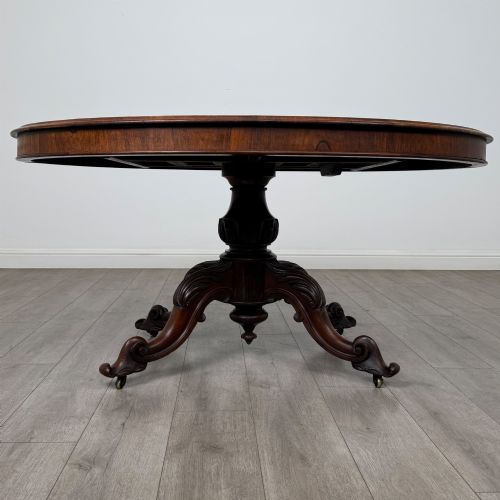
Dating relies on combining the structural style of the pedestal with the prevailing aesthetic of the period. Regency and William IV examples often feature bold carved pillars and platform bases, while later Victorian pieces introduce slimmer turned columns and simpler mouldings.
The choice of secondary woods beneath the veneer and the construction methods of the underlying carcase provide further chronological clues.
Where should I place a centre table?
A centre table is designed to stand freely in the middle of a room rather than pushed against a wall. Its circular top and finished underside or central pillar allow it to be viewed from every angle.
These pieces frequently serve as a focal point in entrance halls, libraries, or large reception rooms, often holding a central lamp or floral display.
How do I care for rosewood?
Rosewood surfaces require protection from direct sunlight and extreme humidity fluctuations to prevent the timber veneer from drying out and splitting. Regular dusting with a soft, dry cloth preserves the polished finish.
Avoid placing damp items directly onto the polished wood, and use breathable pads beneath hot or wet objects.