
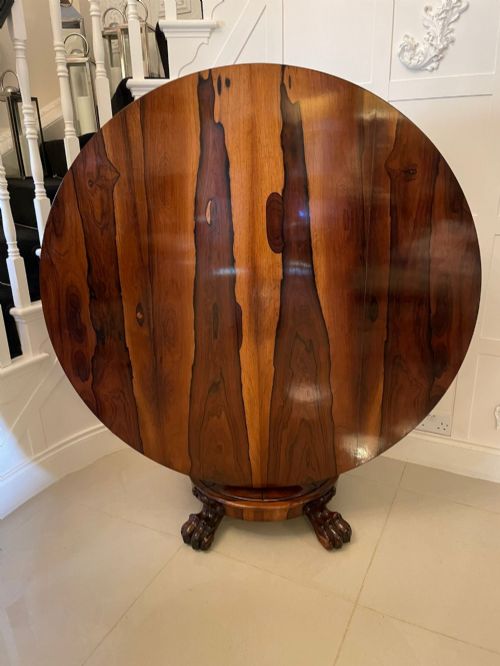
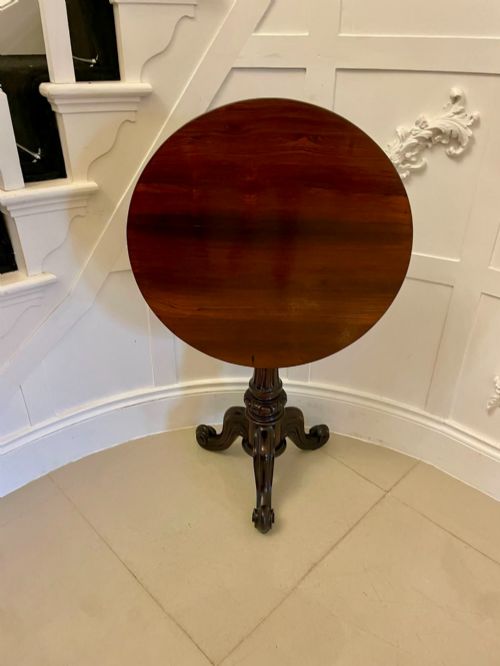

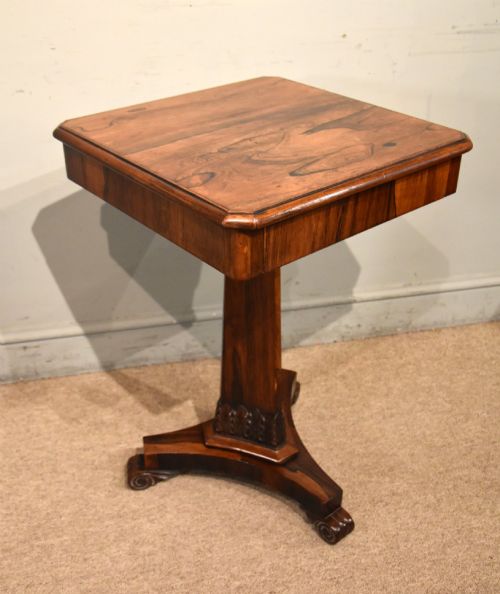
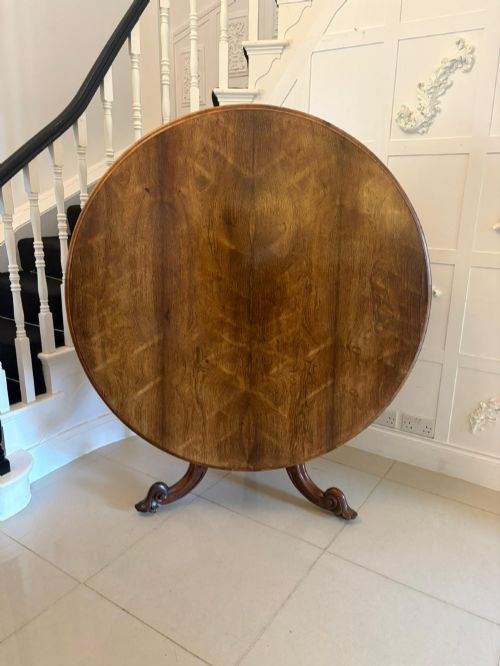
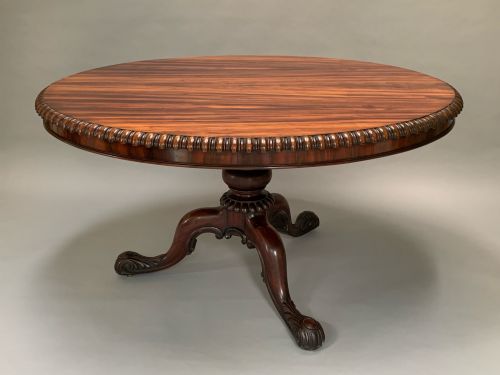
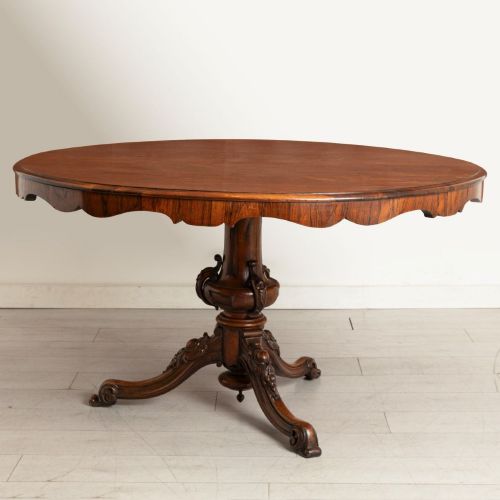
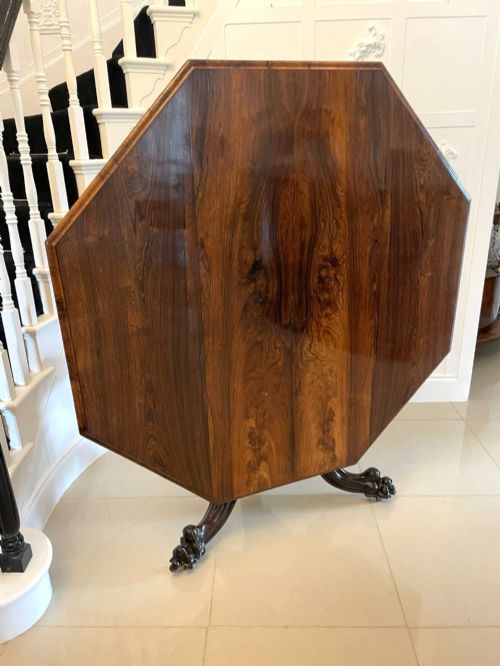
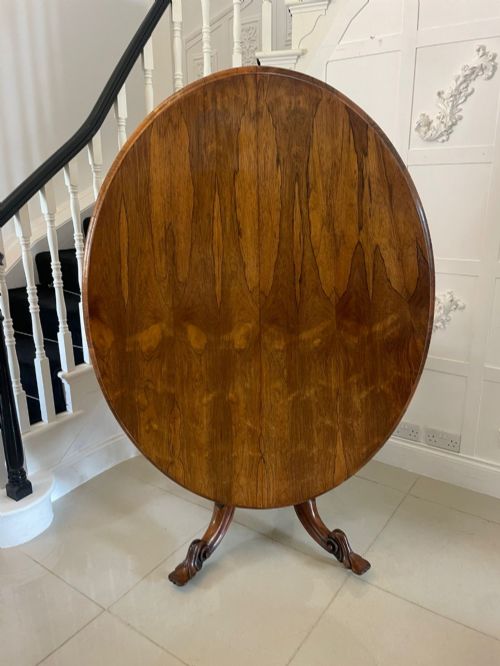
Carved Rosewood Tilt Top Table
These carved rosewood tilt top tables combine rich timber grain with practical folding mechanisms, offering versatile dining and display surfaces for traditional interiors.
Carved Rosewood Tilt Top Table
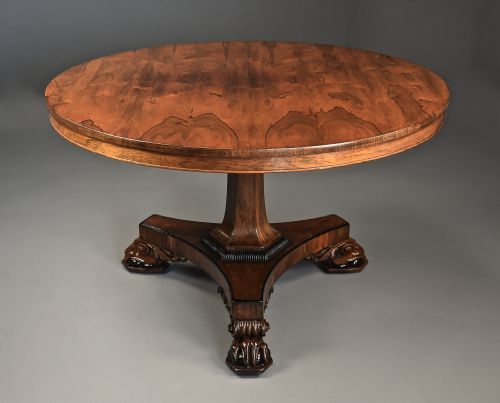
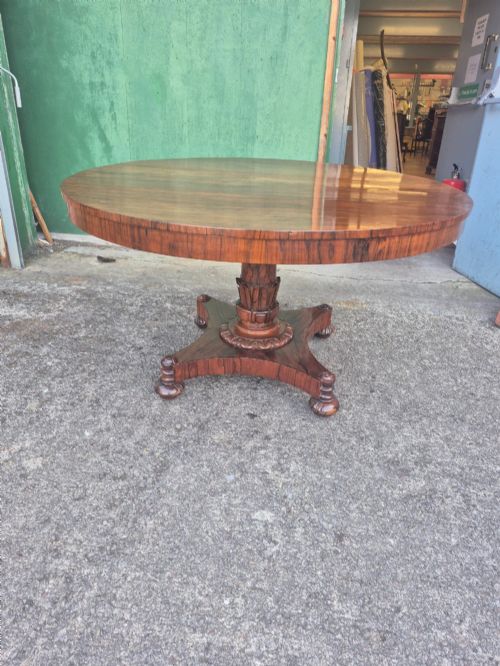
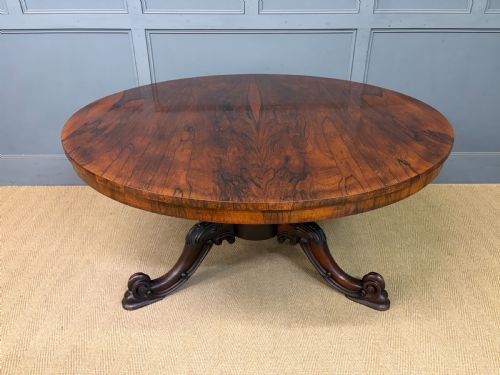
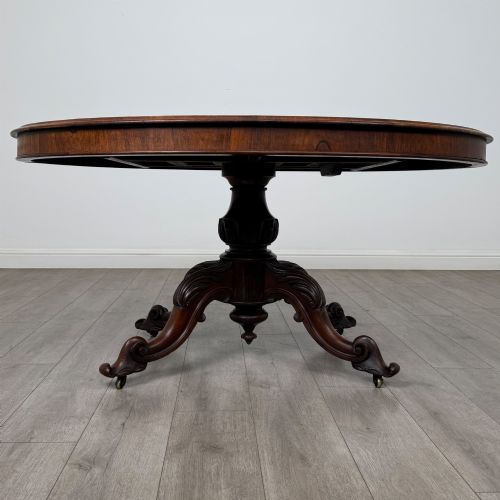
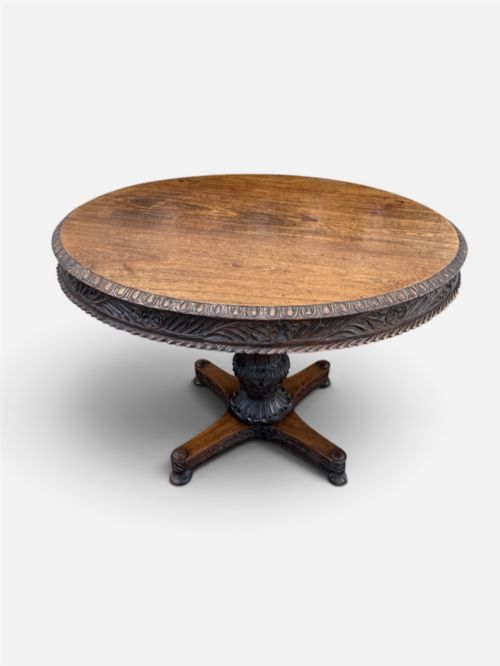
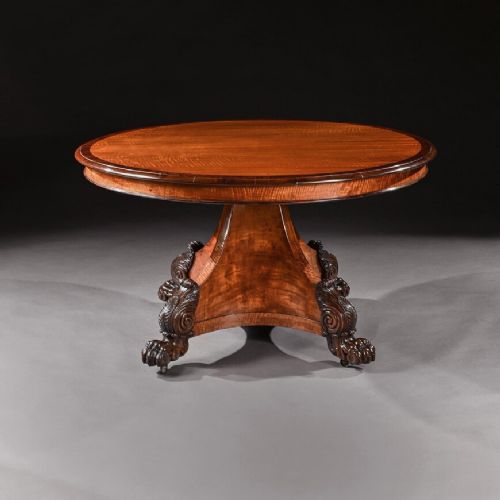
A carved rosewood tilt top table is a versatile piece designed to pivot vertically when not in use, saving floor space in domestic interiors. These examples span the nineteenth century, including Georgian, Regency, William IV, and Victorian periods.
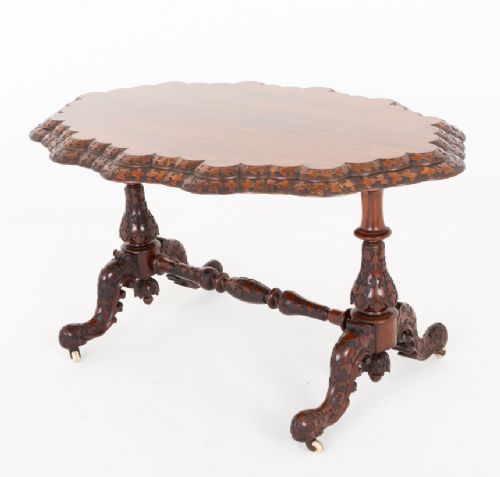
Buyers encounter circular breakfast tables, loo tables, and occasional furniture originating from English workshops as well as Anglo-Indian makers. The form frequently serves dual purposes as a centre table or a dining surface.
Regional variations appear in British and Irish furniture design, alongside imported exotic timber traditions. Most pieces on this page utilise a central pedestal base with heavy carving rather than simple straight legs.
Judging Quality
The sophistication of the timber figuring and the depth of the hand carving separate standard production from superior examples. Master cabinetmakers selected rosewood with intense grain patterns and executed crisp, undercut foliage on the pedestal mounts.
Structural integrity of the tilt mechanism dictates functional quality, as inferior pivot joints develop looseness over decades of use. The stability of the central pillar where it joins the tripod base indicates the original joinery standard.
Some nineteenth-century breakfast tables double as fire screens, allowing a dining surface to transform into a decorative shield against hearth drafts.
Gillows·Peters of Genoa
The Carved Rosewood Tilt Top Table Glossary
- Tilt-top table
- A table with a hinged top that rotates from horizontal to vertical to stand flat against a wall when not in use. This clever mechanism allowed large dining and breakfast tables to clear valuable floor space in nineteenth-century rooms.
- Loo table
- A large round or oval nineteenth-century table originally used for the popular card game loo. These tables typically feature a tilting top and a heavy carved pedestal base.
- Breakfast table
- A mid-sized dining table intended for morning meals before the main dining room was prepared. They frequently utilise a circular top supported by a central pillar.
- Pedestal table
- A table supported by a single central column rather than four corner legs. This construction provides unobstructed seating around the perimeter.
Carved Rosewood Tilt Top Table: Frequently Asked Questions
How do I use a tilt top table?
Release the brass catch or wooden wedge beneath the top to allow the surface to pivot into a vertical position. This makes the furniture easy to move and store against a room boundary.
Ensure the locking mechanism engages securely before placing any objects back onto the horizontal surface during daily use.
Where should I place a centre table?
These tables function best in the middle of a large room where inhabitants can walk around the entire perimeter. They serve as natural display surfaces for lamps, books, or decorative objects.
Keep the timber away from direct sunlight and heat sources to prevent the rosewood veneer from drying out or splitting.
How do I distinguish William IV from Victorian pieces?
William IV furniture, dating from the 1830s, typically displays bold architectural carving, heavy scrolling foliage, and rich dark rosewood tones. Victorian pieces from later decades often adopt lighter proportions or incorporate more eclectic revival styles.
Examining the construction methods underneath the top often reveals transitional design traits between these two overlapping eras.
What is Anglo-Indian rosewood furniture?
Anglo-Indian pieces were manufactured in India by local craftsmen using native timbers for British expatriates and the export market. They feature intricate, dense floral carving that differs subtly from domestic British workshops.
These imported items frequently combine rosewood with padouk or inlaid mother-of-pearl details.