
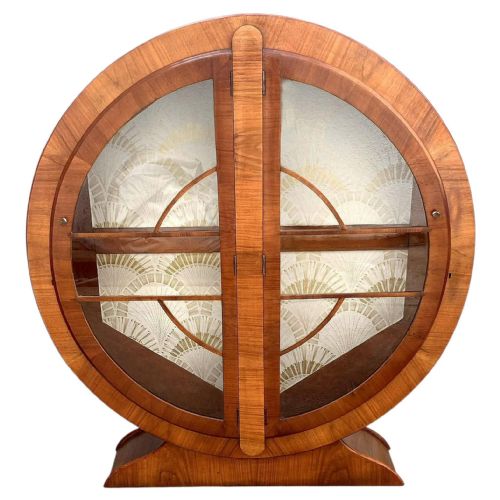


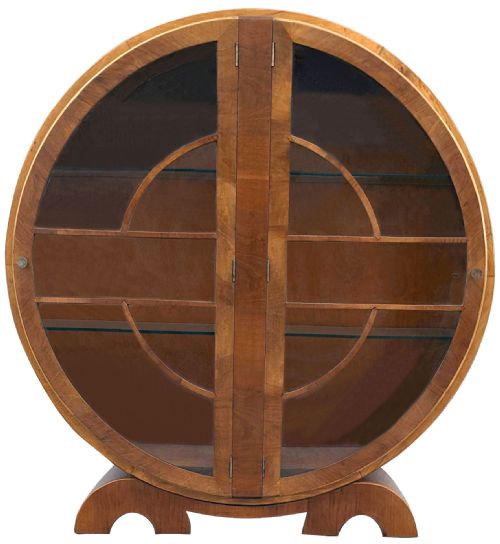


Round Glass Vitrine
A round glass vitrine stands ready to hold small treasures, offering clear views from every angle.
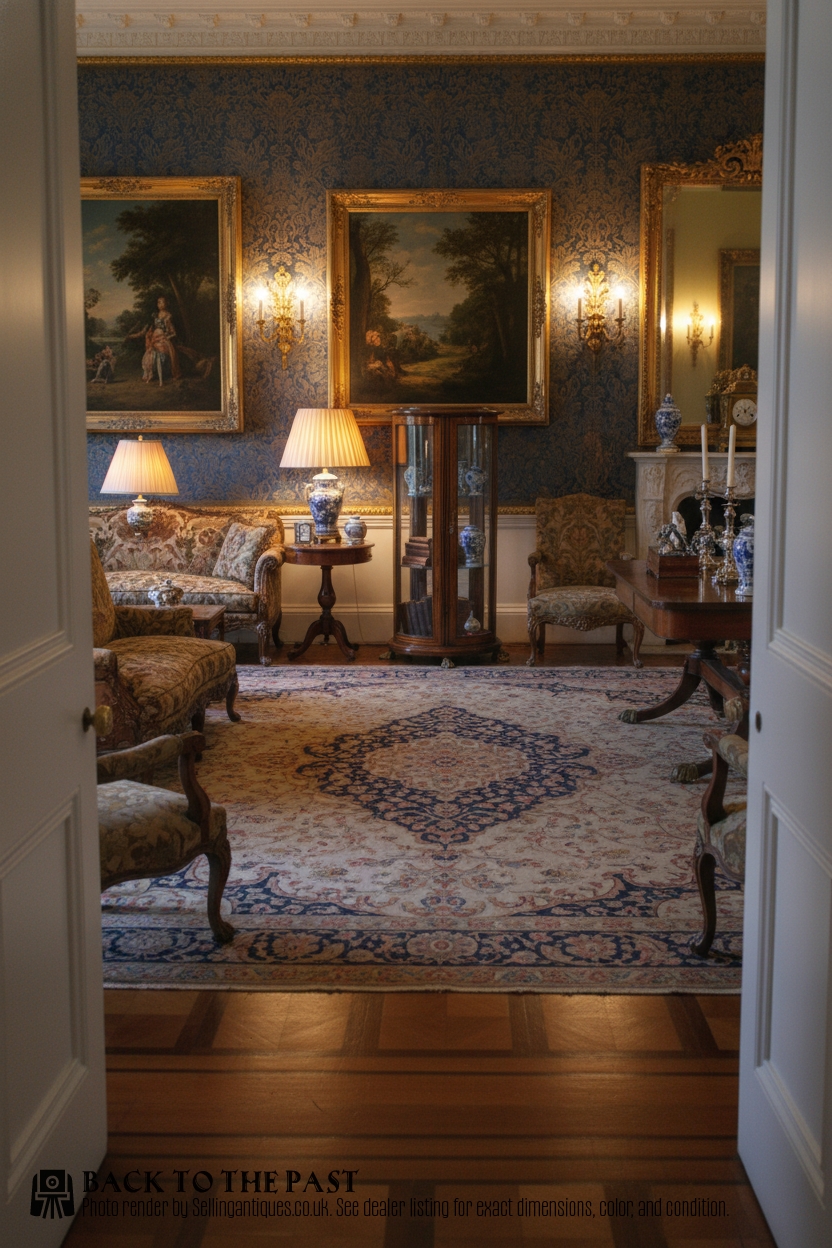
Round Glass Vitrine
A round glass vitrine serves primarily as a display cabinet or display table for precious objects. Buyers seeking a round glass vitrine encounter pieces originating from English and French workshops, spanning the Victorian era through the Art Deco period of the 1930s. These pieces take the form of circular display cabinets, shop vitrines, and bijouterie tables designed to showcase small possessions.
The selection on this page relies heavily on 1930s Art Deco examples alongside Victorian and late 19th-century designs. Walnut, mahogany, rosewood, kingwood, and maple provide the structural framework for these glass enclosures. Most items rely on circular or clove-shaped footprints to maximise visibility from all sides.
Materials and construction
Makers utilised timber veneers such as walnut, kingwood, and mahogany over solid carcasses, often enhancing surfaces with marquetry inlay or figured grains. Brass mounts, lead cames, and velvet or fabric linings provide structural framing and interior contrast for the displayed items.
Curved and flat glass panels enclose the display areas, held securely within wooden frames or metal glazing bars. Cabinet makers shaped these elements to create seamless cylindrical or curved vitrine bodies typical of late 19th-century French and English production.
One exceptional cabinet adopts a distinctive clove shape, proving that Victorian and Art Deco makers enjoyed bending geometry for the sake of a display.
Distinctions in quality
The refinement of the timber grain and the complexity of the inlaid marquetry separate standard examples from finer ones. Figured walnut and kingwood demand greater skill in selection and placement than plain surfaces.
The integration of leaded glass, cast brass mounts, and tailored fabric or velvet linings indicates the original budget and ambition of the piece. Clean joints and smooth operation of doors or hinged table tops reflect superior cabinet making.
The Round Glass Vitrine Glossary
- Vitrine
- A glass-fronted cabinet or case specifically designed for displaying fine objects or curiosities. They protect contents from dust while allowing full visibility.
- Bijouterie table
- A low display table with a glazed top and compartment, traditionally used for holding jewellery and small ornaments. These pieces combine furniture with tabletop display.
- Leaded glass
- Glass panes held together within lead cames to form geometric or decorative patterns. This technique provides structural rigidity for curved cabinet windows.
- Kingwood
- A dense, richly figured exotic timber utilised in high-end cabinet making during the 19th century. Its dark contrasting grain patterns suit decorative inlay.
- Marquetry
- The art of applying pieces of veneer to a structure to form decorative patterns. Craftsmen use various coloured woods to create intricate surface designs.
Round Glass Vitrine: Frequently Asked Questions
What is a round glass vitrine used for?
These cabinets and tables provide a secure, dust-free enclosure for displaying collections of small porcelain, silver, or personal ornaments. The transparent glass allows viewing from all horizontal angles.
They function equally well as standalone display furniture in a drawing room or as specialised shop vitrines for merchandise.
How do I date a round glass vitrine?
Dating relies on identifying stylistic markers such as the geometric symmetry of Art Deco pieces from the 1930s or the ornate inlaid woodwork of Victorian and late 19th-century items. Materials like kingwood and rosewood point towards specific periods of popularity.
Construction methods and hardware types also assist in narrowing down the decade of manufacture.
Are these cabinets suitable for small rooms?
The circular footprint of these vitrines allows them to fit neatly into corners or open spaces where rectangular cabinets might obstruct movement. Their glass construction creates a light, open visual presence.
Interior shelving provides vertical storage capacity without increasing the floor area required.
How do I care for the fabric lining?
Original velvet and fabric linings require gentle vacuuming with a soft brush attachment to remove dust without disturbing fragile fibres. Avoiding direct sunlight prevents fading of both the textile interior and the surrounding timber.
Polishing wooden exterior surfaces should be done with care to avoid staining adjacent fabric or glass.