

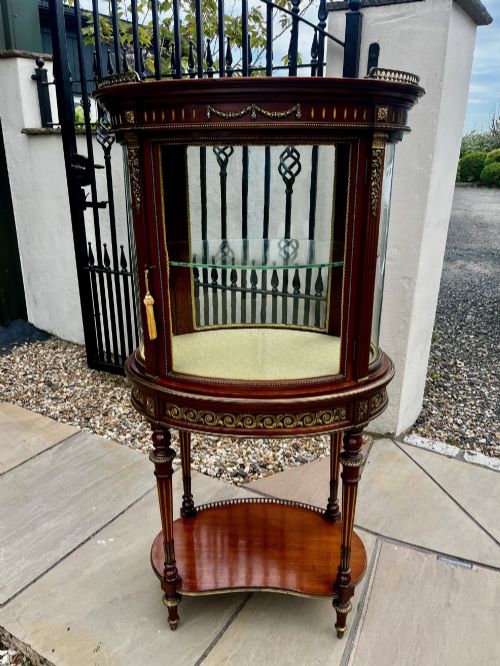


Freestanding Glass Showcase
These freestanding glass showcase pieces are glazed display cabinets designed to hold and exhibit collections.
Freestanding Glass Showcase
A freestanding glass showcase is a cabinet designed for display, appearing in forms such as shop display cabinets, museum cases, tower cabinets, and vitrines. These pieces range from Edwardian oak and mahogany designs to late 19th Century French examples and 1930s Art Deco steel and leather constructions.
The version most likely to meet a buyer on this page is an Edwardian or 19th Century timber display cabinet, often featuring glazed panels for all-round visibility. Such items serve as functional furniture for rooms where objects need protection while remaining visible.
Makers and origins vary across the selection, with English shop pieces by firms like F. Sage & Co alongside French giltwood, vernis martin, and cylindrical pedestal cabinets. Rustic country pine cupboards also appear, demonstrating the diverse contexts these glazed enclosures inhabit.
How they were made
Construction relies heavily on timbers such as mahogany, oak, satinwood, ebonized wood, and pine, paired with extensive glass panels to maximise light entry. Brass fittings provide structural and decorative support, while materials like steel and leather appear in later 20th Century examples.
Surface finishes and detailing include intricate inlay work, giltwood carving, and vernis martin techniques on French 19th Century pieces. Structural joinery supports tall tower configurations, cylindrical pedestal shapes, and broad shop vitrines designed to hold substantial weight.
Freestanding Glass Showcase Retail Price Guide 2026
Typical asking prices for freestanding glass showcase among the pieces listed under this phrase on Sellingantiques today, from the lower quarter to the upper quarter. They describe what is for sale here now, not the wider market.
One cheerful pine cupboard carries later sign-writing for Hovis Bread, proving that even display furniture enjoys a former life in the bakery trade.
What varies in quality
Quality differentiates through the choice of primary timber, such as figured mahogany or quarter-sawn oak versus standard pine, alongside the refinement of decorative elements like fine marquetry inlay or carved giltwood. The precision of the glazing framework and the integrity of the original hardware dictate the overall standard.
Origin and attribution elevate certain pieces, particularly signed shop display cabinets by established makers or finely executed French museum display cases and cylindrical vitrines. The balance between utilitarian strength and decorative proportion separates standard commercial utility from exceptional craftsmanship.
F. Sage & Co
The Freestanding Glass Showcase Glossary
- Vitrine
- A glass-sided cabinet designed for displaying objets d'art or collections. These pieces often feature glazed doors and sides to ensure maximum visibility.
- Bijouterie
- A low display cabinet or table with a glazed top and sides, traditionally used for jewellery and small precious items. The contents are viewed from above.
- Giltwood
- Timber that has been coated with gold leaf or a gold-coloured finish. This technique is frequently seen on decorative 19th Century French furniture.
- Vernis Martin
- A type of decorative lacquer finish developed in 18th Century France and emulated later. It involves multiple layers of varnish applied to create a glossy, painted surface.
- Ebonized
- Wood that has been treated to resemble ebony, achieving a deep black finish. This process was popular for creating striking contrast in period furniture.
Freestanding Glass Showcase: Frequently Asked Questions
Where should I place a freestanding glass showcase?
These cabinets suit rooms where objects require protection from dust while remaining clearly visible. Positioning them away from direct sunlight preserves the timber and interior contents.
Sufficient floor space is necessary to allow clearance for doors and to appreciate the glazed sides from multiple angles.
How do I identify an Edwardian display cabinet?
Edwardian pieces often utilise mahogany or oak, reflecting the stylistic preferences of the early 20th Century. They frequently incorporate inlaid details and clean structural lines.
Comparing the timber grain and hardware style against dated examples helps confirm the period of manufacture.
Can these cabinets hold heavy items?
Shop display cabinets and museum cases were built to support substantial commercial or institutional inventories. Their robust timber frames and thick glass shelves accommodate heavier objects securely.
Domestic variants like bijouterie or inlaid mahogany cabinets are better suited to lighter collections and delicate artefacts.
How do I care for antique glass and timber?
Cleaning requires soft cloths and non-abrasive glass cleaner to maintain transparency without scratching the historical panes. Timber surfaces benefit from appropriate wax polishes suited to the specific wood finish.
Avoiding sudden humidity changes prevents timber warping and protects the structural integrity of the glazed panels.