




Round Convex Wall Mirror
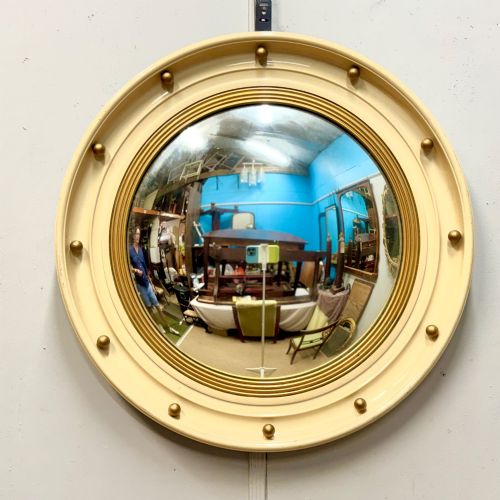
A round convex wall mirror gathers light and bends the room into an intimate, curved globe, drawing the eye directly into its bright focal sweep.
Round Convex Wall Mirror
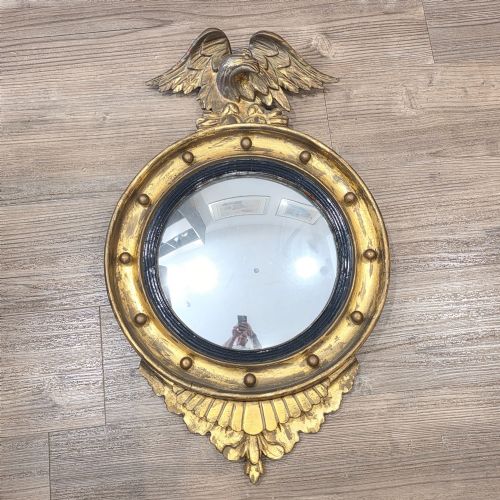
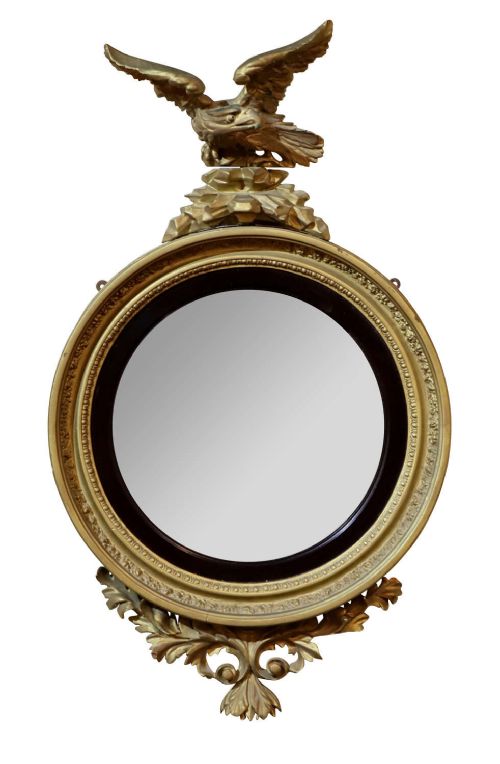
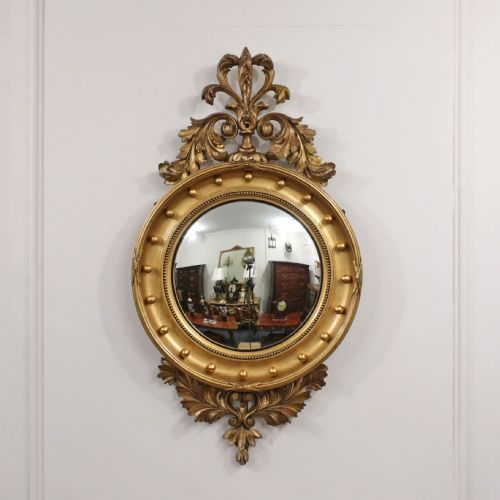
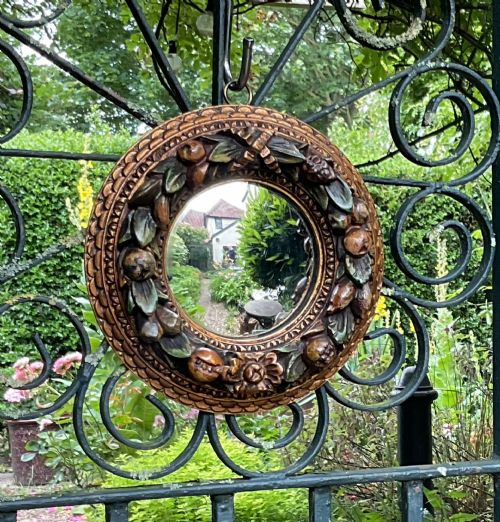
A round convex wall mirror bends the reflection of an entire interior into a deep, sweeping bubble of curved glass. When searching for a round convex wall mirror, a buyer finds circular looking glasses framed by moulded timber or carved ornament.
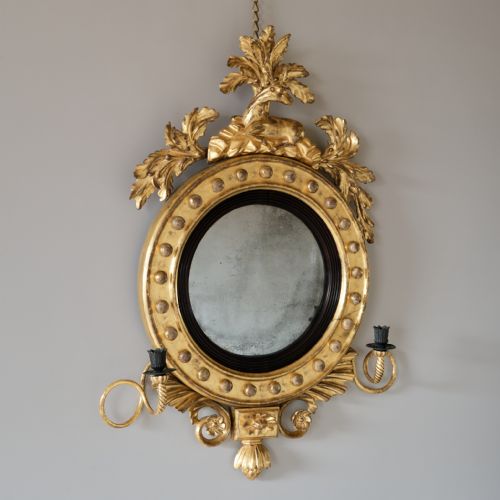
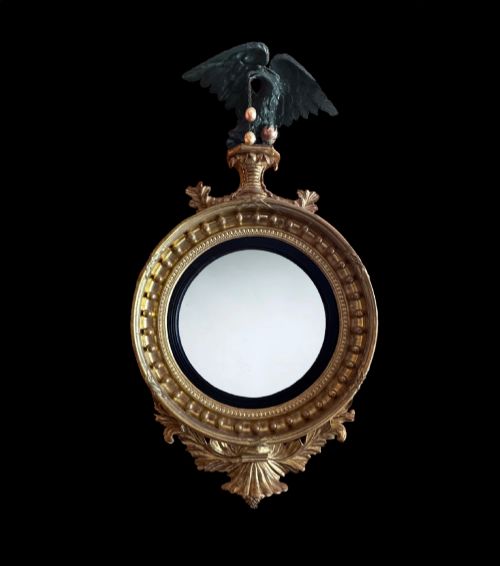
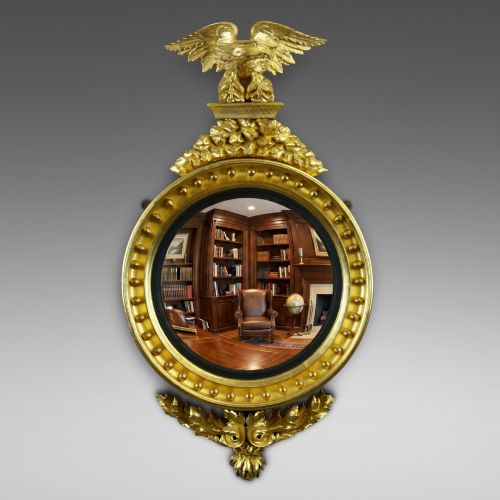
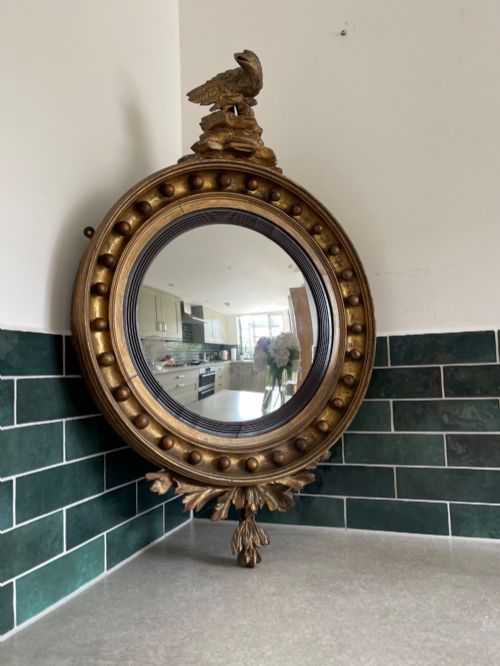
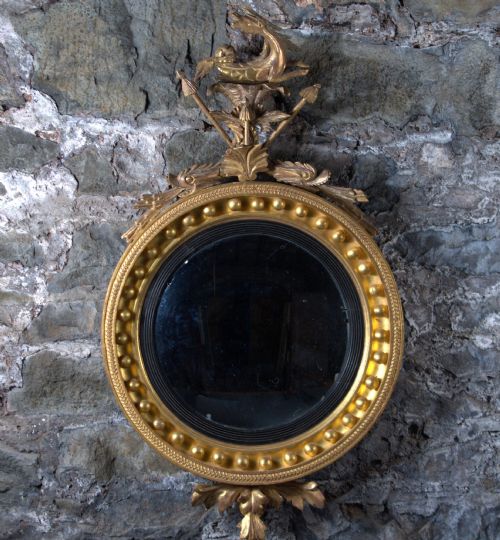
The Regency period provides the most familiar examples, often displaying circular frames topped by carved eagles or gilded foliage. Later Victorian and early twentieth-century interpretations also appear, spanning forms from simple butlers mirrors to ornate giltwood designs.
These pieces function as striking focal points in hallways and drawing rooms, historically serving practical uses alongside ornamental grandeur. The circular silhouette and curved glass remain constants across Georgian, Regency, and later revival periods.
Materials and construction
Giltwood and gesso form the primary framework for many traditional examples, providing a smooth base for bright layers of gold leaf. Artisans carved intricate details such as eagles and foliage into timber before applying gesso and gilding.
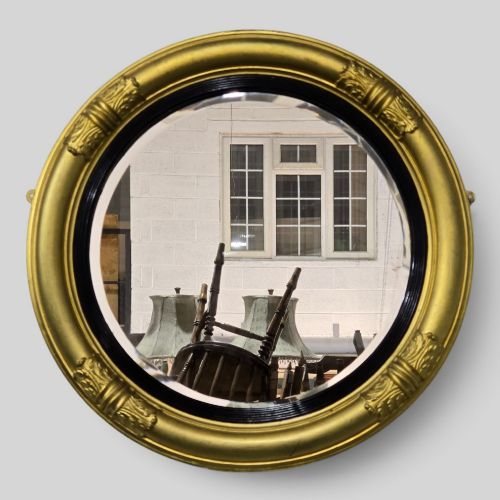
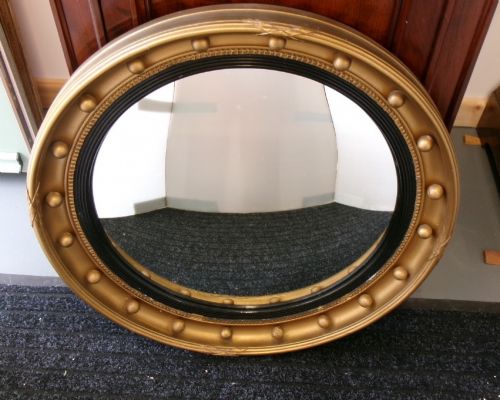
Convex mirror glass sits within the circular rebate, often accompanied by an ebonised slip that creates a dark inner border. Secondary woods provide structural support behind the main timber frame, holding the heavy curved glass securely in place.
Victorian house guests frequently consulted sorcerer's mirrors to check the entire company behind them without turning around.
Judging quality in convex mirrors
The crispness of the carved ornament dictates much of the visual merit, separating sharp Regency hand-carving from softer, later machine work. Original gilding shows a warm, aged patina across the gesso surface rather than flat modern paint.
The quality of the curved glass itself matters greatly, as clear, distortion-free reflection indicates superior early manufacture. Retaining the original eagle surmount, ebonised slip, and backboards preserves the integrity and historical weight of the piece.
The Round Convex Wall Mirror Glossary
- Convex glass
- A curved glass plate that bulges outward to create a wide-angle, circular reflection of the room.
- Ebonised slip
- A dark, black-painted inner moulding that sits between the frame and the glass to provide visual contrast.
- Gesso
- A plaster-like mixture applied to wood frames to create a smooth surface for subsequent gilding.
- Surmount
- The decorative carving, such as an eagle or foliage, positioned at the very top of the mirror frame.
Round Convex Wall Mirror: Frequently Asked Questions
What is a sorcerer's mirror?
A sorcerer's mirror, also known as a witch's mirror, is a convex looking glass historically used to view entire rooms from a single vantage point. The curved surface gathers light and bends the perspective into a compact, globe-like reflection.
These pieces gained popularity during the Regency and Victorian periods as both optical curiosities and striking interior ornaments. Their unusual curved optics distinguish them from standard flat wall mirrors.
How do I hang a heavy convex mirror?
Hanging a convex mirror requires securing the weight directly into wall studs or using heavy-duty fixings suited to the wall type. Because many giltwood examples carry substantial weight in their frames and glass, proper wall anchors are essential.
Ensure the hanging cord or integrated metal rings are firmly attached to the structural backboards of the frame. Professional installation is often advisable for larger nineteenth-century pieces.
How do I date a convex mirror?
Dating relies on examining the construction of the wooden frame, the composition of the gesso, and the style of any carved ornament. Regency examples often feature distinct eagle surmounts and delicate reeded details, while later nineteenth-century pieces show different timber assemblies.
Looking at the backboards, fixings, and the character of the mirror glass provides further clues to age. Original patination on the gold leaf and minor signs of wear help confirm a nineteenth-century origin.
Why do these mirrors have black inner rings?
The black inner ring, known as an ebonised slip, creates a visual boundary that separates the reflective glass from the gilded frame. This dark border prevents the gilt decoration from visually competing with the curved reflection.
Many Regency and nineteenth-century designs incorporate this contrasting slip as a standard decorative feature. It adds depth to the overall composition and frames the curved glass sharply.