




Porthole Style Mirror
A porthole style mirror brings deep, curved reflection into a room, capturing light and space through its distinctive convex glass.
Porthole Style Mirror
When you search for a porthole style mirror, you encounter circular wall mirrors built around a pronounced convex glass plate. These pieces originate across the nineteenth and early twentieth centuries, spanning Victorian production and later revivals.
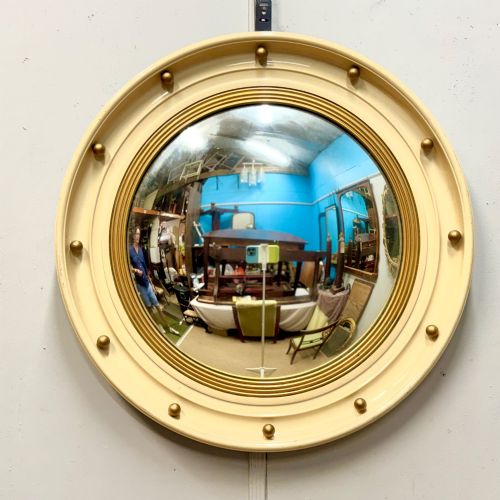
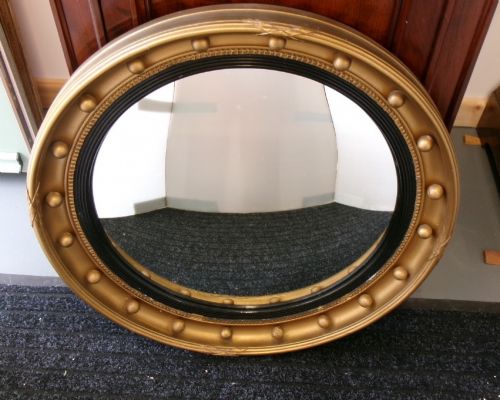
The version you are most likely to meet on this page is the circular gilt-framed convex wall mirror, often referred to as a butler's mirror. These pieces draw on Regency styles and typically measure in wall-hanging formats suitable for halls and living spaces.
How they were made
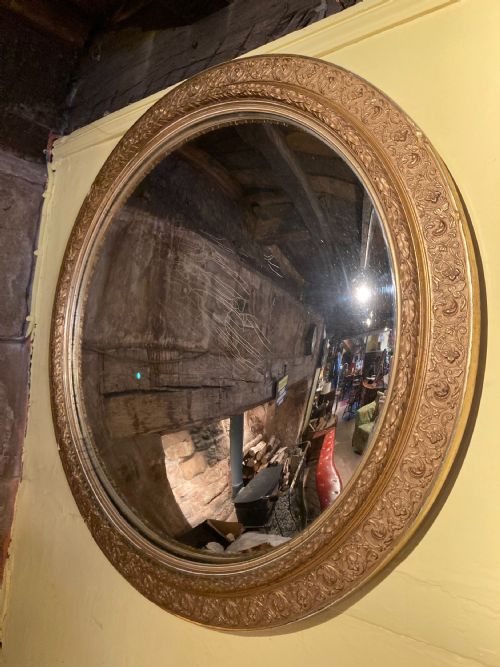
Frames take shape from wood and gesso, finished with applied gilt or painted surfaces, alongside examples utilising gilt metal, ebonised wood, and brass paired with mahogany. Craftsmen formed the circular wooden carcasses before applying layers of gesso and gold leaf or paint.
Optics rely on blown or cast convex glass plates that distort and widen the field of vision within the room. This curved glass sits secure within moulded rebates, backed by wooden boards to protect the silvered reverse.
Listings span the nineteenth and early twentieth centuries, featuring materials such as giltwood, ebonised wood, gesso, brass, and mahogany.
What varies in quality
The refinement of the frame carving and the depth of the gilding set the standard across these pieces. Crisp detail in the gesso ornamentation and the preservation of the original gold leaf distinguish finer examples from plain later revivals.
Glass condition marks another division, as original convex plates hold deeper character and softer silvering than later replacements. The integrity of the timber structure and the weight of the metal components further separate standard production from superior work.
The Porthole Style Mirror Glossary
- Convex glass
- A curved glass plate that bulges outward to create a wide-angled, spherical reflection of the interior. This form concentrates light into the centre of the room.
- Giltwood
- Timber coated with a thin layer of gold leaf over a prepared gesso ground. It provides a bright reflective surface that ages with a warm metallic patina.
- Ebonised wood
- Timber stained or painted deep black to imitate ebony. This finish offers a sharp contrast against gilt details or bright glass.
- Gesso
- A plaster-like mixture applied to wooden frames as a smooth base for gilding or painting. It allows intricate moulded decoration to be built up before finishing.
Porthole Style Mirror: Frequently Asked Questions
What is a porthole style mirror?
A porthole style mirror is a circular wall mirror featuring convex glass that projects outward. The design mimics the shape of a ship's porthole while providing a panoramic reflection of the interior.
These pieces emerged in various forms throughout the nineteenth and early twentieth centuries, drawing heavily on Regency aesthetics. They function primarily as decorative focal points in halls, drawing rooms, and dining spaces.
How do you hang a convex mirror?
Convex mirrors require secure wall fixings due to the substantial weight of the glass and heavy timber frames. Because many historical examples use robust hanging rings, proper anchors ensure the piece remains safe.
Positioning matters for both light distribution and visual balance. Hanging the mirror at eye level allows the curved glass to capture and project natural light across the entire room.
What rooms suit a convex mirror?
These mirrors suit spaces that benefit from expanded light and optical depth, such as narrow hallways, landings, and compact parlours. The wide-angle reflection opens up smaller areas effectively.
Living rooms also accommodate them well above mantelpieces or sideboards where they act as central decorative anchors. The curved reflection naturally draws the eye without cluttering the wall space.