

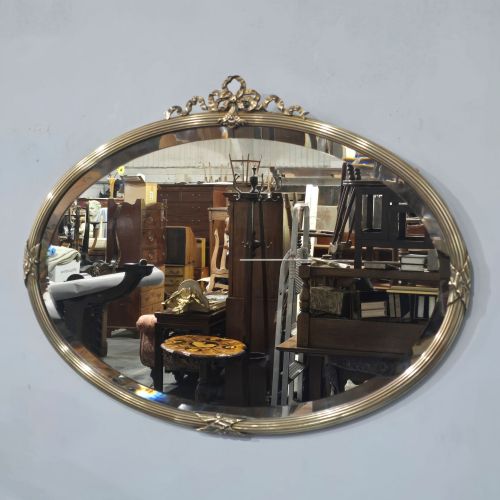
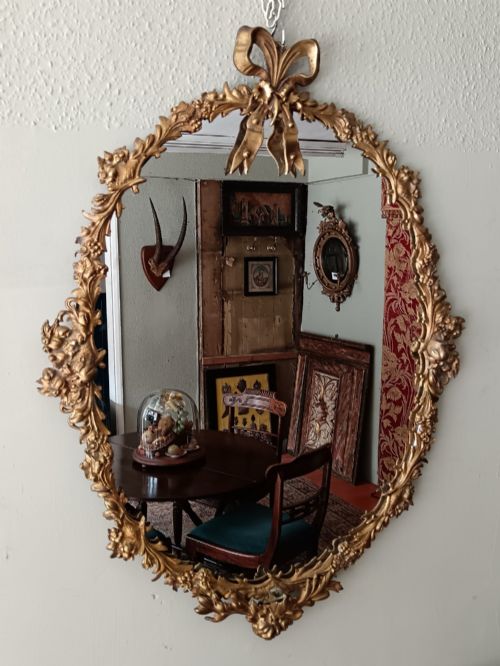


Brass Oval Wall Mirror
A brass oval wall mirror brings warmth and reflection to a room, shifting light across periods from Regency through to Art Deco.
Brass Oval Wall Mirror
A brass oval wall mirror draws the eye through its curved frame, appearing frequently across the Victorian, Edwardian, and Art Deco eras. These pieces bridge functional utility and decorative presence in domestic interiors.
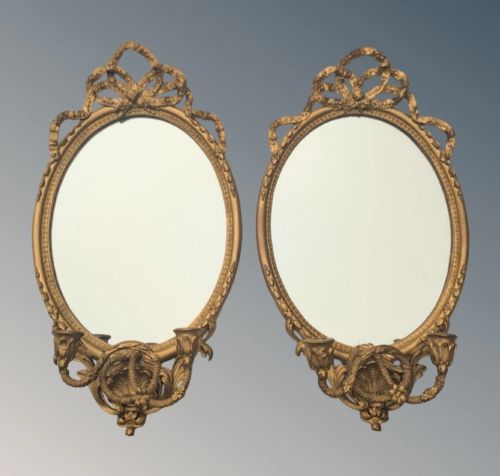
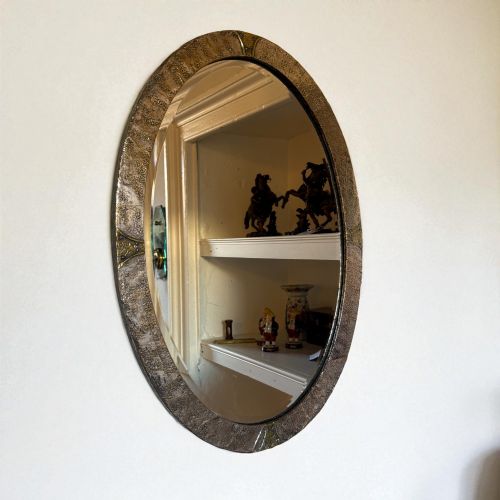
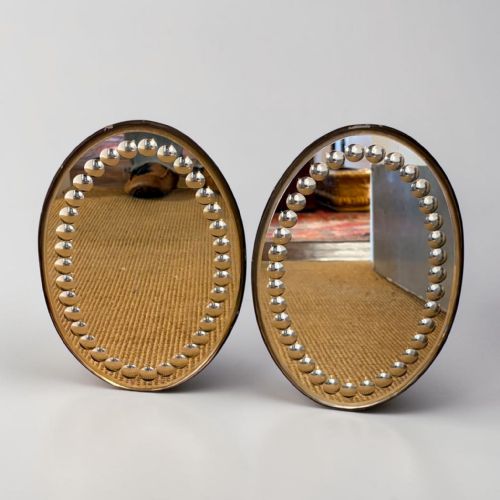
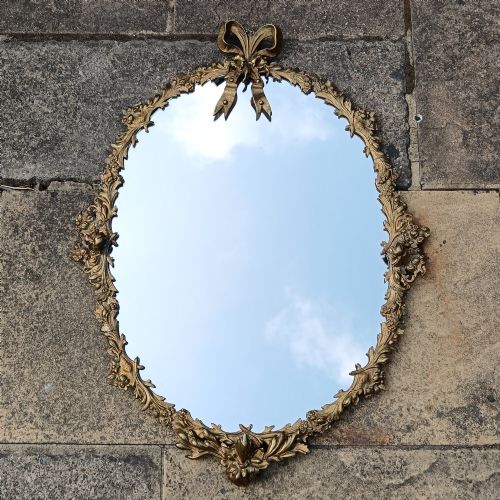
The selection ranges from simple brass and metal frames to elaborate French Louis XVI revival designs and Arts and Crafts creations featuring motifs like peacocks. Collectors encounter both single hanging pieces and matched pairs intended for symmetry.
How they were made
Makers utilised cast and sheet brass, gilt bronze, and gilt metal to construct frames, often incorporating bevelled glass plates within the central aperture. Some examples integrate copper, enamel, and ebonised wood elements to provide textural contrast.
Techniques varied from structured Arts and Crafts hand-working to ornate Rococo and Louis XVI revival casting. Frames frequently employ gilt finishes applied over bronze or brass substrates to achieve a rich metallic lustre.
Listings feature brass, gilt bronze, and copper materials across Victorian, Edwardian, and Art Deco periods.
What varies in quality
Quality rests in the crispness of the frame's casting and the depth of the chased or hand-worked detail around the brass oval wall mirror border. Finer examples display meticulous attention to decorative motifs, whether classical swags or stylized organic forms.
The integrity of the mirror glass itself and the retention of original gilding or patination elevate certain pieces. Substantial construction and robust mounting hardware distinguish superior workshops from standard production.
The Brass Oval Wall Mirror Glossary
- Bevelled glass
- Glass whose edges are cut and polished at an angle. This technique creates a prismatic border that catches the light.
- Girandole
- A decorative wall mirror featuring attached candle sconces. These fixtures allow the glass to reflect and multiply candlelight.
- Gilt bronze
- Bronze coated with a thin layer of gold or gold-coloured alloy. It offers a durable and lustrous finish common in revival pieces.
- Rococo Revival
- A 19th-century style inspired by 18th-century French design. It relies heavily on asymmetrical scrolls, shells, and natural curves.
- Arts and Crafts
- A design movement valuing handcraftsmanship and simple materials. It often incorporates stylized motifs inspired by nature.
Brass Oval Wall Mirror: Frequently Asked Questions
How do I date a brass oval wall mirror?
Dating relies on stylistic clues within the frame, such as the symmetrical restraint of Regency pieces versus the organic motifs of Arts and Crafts or Art Nouveau examples. Material choices like gilt bronze or ebonised wood also point toward specific decades.
Examining the construction methods at the reverse of the frame provides further context. Fasteners and the composition of the backing help confirm the manufacturing period.
Where should I hang a brass oval wall mirror?
These mirrors suit spaces that benefit from reflected light and a softened vertical line, such as above a mantelpiece, in an entryway, or over a bedroom dressing table. Their curved silhouette contrasts well with rectilinear furniture.
Consider the scale of the wall relative to the dimensions of the frame. Smaller mirrors work well in intimate alcoves, while larger overmantle versions anchor a primary living space.
Are these mirrors heavy to hang?
Weight varies considerably depending on the materials used, with solid cast brass and gilt bronze frames being notably heavier than lighter sheet metal or Edwardian examples. Secure wall fixings suited to the specific weight are essential.
Checking the original hanging loops or chains on the reverse helps determine the correct suspension method. Professional installation is recommended for substantial pieces.
What is a girandole mirror?
A girandole is a specialised wall mirror that incorporates one or more candle arms branching out from the frame. Originally designed to amplify candlelight in dimly lit rooms, they serve as striking decorative focal points.
Examples range from ornate Victorian rope-twist designs to classical revival styles. They require careful placement to ensure safe use of candles.