


Rotating Library Bookcase
A rotating library bookcase lets you spin a whole shelf of volumes at a touch, combining practical desk-side utility with handsome timber furniture.
Rotating Library Bookcase
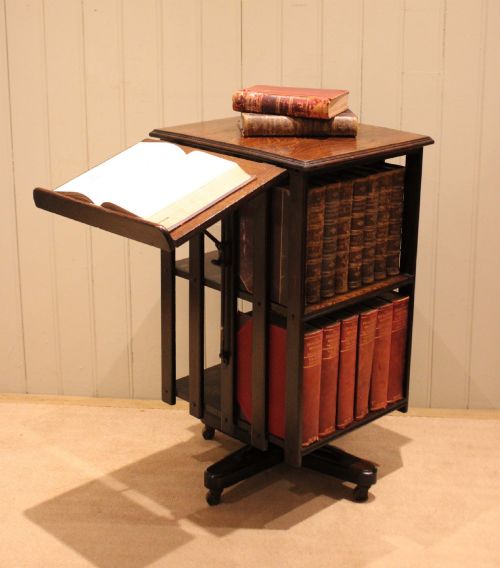
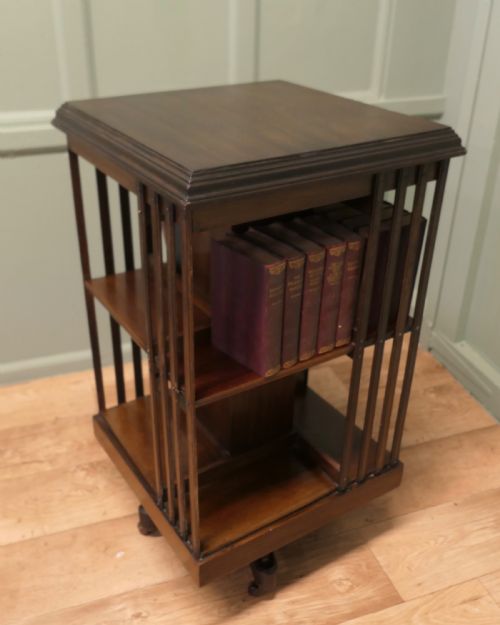
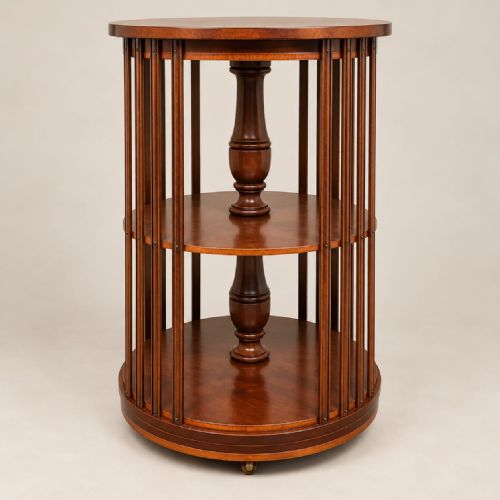
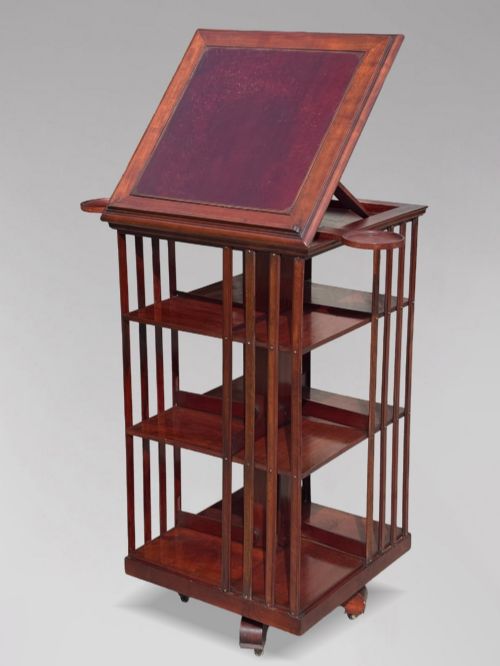
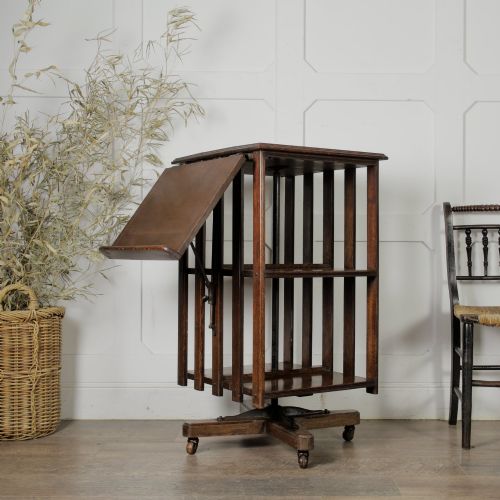
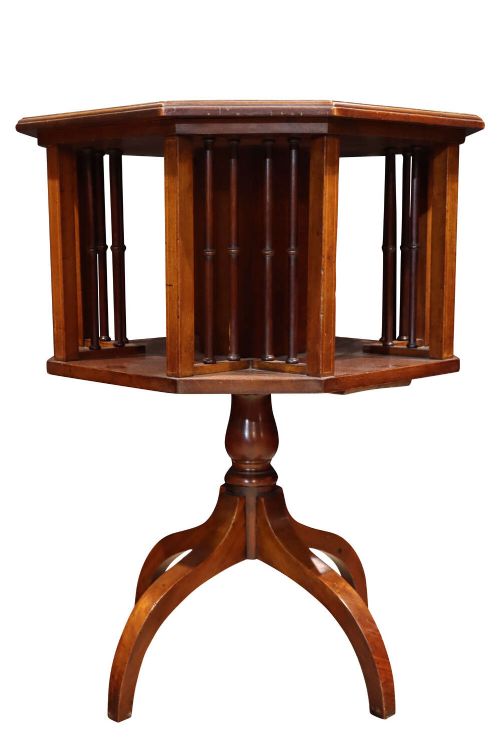
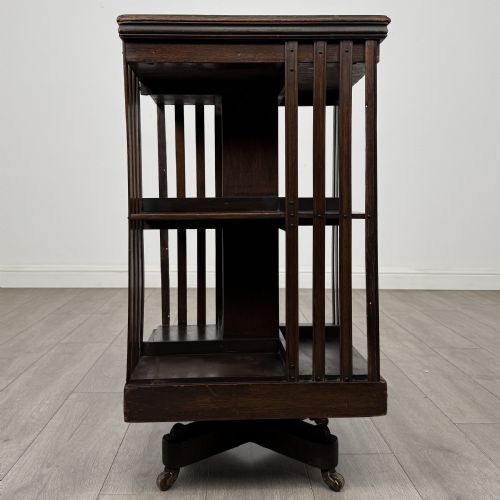
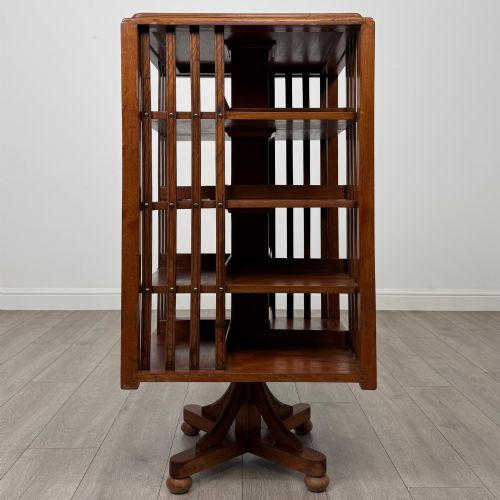
A rotating library bookcase is a clever desk or floor-standing unit designed to hold accessible volumes on shelves that spin freely on a central pivot. You are looking at pieces that range from compact table models to large floor-standing units intended for heavy reference books.
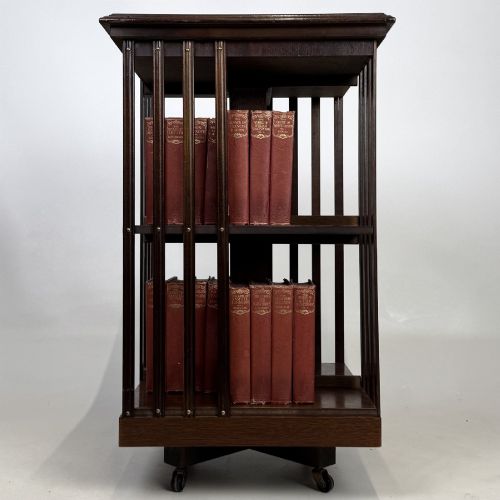
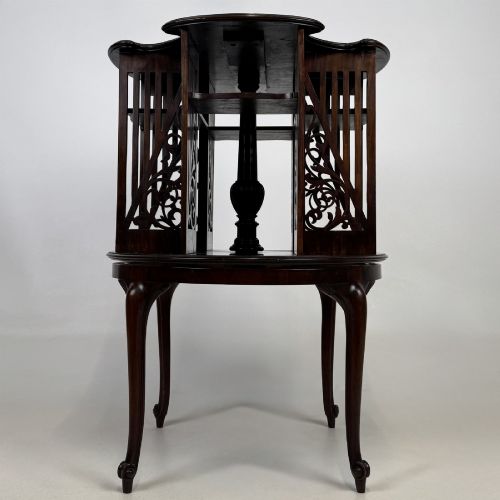
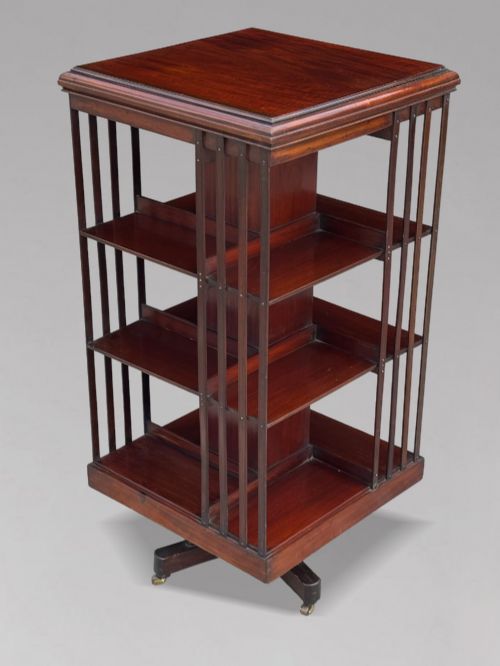
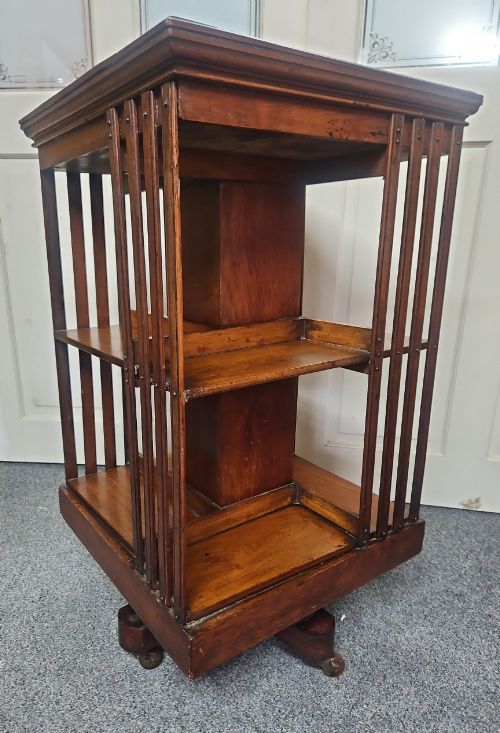
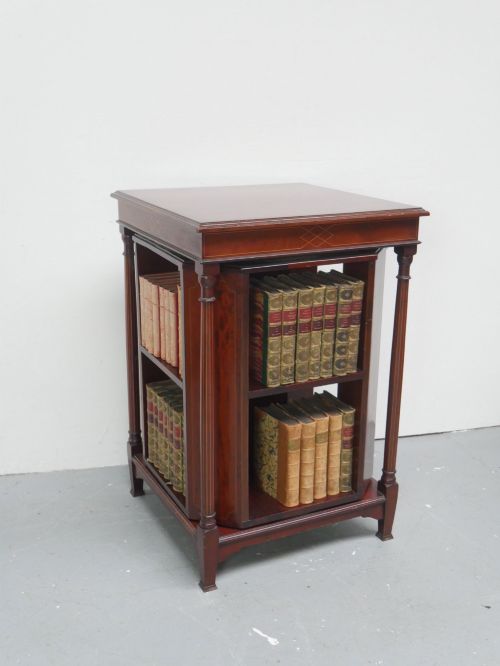
The version you are most likely to meet on this page is the Edwardian or late Victorian mahogany model, often standing on a low base with castors and fitted with slatted or panelled sides. These pieces date predominantly from the late nineteenth and early twentieth centuries, though earlier Georgian examples and walnut or oak variations also appear.
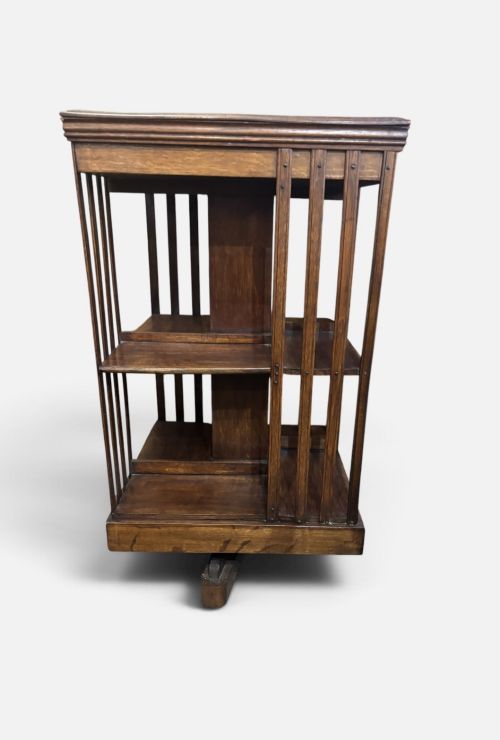
Makers shaped these stands as round, square or rectangular carcases to sit beside armchairs or behind office desks. The fundamental mechanism relies on an internal spider or cast iron bearing that allows smooth rotation without tipping.
Materials and construction methods
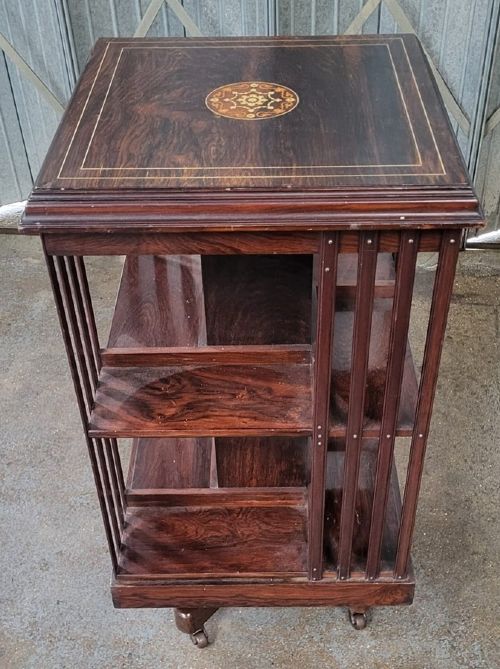
Cabinet makers relied primarily on mahogany, oak and walnut for the main body, often selecting flame veneers or adding contrasting satinwood stringing and marquetry. These timbers were chosen for structural stability and finished with polished surfaces that highlighted the natural grain.
Brass fittings and cast iron mechanisms form the hidden core of each revolving bookcase, ensuring the heavy timber upper structure turns without friction. Slats, dividers and panelled partitions were joined using traditional cabinet-making methods to withstand the weight of numerous books.
Rotating Library Bookcase Retail Price Guide 2026
Typical asking prices for rotating library bookcase among the pieces listed under this phrase on Sellingantiques today, from the lower quarter to the upper quarter. They describe what is for sale here now, not the wider market.
Some Edwardian models include dainty inlaid flowers just where your thumb rests while reaching for a novel.
Judging quality in rotating bookcases
Quality rests in the smoothness of the turning action and the stability of the internal pivot mechanism. A superior piece spins silently and evenly without wobble, supported by a solid cast iron or brass bearing concealed beneath the base.
The choice of timber and the crispness of any inlay or marquetry further separate standard production from finer cabinet work. Flame mahogany veneers, detailed satinwood stringing and robust dovetail joinery indicate a higher standard of manufacture.
Maple & Co
The Rotating Library Bookcase Glossary
- Revolving bookcase
- A freestanding or table-top piece of furniture with shelves arranged around a central vertical axis that turns on a bearing.
- Inlay
- A technique where pieces of contrasting timber such as satinwood are inserted into the primary wood surface to form decorative patterns.
- Marquetry
- Elaborate decorative veneer work assembled in pictorial or floral designs across the visible panels of the bookcase.
- Sheraton style
- A late eighteenth and revival design idiom characterised by straight lines, tapered legs and classical classical geometry.
- Flame mahogany
- Timber cut from the fork of a mahogany tree to produce a distinctive, flamy grain pattern prized by cabinet makers.
Rotating Library Bookcase: Frequently Asked Questions
How do I care for the wood on my bookcase?
Apply a quality beeswax polish periodically to nourish the mahogany, oak or walnut and maintain its natural lustre.
Keep the piece away from direct heat sources and strong sunlight to prevent the timber or veneer from drying out and cracking.
Can these bookcases hold heavy hardback books?
Most floor-standing models are constructed from solid hardwoods and robust veneers designed to support standard reference volumes and heavy hardbacks.
Smaller table-top versions suit lighter novels and periodicals rather than massive encyclopaedias.
How does the rotating mechanism work?
A concealed internal pivot, often built from cast iron and brass, sits between the upper shelving unit and the heavy stable base.
This mechanism allows the entire bookcase to spin freely in either direction with minimal effort from the user.
What is the difference between Edwardian and Victorian models?
Victorian examples tend to use heavier solid oak or dark mahogany with robust, straightforward framing and minimal decoration.
Edwardian pieces frequently showcase lighter mahogany or satinwood with delicate marquetry, stringing and Sheraton revival influences.