




Victorian Book Carousel
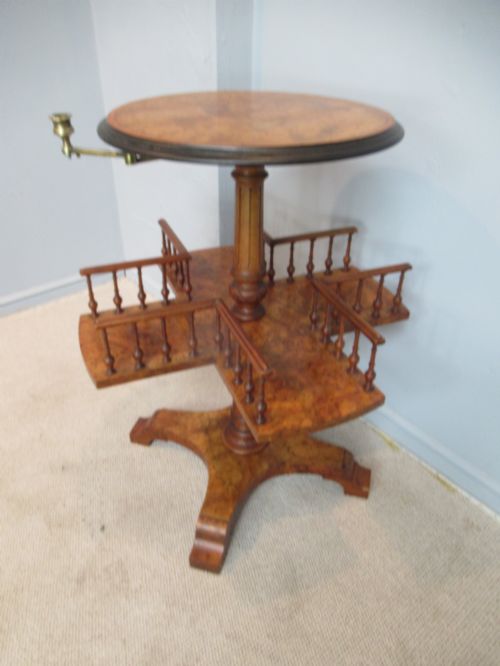
These Victorian book carousel examples offer clever desktop and floor storage that turns smoothly to keep volumes at hand.
Victorian Book Carousel
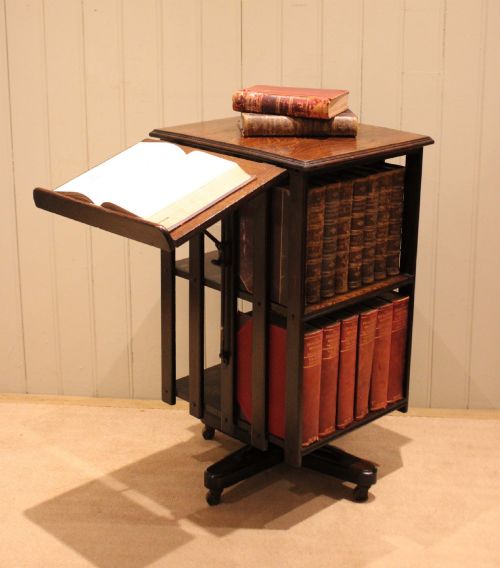
A Victorian book carousel provides compact storage for multiple volumes in a rotating format designed for easy access from a desk or floor position. These pieces include revolving bookcases and book stands originating from the Victorian and Edwardian periods.
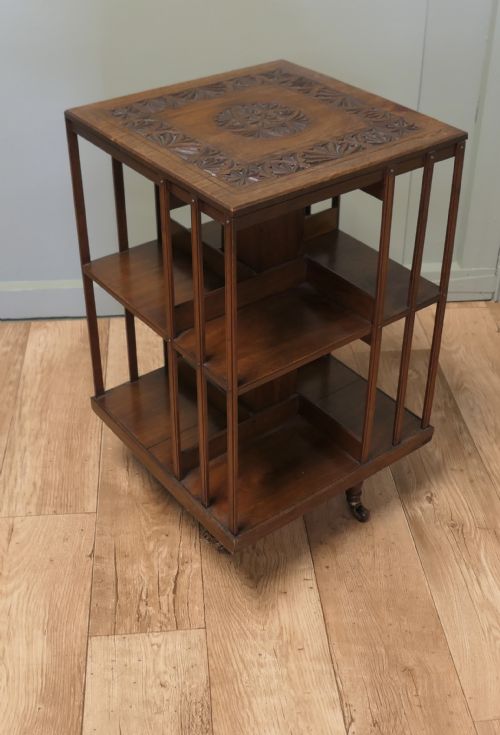
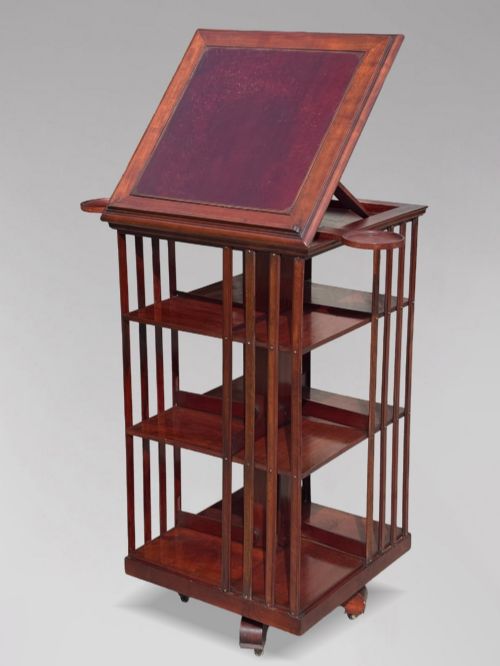
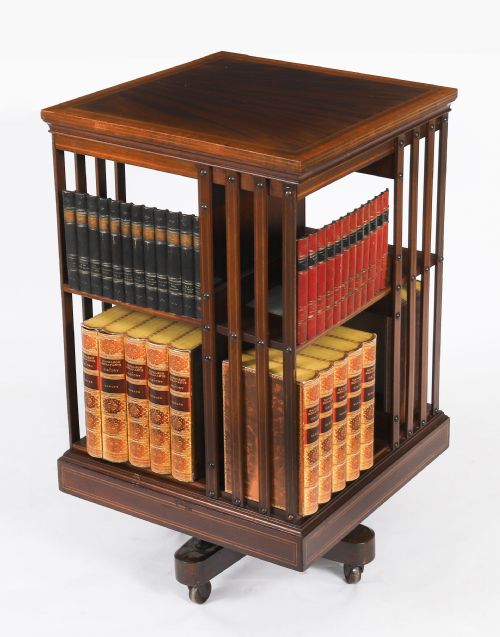
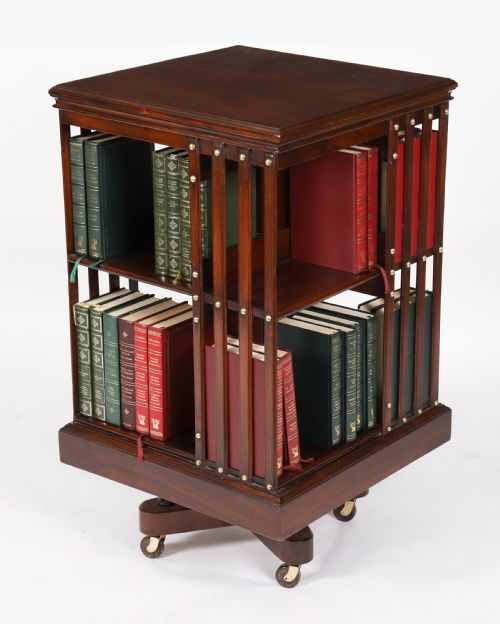
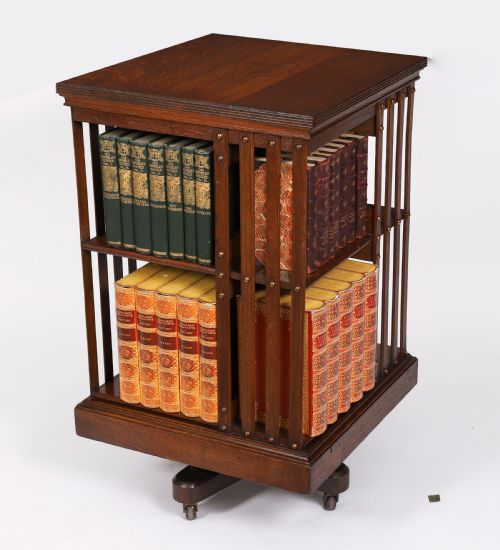
Most examples found here span the late nineteenth century through to the early twentieth century, taking the form of table top models or taller freestanding units. Oak, mahogany, and walnut dominate the construction, often featuring slatted sides to hold books securely.
The layout typically incorporates cruciform interior divisions within a square or slightly rectangular framework, allowing maximum volume capacity in a minimal footprint. Buyers most frequently encounter mahogany and oak variations from this era.
Materials and construction
Timbers such as mahogany, oak, and walnut form the structural framework, sometimes enhanced by burr walnut veneers or satinwood and boxwood inlay. Cabinet makers selected these dense hardwoods to withstand the weight of heavy volumes and the constant rotation of the stand.
Internal mechanisms frequently incorporate iron and brass components to ensure smooth pivoting action without wobbling or sticking. These concealed metal elements support the weight while allowing effortless rotation on a stable base.
Victorian Book Carousel Retail Price Guide 2026
Typical asking prices for victorian book carousel among the pieces listed under this phrase on Sellingantiques today, from the lower quarter to the upper quarter. They describe what is for sale here now, not the wider market.
Some nineteenth-century readers enjoyed spinning their reference volumes so vigorously that makers had to reinforce the internal iron pivots.
Judging quality and craftsmanship
Quality rests upon the smoothness of the revolving mechanism and the stability of the central axis under load. Finer specimens maintain true alignment without sagging or grinding as the tiers turn.
Attention to detail in the cabinet work distinguishes superior examples, such as tight joints, select wood grain choice like burr walnut, and precise inlay work. The crispness of the slatted partitions and the solidity of the base frame further separate standard output from workshops of distinction.
Maple & Co
The Victorian Book Carousel Glossary
- Revolving bookcase
- A freestanding or table top shelving unit built on a pivoting base that turns freely. This design permits access to books from all sides without moving the unit.
- Burr walnut
- A prized timber veneer showing swirling growth patterns and knot formations. Cabinet makers utilised this decorative wood on prominent exterior surfaces to create striking visual depth.
- Boxwood inlay
- Contrasting pale wood pieces set flush into the surface of a darker timber to form geometric borders or decorative motifs. This technique highlights the skill of the maker.
- Cruciform interior
- A four-way internal divider system shaped like a cross when viewed from above. It separates the compartments and provides structural rigidity to the revolving tiers.
Victorian Book Carousel: Frequently Asked Questions
How do I choose between table top and tall models?
Table top versions suit desktops or small side tables where floor space is limited, holding a modest selection of daily reference books.
Tall or freestanding models accommodate larger collections and sit directly on the floor beside a desk or armchair for easy reach.
What woods were commonly used for these carousels?
Mahogany and oak appear most frequently, offering durable surfaces and traditional appearance suited to period interiors.
Walnut, burr walnut, and satinwood also feature, often displaying more decorative grain patterns or fine inlay work.
How do the rotating mechanisms operate?
Most units rely on a concealed pivot mechanism involving brass and iron components housed beneath the lowest shelf.
This hidden assembly bears the weight of the books while permitting smooth, quiet rotation in either direction.
Are these carousels suitable for heavy modern books?
Period revolving bookcases were engineered to carry dense nineteenth-century volumes, making them well-equipped for standard modern hardbacks.
However, distributing heavier reference books evenly across the compartments helps maintain balance and protects the internal pivot over time.