



Revolving Library Stand
A revolving library stand turns smoothly on a spindle, putting a working collection of volumes within arm's reach beside a desk or armchair.
Revolving Library Stand
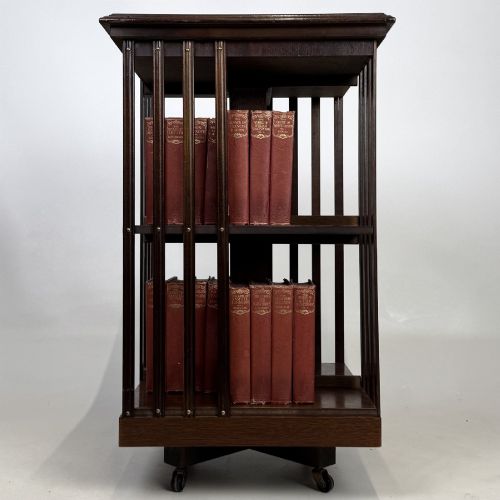
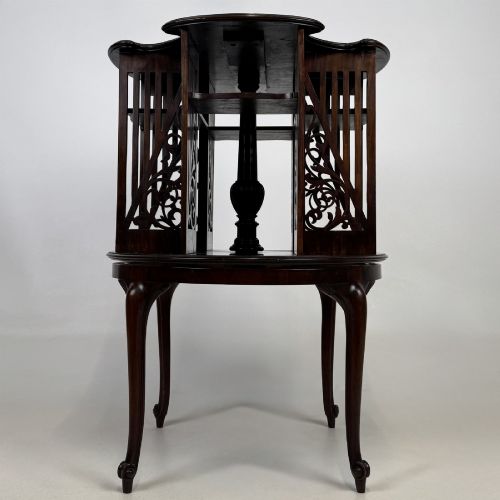
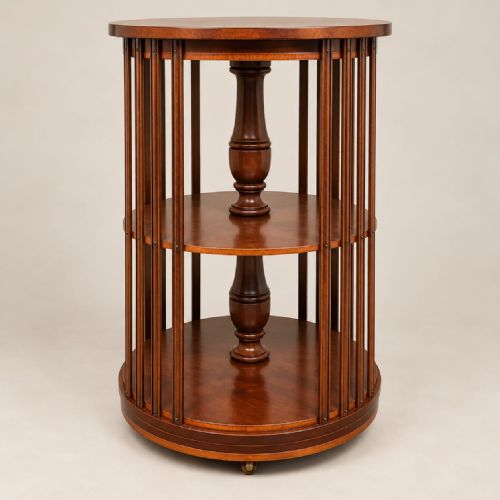
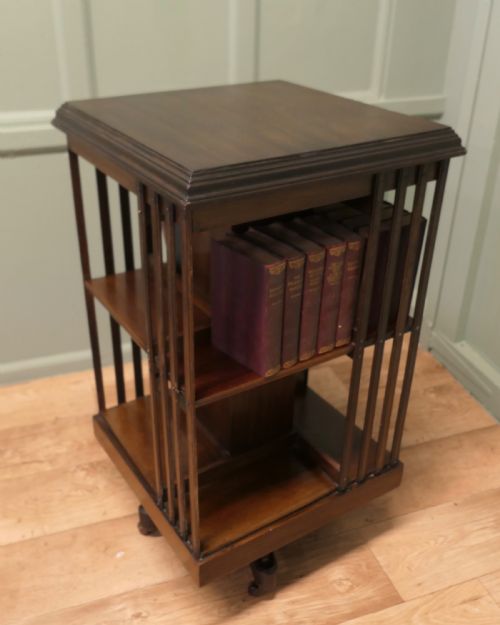
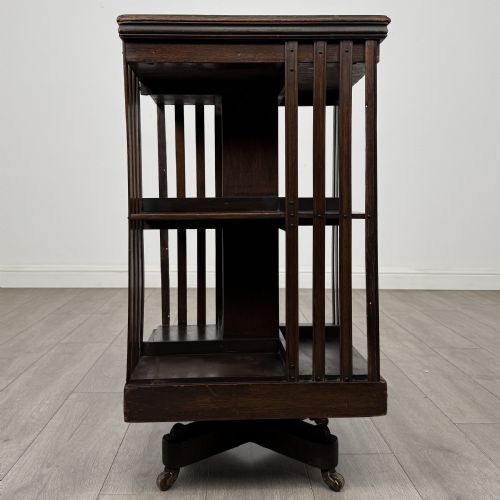
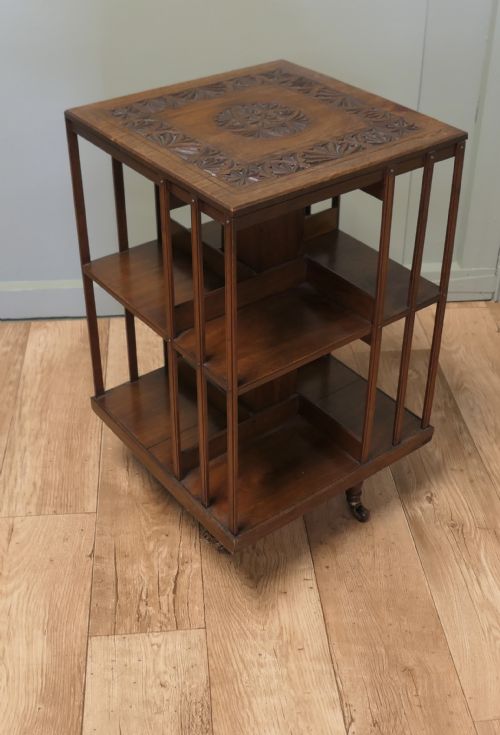
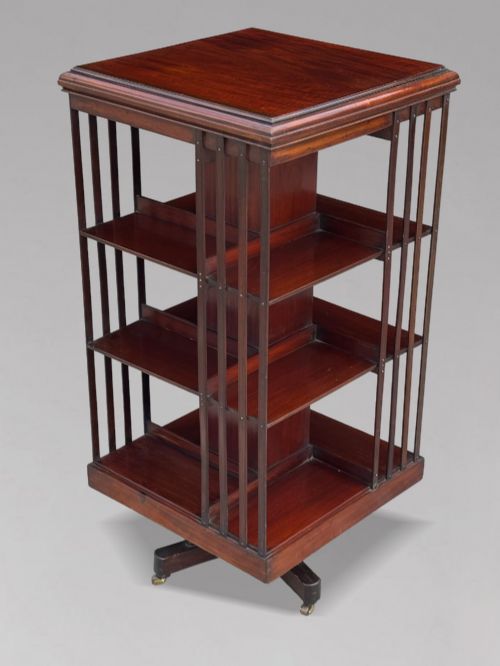
A revolving library stand functions as a compact, rotating bookcase designed to sit on a floor or table surface for easy access to frequently consulted books. The pieces appearing most frequently on this page date from the Victorian and Edwardian eras, spanning the late nineteenth and early twentieth centuries.
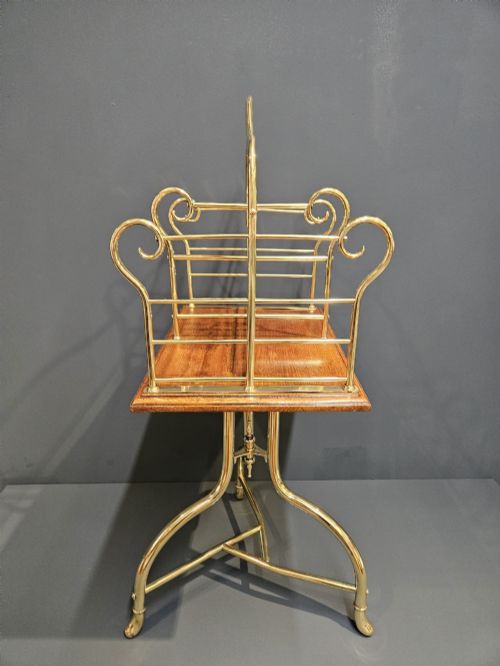
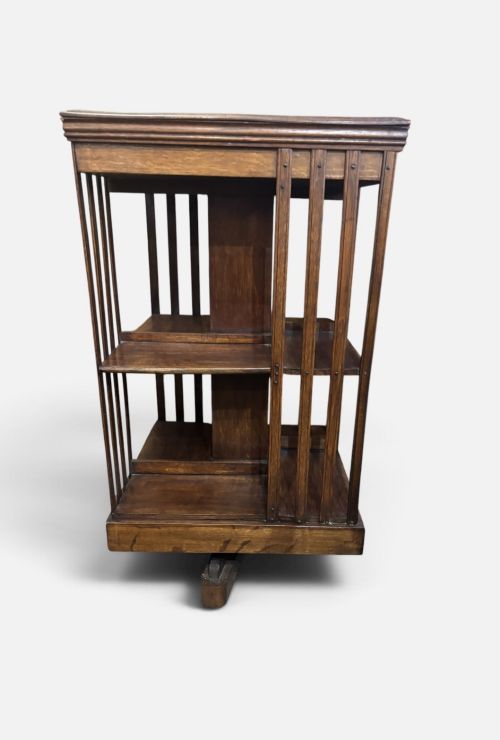
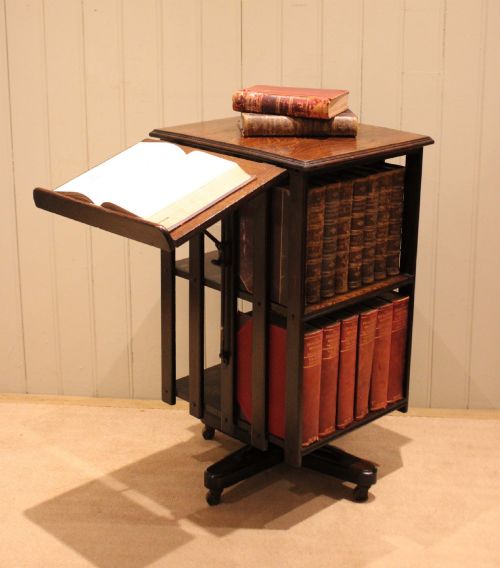
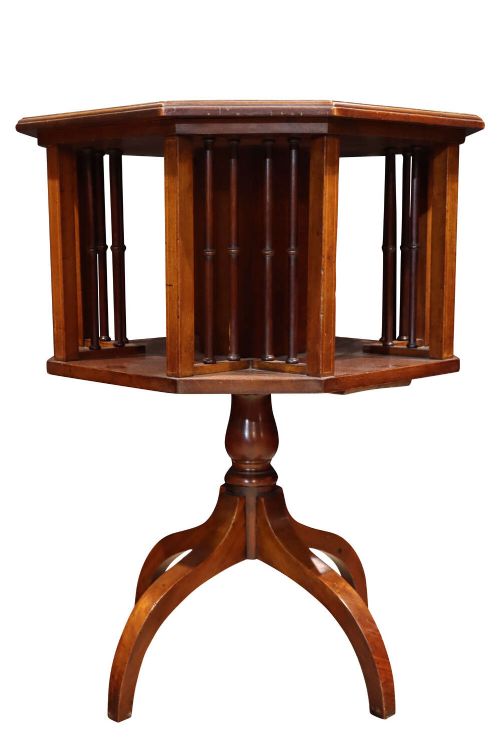
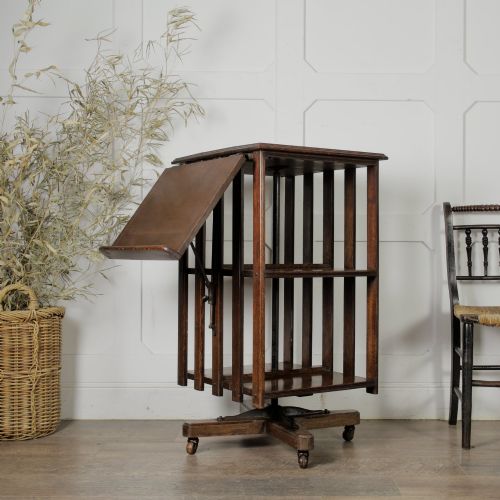
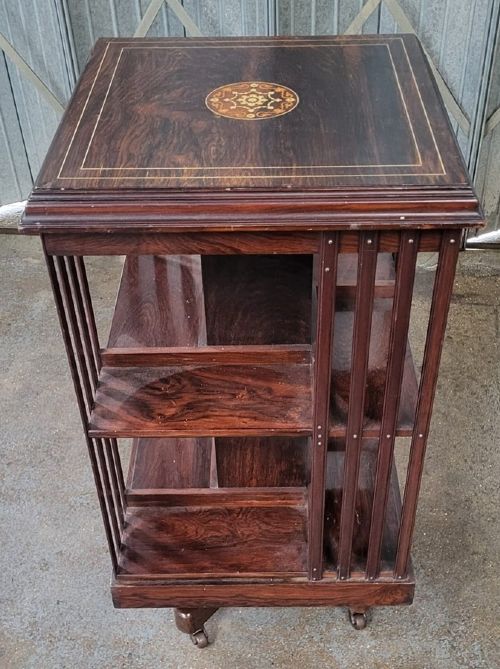
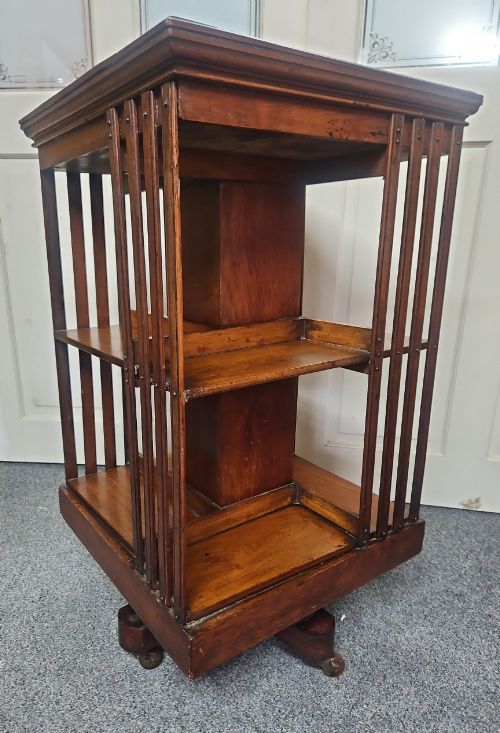
Makers constructed these stands primarily as freestanding floor models with multiple tiers of open shelving, though occasional desk-top book rests appear in the record. Walnut, oak and mahogany dominate the forms, reflecting the typical timber choices of nineteenth-century British cabinet makers.
Materials and Construction Methods
Cabinet makers built these pieces using solid timbers like oak and mahogany, often applying decorative veneers such as burr walnut, flame mahogany or satinwood to the display surfaces. Inlaid details in contrasting woods, along with floral marquetry, appear on refined Edwardian examples to add visual depth to the upper tiers.
The internal rotation mechanism relies on concealed iron or brass fittings and cast iron components that allow the tiers to turn smoothly without wobbling. Joinery techniques such as dovetailed drawers and sturdy vertical partitions ensure the frame supports the considerable weight of heavy volumes.
Revolving Library Stand Retail Price Guide 2026
Typical asking prices for revolving library stand among the pieces listed under this phrase on Sellingantiques today, from the lower quarter to the upper quarter. They describe what is for sale here now, not the wider market.
Invented to save scholars from getting up, these spinning towers let you read an entire encyclopedia without moving an inch.
Distinctions in Execution and Detail
The sophistication of the timber selection marks the primary difference between standard production and top-tier examples, with figured veneers and rich flame mahogany denoting superior workshop output. Simpler pieces rely on plain solid oak or mahogany without decorative stringing or marquetry.
The smoothness and stability of the underlying revolving action dictate the mechanical standard of a piece, requiring precise engineering in the hidden pivot mechanism. Higher-quality stands feature robust brass or iron turning assemblies that operate silently and maintain a level plane under uneven loads.
Maple and Co
The Revolving Library Stand Glossary
- Marquetry
- Decorative patterns formed by fitting together thin slices of wood veneer into complex pictorial designs. This technique appears frequently on late nineteenth-century cabinet tops.
- Flame mahogany
- A highly figured wood grain pattern resembling flickering flames, cut from the branch junctions of the tree. Cabinet makers reserved this timber for prominent display surfaces.
- Sheraton Revival
- An Edwardian furniture style inspired by late eighteenth-century neoclassical designs. Pieces in this style often incorporate delicate inlay and tapering legs.
- Spindle
- The central vertical shaft around which the revolving tiers rotate. It supports the weight of the shelving structure.
Revolving Library Stand: Frequently Asked Questions
How do these revolving stands actually turn?
A concealed internal mechanism involving a central spindle and metal bearings allows the upper tiers to rotate independently of the fixed base. This lets a reader access books from all four sides while sitting in one spot.
The engineering ensures that even when loaded with heavy volumes, the rotation remains balanced and smooth without tipping the entire structure.
Where should I place a revolving stand at home?
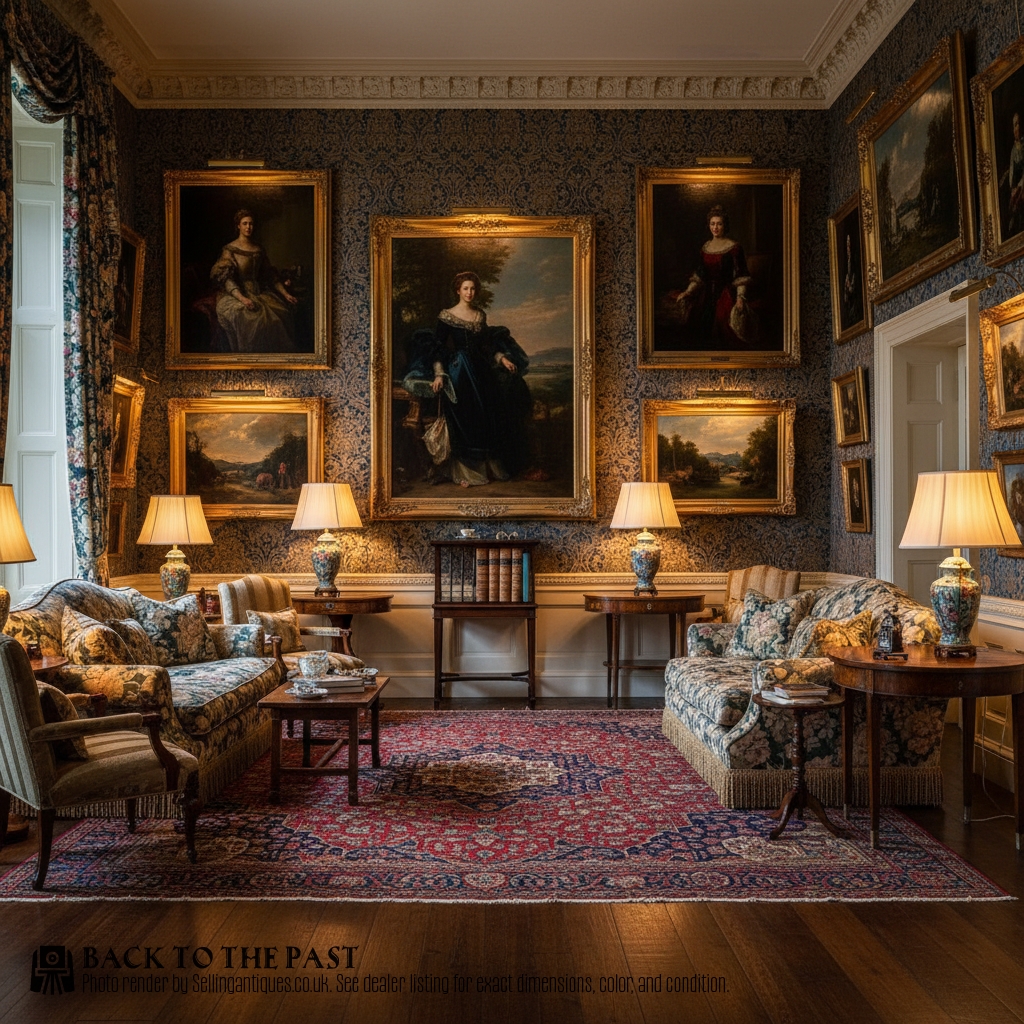
These pieces suit positions beside an armchair, beside a desk, or in the corner of a study where floor space is limited. Their compact footprint allows them to hold a substantial reading library within arm's reach.
Because they are finished on all sides for rotation, they do not need to sit flat against a wall and work well freestanding in an open room.
How do I tell Victorian stands from Edwardian ones?
Victorian examples tend to use heavier solid oak or rich mahogany with robust, straightforward proportions. They often reflect the utilitarian strength required for heavy reference libraries.
Edwardian pieces frequently introduce lighter satinwood inlays, Sheraton revival styling, or decorative marquetry panels that reflect a more delicate aesthetic.
Were these stands meant for desks or floors?
The majority of pieces recorded are freestanding floor models with three or four tiers designed to stand directly on a carpet or wooden floor. These hold large collections of everyday reading material.
A smaller category consists of desk-top book rests or reading stands intended to sit on top of a library table for consultation during active writing.