





Rotating Bookstand
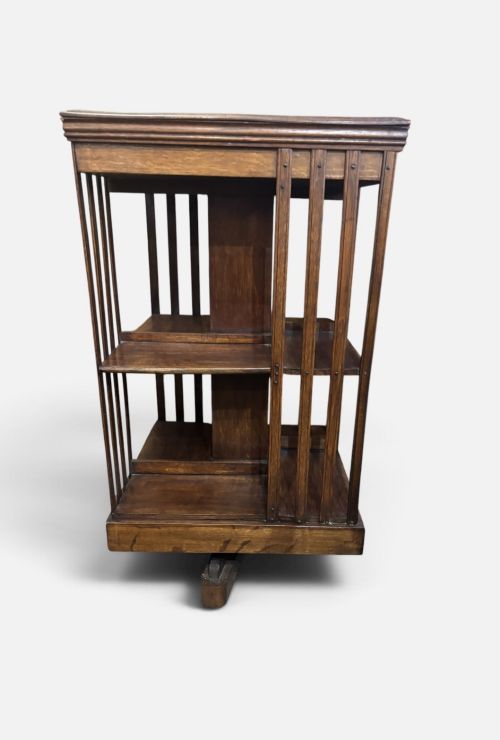
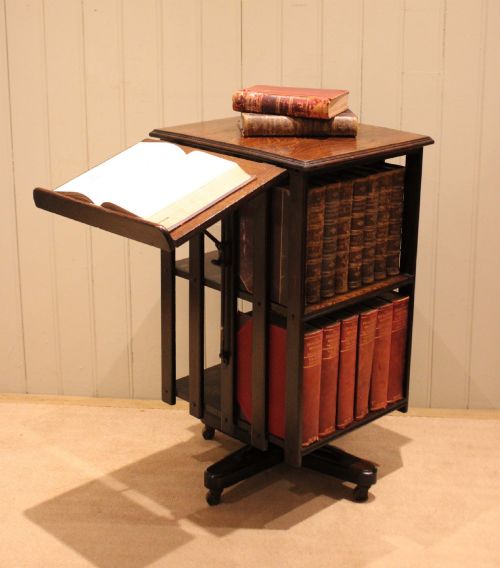
A rotating bookstand brings books within arm's reach on a pivoting base that turns smoothly with a touch.
Rotating Bookstand
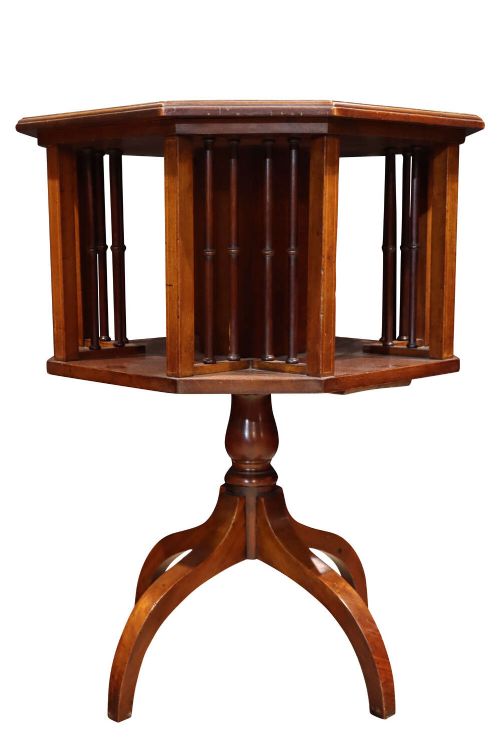
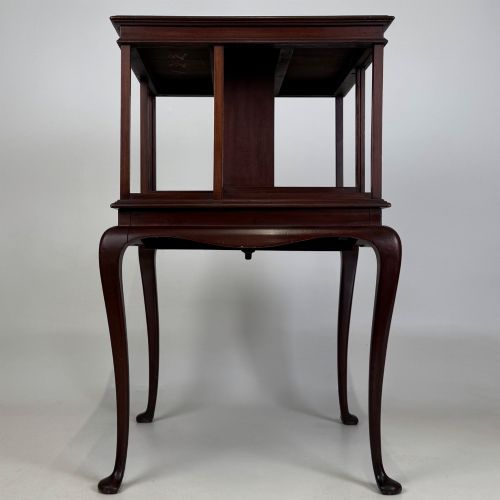
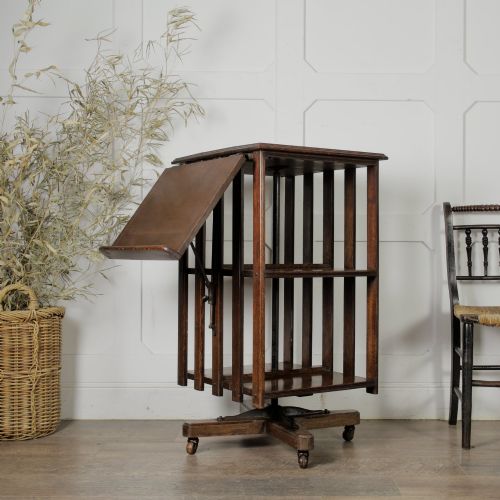
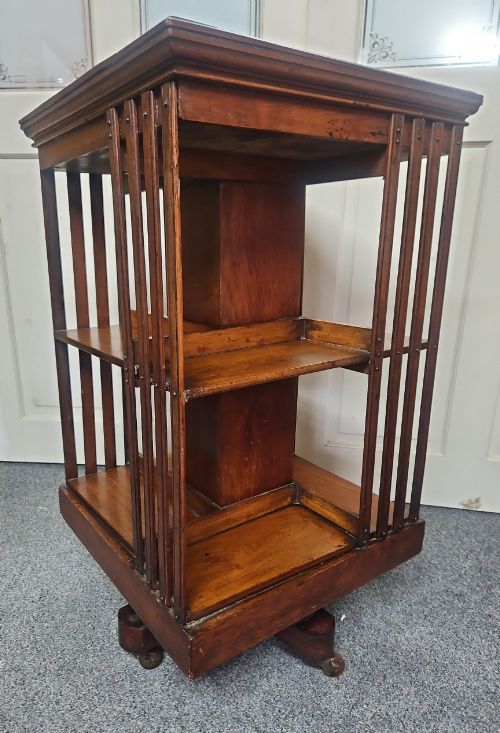
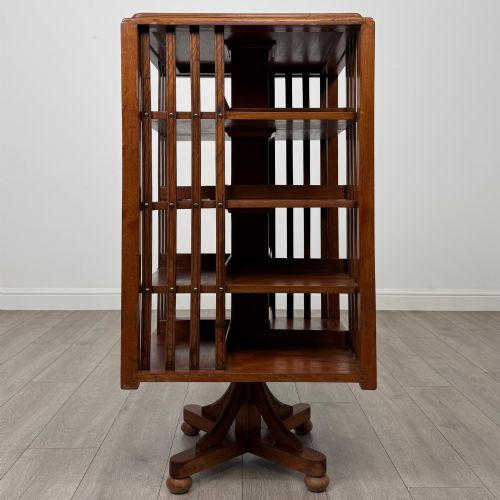
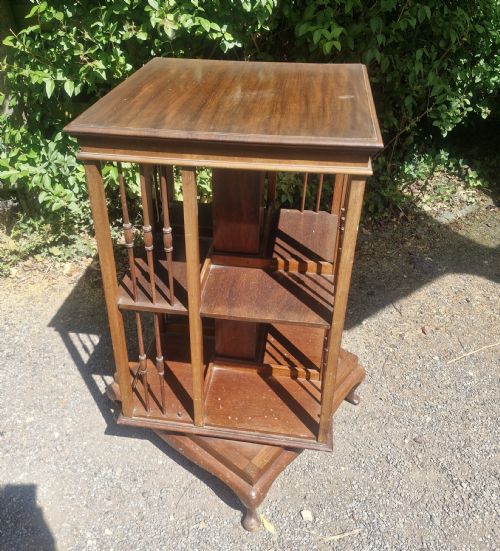
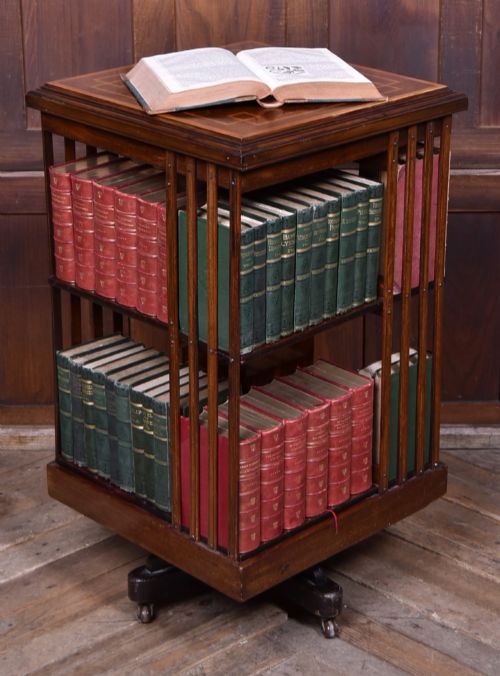
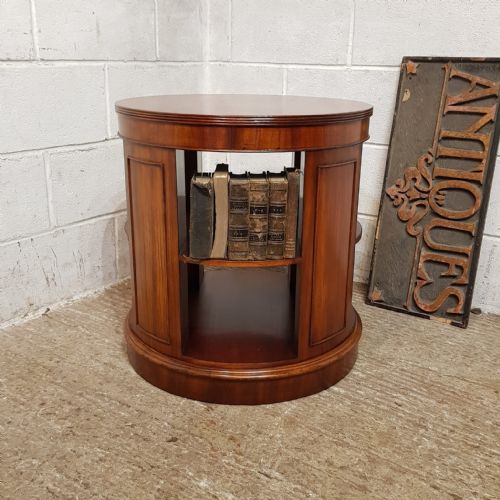
Most pieces sit low to the ground or rest upon tabletops, featuring slatted or panelled sides that keep books secure during rotation. The mechanism relies on a concealed internal bearing or pivot that allows the entire upper tiers to turn without tipping.
Materials and construction
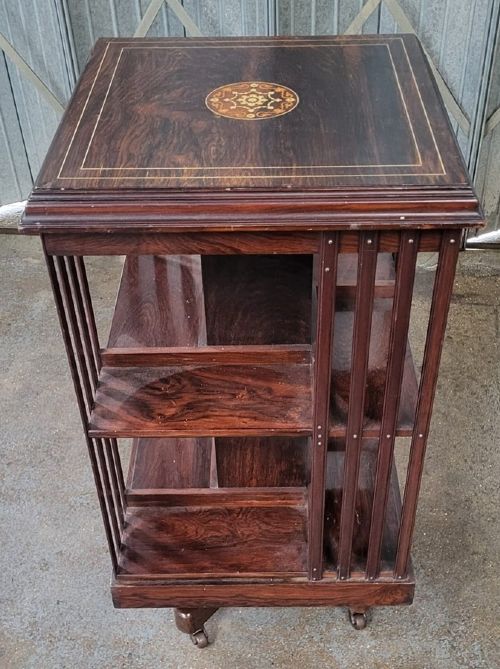
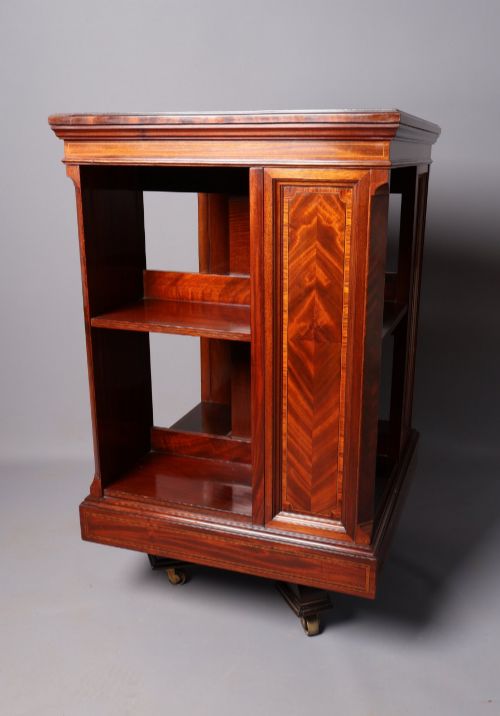
Cabinetmakers constructed these stands predominantly in solid mahogany, oak, and walnut, frequently applying satinwood inlay or rosewood veneers for decorative contrast. Brass and iron components underpin the internal turning mechanism, ensuring durability beneath the revolving tiers.
Joinery techniques include corner framing and slatted partitions designed to bear the weight of numerous heavy volumes. Metal mounts such as ormolu appear on select examples, adding ornamental detail to the corners and feet.
Rotating Bookstand Retail Price Guide 2026
Typical asking prices for rotating bookstand among the pieces listed under this phrase on Sellingantiques today, from the lower quarter to the upper quarter. They describe what is for sale here now, not the wider market.
Some bookstands double as rotary companions, keeping yesterday's novels spinning quietly beside your armchair.
Judging quality
Quality rests upon the smoothness of the revolving mechanism and the stability of the timber frame under weight. Superior examples feature well-figured mahogany or quarter-sawn oak with precise inlay work, whereas simpler pieces rely on plain timber boards.
The integration of the internal pivot dictates how effortlessly the stand turns after decades of use. Finer versions incorporate robust internal bracing that prevents the tiers from sagging or sticking during rotation.
Maple and Co
The Rotating Bookstand Glossary
- Revolving bookcase
- A freestanding or table-top stand fitted with a central pivot that turns a full circle. This design lets readers browse multiple shelves of books from a single seated position.
- Satinwood inlay
- A contrasting light-coloured wood inserted into darker timber surfaces to create geometric or floral patterns. Makers used this technique to ornament the top tiers and panels of Edwardian cabinets.
- Ormolu
- Gilded bronze mounts applied to furniture for decorative effect. These metal ornaments appear on select nineteenth-century pieces.
- Quarter-sawn oak
- Timber cut radially from the growth rings to produce distinctive figuring known as medullary rays. This method yields stable boards used in arts and crafts and period bookcases.
- Flame mahogany
- Wood veneer showing a distinctive flickering, flame-like grain pattern derived from the junction of branches. It decorates the exterior surfaces of finer period cases.
Rotating Bookstand: Frequently Asked Questions
How do I maintain the turning mechanism?
Keep the internal pivot clean and free from dust accumulation over the years. A light application of appropriate lubricant to the metal bearing ensures smooth rotation.
Avoid overloading individual tiers beyond their balanced capacity. Uneven weight distribution places undue strain on the central turning axis.
Are these stands suitable for heavy books?
Most standard models accommodate normal octavo volumes and reference books securely within their slatted compartments. The sturdy wooden partitions provide adequate vertical support for standard libraries.
Larger encyclopaedias are better suited to the lower tiers of floor-standing models. Tabletop versions function best with lighter selections of daily reading material.
How do I date an Edwardian piece?
Edwardian stands typically display lighter timbers like satinwood inlay and rosewood veneers compared to heavier Victorian styles. The integration of Arts and Crafts or Sheraton Revival motifs also points to this period.
Construction details such as machine-sawn internal components help narrow the timeframe. Examining the wood finish and brass hardware provides further clues to the date of manufacture.
Where should I place a rotating bookstand?
Position the stand beside an armchair or desk where books are frequently referenced throughout the day. The rotating feature allows you to reach multiple volumes without changing your seat.
Ensure adequate clearance space on all sides so the tiers can turn freely. Keep the stand away from direct sunlight and heat sources to protect the polished wood surfaces.