



Antique Book Tower
An antique book tower solves the eternal problem of crowding volumes into a small room by spinning them within arm's reach.
Antique Book Tower
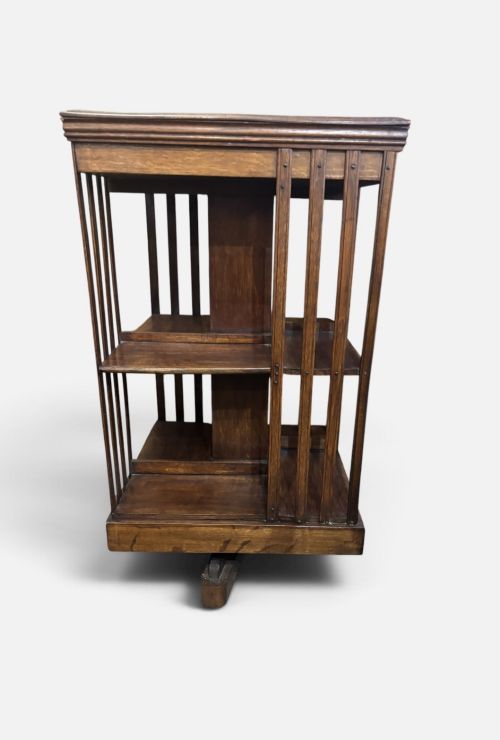
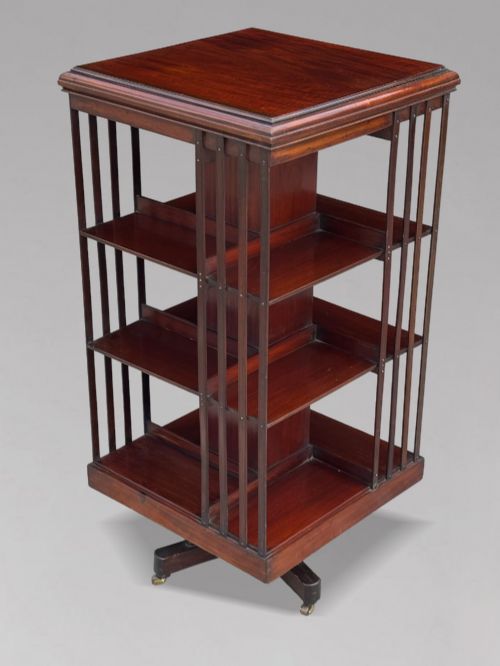
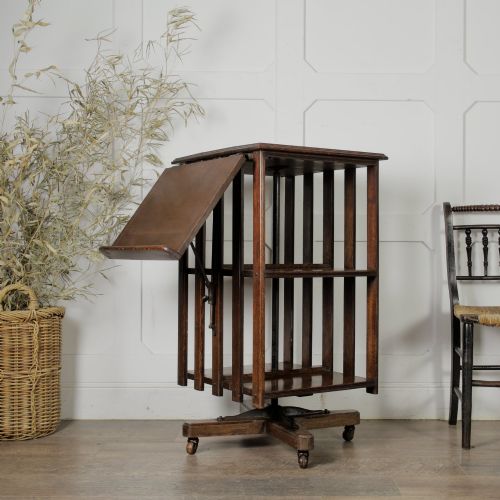
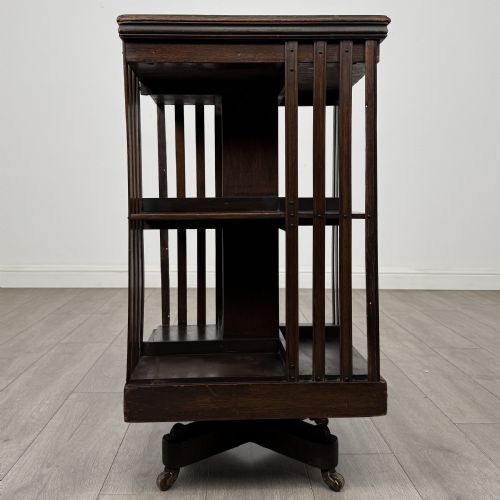
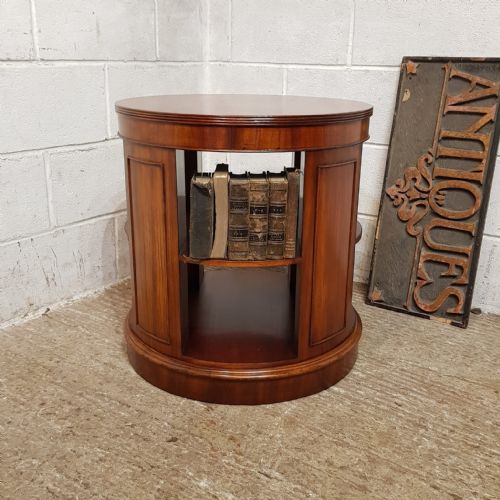
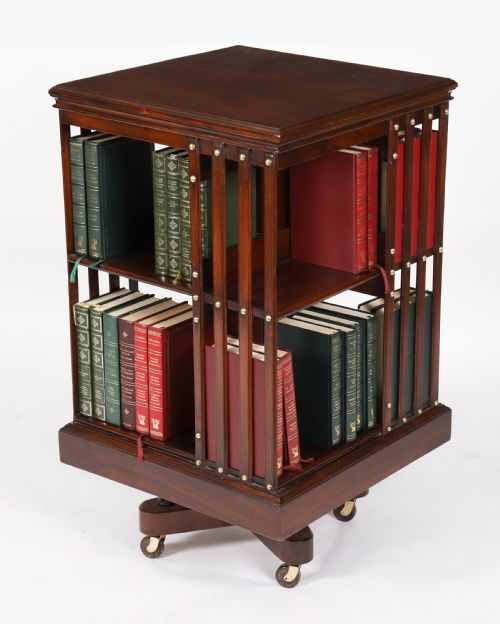
An antique book tower typically takes the form of a revolving bookcase, allowing readers to access multiple tiers of volumes from a single seated position. These pieces span the nineteenth and early twentieth centuries, drawing on Edwardian, Victorian, and Arts and Crafts design traditions.
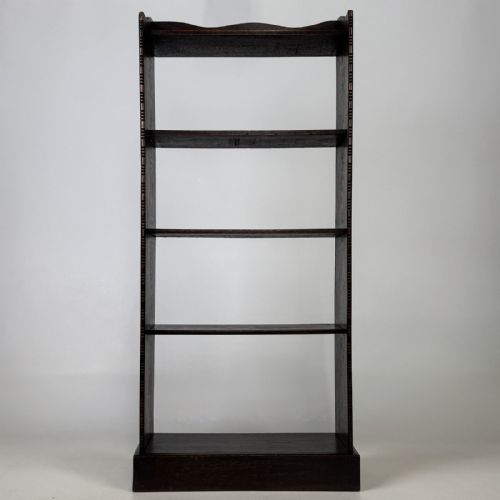
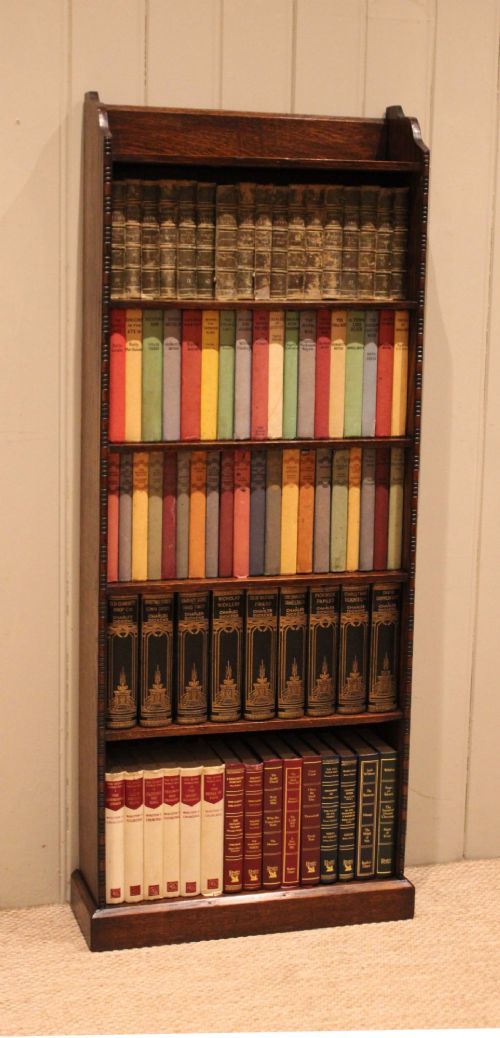
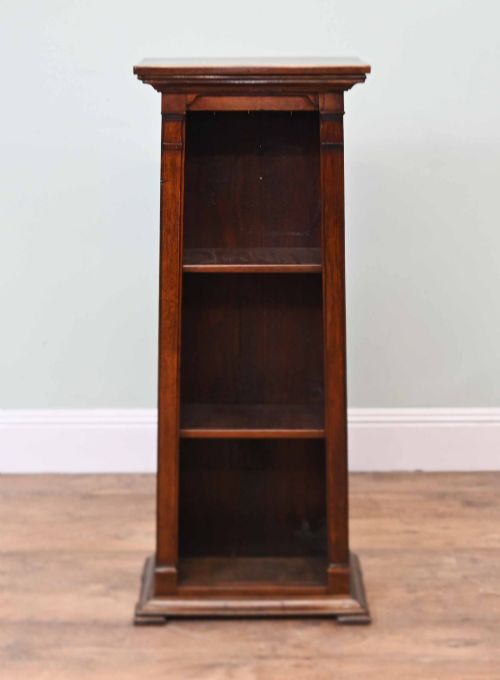
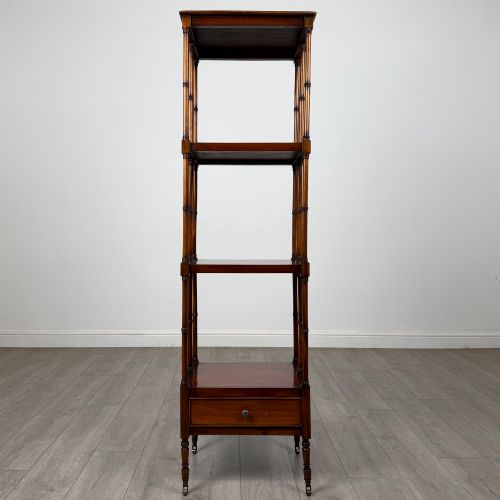
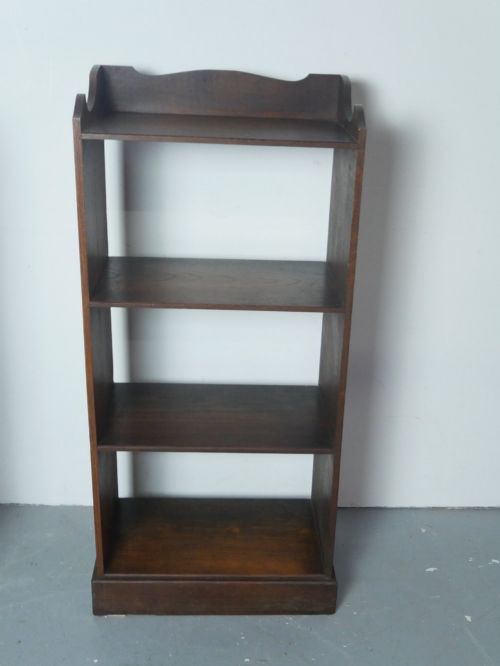
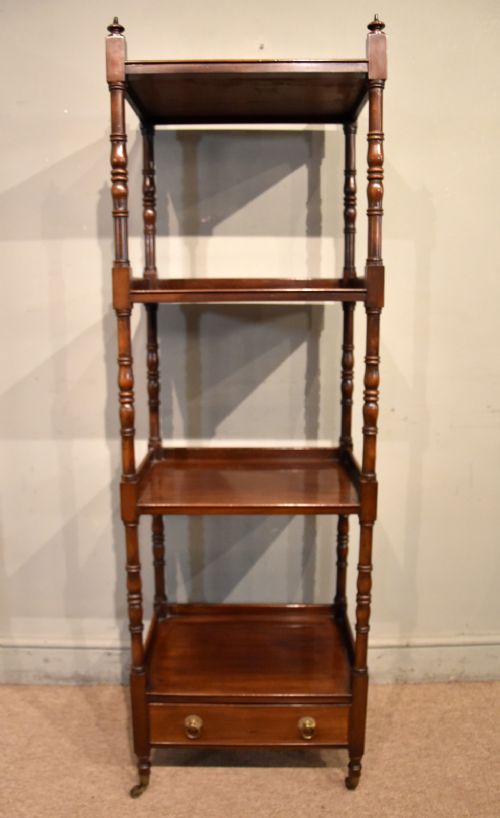
The most common version met on this page is the Edwardian revolving bookcase in solid or veneered oak and mahogany. Alongside these rotating designs, the selection includes standing open bookcases and multi-tiered whatnots that serve a similar domestic function.
Origins range from standard English workshop production to specific regional interpretations like Anglo-Indian construction. Buyers encounter circular and square formats designed to sit beside a desk or fit snugly into the corner of a study.
Materials and construction
Cabinetmakers relied heavily on hardwoods such as mahogany, oak, and walnut to build a stable core capable of holding heavy rows of volumes. Satinwood and fruitwood inlay occasionally appear to accent tabletops and panel borders on finer examples.
Internal mechanisms frequently incorporate cast iron and brass components to ensure smooth rotation without binding. These hidden metal parts bear the weight of the tiers and dictate the fluid motion expected from a quality revolving stand.
Antique Book Tower Retail Price Guide 2026
Typical asking prices for book tower among the pieces listed under this phrase on Sellingantiques today, from the lower quarter to the upper quarter. They describe what is for sale here now, not the wider market.
One stray artist's sketchbook watercolour of an Austrian tower snuck into the archive among all those revolving bookcases.
Judging quality and craftsmanship
The distinction between standard utility furniture and finer cabinetmaking lies in the timber selection and the precision of the joinery. Solid woods and carefully matched veneers separate robust pieces from lesser iterations that show strain over decades of use.
The integrity of the internal pivot mechanism dictates how well a revolving bookcase functions today. Smooth, silent rotation without excessive lateral play indicates superior original engineering and careful upkeep.
Maple & Co
The Antique Book Tower Glossary
- Revolving bookcase
- A freestanding tiered bookcase built upon a concealed rotating base. This mechanism allows the user to spin the entire unit to browse titles without moving.
- Whatnot
- An open set of freestanding shelves used for displaying books and ornaments. These pieces typically feature multiple tiers supported by slender upright posts.
- Inlay
- A decorative technique where contrasting woods such as fruitwood or satinwood are set into the primary surface timber. It creates flat patterns and borders on shelves and tops.
- Edwardian
- A stylistic period spanning the reign of Edward VII up to the First World War. Furniture from this era often lighter in proportion than heavy Victorian designs.
Antique Book Tower: Frequently Asked Questions
How do I care for an antique revolving bookcase?
Keep the timber away from direct heat sources and sudden humidity changes to prevent the wood from splitting or warping.
Apply a light wax polish occasionally and avoid oiling the internal swivel mechanism unless it genuinely binds.
Were these towers used in offices or homes?
They found a natural home in private libraries, studies, and drawing rooms where quick access to reference works mattered.
Their compact footprints made them especially popular for keeping dictionaries and journals beside an armchair.
How can I tell an Edwardian piece from a Victorian one?
Edwardian examples generally favour lighter timbers like satinwood and straightforward forms with subtle inlay derived from Sheraton styles.
Victorian pieces tend to use heavier mahogany and denser ornamentation reflecting earlier nineteenth-century tastes.
Do all revolving bookcases spin smoothly?
Most turn easily on their original cast iron and brass internal bearings once the weight of the books is balanced evenly.
Uneven loading can cause a slight tilt, so distribute heavier volumes across the lower tiers.