


Rosewood Writing Cabinet
A rosewood writing cabinet brings dark figured timber and clever concealed drawers together into a sophisticated place to write letters.
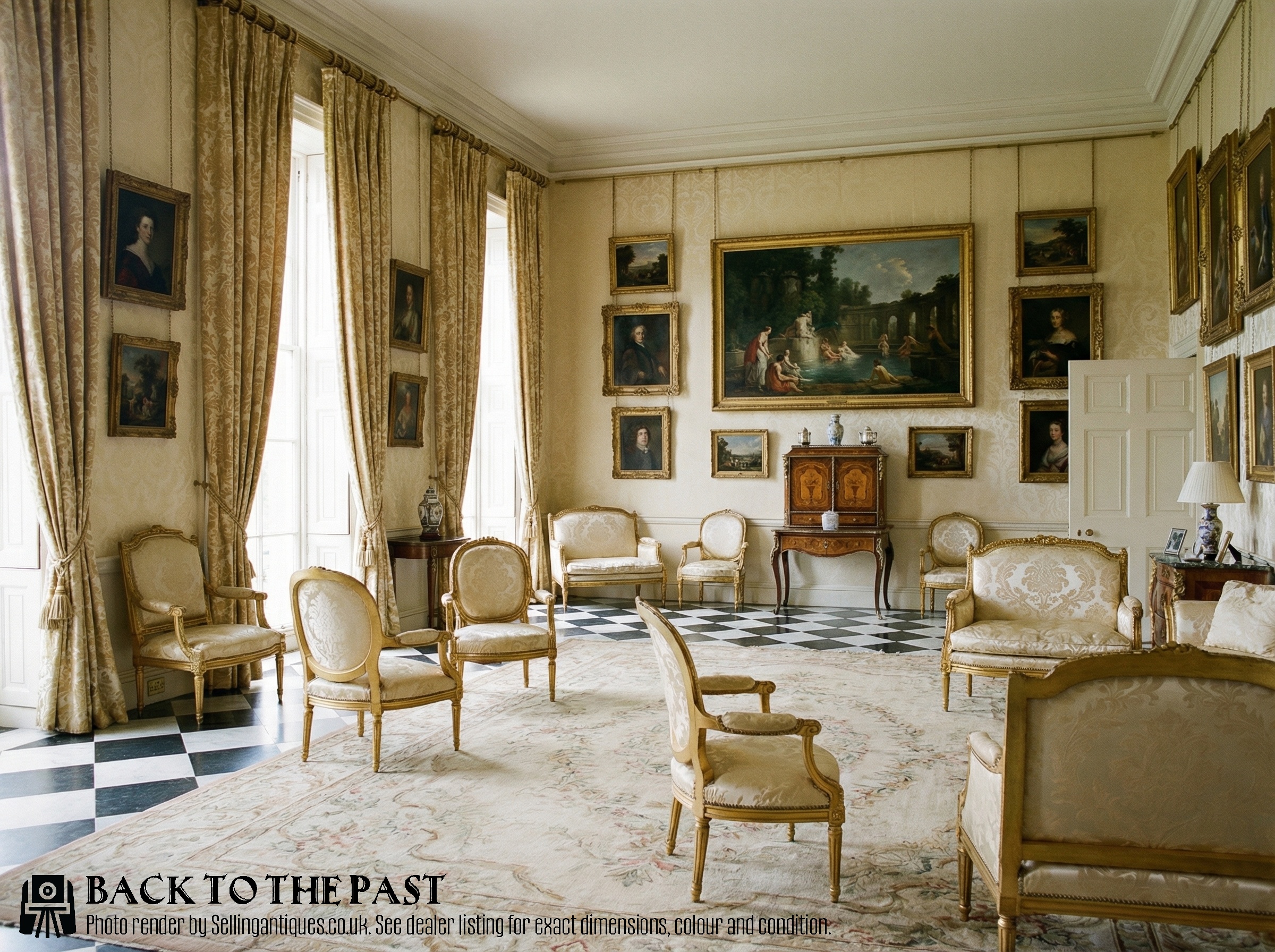
Rosewood Writing Cabinet
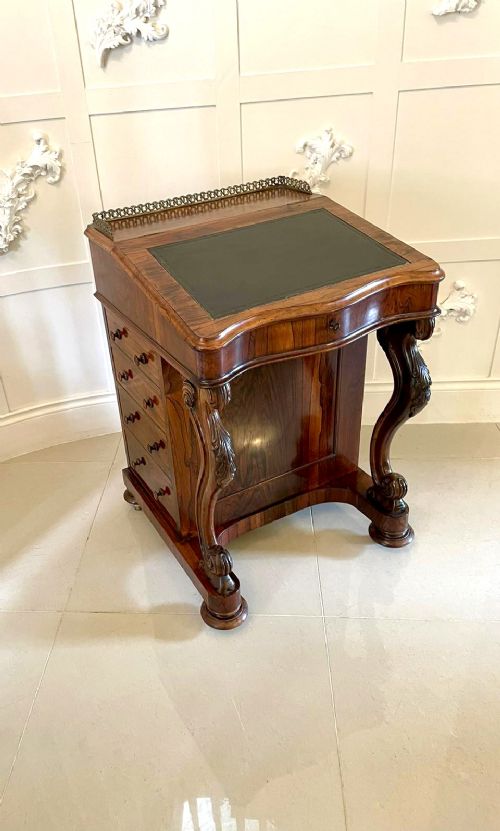
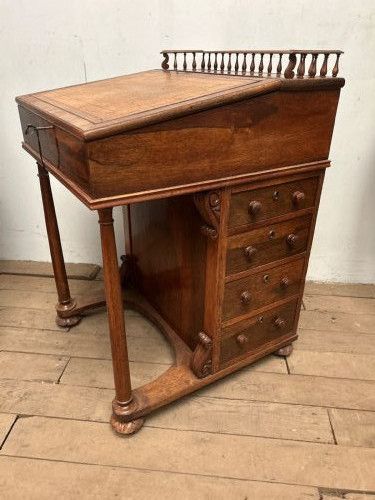
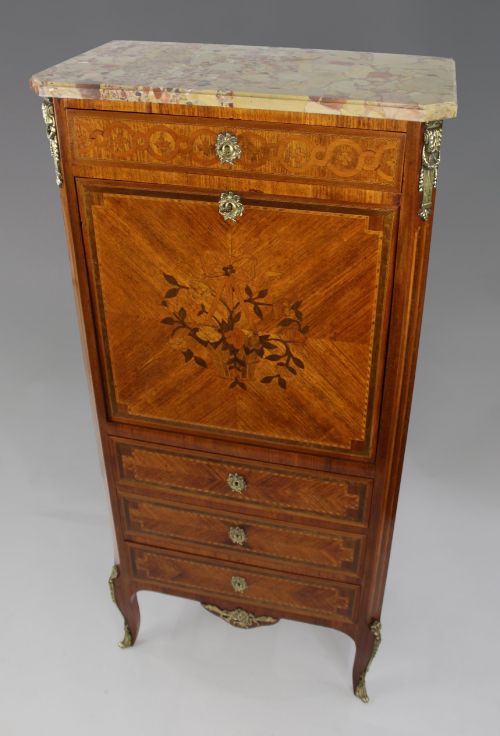
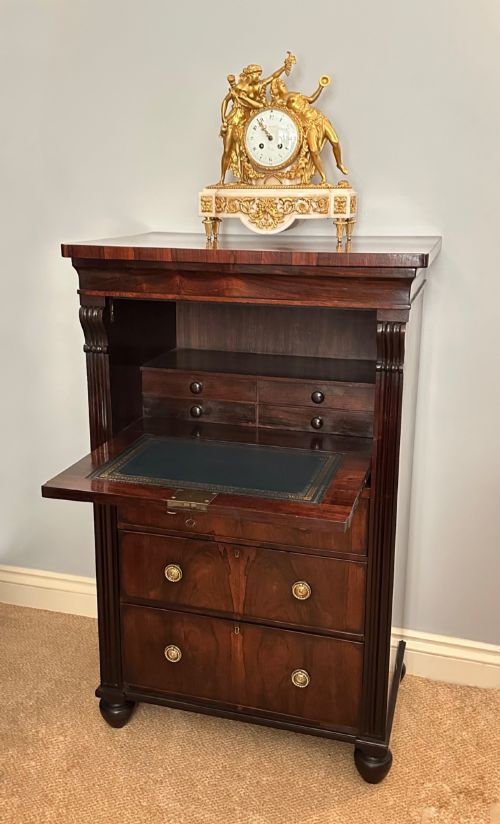
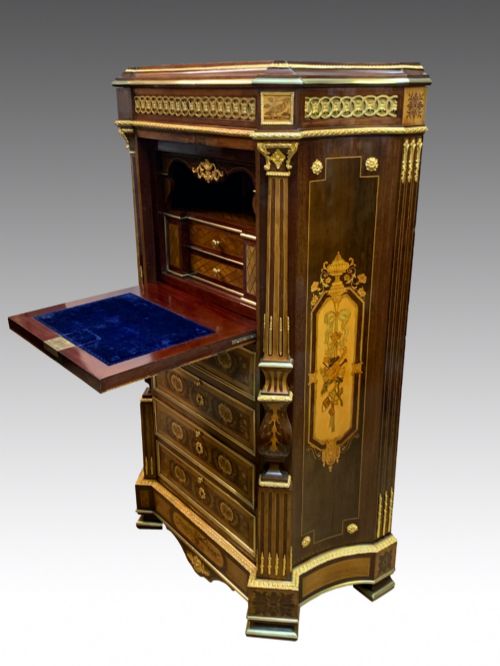
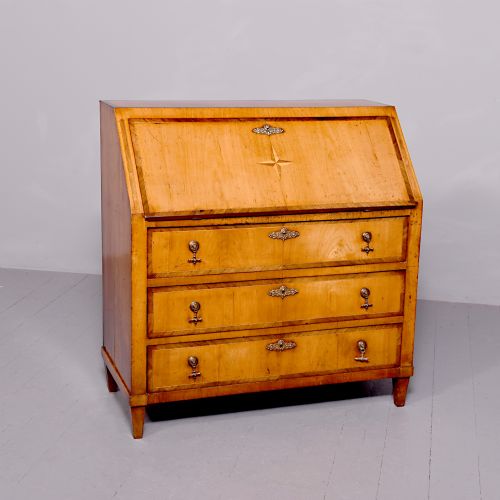
A rosewood writing cabinet encompasses a varied group of compact desks, escritoires, and stationery boxes designed for correspondence and storage. The search phrase covers pieces ranging from English Regency davenports and Victorian freestanding writing desks to French marquetry secretaire cabinets.
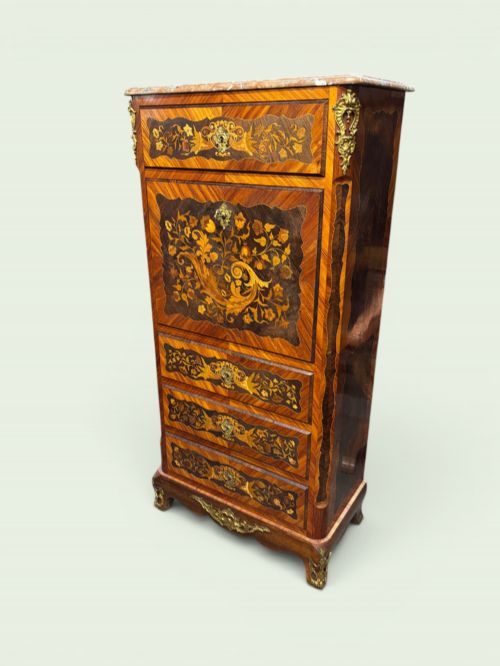
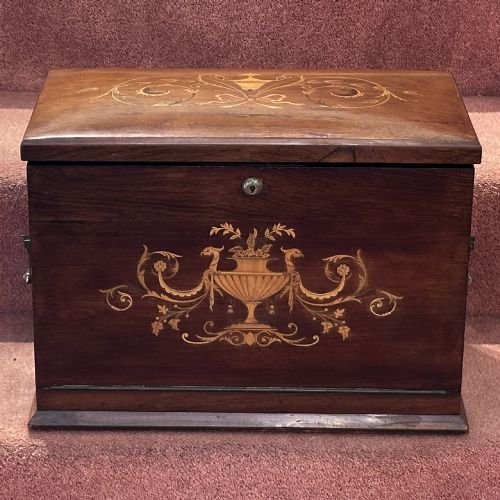
Buyers will most frequently encounter nineteenth-century davenports and inlaid writing boxes on this page, alongside Continental escritoires featuring marble tops and gilt mounts. These objects bridge the gap between heavy library furniture and delicate boudoir pieces.
Origin and period shape the exact silhouette, moving from solid eighteenth-century forms to elaborate revival styles of the later Victorian decades. Each variation utilises the dense grain of the timber to create a commanding presence in a room.

Materials and construction
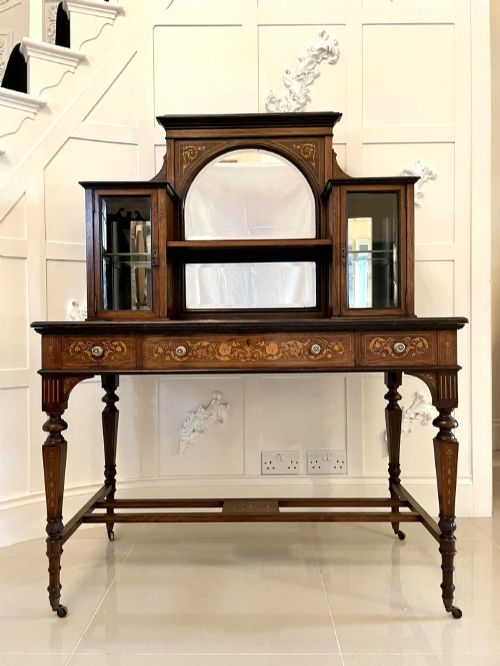
Cabinet makers relied on rich Brazilian and East Indian rosewood veneers applied to stable secondary timbers, often accentuating the surfaces with satinwood, boxwood, and brass inlay. The deep natural grain provides a dark, heavily figured background that contrasts sharply with lighter stringing and marquetry panels.
Structural complexity defines the interiors, incorporating sliding tops, pop-up mechanisms, and secret drawers operated by hidden latches. Ormolu mounts, leather writing surfaces, and original marble tops complete the construction of the finer Continental and English examples.
Rosewood Writing Cabinet Retail Price Guide 2026
Typical asking prices for rosewood writing cabinet among the pieces listed under this phrase on Sellingantiques today, from the lower quarter to the upper quarter. They describe what is for sale here now, not the wider market.
Materials documented across the inventory include solid rosewood, kingwood, satinwood, brass, leather, ormolu, glass, and white marble.
Evaluating the craftsmanship
Quality rests upon the crispness of the brass or wood inlay and the precision with which internal compartments and sliding mechanisms operate. Superior pieces maintain intact original surfaces where the polish has aged uniformly without obscuring the natural figure of the timber.
The integration of secondary materials such as ormolu mounts, fitted leather writing slopes, and substantial marble tops separates standard production furniture from exceptional cabinet work. Original fitted interiors with matching stationery compartments elevate a piece above later adaptations.
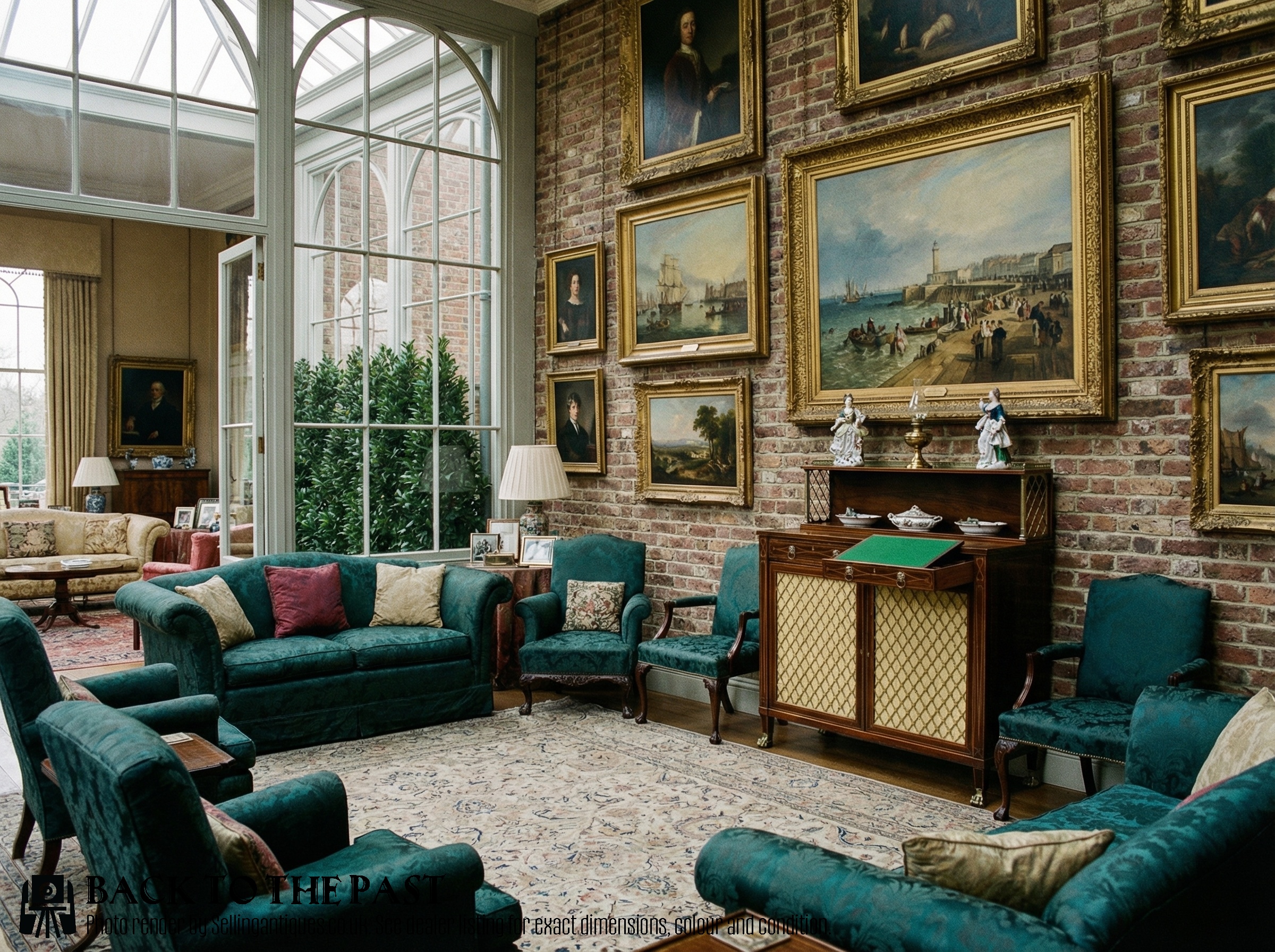
John McClean·Morant And Co·Maison Krieger
The Rosewood Writing Cabinet Glossary
- Davenport
- A compact desk featuring a sloping writing surface above a pedestal of drawers. This form became particularly popular during the Regency and Victorian periods.
- Escritoire
- A writing cabinet with a fall-front panel that conceals small drawers and pigeonholes. These pieces often stand tall and feature elaborate marquetry or veneer patterns.
- Marquetry
- The art of applying pieces of veneer to a structure to form decorative patterns and pictures. Craftsmen utilised contrasting timbers like satinwood and rosewood to achieve pictorial depth.
- Ormolu
- Gilded bronze used for decorative mounts and feet on furniture. This technique gained widespread use on French revival cabinets during the nineteenth century.
- Secrétaire abattant
- A tall wall-mounting or freestanding cabinet with a drop-down writing flap. It provides substantial vertical storage while maintaining a formal architectural facade.
Rosewood Writing Cabinet: Frequently Asked Questions
What is a davenport desk?
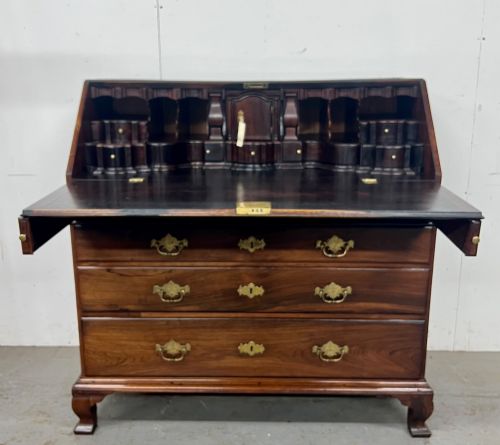
A davenport is a small writing desk featuring a sloped, hinged writing surface and a set of drawers built into the side. They emerged during the early nineteenth century as space-saving furniture for domestic use.
Most versions incorporate internal stationery compartments and pull-out slides for inkwells, combining a writing surface with secure storage in a single compact footprint.
How do I care for rosewood?
Rosewood requires stable humidity and protection from direct sunlight to prevent the timber from drying and the veneer from lifting. Occasional light waxing maintains the polished surface without building up residue.
Avoid placing these cabinets near heat sources or damp areas, as the dense tropical hardwoods react strongly to sudden environmental shifts.
What is a bonheur du jour?
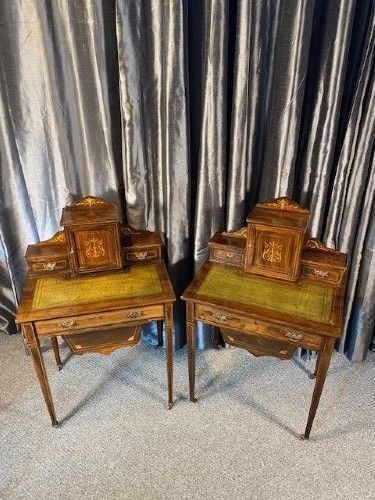
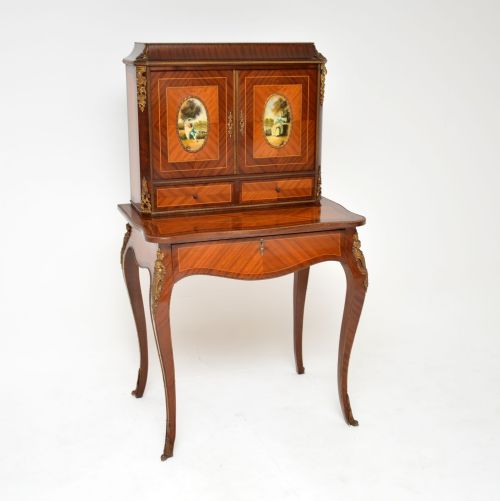
A bonheur du jour is a light, elegant ladies writing desk featuring a small cabinet or set of shelves mounted upon the back of the writing surface. Originating in France, these pieces served as decorative additions to private sitting rooms.
They typically rest on slender legs and often incorporate pull-out work tables or small drawers designed for letters and correspondence.
How do I date a writing cabinet?
Dating relies upon stylistic markers, construction methods, and hardware such as brass handles and secret lock mechanisms. Regency pieces often exhibit classical restraint with brass inlay, while Victorian examples favor heavier proportions and elaborate marquetry.
Examining the secondary timbers inside the drawers provides additional clues regarding the workshop origin and the manufacturing decade.