

Rosewood Writing Bureau
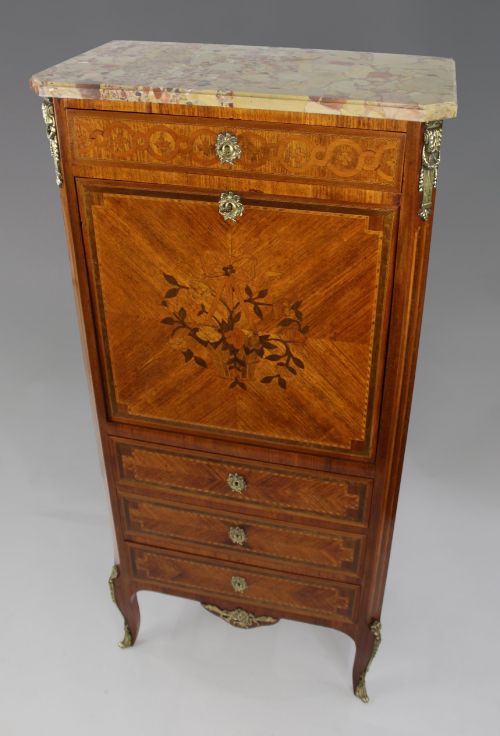
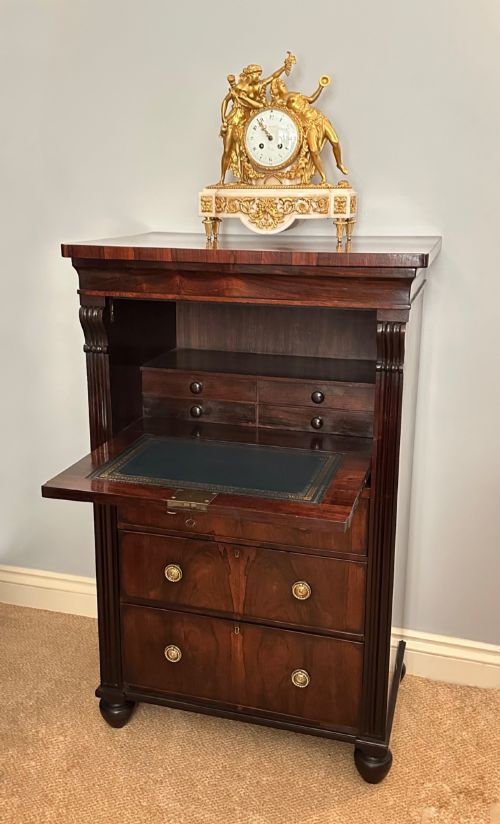
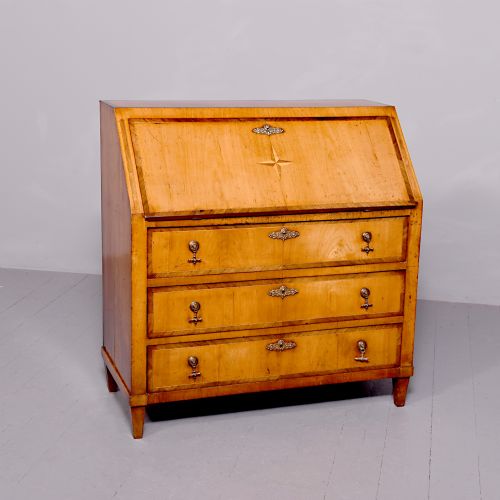
A rosewood writing bureau brings rich grain and structured pigeonholes to a room, offering a private drop-down writing surface.
Rosewood Writing Bureau
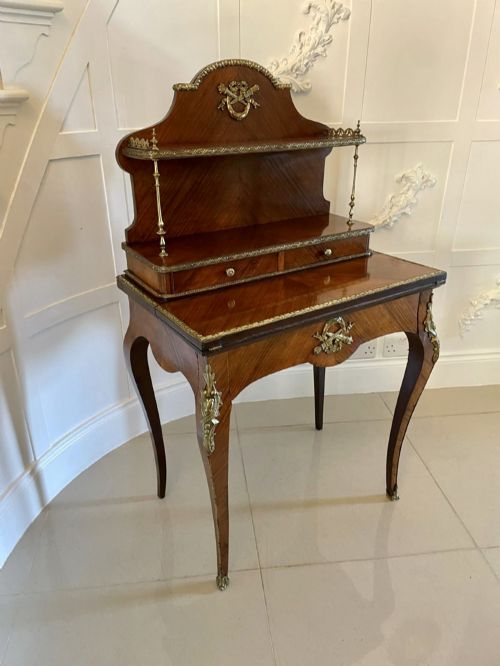
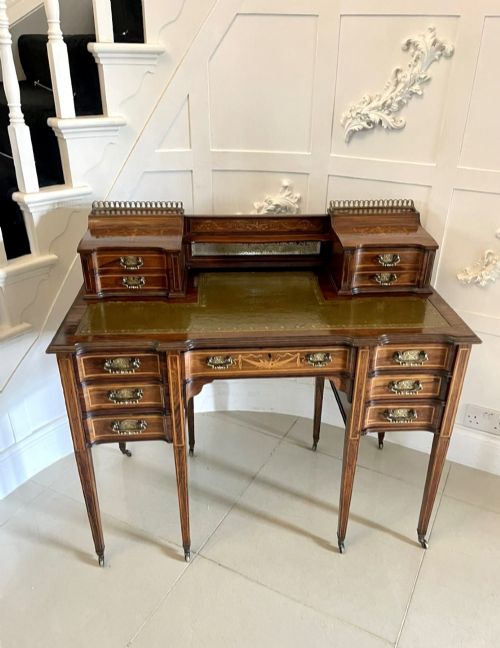
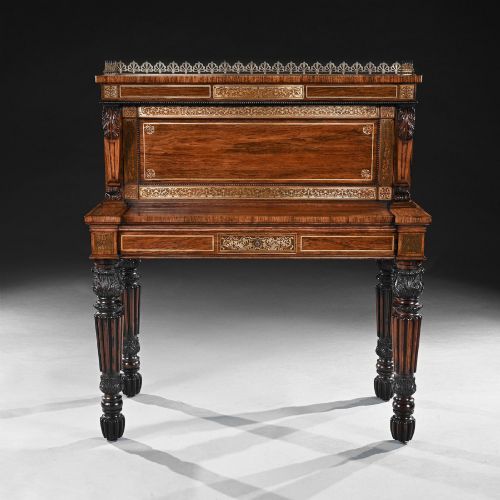
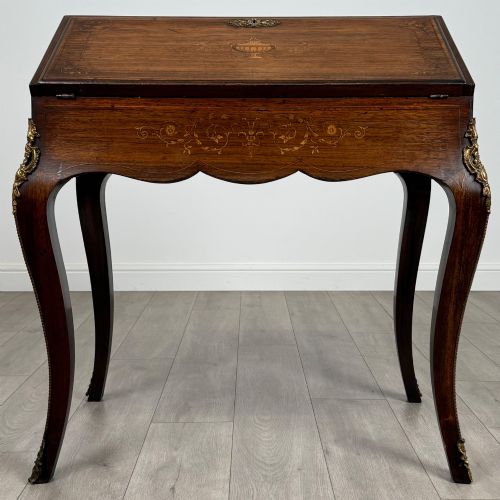
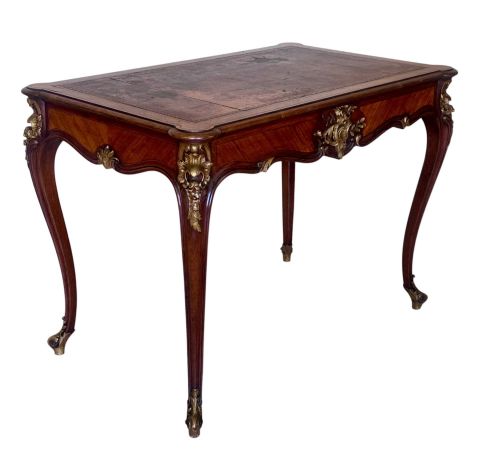
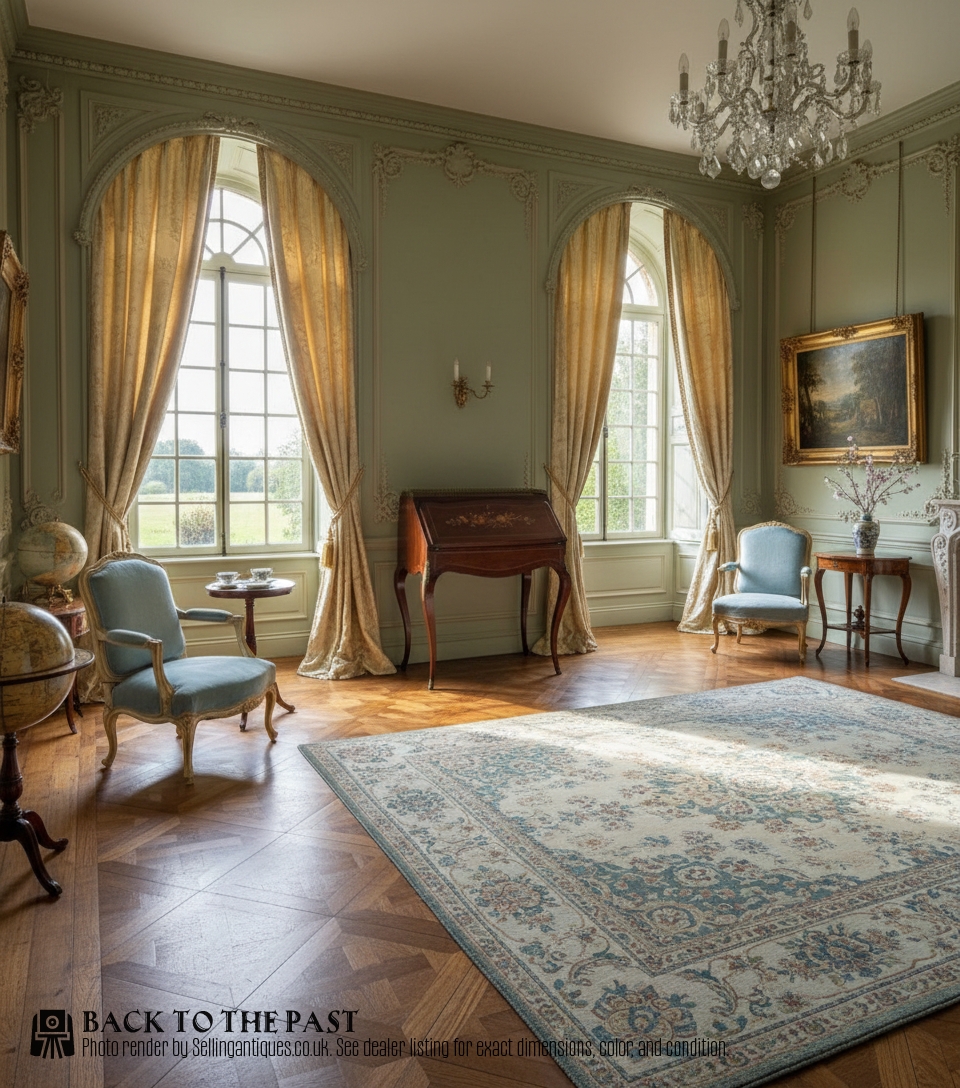
When you search for a rosewood writing bureau, you encounter fine timber secretary desks, compact davenports, and delicate bonheur du jour writing cabinets. These pieces span the nineteenth century, including Victorian, Regency, and Edwardian periods, reflecting both English craftsmanship and French continental styles like Louis XV Revival.
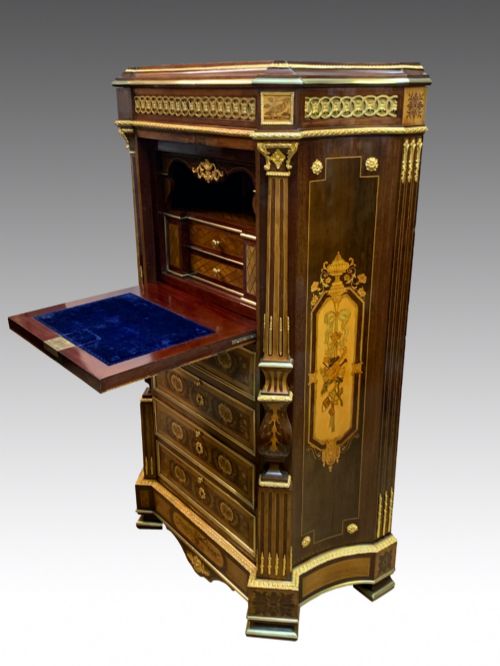
The most common forms on this page feature a sloped writing flap that opens to reveal fitted interiors with small drawers, pigeonholes, and secret compartments. Larger examples incorporate bookcase tiers above or drawer stacks below, while smaller Davenport and bonheur du jour variants suit compact studies or bedrooms.
How They Were Made
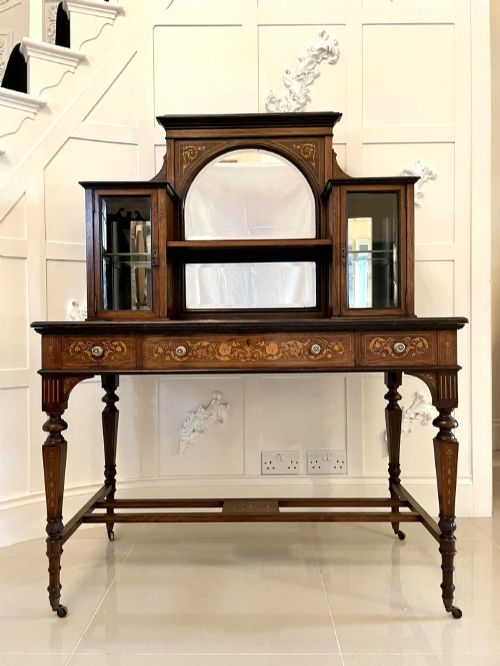
Cabinet makers utilised dense Brazilian and East Indian rosewood veneers over secondary timbers, often cutting the grain to display rich figuring and symmetrical patterns. Brass stringing, satinwood inlay, and marquetry motifs decorate the exterior surfaces of finer examples.
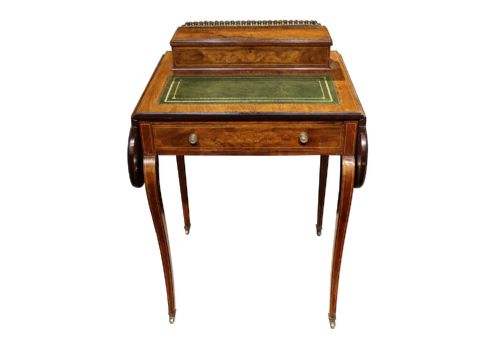
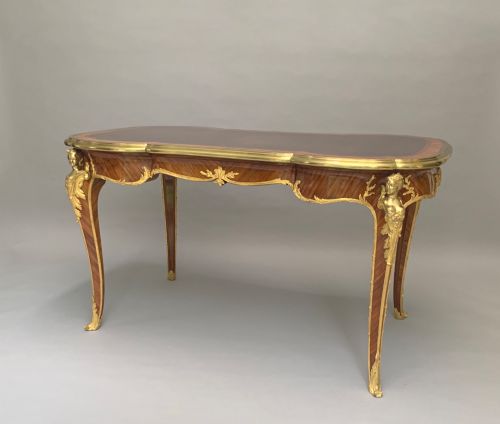
Structural mounts in cast and chased ormolu frame the corners and escutcheons, whilst leather or tooled inserts provide a durable writing surface within the fold-down flaps and pull-out slides.
Listings feature nineteenth-century forms in rosewood, kingwood, and satinwood, spanning Regency, Victorian, and Edwardian periods alongside French revival styles.
What Varies in Quality
The standard of a rosewood writing bureau rests on the precision of its marquetry, the crispness of its cast ormolu mounts, and the integration of internal cabinetry. Finer workshops invested heavily in matched timber veneers and complex secret locking mechanisms.
Proportion and stability distinguish masterworks from standard production pieces, particularly where delicate cabriole legs or freestanding plinths must support heavy hardwood carcases without distortion.
Gillows Oxford Street Workshop·Francois Linke·Maison Krieger·CH. Jeanselme and Co·Donald Ross·John MaClean
The Rosewood Writing Bureau Glossary
- Bureau
- A sloping desk with a hinged flap that opens to reveal a fitted interior of small drawers and pigeonholes. It often sits above a chest of drawers or a stand.
- Davenport
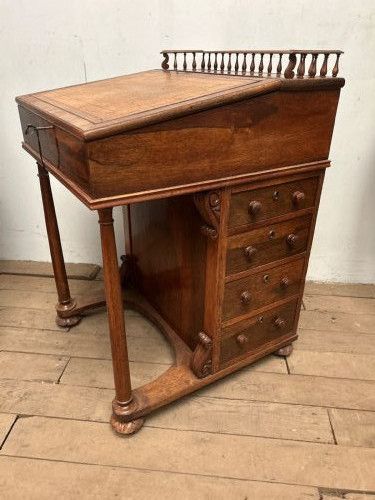
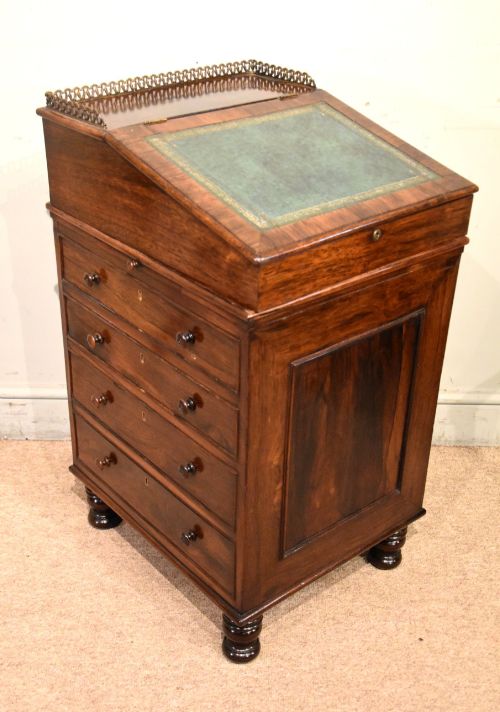
- A compact pedestal desk featuring a sloped, lidded writing surface and a set of drawers accessed from the side. This form emerged during the Regency period.
- Marquetry
- The art of applying thin decorative veneers of wood, brass, or shell onto a carcase to form intricate pictorial or geometric patterns. Makers utilised contrasting timbers to achieve tonal depth.
- Ormolu
- Gilded bronze mounts and decorative trimmings applied to furniture surfaces. Craftsmen chased the cast metal to produce sharp relief details.
- Bonheur du jour
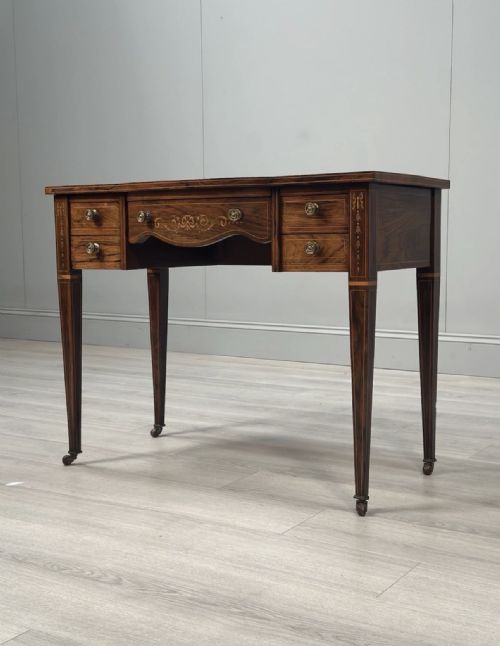
- A light lady's writing desk featuring a small cabinet or set of shelves superstructure upon the main writing table. These pieces became popular during the nineteenth century.
Rosewood Writing Bureau: Frequently Asked Questions
How do I identify a Regency bureau?
Regency pieces often display classical proportions, brass inlay, and rosewood veneers characteristic of the early nineteenth century.
Look for refined architectural lines and robust craftsmanship without heavy Victorian ornamentation.
What is a Davenport desk?
A Davenport is a small, box-like writing desk with a sloped lid and side drawers.
These pieces were designed for compact spaces and feature internal stationery storage.
How should I clean rosewood furniture?
Dust rosewood surfaces regularly with a soft, dry cloth to protect the polished timber grain.
Avoid silicone-based sprays and keep the furniture away from direct sunlight and heat sources.
Are interior compartments original?
Original interiors feature matching rosewood or satinwood veneers, hand-cut dovetails on tiny drawers, and period brass pulls.
Replacement timbers or modern fixings indicate later alterations to the writing compartment.