


Rosewood Vanity Stool
A rosewood vanity stool brings rich dark timber and textured upholstery to a dressing room or parlour, offering a compact seat with genuine period character.
Rosewood Vanity Stool
A rosewood vanity stool serves as a low seat for a dressing table, piano, or window, uniting practical utility with decorative grace. These pieces emerge predominantly from the Victorian and Georgian eras, alongside Regency and nineteenth-century examples.
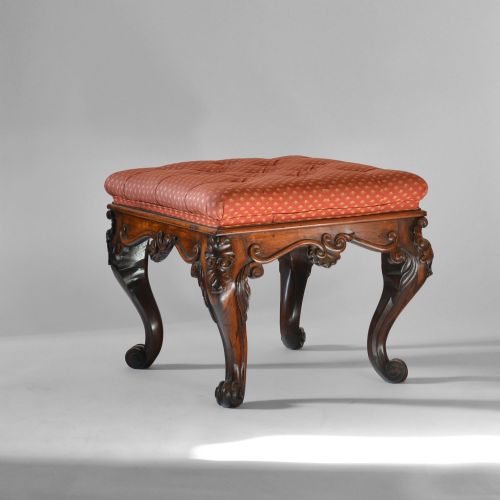
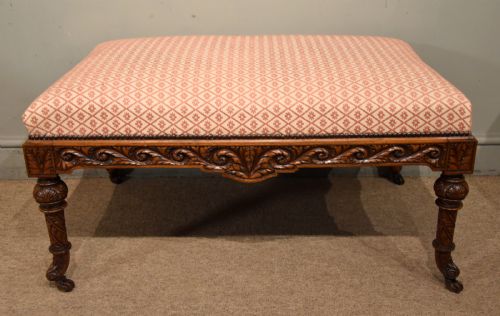
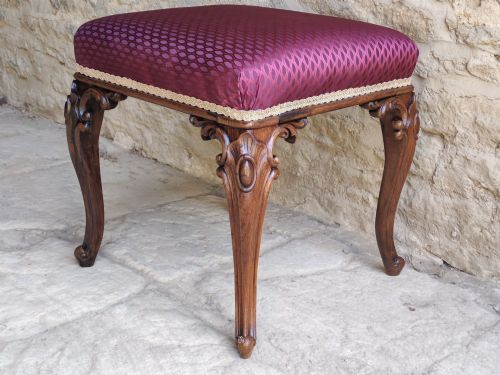
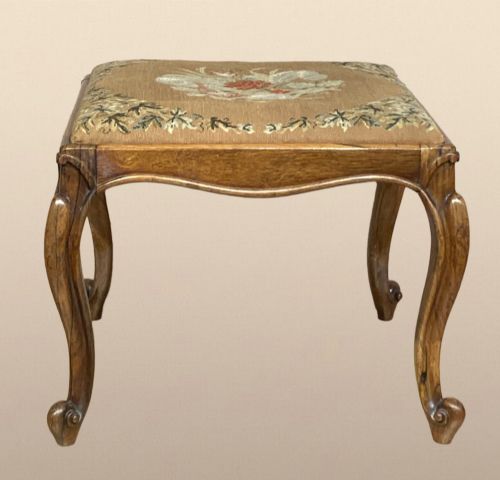
The form appears under several descriptions including dressing stools, piano stools, ottomans, and window seats. The most frequently encountered version on this page is the Victorian cabriole leg dressing stool, often featuring carved woodwork and upholstered seating.
Makers and workshops ranged from English cabinet makers to Anglo-Indian artisans, producing both simple turned legs and elaborate carved frames. Certain regional interpretations, such as Qing Dynasty carved hardwood furniture, sit alongside traditional British designs.
Materials and construction
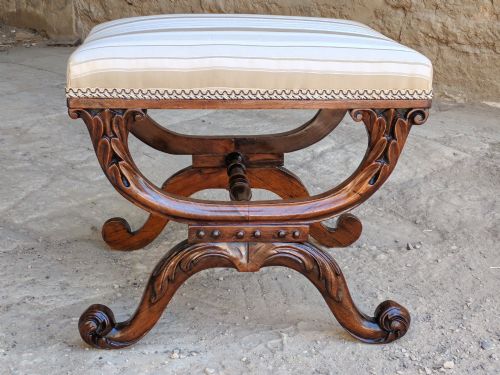
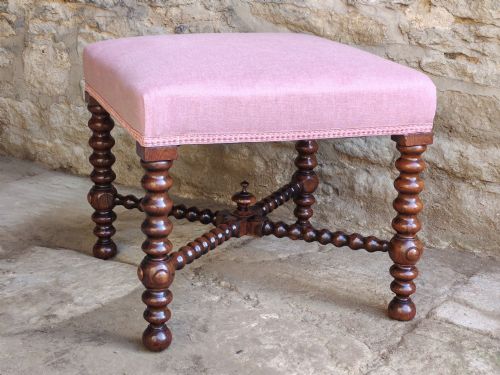
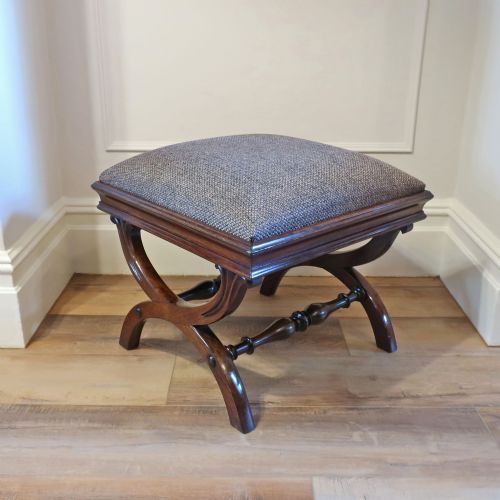
Makers constructed the primary frames from solid rosewood, occasionally utilising simulated rosewood or huali hardwood. Selected pieces incorporate brass hardware, bobbin legs, or cross frames to provide structural support and visual contrast.
Upholstery forms a vital component of each piece, utilising materials such as fabric, textile, wool, woven fabric, tapestry, and gold braid. These textiles are fixed over padding to create comfortable seating surfaces designed for daily use.
Assessing quality and craftsmanship
Superior examples display crisp carving on the cabriole legs and frame, showing the hand of a skilled cabinet maker rather than mass production. The depth of the timber grain and the integrity of the joinery distinguish finer specimens from simpler utility seating.
The retention of original or period-appropriate textiles, such as tapestry or wool with gold braid, elevates the character of a piece. Well-executed mechanisms on revolving piano stools and robust cross-frame construction indicate higher workshop standards.
Gillows
The Rosewood Vanity Stool Glossary
- Rosewood
- A dense, dark timber prized for its prominent grain and deep colour, used extensively in fine cabinet making during the eighteenth and nineteenth centuries.
- Cabriole leg
- A furniture leg that curves outward and then tapers inward, typically finishing in a scroll or pad foot, popular in Victorian and Georgian designs.
- Bobbin leg
- A turned wooden furniture leg shaped to resemble a series of bobbins or spools, commonly found on mid-nineteenth-century seating.
- Cross frame
- A furniture base formed by intersecting curved or straight wooden members, providing stability and visual interest to dressing stools.
- Huali
- A traditional Chinese hardwood with varied grain patterns, utilised for carved seating and window seats during the Qing Dynasty.
Rosewood Vanity Stool: Frequently Asked Questions
What is a rosewood vanity stool used for?
These low seats were designed primarily for use at a dressing table or piano, providing a comfortable perch for grooming or playing music.
Today, they function equally well as decorative window seats or occasional stools in living spaces and bedrooms.
How do I date a rosewood vanity stool?
Dating relies on observing structural details, such as cabriole legs typical of Victorian pieces or the cleaner lines associated with Georgian and Regency eras.
Turnings like bobbin legs and the style of upholstery materials also help place the piece within the nineteenth century.
Are piano stools and vanity stools different?
While both offer low seating, piano stools frequently incorporate revolving mechanisms to adjust height for the musician.
Vanity and dressing stools tend to have fixed heights with decorative upholstered tops intended for bedrooms.
How should I care for rosewood furniture?
Keep the timber away from direct sunlight and heat sources to prevent the rosewood from drying out or fading over time.
Dust the carved wooden frame gently with a soft cloth and protect the fabric upholstery from excessive moisture.