


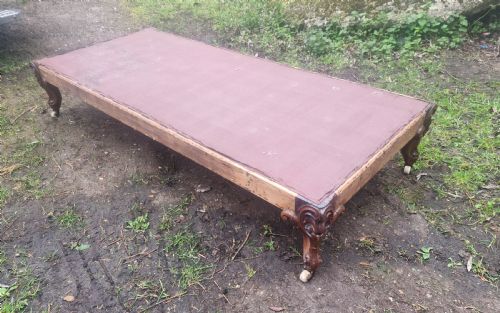
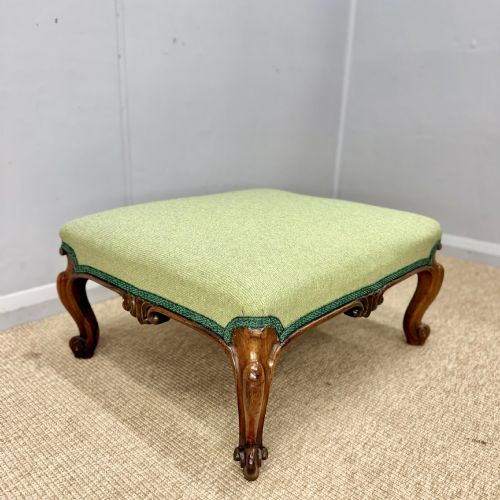
Rosewood Upholstered Stool
A rosewood upholstered stool brings tactile warmth and rich timber grain to any interior.

Understanding rosewood upholstered stool
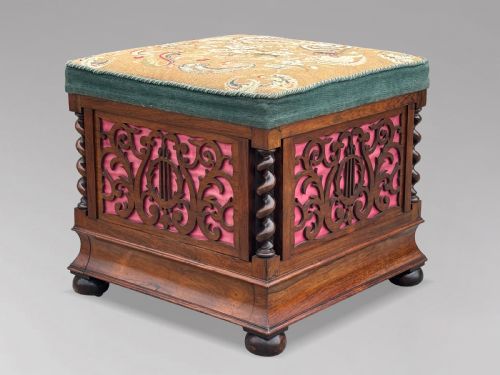
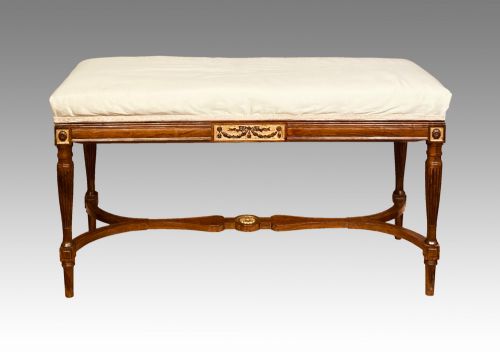
A rosewood upholstered stool is a versatile seating form designed for parlours, dressing rooms, and drawing rooms, combining dense exotic hardwood with soft textile surfaces. Buyers seeking this phrase encounter pieces spanning the Regency and Victorian eras, often taking the shape of footstools, long benches, or centre stools.
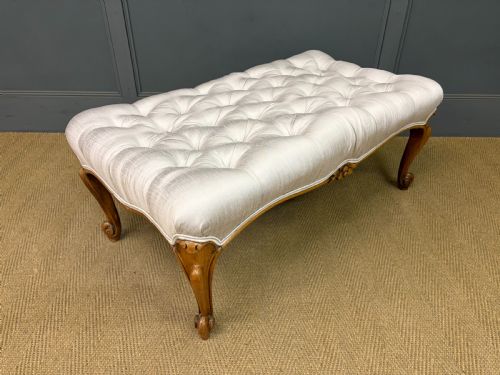
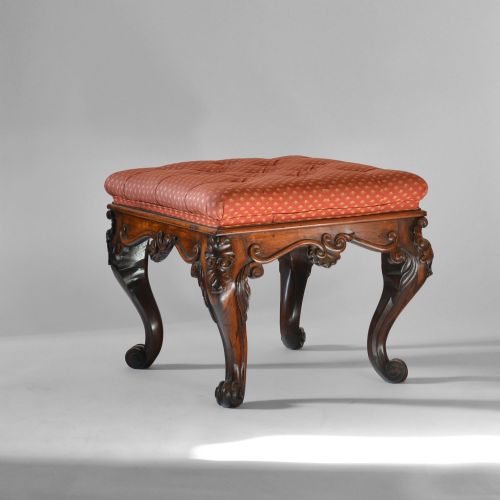
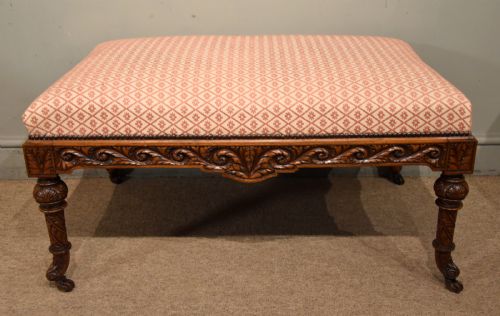
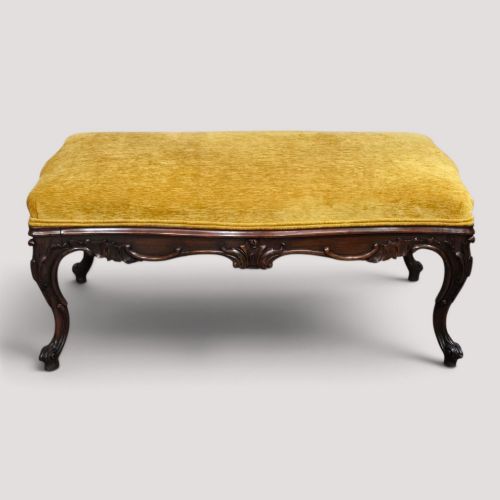
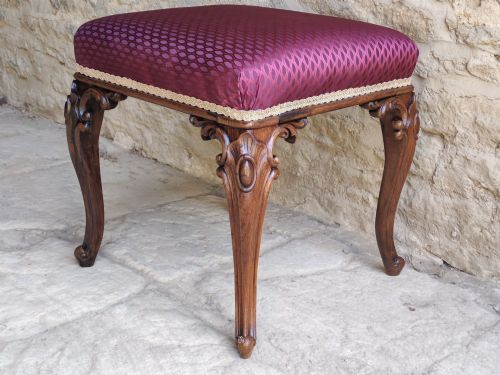
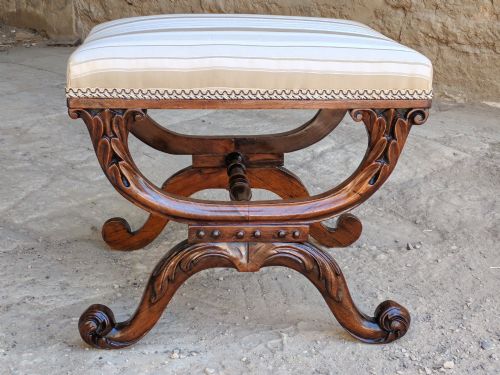
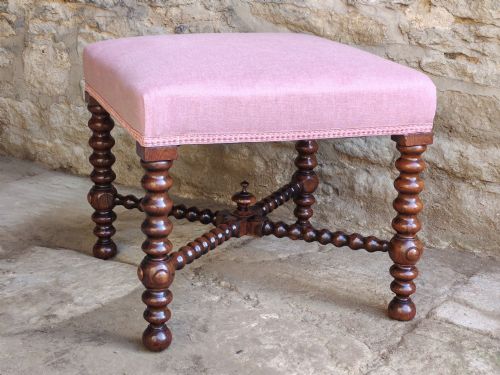
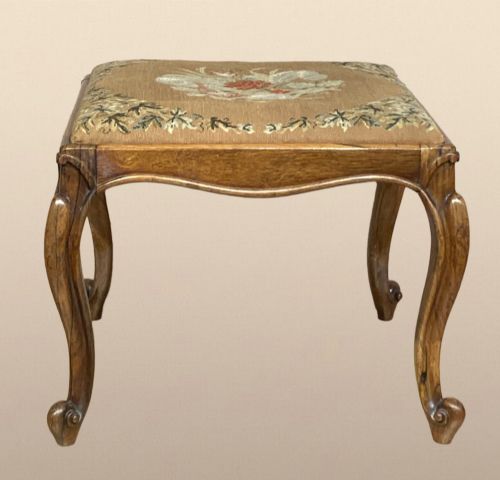
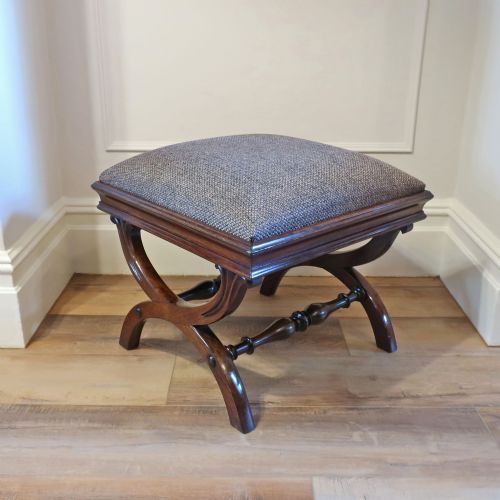
The dominant forms on this page include compact Victorian footstools on cabriole legs and larger nineteenth-century centre stools designed to anchor a room. Examples range from simple oval and oblong shapes to architectural X-frame constructions and height-adjustable piano seats.
Origins trace primarily to nineteenth-century British workshops, utilising dense tropical timbers that were highly prized by cabinet makers of the period. These seating pieces served multiple functions, from supporting tired feet to providing auxiliary seating during formal gatherings.

Materials and construction
Makers utilised solid and veneered rosewood for the frames, prized for its deep colour and distinct grain patterns. Frames were joined using traditional cabinet-making methods, often shaped with curves, scrolls, or cabriole legs characteristic of Victorian Rococo Revival and Regency styles.
Upholstery techniques involved webbing, stuffing, and securing top layers of fabric using brass tacks or decorative braids. Common covering materials recorded in the evidence include velvet, leather, tapestry fabric, and modern or period textile trims, sometimes accented with gold braid.
Retail Price Guide 2026
Typical UK retail prices for rosewood upholstered stool, calculated from the Sellingantiques database of over a million retail prices indexed since 2003. This retail price guide relies exclusively on Sellingantiques data; no external sources or auction records are used, so the figures do not describe the wider market.
Listings feature pieces spanning the Regency period through the mid-nineteenth century, incorporating rosewood frames paired with leather, velvet, and tapestry fabrics.
Judging quality and execution
Quality in a rosewood upholstered stool rests in the crispness of the timber carving and the architectural integrity of the frame. Superior pieces display finely turned or carved legs, substantial timber weight, and balanced proportions that maintain stability under daily use.
The refinement of the secondary details, such as the precision of brass mountings, the execution of X-frame joints, or the inclusion of mechanical height adjustment, separates standard production from exceptional craftsmanship.
The Rosewood Upholstered Stool Glossary
- Rosewood
- A dense, heavily grained tropical hardwood displaying deep reddish-brown tones with dark streaks. It was the premier timber for fine nineteenth-century cabinet work.
- Cabriole leg
- A furniture leg featuring a double curve, typically arching outward and then tapering inward to a foot. This form became a defining feature of Victorian Rococo Revival seating.
- Centre stool
- A large freestanding seating piece designed to sit in the middle of a room rather than against a wall. These substantial forms often feature elaborate upholstery and robust frames.
- X-frame
- A structural furniture base formed by intersecting diagonal members resembling the letter X. This classical design provides exceptional strength and visual movement.
- Gout stool
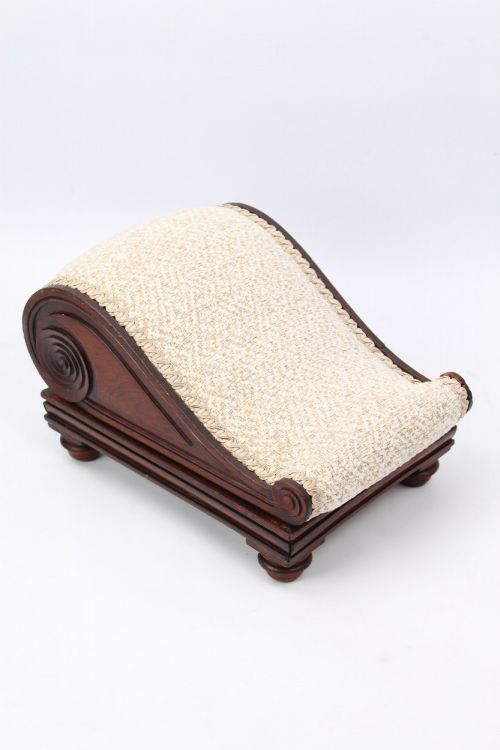
- A specialised inclined footstool designed to elevate and support the foot or leg of a person suffering from joint pain. Period examples often incorporated adjustable mechanisms or scrolling leather-upholstered rests.
Frequently Asked Questions
How do I use a rosewood upholstered stool today?
These stools fit easily into modern interiors as flexible seating at the end of a bed, beside a fireplace, or as an occasional coffee table alternative when topped with a rigid tray.
Their compact scale allows them to move between rooms easily, adding both a functional surface and a touch of nineteenth-century warmth to contemporary spaces.
How do I tell Regency from Victorian stools?
Regency pieces often lean toward classical lines, architectural X-frames, and restrained brass details, reflecting classical antiquity and early nineteenth-century taste.
Victorian examples frequently introduce richer curves, cabriole legs, buttoned upholstery, and the elaborate ornamentation characteristic of mid-nineteenth-century Revival styles.
What maintenance does rosewood furniture need?
Rosewood frames benefit from occasional light dusting with a soft cloth and minimal exposure to direct sunlight or sudden humidity changes. This preserves the natural oils and deep colour of the dense timber without damaging the historic finish.
Upholstery care depends entirely on the specific fabric covering, requiring gentle vacuuming or specialist cleaning tailored to the textile used.
Were these stools used as piano seats?
Certain nineteenth-century forms were built specifically for musicians, incorporating mechanical height adjustment or revolving mechanisms to suit different players. These specialist variants often feature sturdy round or oblong tops designed to withstand the rigours of daily practice.