


Rosewood Tripod Screen
A rosewood tripod screen is a substantial nineteenth-century domestic furnishing designed to shield the face from an open hearth, combining timber work with adjustable textile panels.
Rosewood Tripod Screen
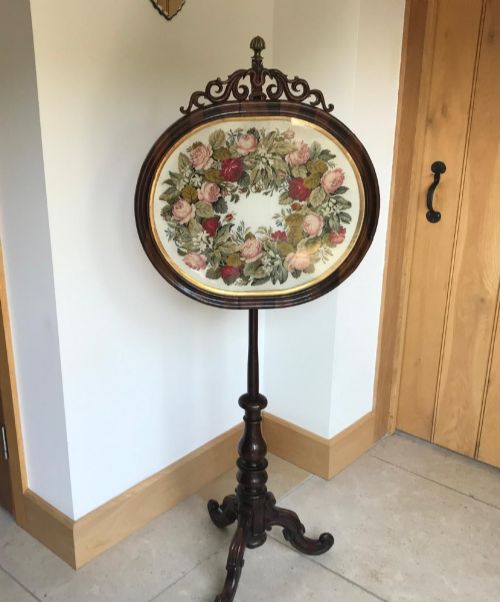
A rosewood tripod screen consists of a vertical pole mounted on a three-legged base, supporting a sliding panel used traditionally to block heat from a fireplace. These items appear across the nineteenth century, including Regency, William IV, Early Victorian, and general Victorian periods.
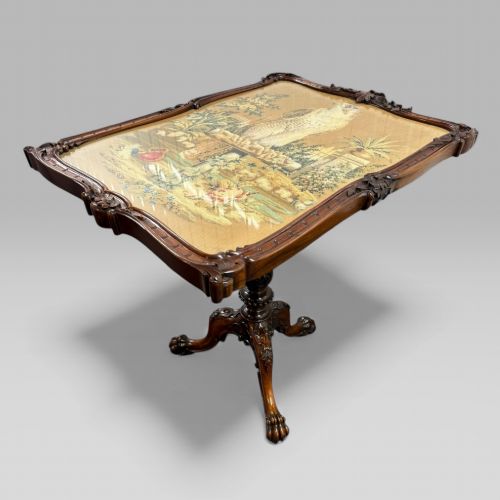
The primary forms on this page include pole screens and tilt-top tripod tables that integrate fire screens, utilising substantial timber turned columns and carved bases. Most examples feature adjustable panels, allowing the screen to move vertically along the pole to suit the user.
Makers and origins span English workshops, with specific attribution recorded in the evidence for Gillows cabinet makers working in mahogany and rosewood. The structural designs range from standard pole screens to examples of grand proportions and Goncalo Alves timber variants.
Materials and construction methods
Carpenters constructed the primary framework using dense exotic hardwoods such as rosewood and mahogany, often incorporating turned or carved upright columns supported by stable three-legged bases. Some pieces combine the tripod table mechanism with a tilting top and integrated screen.
The adjustable panel frameworks house various textile elements, including floral tapestry, embroidered fire panels, needlework, and damask silk. Additional components include brass adjustments and glass elements or reflectors fitted to protect and display the hand-worked fabrics.
Listings feature rosewood, mahogany, and Goncalo Alves timbers combined with brass, glass, and wool textiles across the nineteenth century.
Assessing build quality and execution
Quality separates simple turned poles from elaborate pieces featuring carved rosewood bases, floral carvings, and inlaid details. The execution of the woodwork, from the stability of the tripod feet to the crispness of the turned columns, defines the upper tier of production.
The refinement of the textile panel also dictates the standard of the piece, distinguishing plain damask inserts from intricately embroidered or tapestried needlework panels. Furthermore, the smoothness of the sliding mechanism on the pole indicates the care taken during original manufacture.
Gillows
The Rosewood Tripod Screen Glossary
- Pole screen
- A vertical furnishing with an adjustable panel designed to deflect radiant heat from a fireplace. It stands on a weighted base.
- Tripod base
- A three-legged support structure providing stability for upright columns and tables. This form prevents rocking on uneven historical floors.
- Needlework
- Hand-stitched textile art utilised for the central display panel of a screen. These panels often depict floral or pastoral scenes.
- Damask silk
- A reversible figured fabric woven on a loom, frequently chosen for luxurious historical screen inserts. It provides a subtle sheen under lamplight.
- Goncalo Alves
- A dense exotic hardwood sometimes utilised in place of standard rosewood for high-status nineteenth-century furnishings. It exhibits a distinctive figured grain.
Rosewood Tripod Screen: Frequently Asked Questions
What is a rosewood tripod screen?
A rosewood tripod screen is a nineteenth-century furniture piece featuring a vertical wooden pole mounted on three legs that holds a movable screen panel.
Historically placed near hearths, these items allowed occupants to adjust the height of the panel to block excess heat from open fires.
How do you use a pole screen?
Users slide the mounted textile panel up or down the central pole to the desired height depending on proximity to the fire.
In modern interiors, collectors position these pieces as decorative focal points in sitting rooms or studies rather than functional heat shields.
How do I date a Victorian screen?
Dating relies on stylistic markers such as the transition from Regency elegance to heavier carved Victorian and William IV aesthetic conventions.
Evidence on this page shows pieces spanning the Georgian, Regency, and Victorian periods, identified through timber choice, turning styles, and base carving.
What is Goncalo Alves timber?
Goncalo Alves is a dense tropical hardwood noted for its striking striped grain patterns, similar in durability to rosewood.
It appears in nineteenth-century cabinet making for substantial screen frames and occasional tables requiring high structural strength.