

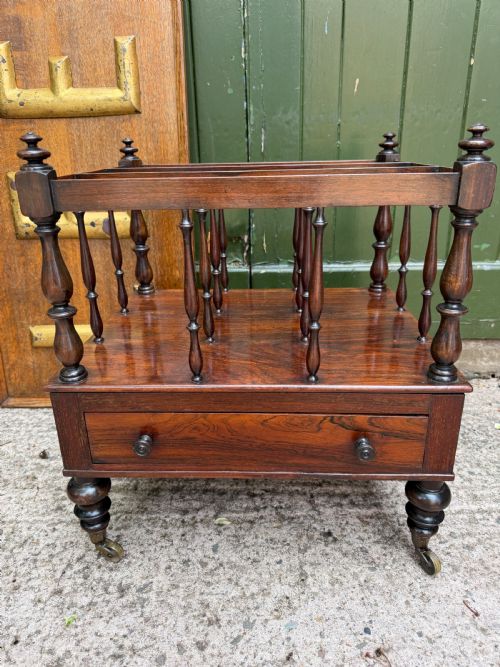


Rosewood Sheet Music Holder
A rosewood sheet music holder is a distinguished nineteenth-century piece designed to organise scores and folios beside a piano or in a parlour.
Rosewood Sheet Music Holder
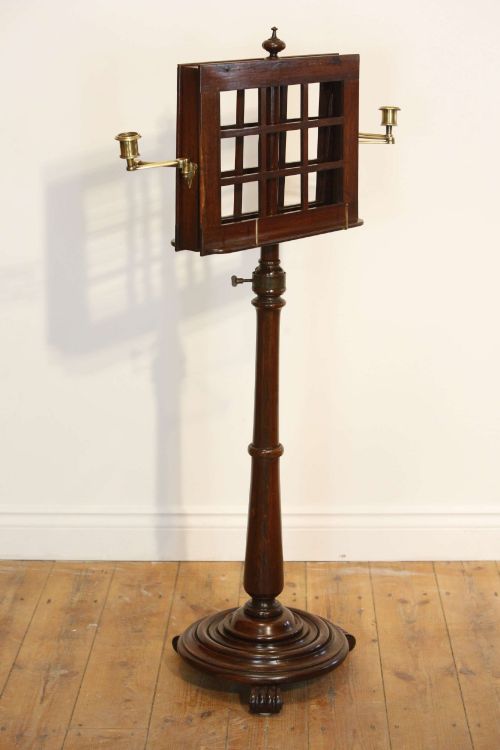
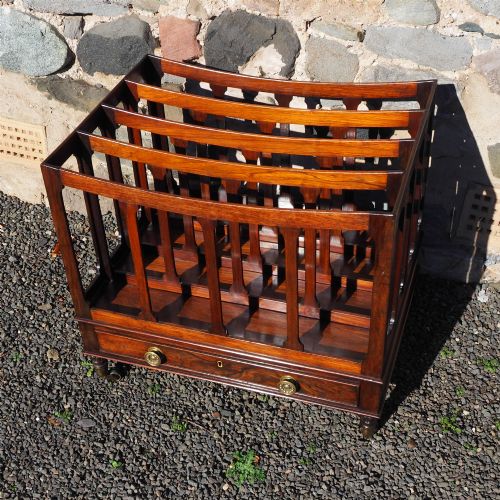
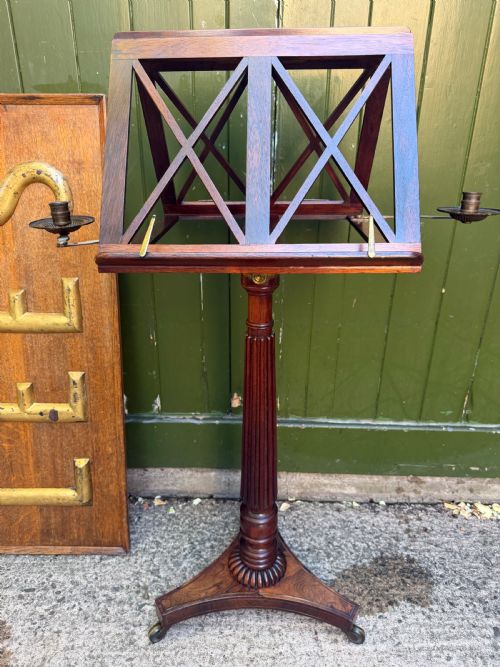
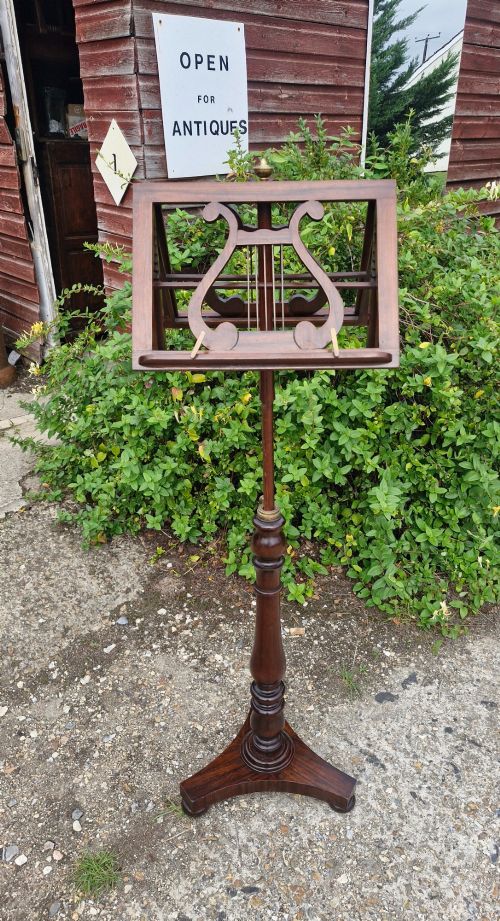
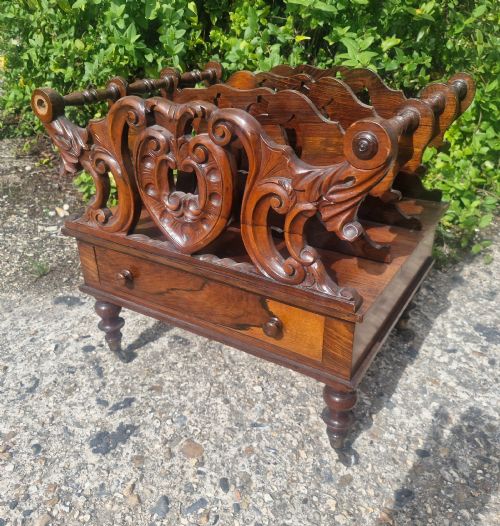
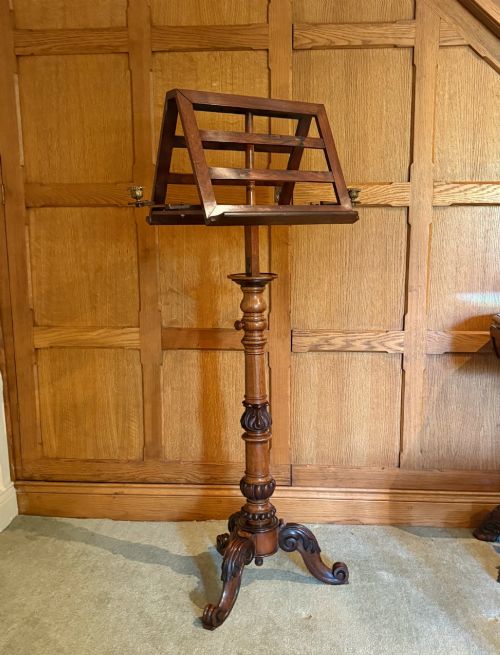
When you examine a rosewood sheet music holder, you are looking primarily at nineteenth-century canterburys, music stands, and folio racks originating from the Regency, George IV, William IV, and Victorian periods.
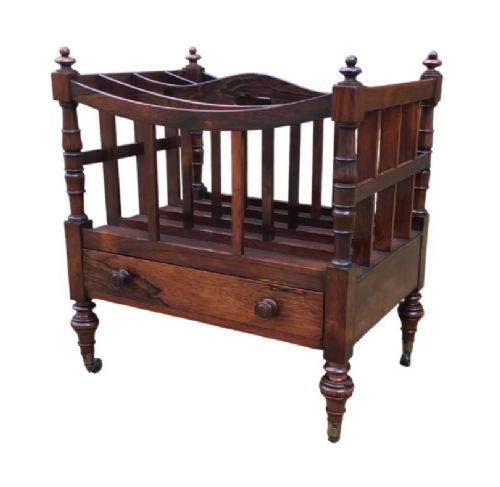
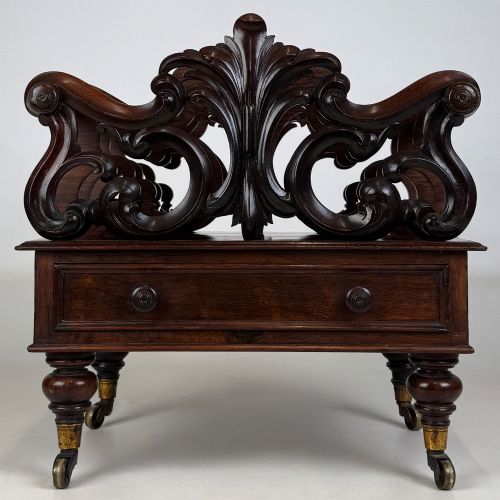
Canterburys form the largest group on this page, appearing with distinct divisions for papers, often featuring lower drawers or carrying handles, alongside tripod music stands and occasional tables.
The aesthetic reflects major stylistic phases including Regency, French nineteenth-century, and designs associated with cabinet makers such as Gillows or designers like Loudon.
How they were made
The primary timber is rosewood, frequently complemented by secondary woods like mahogany and dense exotic timbers such as gonçalo alves, shaped into freestanding racks and stands.
Craftsmen incorporated brass castors, metal fittings, inlaid details, ceramic accents, and carved motifs like the Prince of Wales feathers or foliate patterns to enrich the timber framework.
Rosewood Sheet Music Holder Retail Price Guide 2026
Typical asking prices for rosewood sheet music holder among the pieces listed under this phrase on Sellingantiques today, from the lower quarter to the upper quarter. They describe what is for sale here now, not the wider market.
Listings feature nineteenth-century forms spanning the Regency, George IV, William IV, and Victorian eras.
What varies in quality
Quality separates examples through the crispness of carved wooden details, the sophistication of inlaid decoration, and the proportion of the divisions.
Subtleties in the turning of carrying handles, the integration of functional lower drawers, and the weight of the brass fittings distinguish workshop-made pieces from standard production.
Gillows·J C Loudon
The Rosewood Sheet Music Holder Glossary
- Canterbury
- A low stand with upright divisions designed for holding sheet music, newspapers, or folios. The form typically includes a carrying handle and sometimes a small drawer beneath.
- Gonçalo Alves
- A dense, highly figured tropical hardwood displaying dramatic dark brown and light brown contrasting grain. It appears in high-status nineteenth-century stands.
- Duet Music Stand
- An adjustable stand designed to hold scores for two musicians sharing a piano or music desk. These often feature pivoting or rising reading ledges.
- Folio Stand
- A large freestanding rack intended for oversized books, prints, or music sheets. These are scaled for country house proportions rather than a small parlour.
Rosewood Sheet Music Holder: Frequently Asked Questions
What is a canterbury used for?
A canterbury serves as a designated stand for holding sheet music, folios, and newspapers near a piano or seating area.
The vertical divisions keep paper collections upright and organised for daily musical practice.
How do I date a rosewood music stand?
Dating relies on stylistic markers from periods like Regency, William IV, and Victorian, combined with construction details.
Cabinet-making conventions and timber choices specific to the nineteenth century help narrow the decade of origin.
Where should I place a music rack at home?
These pieces suit music rooms, studies, and living spaces where sheet music or large folios require neat storage.
Freestanding designs work best positioned beside a piano, armchair, or empty wall space.
What distinguishes a George IV stand?
George IV pieces often display robust proportions, rich rosewood grain, and precise classical or early Victorian detailing.
Characteristics include turned columns, brass castors, and structured division frameworks.