

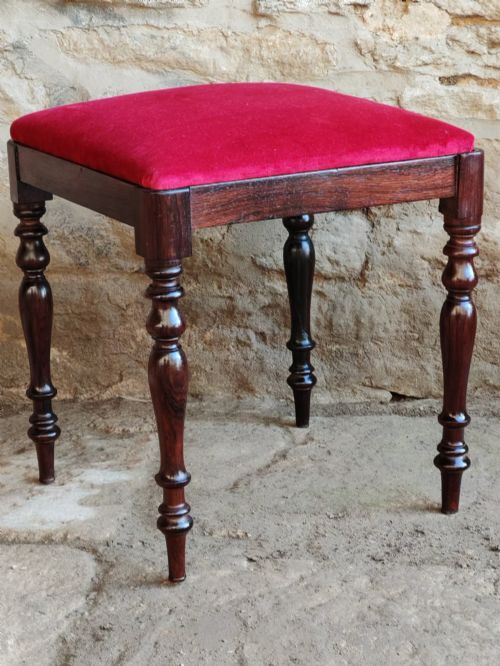
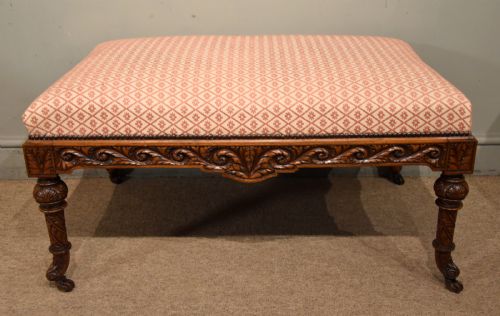
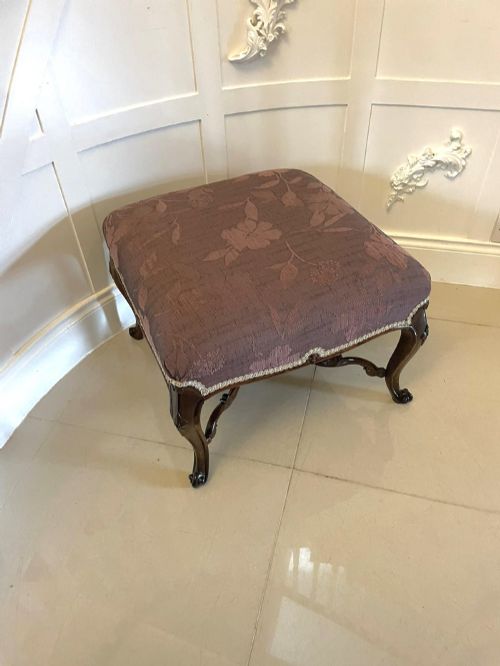
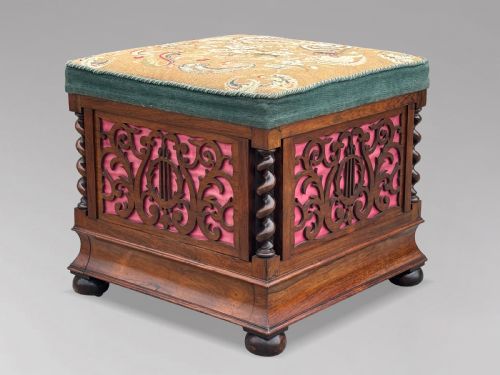

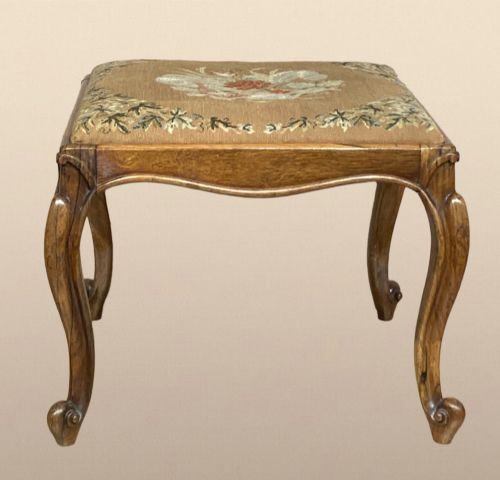


Rosewood Piano Stool
A rosewood piano stool brings mechanical ingenuity and rich timber tone to the instrument bench, spanning the Georgian, Regency, and Victorian eras.

Rosewood Piano Stool
A rosewood piano stool is a specialised seat designed for keyboard players, encompassing adjustable screw mechanisms, revolving tops, and cross-frame configurations. These items appear primarily in Victorian, Regency, and William IV forms, reflecting the domestic musical enthusiasm of the nineteenth century.
The objects vary from simple circular revolving stools to complex rise-and-fall mechanisms, alongside duet benches and music chairs with backs. Makers adapted these forms for both solo practice and parlour performances.
Most examples date from the nineteenth century, utilising the dense dark timber favoured by cabinet makers of the period. Alongside dedicated piano seating, related variants include dressing stools and music chairs.
What varies in quality
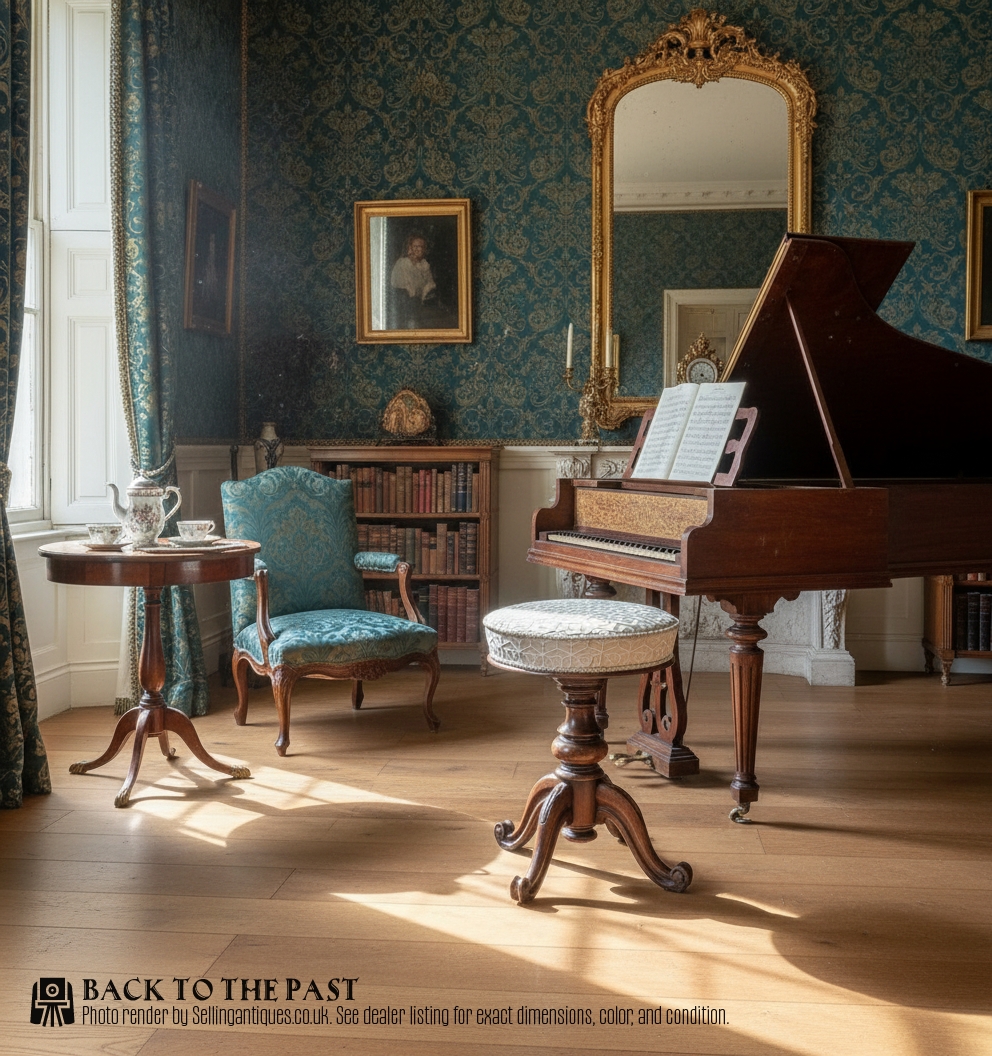
The sophistication of the mechanical adjustment separates standard seating from finer workshop production. Smooth operation in rise-and-fall screws and revolving seats indicates superior initial construction.
Carving depth, timber selection, and the presence of documented maker signatures elevate individual pieces. Refined proportions in cabriole legs or brass inlay denote higher workshop standards.
Rosewood Piano Stool Retail Price Guide 2026
Typical asking prices for rosewood piano stool among the pieces listed under this phrase on Sellingantiques today, from the lower quarter to the upper quarter. They describe what is for sale here now, not the wider market.
The archive reveals frequent examples of rise-and-fall mechanisms, revolving tops, and X-frame structures among nineteenth-century music stools.
Charles Nosotti·Gillows·Charles Wadman·H. Brooks & Co
The Rosewood Piano Stool Glossary
- Rise & fall
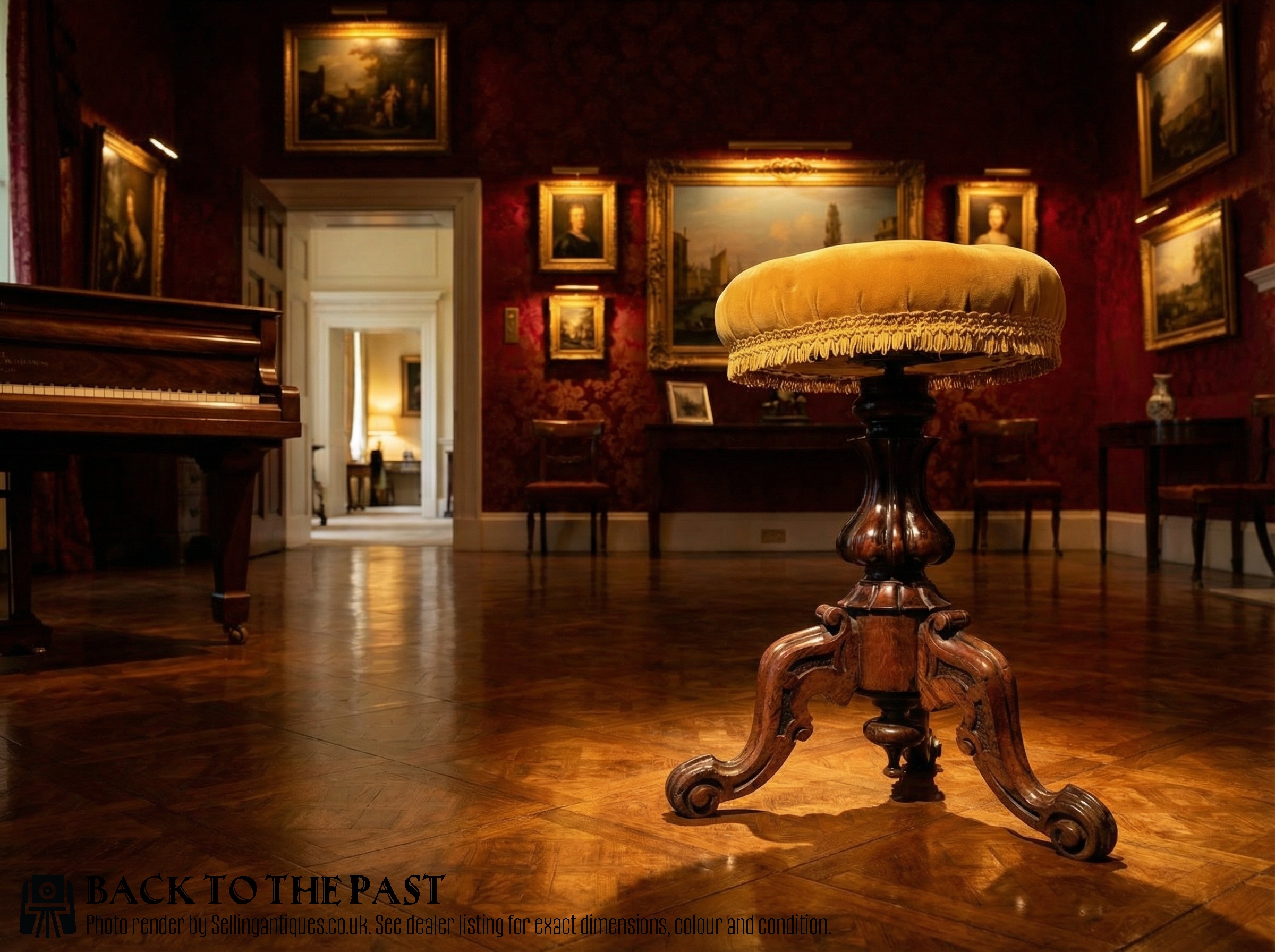
- A mechanical seat height adjustment operated by turning the top of the stool. This mechanism uses a central wooden or metal screw thread concealed within the column.
- Revolving
- A seat top that turns freely in a circle without altering its height. This motion relies on a central pivot pin or spindle.
- X-frame
- A structural base formed of two intersecting diagonal timber members shaped like the letter X. It provides stability and visual balance to dressing and piano stools.
- Simulated rosewood
- Common native timber painted or grained to imitate the dark figured appearance of genuine exotic rosewood. This practice appeared widely in Regency furniture production.
Rosewood Piano Stool: Frequently Asked Questions
How do adjustable piano stools work?
A concealed wooden or metal screw mechanism raises and lowers the seat platform as it turns. This allows the player to set a comfortable height relative to the keyboard.
Many examples use a central column with a threaded shaft that locks into place with a side key or thumb screw.
Were these stools only used for pianos?
Musicians used these seats for harps, violins, and general parlour recitals alongside keyboard instruments. Some variants functioned equally well as dressing table chairs or desk seating.
The inclusion of backs or revolving tops suited diverse domestic tasks in nineteenth-century rooms.
How can I date a rosewood stool?
Stylistic indicators such as Regency brass inlay, William IV robust proportions, or Victorian cabriole legs point to specific decades. Mechanical patents and maker stamps provide precise chronological markers.
General construction methods, from early nineteenth-century hand-cut joints to later machine-turned components, help narrow the production period.
Are the upholstery fabrics original?
Upholstery on nineteenth-century seating rarely survives in untouched condition due to standard wear and tear. Most pieces feature replacement textiles ranging from period-appropriate velvet to needlepoint and tapestry.
Underneath the top layer, webbing and stuffing often show evidence of past restoration work.