


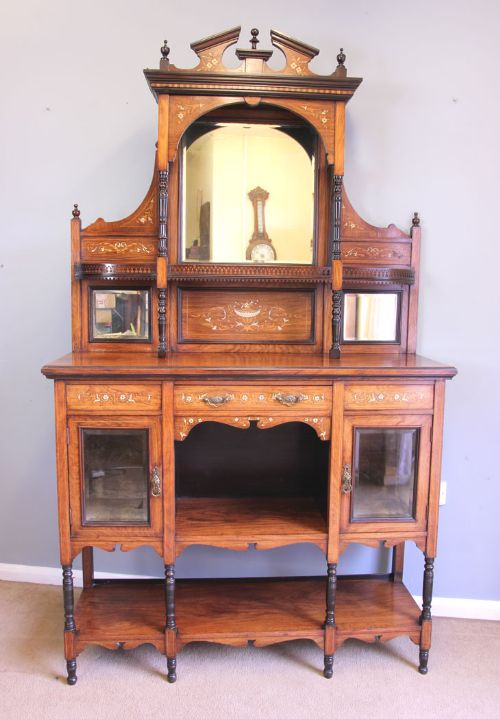
Rosewood Parlour Cabinet
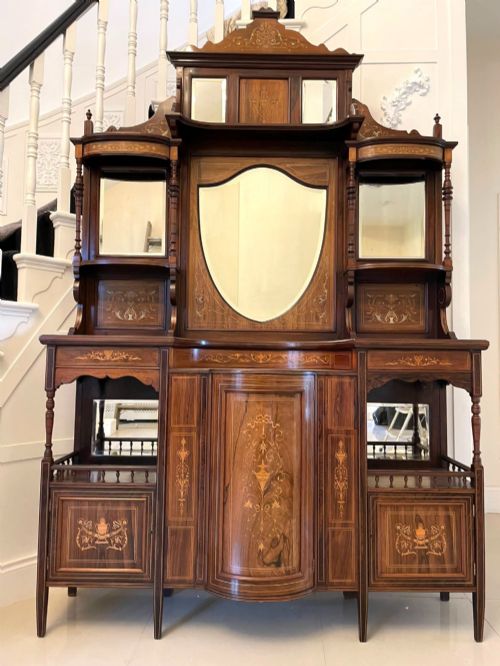
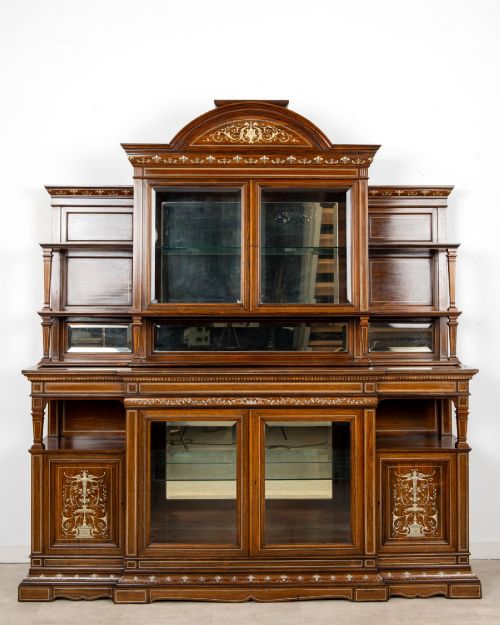
A rosewood parlour cabinet brings a rich dark timber and delicate contrasting inlay straight into a formal sitting room.
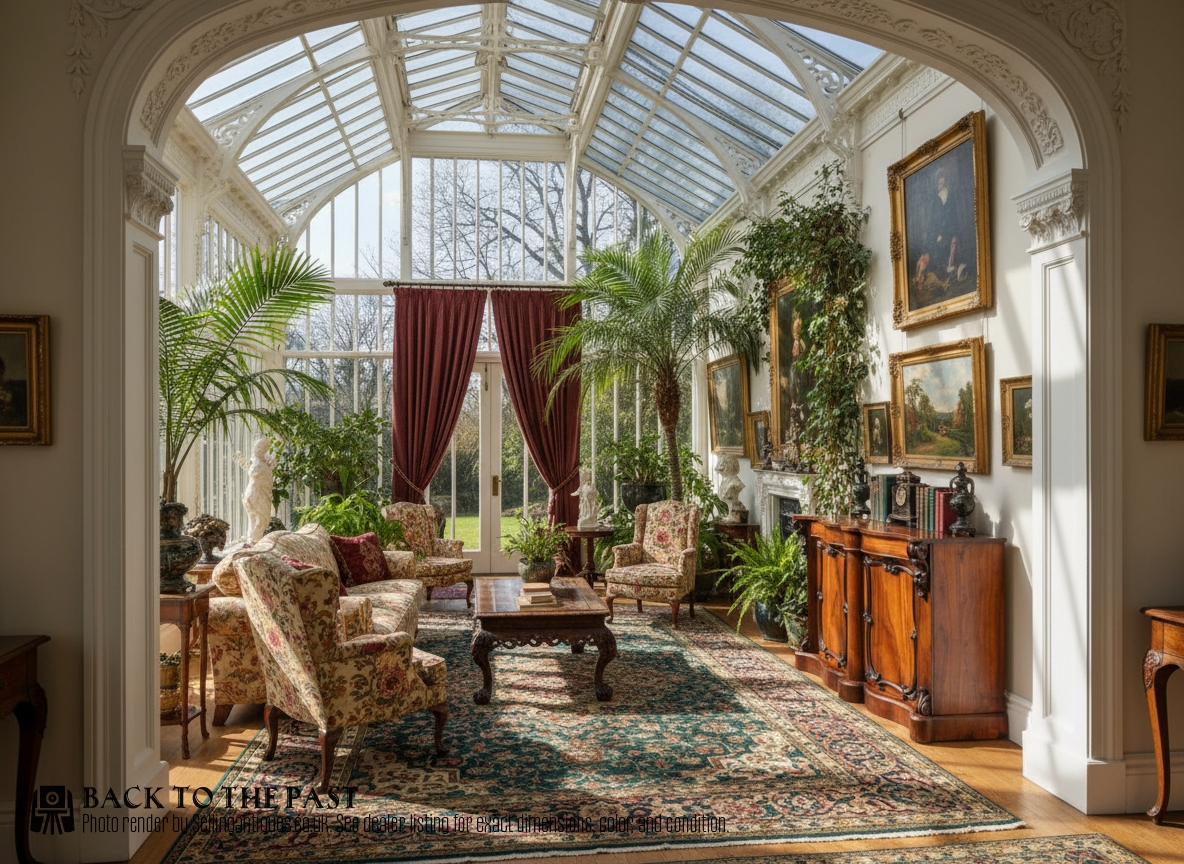
Rosewood Parlour Cabinet
A rosewood parlour cabinet is a refined piece of formal furniture designed to display decorative objects and store household items in a Victorian or Edwardian drawing room. These cabinets appear primarily across the Victorian and Edwardian periods, stretching from the mid nineteenth century into the early twentieth century.
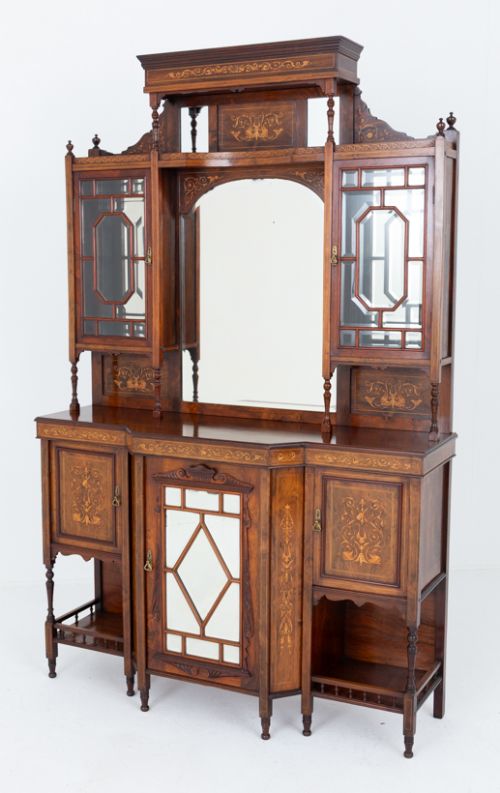
The most common version met on this page is a side cabinet or display cabinet featuring glazed doors, mirror backs, and intricate boxwood inlay or marquetry. Makers often drew upon Sheraton Revival, Aesthetic Movement, and French Revival styles to ornament the dense timber.
How they were made
Cabinet makers built these pieces using solid rosewood and rosewood veneers laid over secondary timbers, often incorporating glass panels for display sections. The dense, oily grain of rosewood provided a naturally polished finish that deepened in tone over decades.
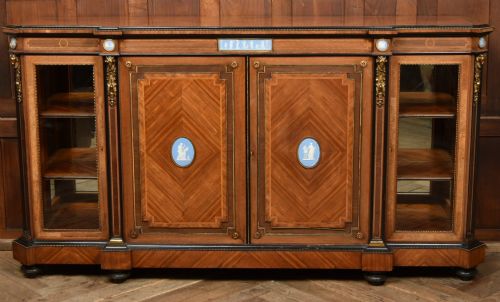
Decoration relied heavily on contrasting materials such as boxwood inlay, satinwood, and marquetry pictorial panels set flush into the dark carcass. Brass hardware, mirrored glass inserts, and occasional Jasperware plaques completed the intricate composition of the cabinet face.
Some nineteenth century parlour cabinets secretly doubled as games compacts, housing hidden boards for chess and cards behind unassuming rosewood panels.
What varies in quality
The standard of a rosewood parlour cabinet rests on the precision of its marquetry and the depth of the timber's natural grain. Finer examples display crisp, hand-cut boxwood inlay and balanced proportions that integrate mirror backs without crowding the visual field.
Construction methods also separate standard production from superior workshop output, particularly in the joinery of curved glazed doors and the weight of the brass mounts. Workshop attribution, whether to documented makers or accomplished regional cabinet makers, marks the upper tier of quality.
Collinson and Lock·Edwards and Roberts·Hampton and Sons
The Rosewood Parlour Cabinet Glossary
- Marquetry
- Inlaid patterns formed from pieces of fitted wood veneer applied to a structural carcass. This technique allows for elaborate floral or geometric designs across the front doors and drawers.
- Boxwood inlay
- Contrasting pale wood set into recesses cut into the darker rosewood background. It creates sharp linear borders and delicate motifs.
- Credenza
- A low cabinet or sideboard designed for display and storage, frequently used in nineteenth century formal rooms. These pieces often incorporate central glass doors flanked by curved side cupboards.
- Aesthetic Movement
- A late nineteenth century design style emphasising visual beauty over narrative meaning, often drawing on Anglo-Japanese motifs. Cabinets in this style reject heavy Victorian clutter in favour of cleaner lines and stylised floral inlay.
- Sheraton Revival
- A late nineteenth century revival of eighteenth century neoclassical furniture forms associated with Thomas Sheraton. These pieces utilise symmetrical inlay, satinwood banding, and tapered supports.
Rosewood Parlour Cabinet: Frequently Asked Questions
What is a parlour cabinet?
A parlour cabinet is a decorative storage and display piece made for the formal reception rooms of nineteenth century homes. They held treasured ceramics, books, and curiosities behind glass doors.
These pieces were designed to catch the light and impress visitors, combining useful shelving with ornate woodwork and mirrored sections.
How do I date a rosewood cabinet?
Dating relies on combining the overarching style, such as Aesthetic Movement or Sheraton Revival, with construction methods visible inside the drawers and carcass. Periods span from the mid Victorian era through to the Edwardian period.
Secondary woods, backboards, and screw types also offer reliable clues to the decade of manufacture.
Where should I place it in my home?
These cabinets suit reception rooms, formal dining spaces, or large hallways where their dark timber and reflective mirror backs can catch natural light. They work best against plain walls that allow the detailed inlay to stand out.
Keep them away from direct sunlight and strong heat sources to protect the rosewood veneer and natural polish.
How do I care for rosewood furniture?
Dust the cabinet regularly with a soft, dry cloth and avoid commercial silicone polishes that build up a greasy film over the timber. Feeding the wood with appropriate wax periodically helps maintain the moisture and depth of the grain.
Ensure the room maintains stable humidity levels to prevent the rosewood veneers and boxwood inlay from lifting.