
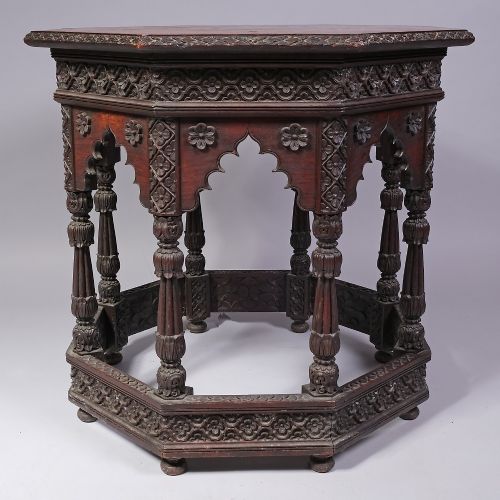
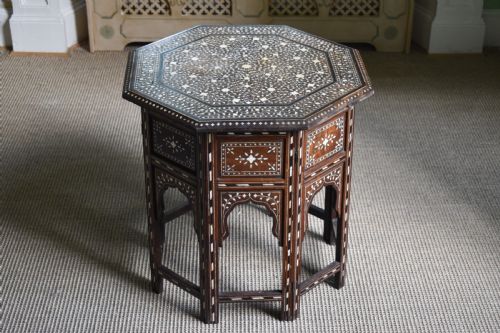


Rosewood Oriental Occasional Table
These rosewood oriental occasional table examples combine dense exotic timbers with intricate carving, offering versatile surfaces suited to traditional and modern interiors alike.
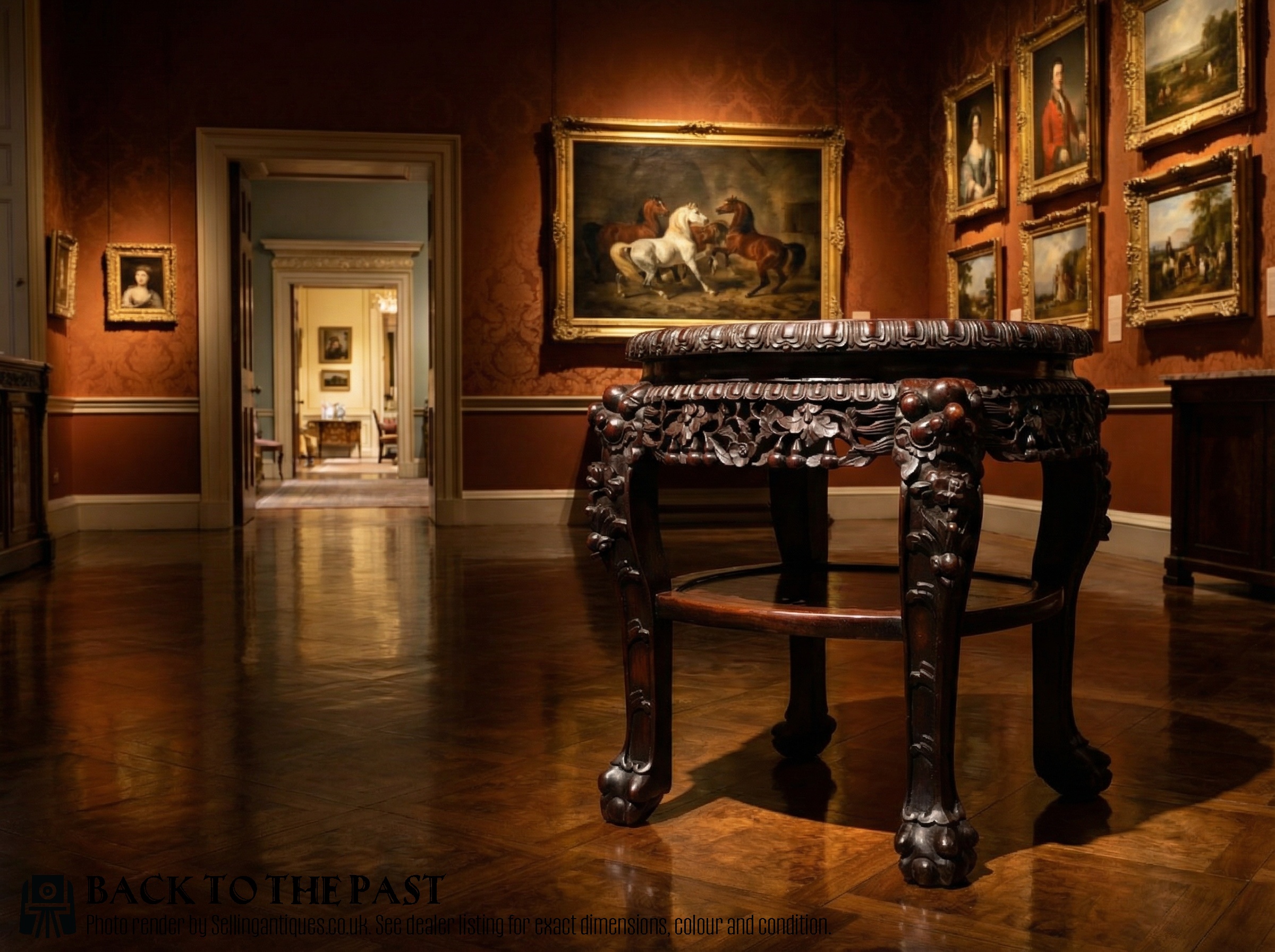
Rosewood Oriental Occasional Table
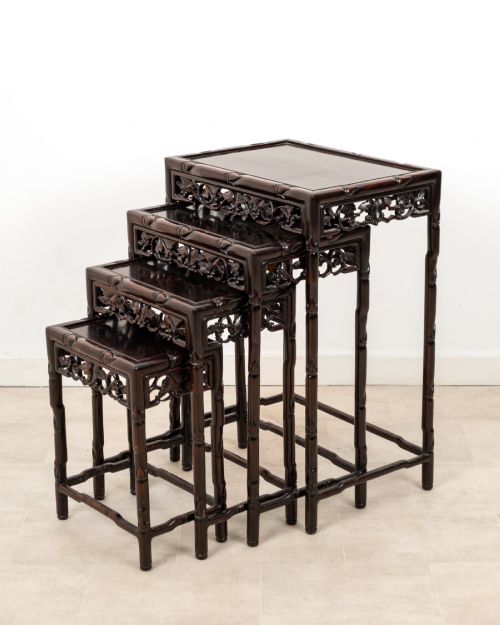
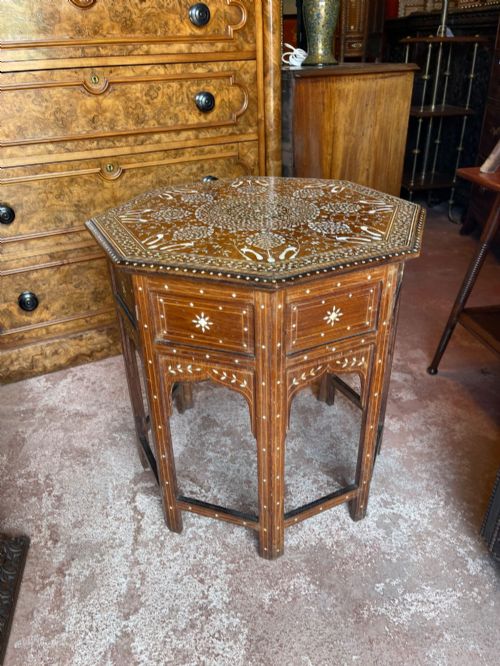
A rosewood oriental occasional table brings together distinct traditions from Chinese workshops and Anglo-Indian makers spanning the nineteenth and early twentieth centuries. Buyers seeking these items will frequently encounter nesting sets, octagonal side tables, and plant stands shaped from dense timbers.
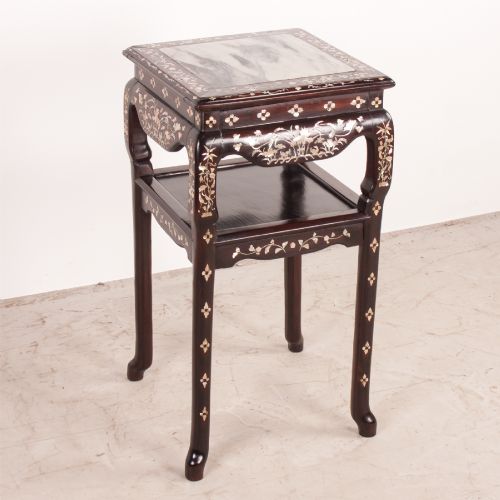
The selection ranges from carved dragon motifs and Hongmu coffee tables to bone-inlaid folding tray tables and marble-topped lamp stands. Pieces hail predominantly from the Victorian and Edwardian periods, reflecting both Chinese export trade and British colonial craftsmanship.
Judging execution
The distinction between standard examples and superior pieces rests on the crispness of the hand-carved detail and the stability of the timber joints. Finer specimens display deeply undercut foliage and dragon motifs that retain sharp edges without splitting or warping across the panels.
Inlaid versions rely on the precision of the bone or mother-of-pearl placement, where tightly fitted segments sit flush within the dark wood ground. Furthermore, the selection of solid rosewood or heavy hongmu rather than lighter secondary timbers elevates the structural integrity and visual depth of the surface.
Listings feature items spanning the nineteenth century through the 1930s, encompassing Chinese export styles and Anglo-Indian traditions.
Liberty & Co
The Rosewood Oriental Occasional Table Glossary
- Hongmu
- A dense, heavy Chinese hardwood prized for its dark red-brown colour and strength in traditional furniture making. It frequently forms the primary structure of nineteenth-century tables and nesting sets.
- Quartetto
- A matched set of four graduated occasional tables designed to slide neatly beneath one another. This term appears frequently in nineteenth-century descriptions of nesting table sets.
- Hoshiarpur
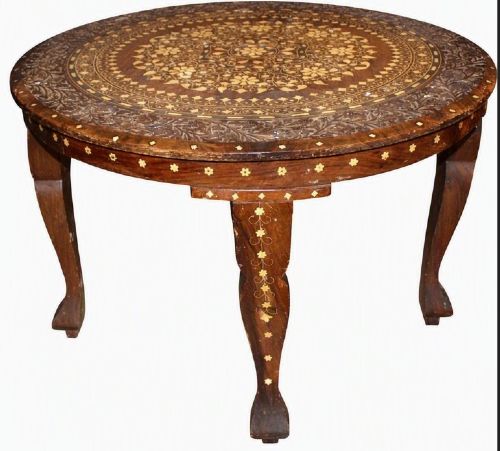
- A style of Indian woodwork originating from Punjab, characterised by intricate wire-thin bone or shisham wood inlay set into dense timber surfaces. Pieces from this region often feature dense geometric and floral patterns.
- Jardiniere
- A decorative stand or pot holder designed to display indoor plants. These circular or square topped tables often feature elevated rims to secure heavy plant pots.
Rosewood Oriental Occasional Table: Frequently Asked Questions
How do I identify Anglo-Indian inlay work?
Anglo-Indian pieces, particularly those associated with Hoshiarpur production, feature intricate geometric or floral patterns formed from thin pieces of bone or light wood inserted into darker timber. This meticulous surface decoration covers the entire table structure from top to legs.
Makers such as Liberty & Co retailed these distinctive inlaid items for fashionable British interiors during the late nineteenth and early twentieth centuries.
Are marble tops original to these tables?
Many nineteenth-century plant stands and lamp tables incorporated inset marble slabs to provide a durable, heat-resistant surface for displays. These stone inserts were fitted directly into recessed wooden frames during initial construction.
Examining the underside of the tabletop reveals how the marble sits within the hardwood structure, confirming whether the top remains in its original configuration.
Where should I place an occasional table?
These compact tables suit living rooms as lamp stands, beside armchairs as tea tables, or in hallways as decorative plant pedestals. Their varied heights and modular nesting designs allow them to move easily between rooms as needed.
Keeping them away from direct heat sources protects the dense rosewood timbers and prevents movement in delicate mother-of-pearl or bone inlay.