
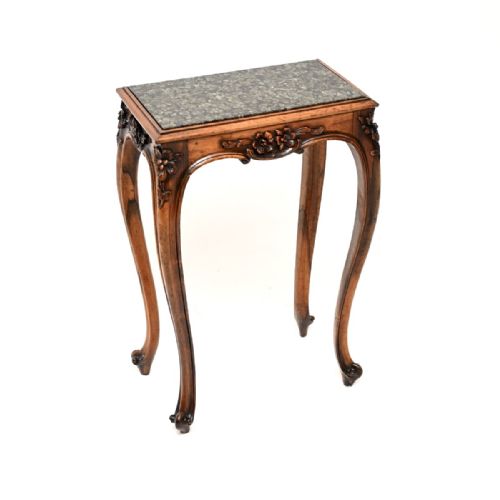
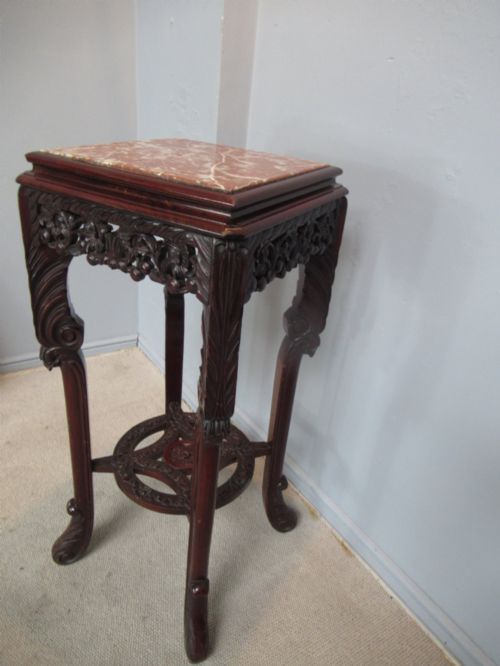
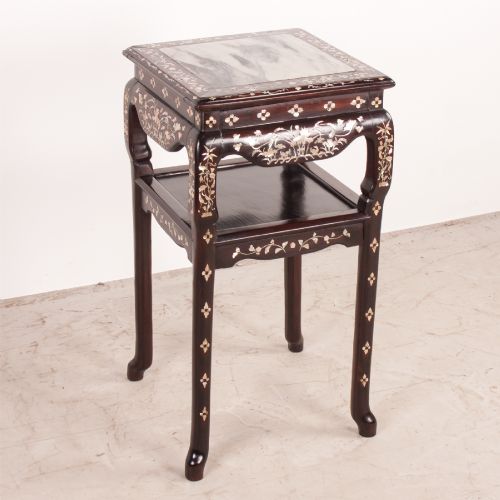
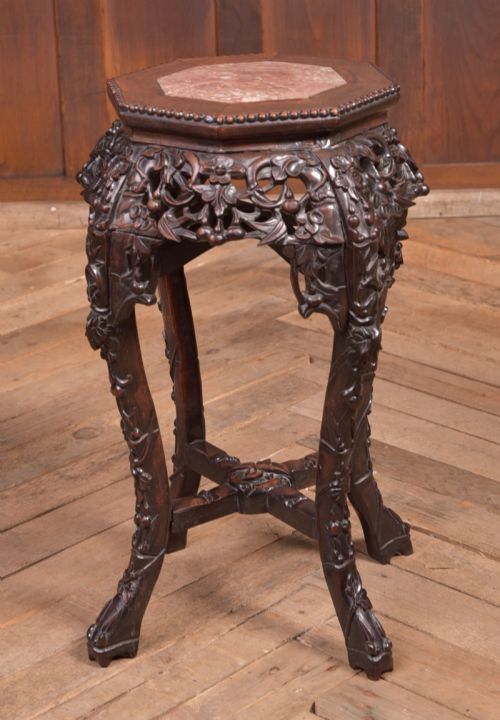


Rosewood Marble Side Table
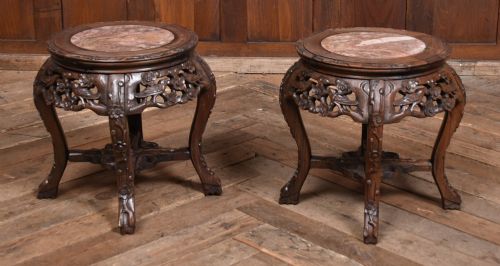
A rosewood marble side table brings together dense tropical timber and cool stone, spanning formal Regency reception rooms and carved Chinese export workshops.
Rosewood Marble Side Table
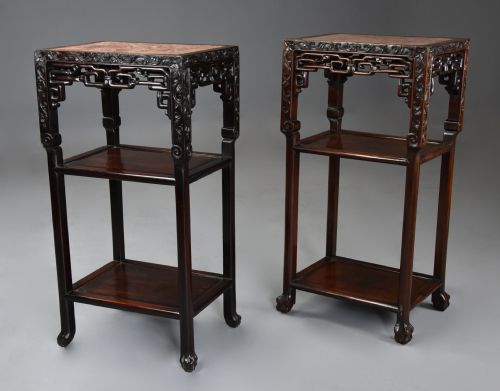
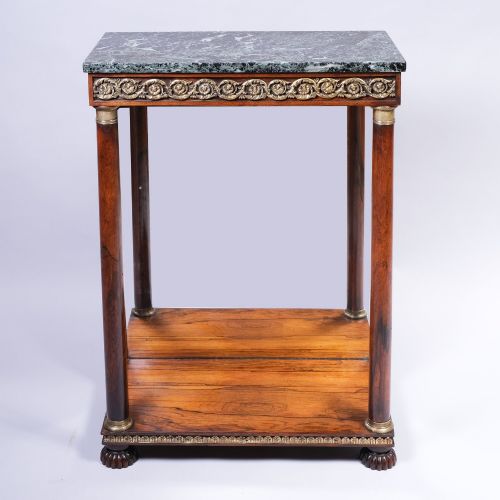
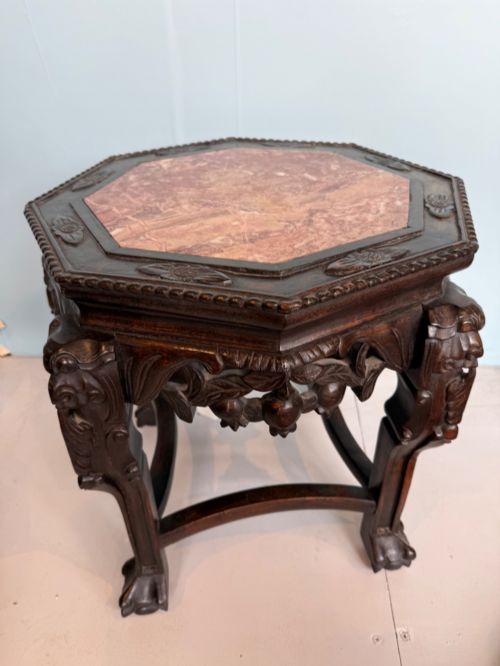
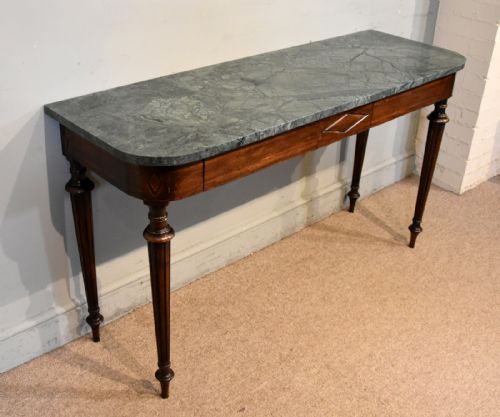
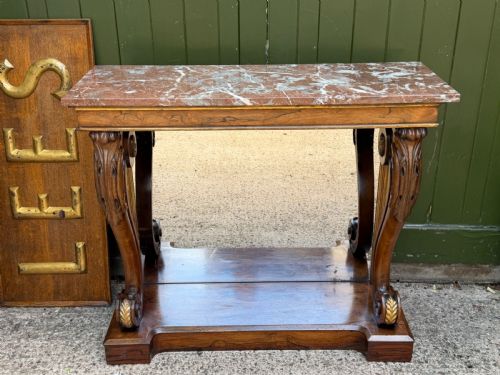
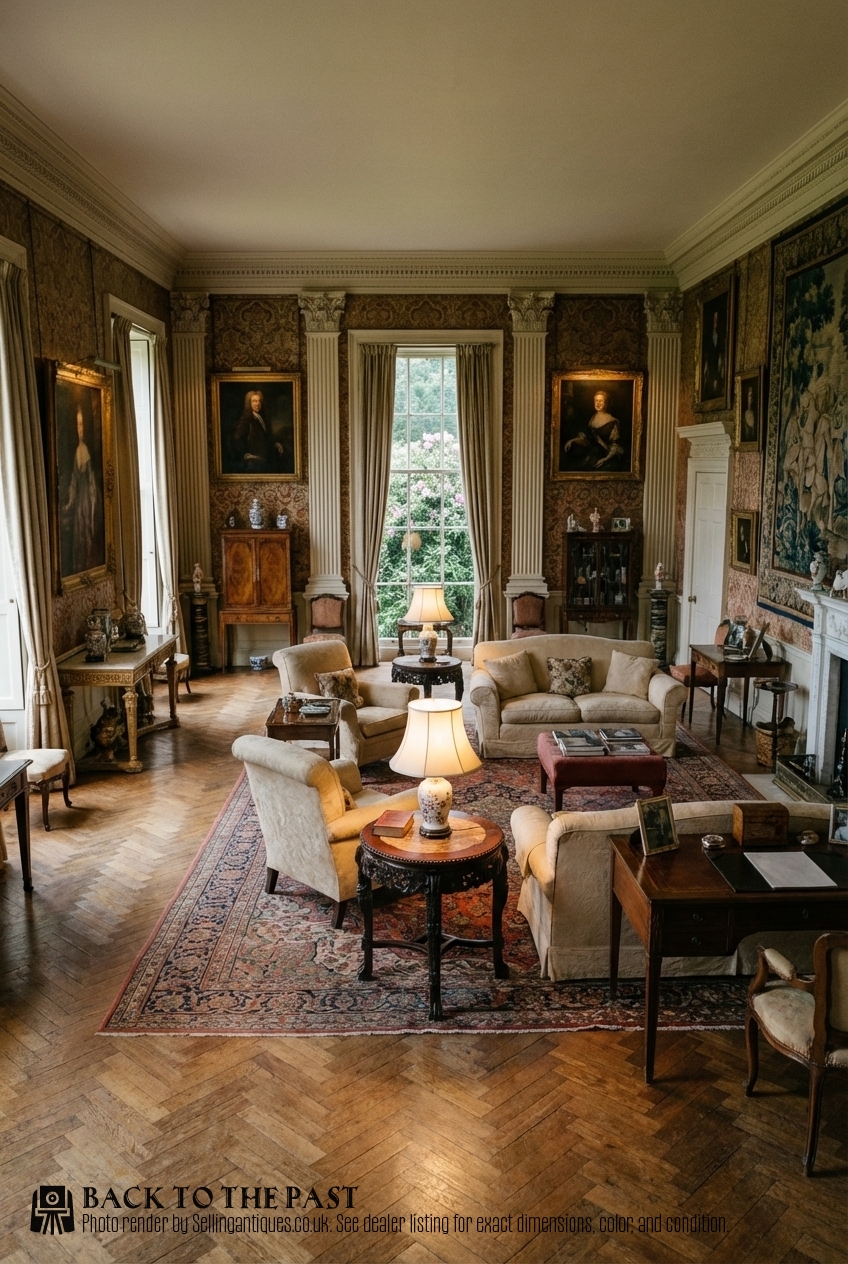
A rosewood marble side table combines a heavy stone slab with a dark timber frame, serving domestic interiors as a surface for lamps, plants, and decorative objects. When you search for this phrase, you encounter two distinct traditions: the English and French Regency pieces with polished classical lines, and the Chinese export stands featuring intricate floral carving.
The pieces on this page range from tall plant stands and jardiniere supports to low occasional tables, console tables, and centre tables. Most examples date from the nineteenth century, drawing on periods such as the Regency era, the Victorian decades, and the late Qing Dynasty.
Forms vary from compact square pedestals to wide rectangular console tables, some fitted with lower mirror backs or parcel-gilt details. You find standalone pieces alongside matched pairs designed to anchor either side of a fireplace or hallway.
Materials and construction
Makers utilised dense exotic hardwoods, predominantly rosewood, padouk, and kingwood, selected for their deep grain and structural weight. These timbers support heavy inset stone panels without warping, providing a stable frame for polished marble tops.
Surfaces frequently incorporate carved ornamentation, mother-of-pearl inlay, and brass mounts, alongside specialised techniques like parcel-gilt highlights and turned pedestals. Stonemasons cut and polished the inset marble panels - ranging from plain white to figured rouge and specimen varieties - to fit flush within the wooden surrounds.
The inventory spans diverse origins, uniting English Regency and French Empire designs with Chinese export and Anglo-Indian traditions.
Judgements of quality
Quality rests upon the crispness of the timber carving and the harmony between the stone top and the wooden base. Superior examples demonstrate deep, undercut relief work on plant stands and precise jointing on console frames.
The selection of the marble slab separates standard items from finer works, with figured rouge stone, specimen marble mosaics, and heavy white slabs marking out the higher tiers of production. The density of the rosewood grain and the integration of brass mounts or mother-of-pearl inlay further distinguish workshop output.
The Rosewood Marble Side Table Glossary
- Rosewood
- A dense, dark timber with a pronounced grain pattern, prized for its durability and rich polish. It forms the primary structural frame for many nineteenth-century console and occasional tables.
- Console table
- A table designed to stand against a wall, frequently secured with brackets or resting on front legs. These pieces often feature shaped marble tops and mirror-backed lower sections.
- Jardiniere stand
- A tall, slender support built to hold heavy plant pots and floral arrangements. They appear frequently in carved Chinese hardwood and Victorian variants.
- Padouk
- A heavy tropical hardwood with a reddish-brown hue, utilised in Chinese export stands and furniture. It provides the necessary strength for intricate openwork carving.
- Specimen marble
- A decorative top composed of various coloured marbles arranged in geometric or mosaic patterns. It signals high-end Regency and Victorian craftsmanship.
- Parcel-gilt
- A finish where selected portions of a wooden or brass surface receive a thin application of gold leaf. This technique highlights carved details against dark rosewood.
Rosewood Marble Side Table: Frequently Asked Questions
How do I clean the marble top?
Use a soft cloth dampened with warm water and mild soap, drying the stone immediately to prevent water spots. Avoid acidic cleaners and abrasive agents that can etch the polished surface.
Ensure no liquid seeps into the joint between the marble and the rosewood frame. Regular dusting preserves the sheen of both the stone and the timber.
Can these tables support heavy lamps?
The solid hardwood frames and heavy stone tops provide robust support for standard table lamps and decorative objects. Their sturdy construction stems from the weight required to hold dense marble panels.
Position the table on an even floor to maintain balance, especially with taller plant stands and narrow console designs.
How do I date a Chinese hardwood stand?
Examine the depth of the carving, the species of timber, and the construction methods used in the frame. Nineteenth-century examples often feature dense padouk or rosewood with hand-cut joinery.
Check for the characteristic patination of the wood and the type of marble inset, which typically shows age through minor surface wear rather than machine-cut precision.
What is the difference between a pier table and a console table?
A pier table stands specifically against the wall space between two windows, frequently accompanied by a matching wall mirror. A console table is a broader term for any wall-mounted or leg-supported table placed against a flat surface.
Both forms make extensive use of marble tops and decorative rosewood frames during the Regency and Victorian periods.