
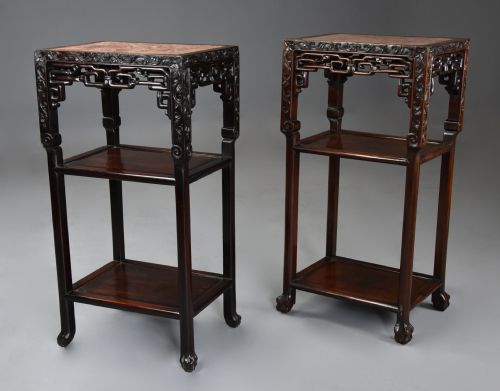
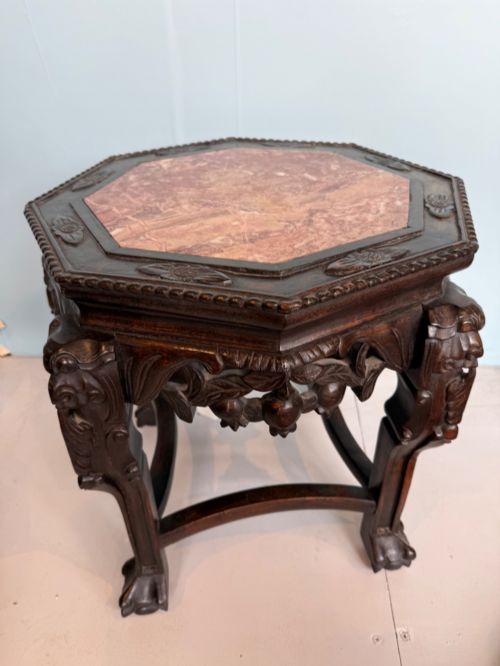
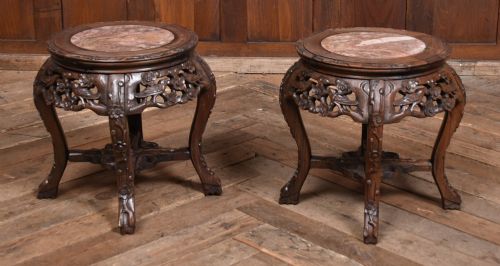
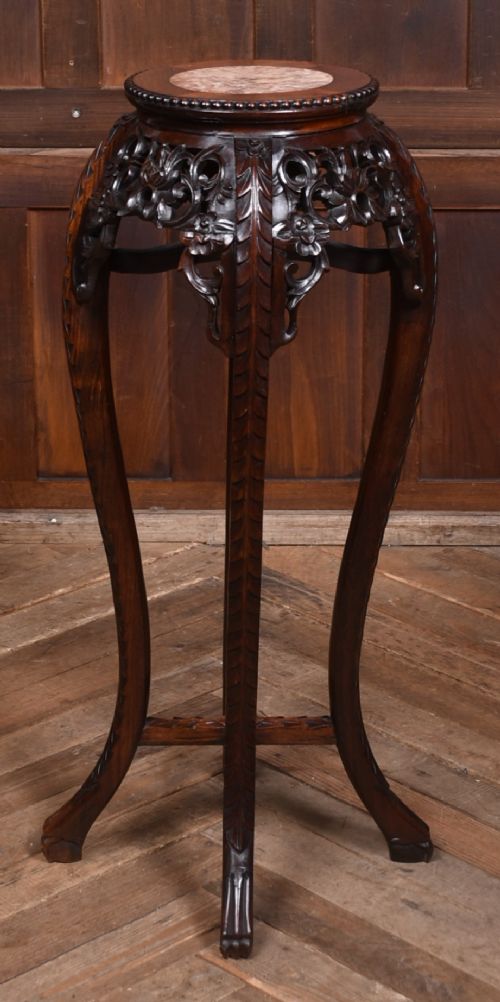


Rosewood Marble Pedestal
A rosewood marble pedestal provides a solid, elevated surface for plants and urns, combining fine timber with cool stone.
Rosewood Marble Pedestal
A rosewood marble pedestal typically takes the form of a plant stand, jardiniere stand, or urn stand designed to elevate decorative items in a room. The search phrase covers a distinct range of pedestal furniture built to display objects at height.
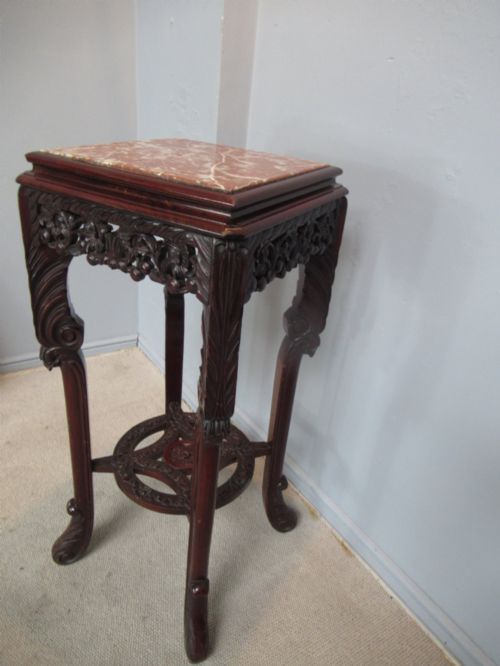
Most examples found on this page originate from Chinese workshops of the nineteenth century alongside Regency English pieces. These are encountered as round or rectangular stands featuring inset stone surfaces.
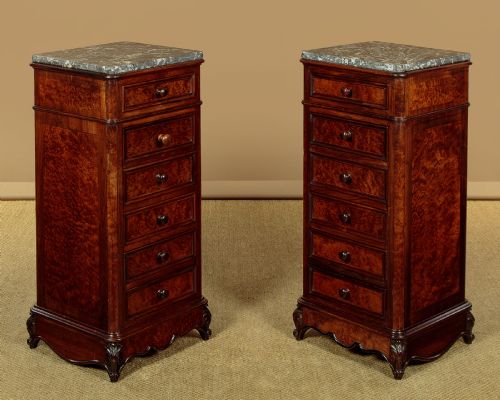
Makers utilised these sturdy tables as occasional furniture, bedside pieces, and chess tables. Buyers select them to bring varied heights and natural textures into interior spaces.
Materials and Construction
Craftsmen built these pieces using dense tropical hardwoods such as rosewood, padouk, and hongmu, paired with inset marble or rouge marble tops. Selected timbers provided the structural strength required to support heavy stone inserts.
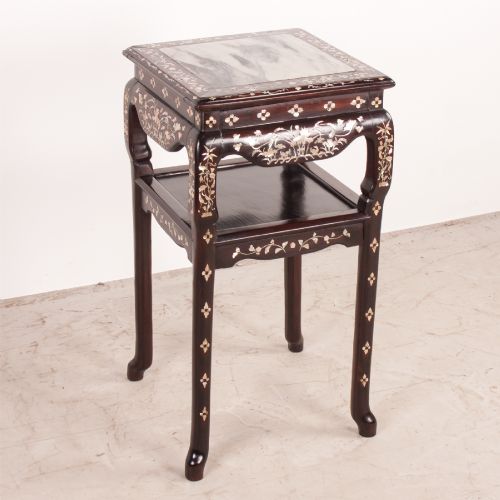
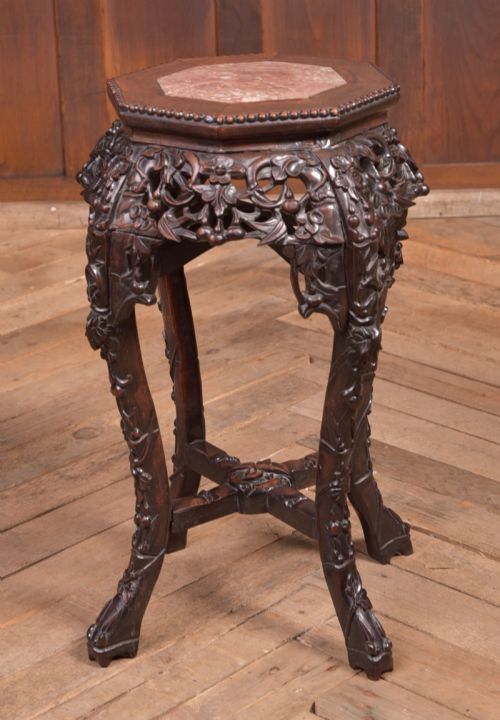
Many Chinese and English examples incorporate detailed hand-carved decoration around the frieze and legs. Inlaid mother-of-pearl and brass details occasionally accent the timber frames.
Joinery techniques kept the upright forms stable, allowing slender pedestals to bear the weight of heavy ceramic planters and stone vases safely.
Several stands doubled as impromptu chess tables when the house needed a quick game room setup.
Craftsmanship and Material Selection
The standard of a rosewood marble pedestal depends heavily on the depth and crispness of the wood carving. Superior pieces display sharply defined botanical motifs and well-balanced proportions across the legs and apron.
The choice of stone insert also marks out finer examples, particularly where richly figured specimen marble or vibrant rouge marble is fitted flush into the timber frame. Heavy, stable construction distinguishes better workshop production from lighter commercial output.
The Rosewood Marble Pedestal Glossary
- Jardiniere stand
- A tall table specifically built to hold a ceramic plant container or flower pot. These stands elevate greenery to eye level within a room.
- Padouk
- A heavy, durable tropical hardwood with reddish tones utilised in nineteenth-century Asian furniture production. It resists warping and takes fine carving work.
- Hongmu
- A traditional Chinese term for dense red hardwoods used in classical furniture. Pieces made from this material exhibit deep colour and heavy weight.
- Specimen marble
- Multi-coloured marble sections arranged in geometric patterns or pictures on a tabletop. Regency makers favoured this decorative stone top for formal tables.
Rosewood Marble Pedestal: Frequently Asked Questions
What were rosewood marble pedestals used for?
These tall stands served primarily to elevate heavy porcelain planters, urns, and decorative vases above floor level. Placing plants on pedestals kept damp soil away from fine timber floorboards while displaying foliage prominently.
Secondary uses included acting as lamp tables, chess tables, or bedside surfaces. Their compact footprints suited smaller corners and narrow wall spaces in nineteenth-century interiors.
How do I distinguish Chinese export pieces from Regency English ones?
Chinese export stands of the nineteenth century typically feature carved hardwood frames with floral motifs, ball and claw feet, and inset marble panels. The timber used is often rosewood, padouk, or hongmu.
Regency English pedestals generally display classical European styling, such as reeded columns, brass mounts, and specimen marble tops. The framing timbers lean towards figured rosewood and amboyna.
Are these stands strong enough to hold heavy plants?
Dense tropical hardwoods and heavy stone inserts make these pedestals exceptionally sturdy. They were engineered specifically to carry the weight of water-filled ceramic jardinieres and large stone urns without tipping.
Placing heavy items centrally ensures stability on uneven antique floors. The solid timber construction bears significant vertical loads safely.
How should I clean the marble top?
Wiping the stone with a soft, damp cloth removes everyday dust and prevents grit from scratching the polished surface. Avoid acidic cleaners or lemon juice, which etch marble instantly.
Dry the stone thoroughly after wiping to maintain its finish. Use protective pads under heavy pots to guard against moisture rings.