


Rosewood Fire Screen
A rosewood fire screen is a practical domestic antique that shields the face from blazing hearths while adding rich timber tones to a room.
Rosewood Fire Screen
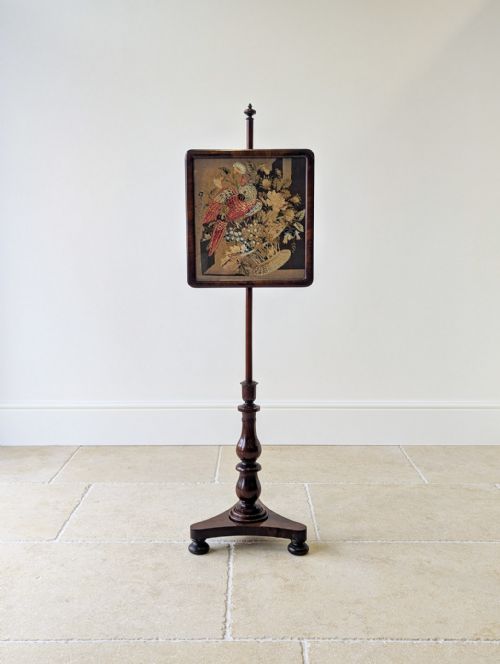
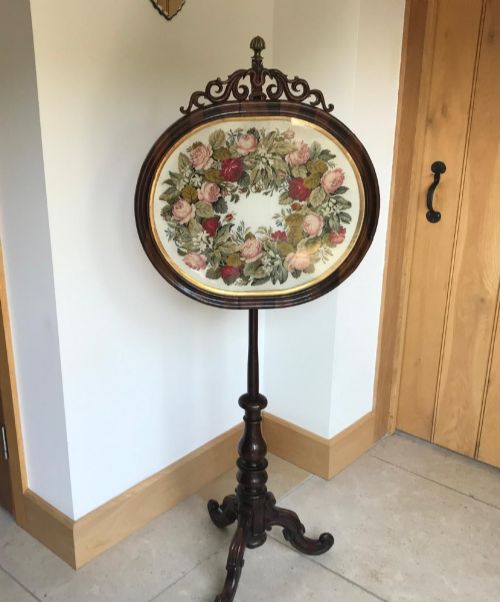
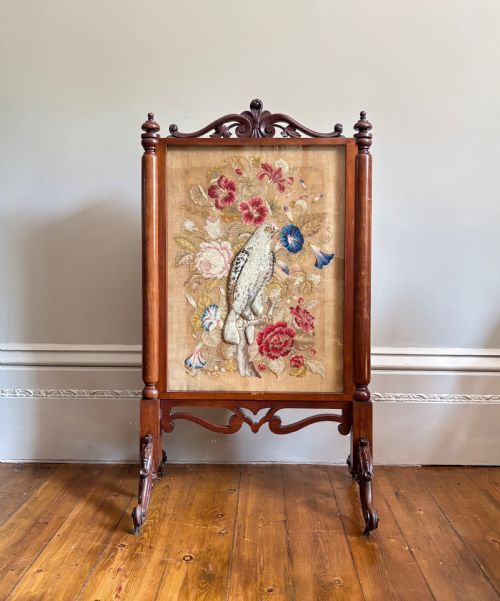
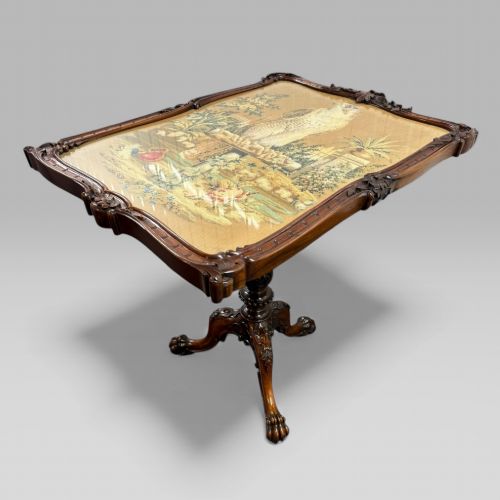
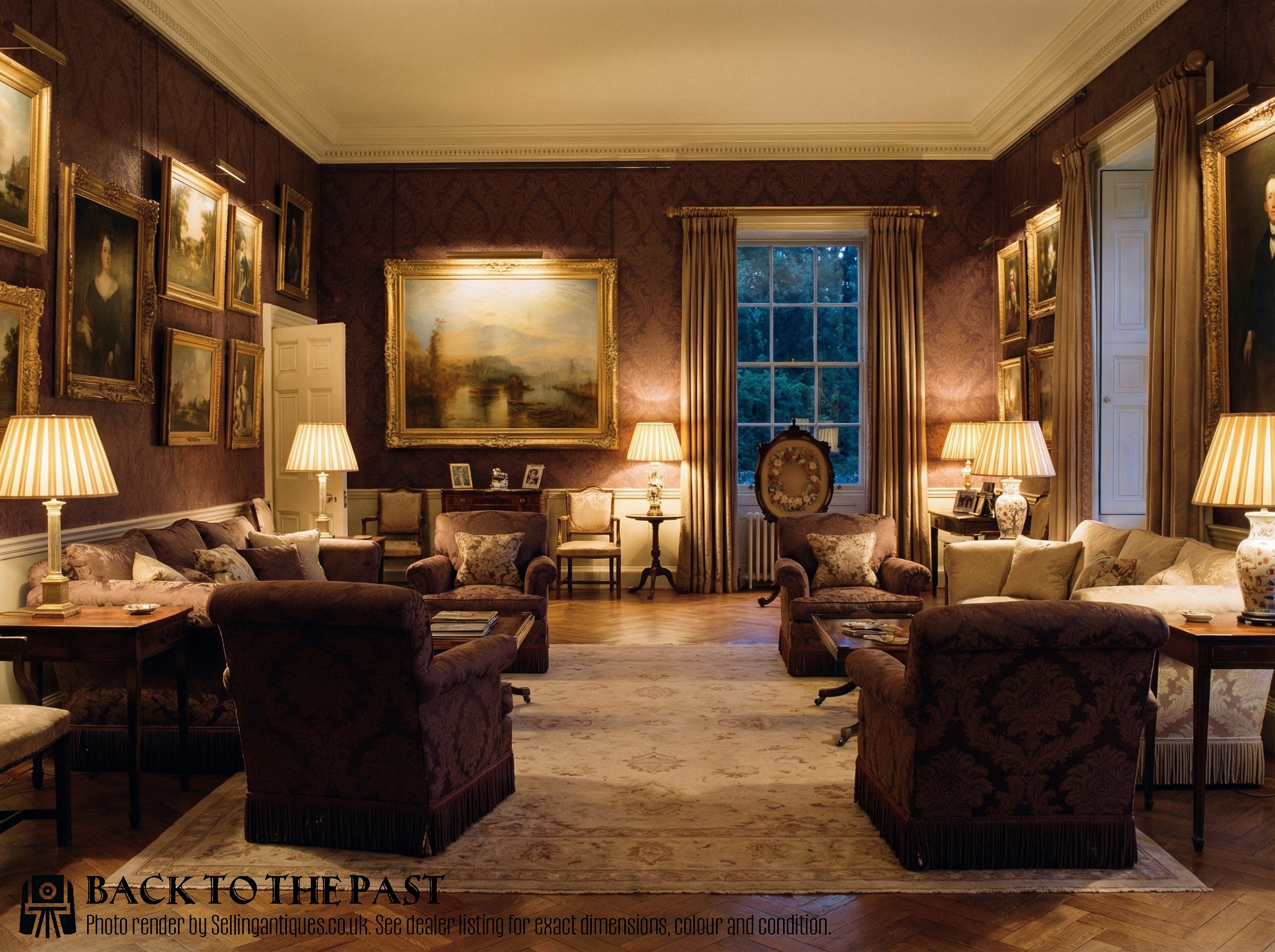
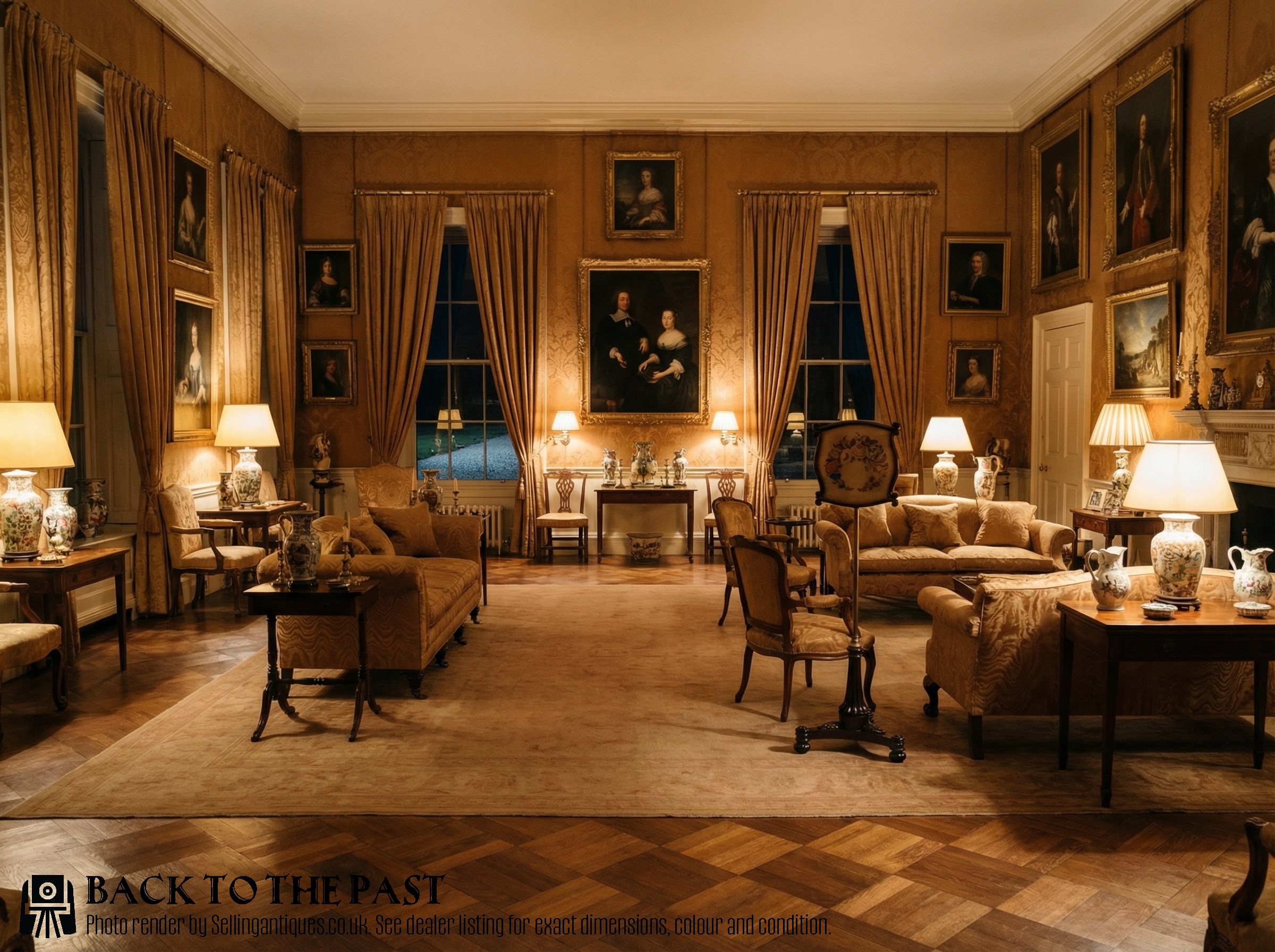
A rosewood fire screen is an antique furnishing designed to deflect heat from an open hearth, most commonly found as a tall pole screen featuring an adjustable panel mounted on a tripod base. These pieces span the Georgian, Regency, William IV, and Victorian periods, often taking the form of floor-standing pole screens or Cheval screens with needlework and tapestry panels.
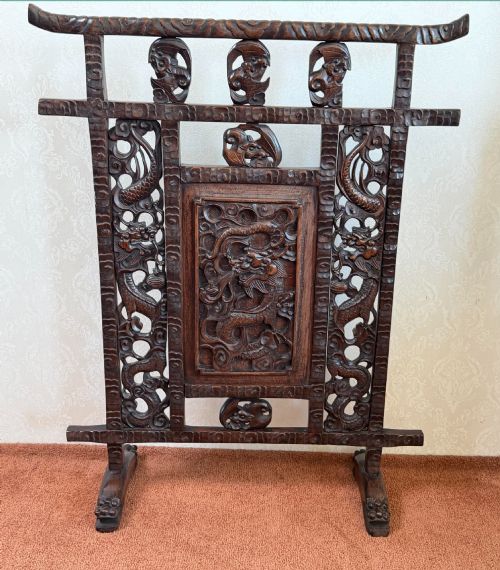
Buyers will frequently encounter nineteenth-century examples that combine dark, figured timber with hand-stitched woolwork, Berlin work, or needlepoint. The selection also includes table screens and occasional combinations with work tables or writing surfaces, originating primarily from English workshops alongside occasional Chinese hardwood imports.
How they were made
Cabinetmakers utilised dense, richly grained rosewood, palisander, and mahogany to turn slender support columns and carve intricate tripod bases with scroll or paw feet. Frames were constructed to hold sliding panels, securing delicate textiles behind glass or allowing users to adjust the height of the screen along a turned wooden pole.
The decorative panels required considerable hand labour, employing techniques such as woolwork, needlepoint, tapestry, canvas work, and poker work to create pastoral scenes or floral motifs. Brass fittings, including sliding collars and adjustable brackets, provided the mechanical linkage between the timber frame and the weighted base.
Rosewood Fire Screen Retail Price Guide 2026
Typical asking prices for rosewood fire screen among the pieces listed under this phrase on Sellingantiques today, from the lower quarter to the upper quarter. They describe what is for sale here now, not the wider market.
What varies in quality
The distinction between standard domestic pieces and superior examples rests on the depth and crispness of the timber carving on the base and stem. Master cabinetmakers integrated elaborate foliate carving and substantial proportions, whereas lesser examples relied on simpler turned poles and plain feet.
The fidelity and condition of the textile panel also determine the standing of a piece, with finely detailed hand-woven tapestry or original Berlin woolwork commanding greater appreciation than later replacement panels. The integration of mechanical adjustments, such as smoothly functioning brass screws and balanced counterweights, separates utilitarian items from high-status furniture.
Gillows
The Rosewood Fire Screen Glossary
- Pole screen
- A tall, slender floor-standing screen featuring an adjustable framed panel that slides vertically on a central turned post. This design allowed occupants to position the shield at exact face height to block radiant heat from the fire.
- Cheval screen
- A floor-standing fire screen supported by two sturdy vertical pillars mounted on wide feet, allowing the central panel to swing on a horizontal axis. Unlike pole screens, these larger frames remained fixed in height.
- Berlin work
- A style of counted-thread embroidery popular in the nineteenth century that used brightly coloured wools to create pictorial scenes on canvas. These detailed needlework pieces frequently formed the decorative inserts of fire screens.
- Needlepoint
- A form of canvas work embroidery stitched by hand using a tent stitch to cover an entire mesh foundation. This technique produced durable, richly textured panels suitable for domestic heat shields.
- Tripod base
- A three-legged furniture support commonly utilised on pole screens to provide stability on uneven wooden floors. The legs often terminate in carved scroll, claw, or pad feet.
Rosewood Fire Screen: Frequently Asked Questions
What is a pole screen?
A pole screen is a vertical nineteenth-century furnishing consisting of a slender wooden post mounted on a tripod base with a sliding panel attached to the upper section.
Occupants placed these items near hearths to protect their complexions from excessive fire heat, adjusting the height of the textile panel as needed.
How do you use a fire screen?
These screens sat between seating areas and open fireplaces to deflect intense radiant heat away from people sitting nearby.
The adjustable panels allowed users to control the exact height of the shield depending on whether they were sitting or standing.
How do I date a rosewood screen?
Dating relies on stylistic shifts in the timber framing and the execution of the base, moving from Georgian restraint through Regency elegance to Victorian elaboration.
Earlier pieces often feature crisper tripod carving and crewelwork, while mid-nineteenth-century examples frequently incorporate Berlin woolwork and heavier proportions.
What are tapestry fire screens?
Tapestry fire screens are frames inset with hand-stitched wool or silk panels depicting pastoral landscapes, floral compositions, or pictorial scenes.
These textiles were worked by hand and mounted into the wooden frames to serve both a decorative and a functional purpose.