




Rosewood Davenport Cabinet
A rosewood davenport cabinet is a compact writing desk offering a sloped writing surface above a set of drawers, prized for both efficiency and decorative grain.
Rosewood Davenport Cabinet
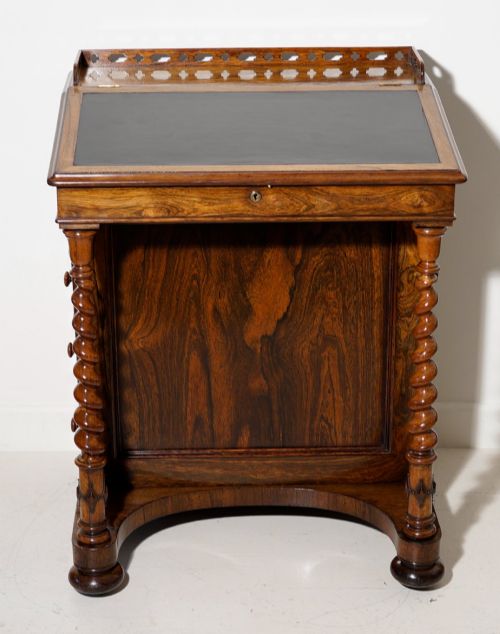
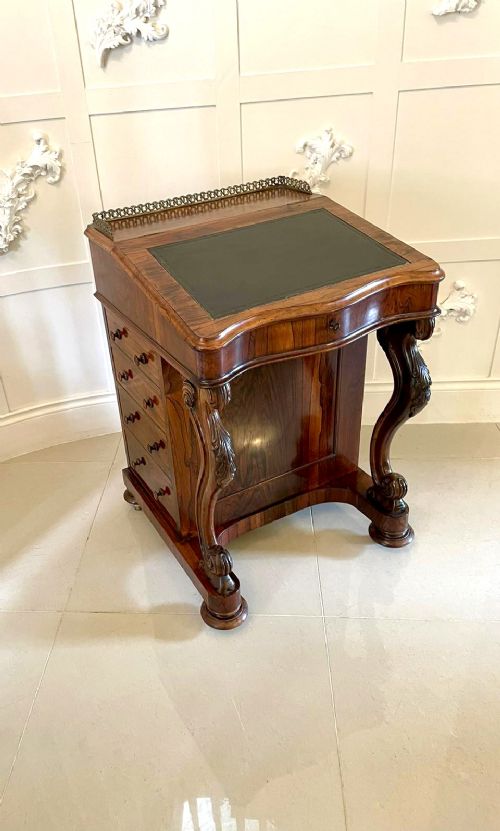
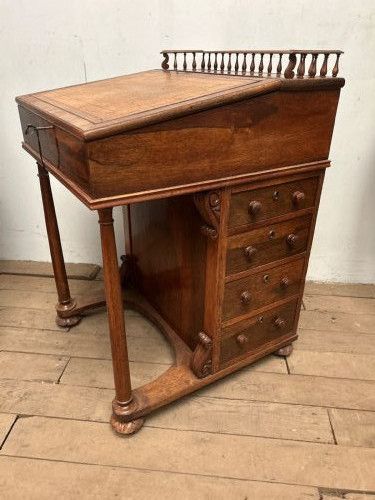
A rosewood davenport cabinet is a small, freestanding writing desk designed with a sloping top and drawers to the side. These pieces date across the nineteenth century, spanning the Regency, William IV, and Victorian periods.
Most examples found here take the form of compact desks, with some featuring sliding tops or pop up mechanisms for additional writing space. The design combines practicality with the rich, dark tones characteristic of nineteenth century timber.
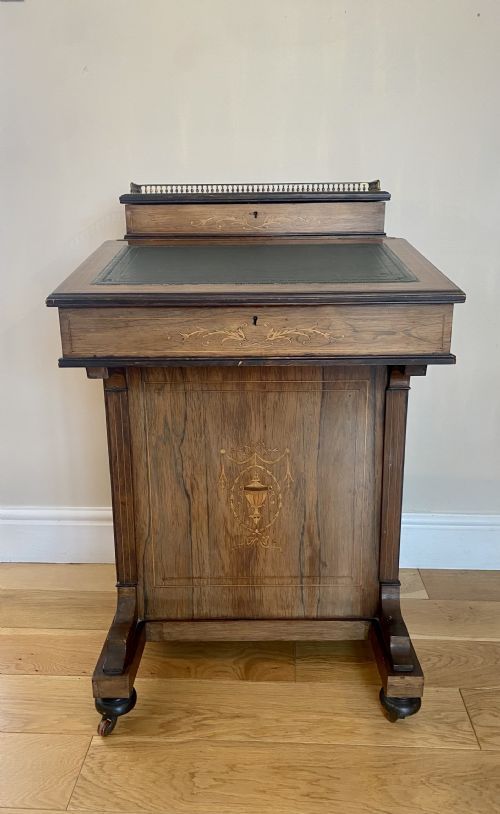
Originating as a space saving desk for the home, a rosewood davenport cabinet provides a dedicated writing surface without dominating a room. The listings concentrate on nineteenth century pieces, showing variations from plain Regency lines to later Sheraton Revival inlay work.
How they were made
Makers built these cabinets using solid and veneered rosewood over secondary timbers, often incorporating brass hardware and leather writing inserts. The dark grain of the rosewood forms the primary visual surface across both Regency and Victorian examples.
Detailing frequently includes satinwood inlay, marquetry, and birds eye maple within the interior compartments. Sliding mechanisms and secondary drawer banks required precise carpentry to ensure smooth operation within a compact footprint.
Listings span the nineteenth century, featuring Regency, William IV, and Victorian periods alongside Sheraton Revival styles.
What varies in quality
The standard of a rosewood davenport cabinet depends heavily on the crispness of the timber selection and the precision of any inlay work. Finer examples display continuous grain matching and delicate satinwood or marquetry details rather than simple painted decoration.
Structural execution also sets pieces apart, particularly the smoothness of sliding top mechanisms and the internal drawer construction. Freestanding versions finished on all sides represent a higher grade of cabinet making than those intended solely for placement against a wall.
Gillows
The Rosewood Davenport Cabinet Glossary
- Rosewood
- A dense, heavily figured timber with dark brown and black grain patterns used extensively in high quality nineteenth century cabinet making. It polishes to a deep lustre.
- Davenport
- A small pedestal desk featuring a slanted, hinged writing surface and side drawers. The form gained popularity in the early nineteenth century.
- Marquetry
- The art of applying pieces of veneer to a structure to form decorative patterns and pictures. It appears on finer Victorian examples.
- Regency
- A style period dating from the early nineteenth century defined by classical restraint and clean architectural lines. Pieces from this era often feature minimal ornamentation.
- Palisander
- A European term for certain rich, dark rosewoods imported from South America and the East Indies. This name appears in continental descriptions of the same timber.
Rosewood Davenport Cabinet: Frequently Asked Questions
What is a davenport desk?
A davenport is a compact writing desk featuring a sloping, hinged top for correspondence and a bank of drawers opening to the side. This clever layout provided a full working surface and storage within a minimal footprint.
First produced in the late eighteenth century, the form remained popular throughout the nineteenth century in both Regency and Victorian households for use in parlours and boudoirs.
How do I use a davenport?
These desks suit placement in living areas or studies where space is at a premium, serving as a dedicated station for writing letters or placing a laptop. The sloping top typically lifts to reveal small pigeonholes and stationary compartments.
Side drawers store paper and writing implements close at hand. Many examples feature stationary boxes or pop up mechanisms that add further organisation to the writing surface.
How do I date a rosewood davenport?
Dating relies on stylistic clues and construction methods spanning the nineteenth century, from Regency forms to later Victorian revivals. Earlier pieces display cleaner architectural lines, while mid to late nineteenth century examples often incorporate richer inlay and mechanical pop up compartments.
Examining the secondary timbers inside the drawers and the style of the brass hardware helps confirm the period. Regency pieces tend to be more restrained, whereas Victorian versions embrace marquetry and satinwood contrast.
Are davenport desks comfortable to write at?
The sloping top provides a natural angle for writing short notes or correspondence, though the fixed height requires a suitably proportioned chair. Because these desks are compact, legroom underneath is limited compared to a standard partner desk.
Sliding top versions allow the user to adjust the writing surface forward for a more comfortable seating position. The leather or faux leather insert on the slope offers a smooth grip for a pen.