
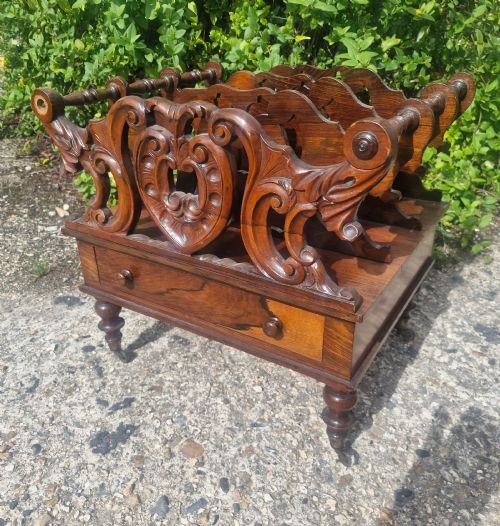
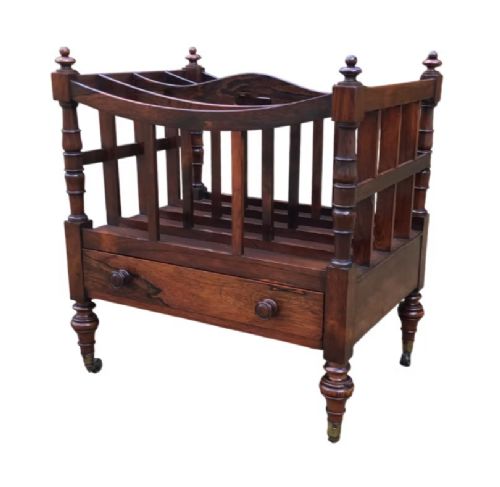
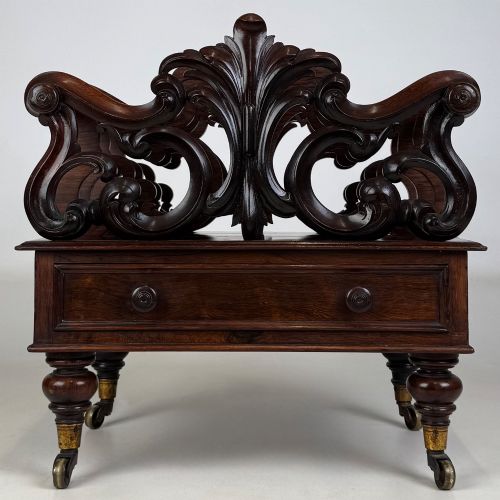


Rosewood Canterbury Stand
A rosewood canterbury stand is a refined furniture piece designed to hold periodicals, music sheets and books with elegance.
What They Are
A rosewood canterbury stand unites compartmentalised vertical slots with a low frame, serving as a tidy for reading materials and music sheets. The examples found here span the Regency and Victorian periods, alongside general nineteenth-century pieces.
Most pieces take the form of magazine racks, canterburys, or two-tier whatnot combinations incorporating compartments and small shelves. Occasional tables and music stands appear alongside these standard variations.
Origins trace principally to Regency and Victorian workshops, where craftsmen utilised rich timber to produce functional items for the drawing room and parlour. These stands remain practical additions for organising papers today.
How They Were Made
These stands rely primarily on rosewood, chosen for its deep grain and durability, frequently paired with brass castors for mobility. Specific examples incorporate ebonised knobs to accent the timber framework.
Joinery methods of the nineteenth century secure the vertical partitions and slatted dividers that form the distinct compartments. Turned uprights and multi-tiered shelves demonstrate traditional cabinet-making practices.
Retail Price Guide 2026
Typical UK retail prices for rosewood canterbury stand, calculated from the Sellingantiques database of over a million retail prices indexed since 2003. This retail price guide relies exclusively on Sellingantiques data; no external sources or auction records are used, so the figures do not describe the wider market.
Listings feature rosewood stands spanning the Regency, William IV, and Victorian periods, often incorporating brass castors and ebonised knobs.
What Varies in Quality
The distinction between standard examples and superior pieces rests on the complexity of the design and the integration of secondary forms like the whatnot or etagere. Elaborate foliate carvings and well-proportioned multi-tier structures elevate certain stands above simple magazine racks.
Material selection and hardware detailing also define the grade of the piece, particularly where carefully turned members, ebonised highlights, and original brass castors remain intact. The crispness of the joinery and the figure of the rosewood dictate the overall visual weight.
The Rosewood Canterbury Stand Glossary
- Canterbury
- A low stand with vertical divisions used for holding loose sheets of music, newspapers, or magazines. The name derives from an archbishop who reportedly commissioned the first such piece.
- Rosewood
- A dense, dark timber featuring pronounced grain patterns that made it a favoured choice for fine nineteenth-century cabinet-making. It takes a high polish and provides deep colouration.
- Whatnot
- A piece of furniture consisting of a set of open shelves for displaying ornaments or holding books. It frequently combines with a canterbury base in Victorian examples.
- Castor
- A small wheel mounted on a swivel assembly attached to the legs of furniture to ease movement. Brass versions are typical on nineteenth-century stands.
- Etagere
- A set of open shelves for display, sometimes incorporating compartments similar to a folio stand or canterbury.
Frequently Asked Questions
What is a rosewood canterbury stand used for?
A rosewood canterbury stand serves to store and organise magazines, newspapers, and music sheets within a living space.
Its divided compartments keep loose papers upright and accessible while adding a decorative nineteenth-century accent to the room.
How do I date a rosewood canterbury?
Dating relies on stylistic clues and construction traits that align with the Regency, William IV, or Victorian eras.
Evidence shows variations such as ebonised knobs on early Victorian pieces and specific structural forms spanning the nineteenth century.
Where were these stands placed in a home?
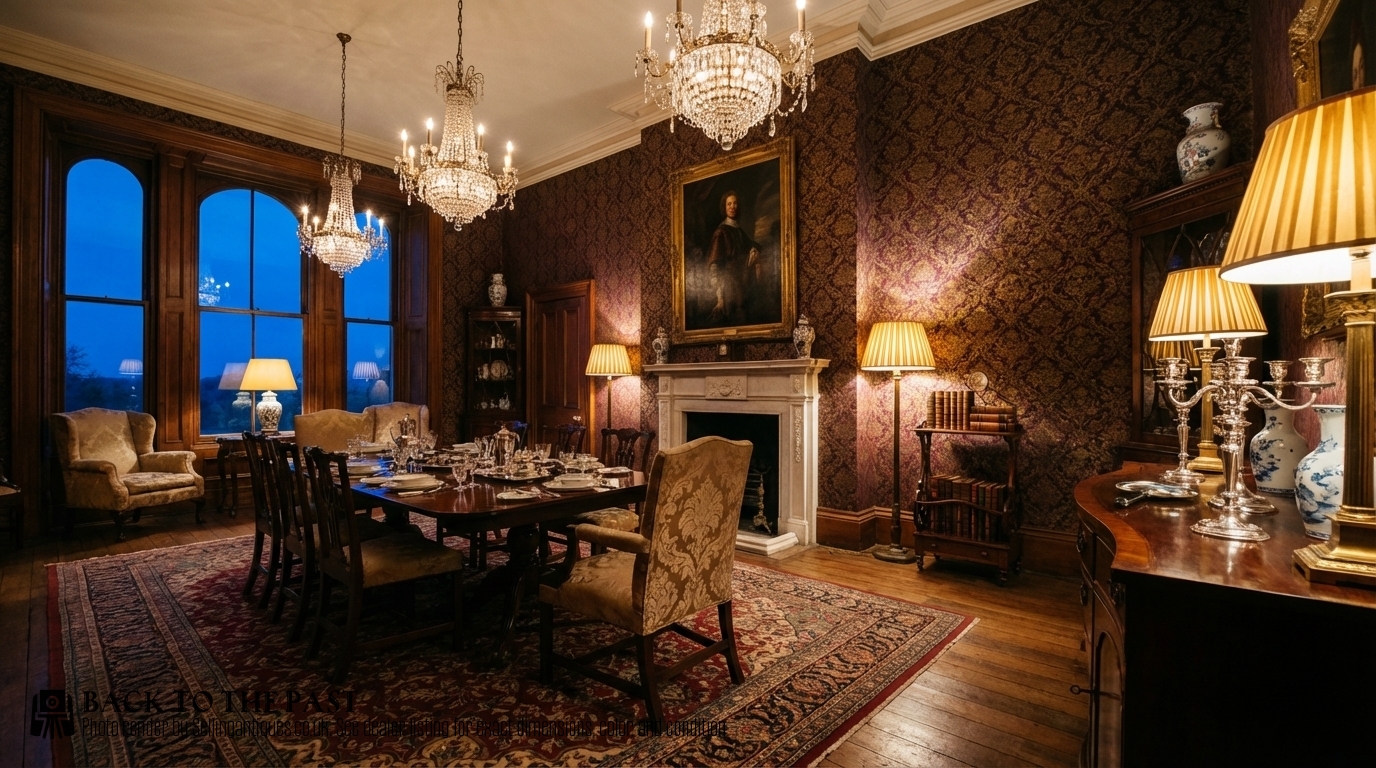
They typically sat beside seating areas or against parlour walls in nineteenth-century drawing rooms.
Their compact footprint allowed them to hold reading materials near a chair or music near an instrument.
What is the difference between a canterbury and a whatnot?
A canterbury focuses on compartmentalised storage for papers and folios, usually featuring a low profile.
A whatnot incorporates multiple open shelves for display or storage, though makers sometimes combined both forms into a single two-tier piece.