


Rosewood Bonsai Table
A rosewood bonsai table elevates a small tree or display piece, bringing traditional Chinese craftsmanship and distinctive dense timber into an interior.
Rosewood Bonsai Table
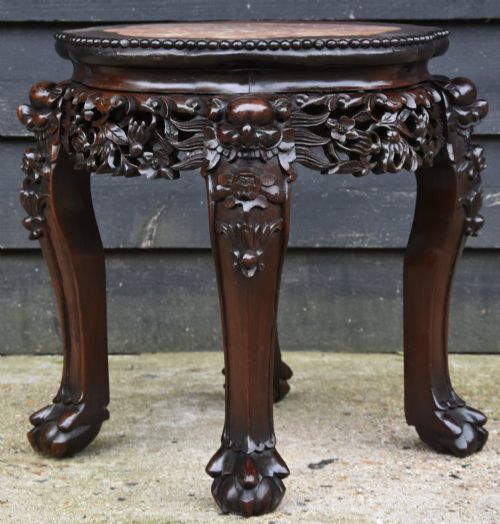
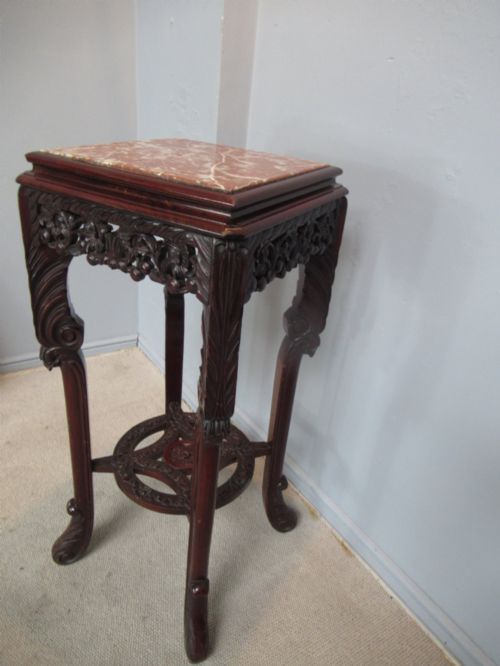
A rosewood bonsai table is typically encountered as a low plant stand, jardiniere stand, or vase stand originating from nineteenth-century China. These surfaces serve to elevate small decorative items, scholarly objects, and potted trees within a room.
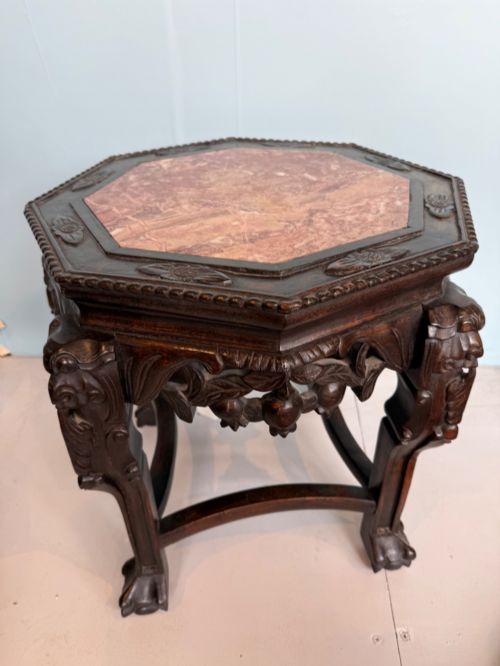
The objects span periods from the Victorian era to the Qing Dynasty, appearing in forms such as pedestals, urn stands, and low occasional tables. Buyers most frequently meet pieces carved from dense Asian hardwoods featuring shaped tops designed to frame a display.
Makers produced these stands in various configurations, including two-tier designs and square coffee table proportions. Each variant reflects traditional Chinese craftsmanship adapted for domestic display.
Materials and Technique
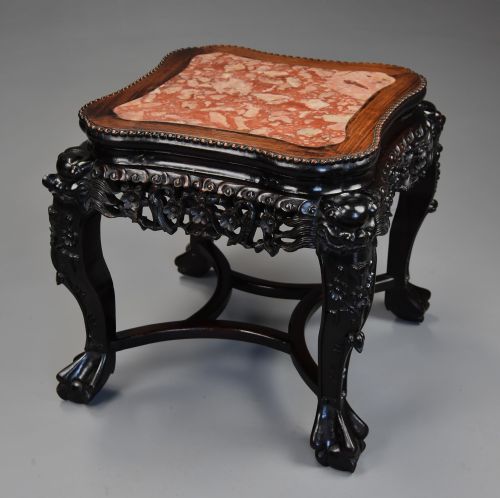
Craftsmen utilised heavy exotic timbers including rosewood, hongmu, padouk, huali wood, and general hardwood for these tables. These dense woods tolerate intricate hand carving without splintering, allowing artisans to create pierced aprons and curved legs.
Many examples incorporate inset marble panels, specifically smooth rouge marble, fitted precisely into the wooden frames of the top surface. This combination provides a cool, durable centre that contrasts with the dark, polished grain of the surrounding timber.
Materials across current options include traditional Asian timbers such as hongmu, padouk, and huali wood alongside general rosewood.
Judging Quality
Quality in a rosewood bonsai table rests upon the depth and crispness of the hand carving on the aprons and legs. Pierced work that retains sharp relief and careful undercutting demonstrates superior workshop execution compared to shallow, machine-like smoothing.
The choice and figuring of the timber alongside the precise fitting of the inset marble top distinguish finer pieces. Heavier, richly grained rosewood and hongmu command attention through their natural lustre and solid joinery without relying on excessive ornament.
The Rosewood Bonsai Table Glossary
- Rosewood
- A dense, heavy tropical timber prized for its dark colour and prominent grain. It provides a durable structure for intricate carving.
- Hongmu
- A traditional Chinese term for dense hardwoods, literally translating to red wood. These timbers take a high polish and resist warping.
- Jardiniere stand
- A tall or low table specifically built to hold a ceramic plant pot or flower bowl. They often feature inset tops to protect the wood from moisture.
- Padouk
- A heavy, durable exotic hardwood with reddish tones. Craftsmen utilise it for robust stands and carved display pieces.
- Qing Dynasty
- The final imperial dynasty of China, lasting from the seventeenth to the early twentieth century. Pieces from this era often display traditional motifs and formal carving styles.
Rosewood Bonsai Table: Frequently Asked Questions
What is a rosewood bonsai table used for?
These tables are traditionally used to elevate bonsai trees, ceramic planters, and small decorative vases. Raising the object improves air circulation around a plant and gives prominence to a treasured display piece.
In modern interiors, they function effectively as small side tables, lamp tables, or independent display surfaces for sculpture and ceramics.
How do I care for marble inset tops?
Marble inset panels require simple dusting with a soft cloth and occasional wiping with a damp sponge. Avoid harsh chemical cleaners that can dull the polished surface of the stone.
Keep moisture away from the surrounding wooden edges to protect the joinery where the marble meets the rosewood or hongmu frame.
Are these tables strictly for plants?
While many were constructed as plant stands or jardiniere supports, their compact proportions make them versatile for various household uses. They serve well as occasional tables for holding cups, books, or small lamps.
Collectors frequently place scholar's objects, bronzes, and carved figures upon them to highlight the craftsmanship of the items.
How do I identify nineteenth-century pieces?
Nineteenth-century stands exhibit hand-cut joinery, dense traditional hardwoods, and patination acquired through decades of handling. Tool marks left by traditional chisels often remain visible on unexposed underside surfaces.
Stylistic details correspond to Qing Dynasty traditions and Victorian export preferences, distinguishing them from later modern reproductions.