


Rose Still Life Art
Rose still life art captures the delicate form and colour of blossoms, offering lasting beauty for any interior wall.
Rose Still Life Art
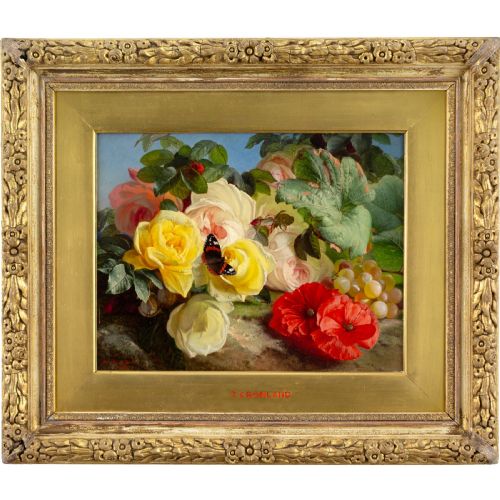
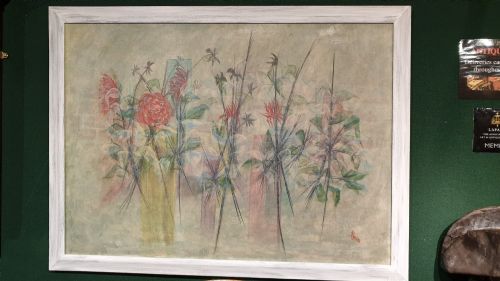
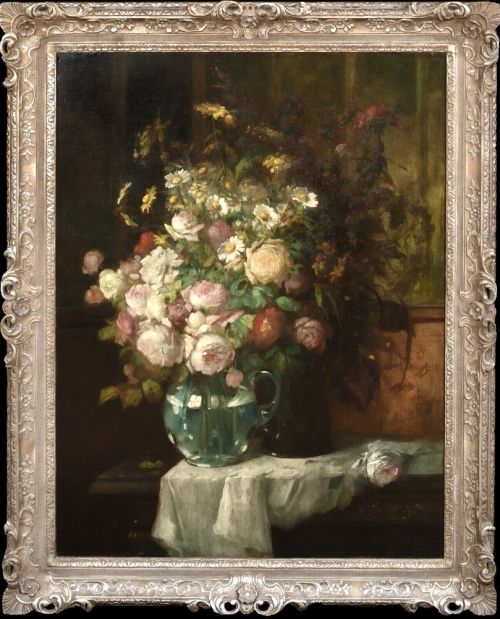
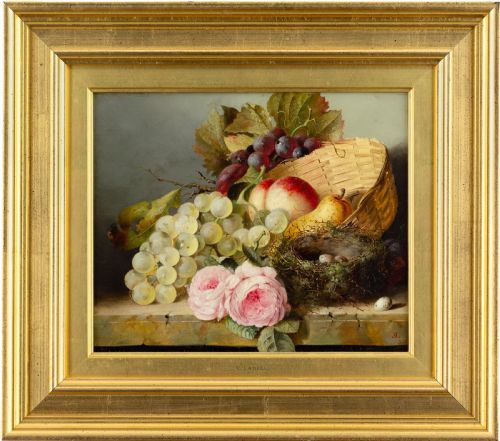
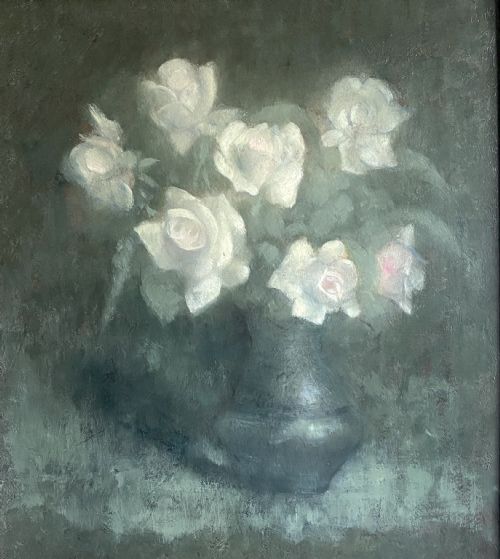
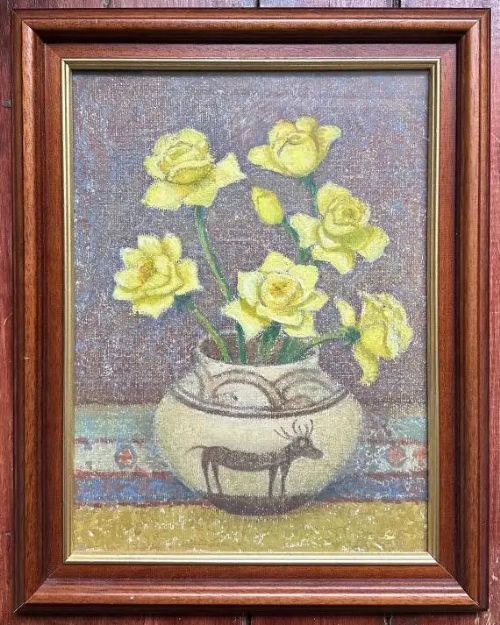
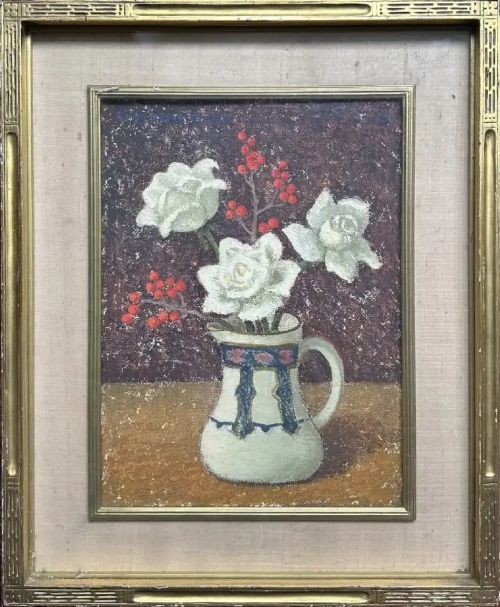
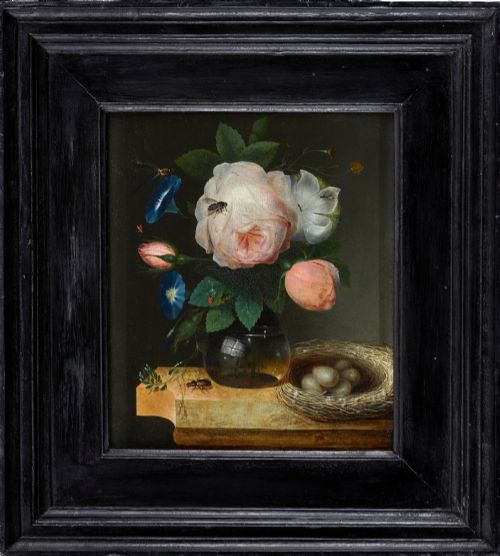
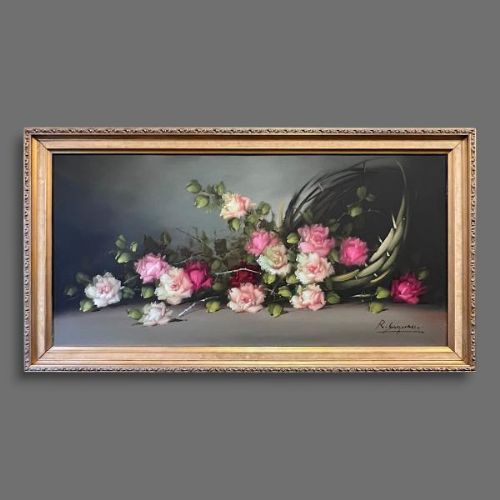
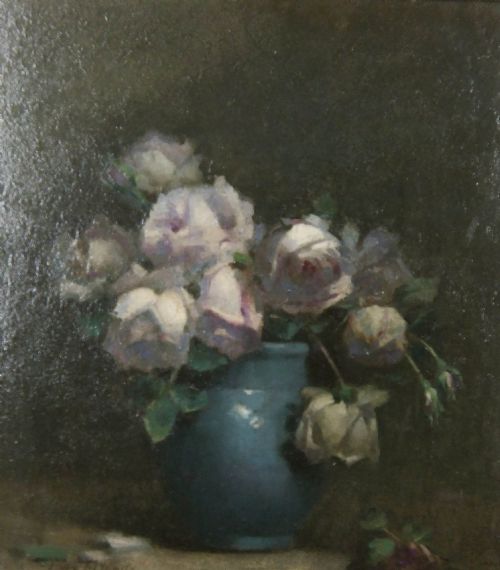
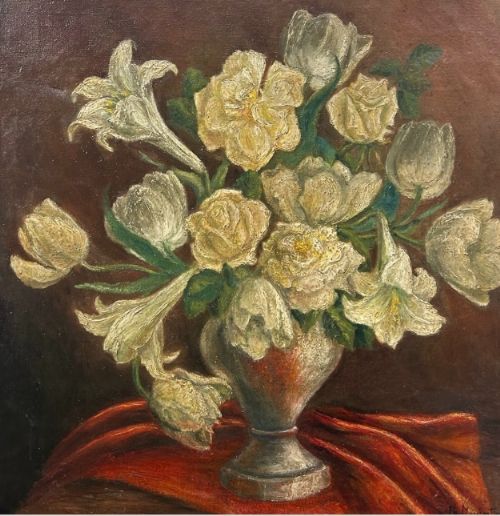
Rose still life art encompasses painted depictions of floral arrangements, frequently featuring blooms in vases or spilling from wicker baskets alongside fruit and foliage. When searching for rose still life art, buyers encounter oil and watercolour works spanning from the Victorian era through the mid-twentieth century. The selection ranges from nineteenth-century realism to mid-century modern interpretations and British impressionism.
The most common pieces on this page are oil paintings on canvas or board dating from the nineteenth and twentieth centuries. These works reflect diverse regional approaches, including British, French, Austrian and Dutch traditions. Whether choosing an intimate Victorian study or a bolder mid-century composition, collectors find pieces executed with varied brushwork and colour palettes.
Materials and Techniques
The works rely primarily on oil paint applied to canvas, wood panels, or board, allowing artists to build rich textures and deep colour tones. Watercolour on paper also appears frequently, offering a lighter and more transparent medium for capturing delicate petal structures. Gilded wood frames frequently complete these pieces, providing a traditional presentation.
Artists employed varied handling of paint, shifting from precise nineteenth-century realism to looser impressionist brushstrokes and mid-century tempera or pastel techniques. The choice of support and pigment dictates the surface grain and light reflection, shaping the visual impact of each floral study.
Several artists preferred to paint their roses right alongside stray grapes and inquisitive butterflies.
Evaluating Quality
Quality rests in the artist's command of light, shadow, and compositional balance within the arrangement of petals, foliage, and vessels. Superior examples display confident brushwork and harmonious colour relationships that lend depth and life to the flowers.
The integration of background elements and secondary objects, such as draped cloth or fruit, distinguishes accomplished works from simpler decorative studies. Finer pieces maintain structural integrity across the canvas while conveying the ephemeral texture of fresh blooms.
Theude Grönland·Konstantin Stoitzner·Edward Ladell·Emma Fordyce MacRae·Gaspar Peeter Verbruggen·William Thomas Wood·Stuart Armfield·Phyllis I Hibbert·Lena M Alexander·James Stuart Park·Ernest Higgins Rigg·Owen Bowen·Jules Felix Ragot·Louise Perman·Arthur Dudley·Giovanni Barbaro·Marthe Barbaud-Koch·Edward Hartley Mooney
The Rose Still Life Art Glossary
- Canvas
- A heavy woven fabric stretched across a wooden frame to serve as a support for oil paintings. It provides a textured surface that holds thick applications of pigment.
- Impressionism
- An art style focused on capturing the visual impression of a moment, marked by visible brushstrokes and an emphasis on light. This approach appears frequently in floral studies from the nineteenth and twentieth centuries.
- Still life
- A painting or drawing featuring inanimate subject matter, typically everyday objects or natural items such as flowers and fruit. Floral arrangements form a distinct subgenre within this tradition.
- Tempera
- A permanent, fast-drying painting medium consisting of coloured pigments mixed with a water-binder agent. It yields a matte surface finish found in select mid-century works.
- Watercolour
- A paint wherein the colour pigments are suspended in a water-soluble vehicle. It is typically applied to paper to create translucent layers.
Rose Still Life Art: Frequently Asked Questions
What is rose still life art?
Rose still life art refers to painted representations of roses arranged in vases, baskets, or displayed upon tabletops. These works capture the fleeting beauty of flowers through enduring artistic mediums.
Such pieces range from detailed nineteenth-century studies to expressive mid-century modern interpretations. They offer collectors a way to bring botanical forms into interior spaces permanently.
How do I date a rose painting?
Dating relies on stylistic clues, framing techniques, and the materials used for the support, such as canvas or board. Victorian and nineteenth-century works often feature tighter realism and ornate gilded frames.
Mid-century pieces typically exhibit looser brushwork and bolder colour choices characteristic of twentieth-century modernism. Signatures and artist records further help establish specific creation dates.
Where should I hang these paintings?
These artworks suit living rooms, dining spaces, or studies where traditional or mid-century decor benefits from botanical colour. They work well displayed at eye level against neutral walls to highlight the painted tones.
Protecting the canvas or watercolour from direct sunlight helps preserve the pigments over time. Proper placement ensures the frame and painting complement the surrounding room.
How do I care for antique paintings?
Maintenance involves keeping paintings away from direct heat sources and excessive moisture to protect the canvas and wood. Gentle dusting with a soft, dry cloth keeps the surface clean without harming the paint.
Avoiding harsh cleaning solutions ensures the original varnish and pigments remain intact. Professional conservation should be sought for any major structural repairs.