




Rose Medallion Vase
A rose medallion vase brings rich polychrome panels of figures, birds and flowers into a room.
Rose Medallion Vase
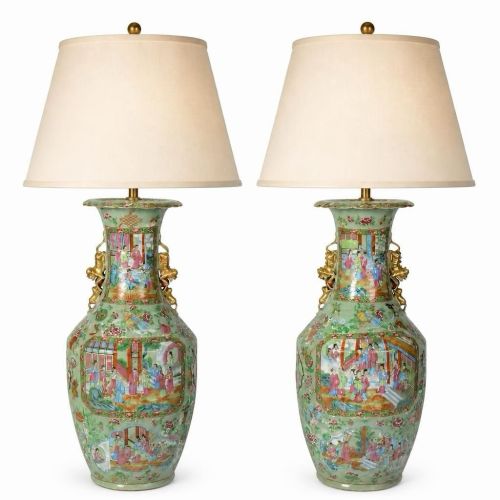
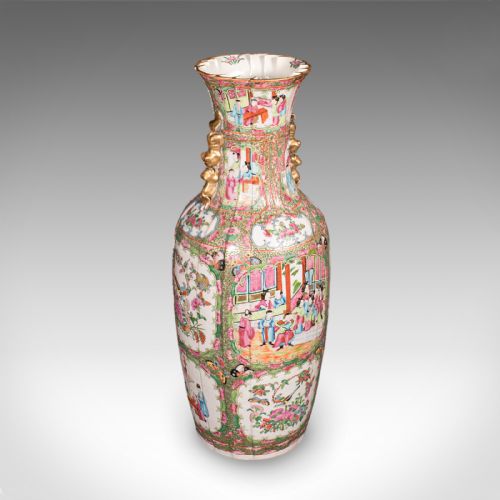
A rose medallion vase presents the distinct style known through Chinese export porcelain and Qing dynasty production. These pieces span the nineteenth century, including Victorian periods and circa eighteen eighty dates, taking forms such as baluster vases, decorative vessels, umbrella stands and converted table lamps.
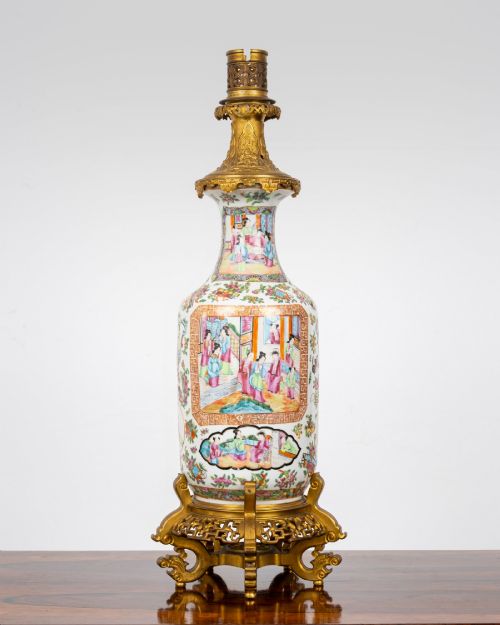
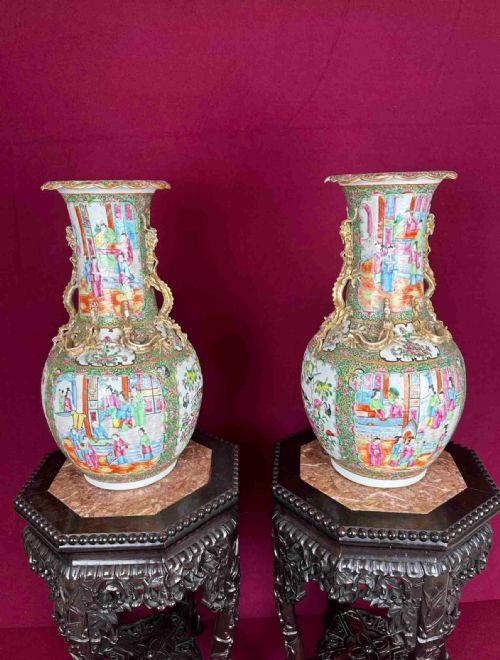
The buyer meets pairs and single items, often associated with Cantonese workshops and Canton porcelain traditions. Many examples arrive mounted in gilt bronze, or fitted with stands and shades, showing how these objects adapted over time.
How they were made
Makers shaped porcelain and ceramic bodies before applying detailed enamel decoration and gilding. Enamels provided the vivid palette characteristic of famille rose and rose medallion patterns, often enhanced by gold leaf and gilt highlights.
Certain vessels received structural additions in metal, combining porcelain with brass, gilt bronze or ormolu mounts. Fabric elements appear on later lamp adaptations, complementing the hard ceramic surfaces.
Several grand vases spent decades doubling as towering reading lamps before returning to pure ceramic dignity.
What varies in quality
The fineness of the hand-painted enamel work dictates visual success, separating crowded panels from neatly balanced compositions of figures and foliage. Crisp definition in the gilding and precise application of gold leaf further elevate the better examples.
Scale and proportion separate standard vessels from monumental baluster vases and large umbrella stands. The integration of mounts, whether original porcelain bodies or later ormolu additions, influences the overall character of the piece.
The Rose Medallion Vase Glossary
- Rose Medallion
- A pattern of compartmentalised enamel decoration centred on a medallion, populated by figures, birds and flowers. It remains a key identifier for nineteenth-century Chinese export porcelain.
- Famille Rose
- A palette of opaque enamels dominated by pink or rose colours, introduced to Chinese ceramics during the Qing dynasty. This technique forms the basis of rose medallion and rose mandarin designs.
- Canton
- A major port in China from which export porcelain was shipped to Western markets. Pieces from this region are frequently termed Cantonese.
- Baluster
- A vase form with a rounded body that tapers toward a narrower neck and flared rim. This shape provides large panels for elaborate enamel painting.
- Ormolu
- Gilt bronze mounts applied to the base or rim of ceramic vessels. Makers utilised these metal additions to enhance decorative presence and stability.
Rose Medallion Vase: Frequently Asked Questions
What is a rose medallion vase?
A rose medallion vase is a piece of Chinese export porcelain decorated with distinct panels of enamelled figures, birds, and botanical motifs. These vessels date primarily from the nineteenth century.
They reflect Qing dynasty craftsmanship and Canton trade traditions, often featuring vibrant pink enamels and gilt highlights.
How do I date a rose medallion vase?
Dating relies on stylistic clues, potting characteristics, and associated mounts. Many examples date from the nineteenth century, with specific pieces linked to eighteen eighty or Victorian periods.
Later adaptations include early twentieth-century lamp conversions fitted with fabric shades and electrical wiring.
Were these vases made as lamps?
Many nineteenth-century vases were originally created as display vessels or lidded containers. They were frequently converted into table lamps at a later date.
Some conversions incorporated gilt bronze or ormolu mounts to secure electrical fittings while retaining the ceramic body.
What is the difference between rose medallion and famille rose?
Famille rose is the broader ceramic category defined by an opaque pink enamel palette used during the Qing dynasty. Rose medallion is a specific pattern within that tradition.
Rose medallion uses distinct compartmentalised panels arranged around a central medallion motif, filled with figures and flowers.