





Rococo Style Table Clock
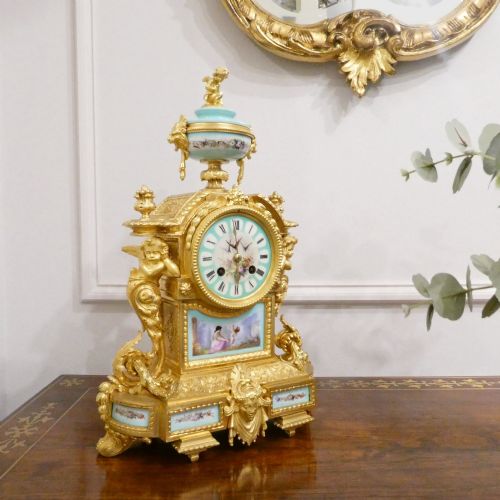
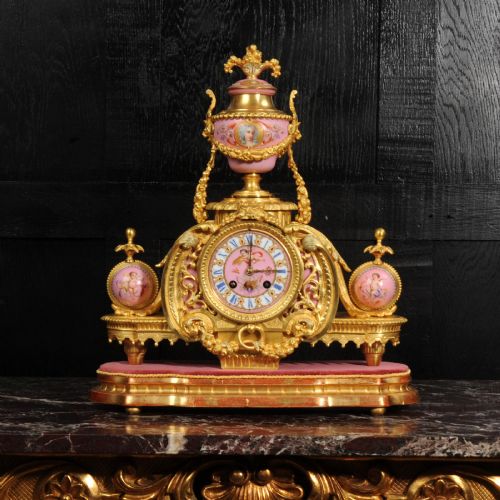
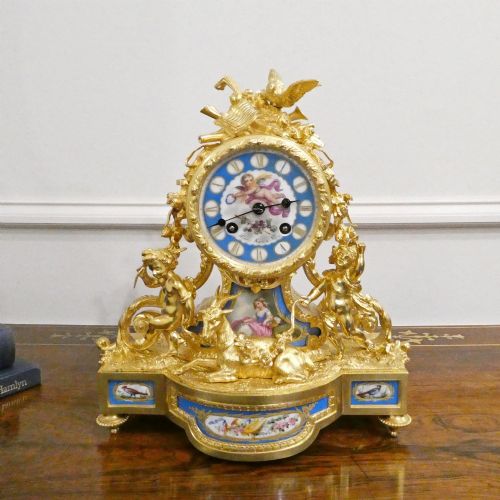
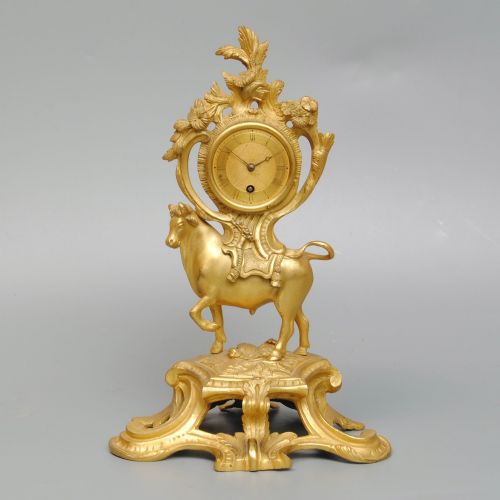
A rococo style table clock brings flamboyant asymmetrical curves, gilt metal and painted porcelain panels into a room.
Rococo Style Table Clock
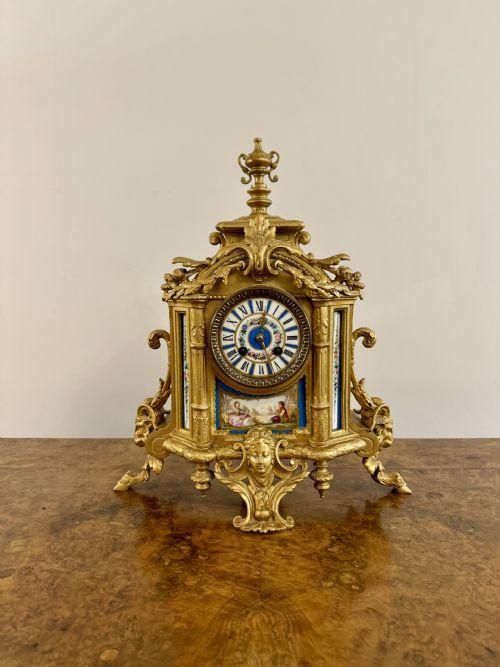
A rococo style table clock takes the form of an elaborate mantel clock or desk clock, drawing heavily on French revival designs from the nineteenth century. These pieces combine sculptural metalwork with decorative elements such as enamel dials and porcelain panels.
The selection here leans toward nineteenth-century French makers and Victorian interpretations, frequently channelling Louis XV and Louis XVI styles. Alongside traditional mantel clocks, buyers encounter occasional variants like carriage clocks, table cabinets and clock garnitures.
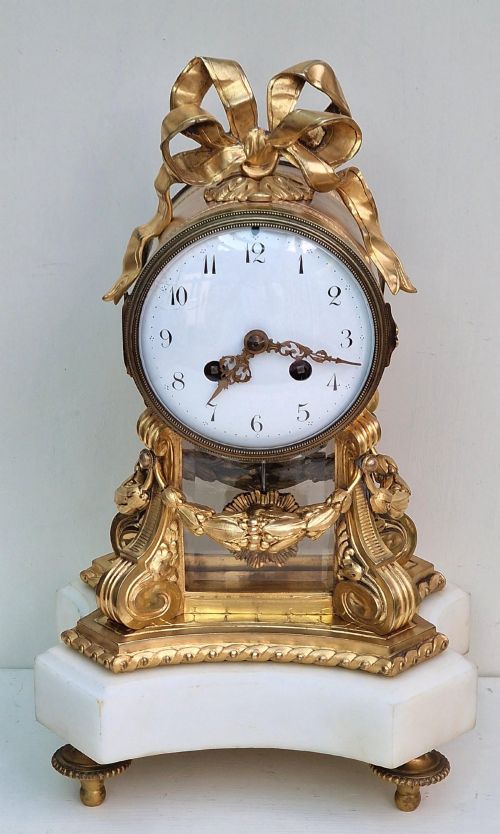
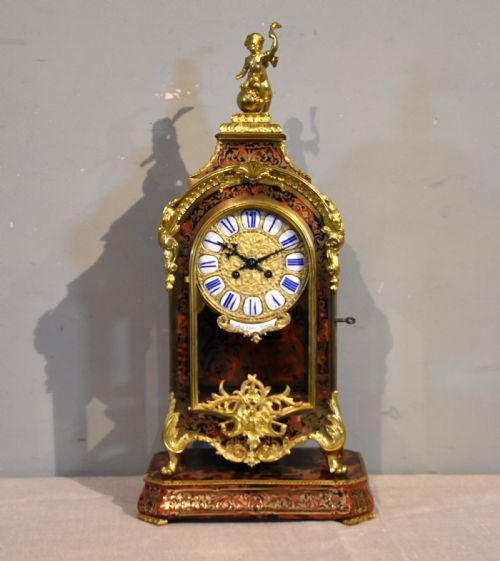
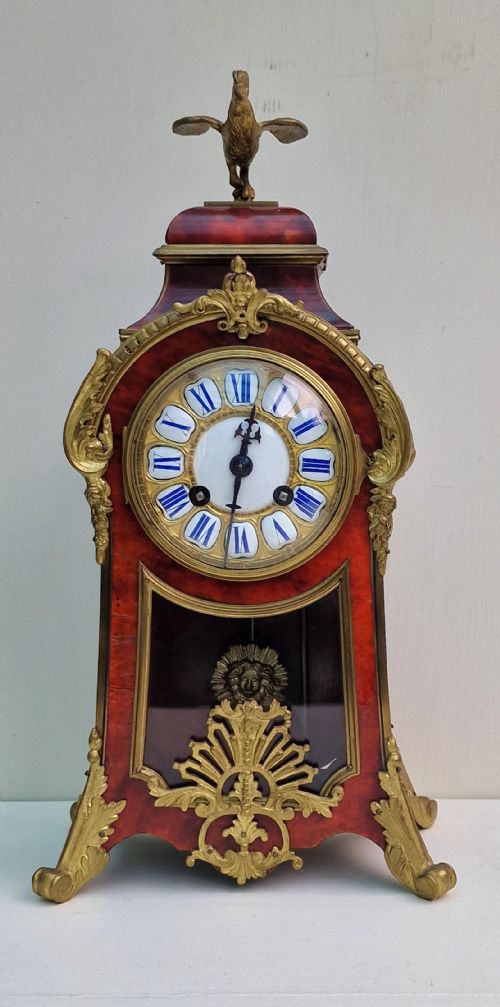
Examples range from solid ormolu and gilt bronze housings to tortoiseshell and marble cases. The overall aesthetic prioritises ornate scrolling foliage, asymmetrical cartouches and figural motifs.
How they were made
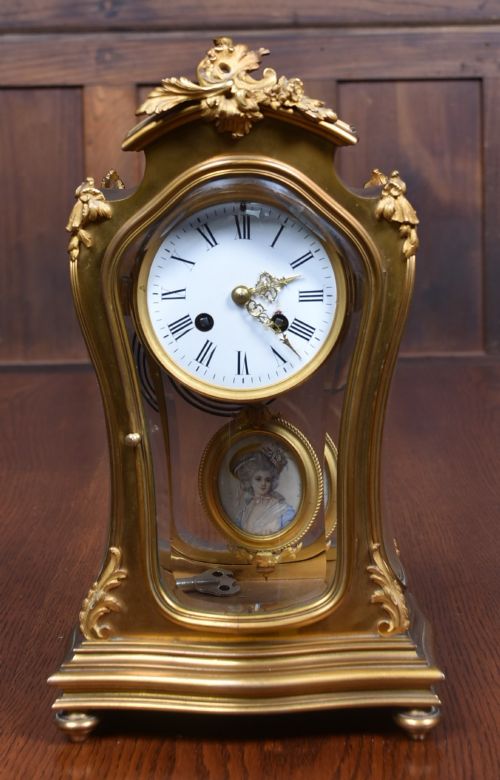
Craftsmen cast housings in bronze, brass or gilt metal, often finishing surfaces with rich ormolu gilding. These heavy metal frames frequently incorporate hand-painted porcelain panels from factories like Sèvres or detailed enamel dials.
Alternative materials include tortoiseshell veneer over wooden carcasses, white marble bases and carved walnut. Movements were precision-engineered by established Parisian and London horologists, driving striking mechanisms and delicate hands.
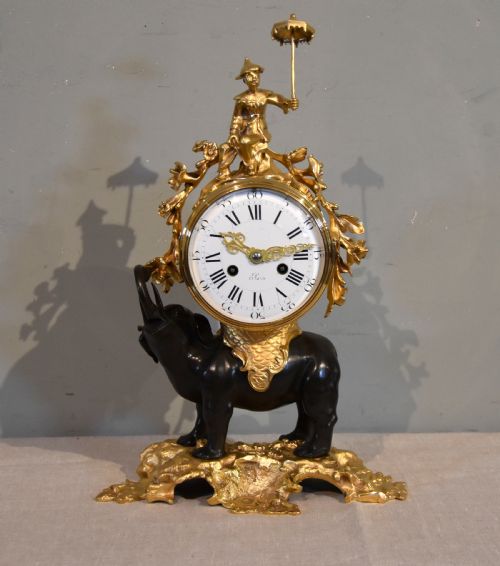
Some mantel clocks take unexpected shapes, including an intricate elephant form and tortoiseshell boudoir cases.
What varies in quality
Quality rests in the crispness of the metal casting and the depth of the ormolu. Finer examples display sharp, hand-chased detail in the scrolling foliage and figures, whereas lesser pieces show softer, shallower relief from secondary casting.
The integration of materials dictates the tier of the piece. Superior clocks feature signed movements by known makers, hand-painted porcelain free from hairline cracks, and robust tortoise-shell or gilt bronze cases that retain their original fire gilding.
Achille Brocot·Henry Marc·Japy Freres·Leroy Paris·PH Mourey·Samuel Marti·Viner London·John Barwise·Leon Message Jollet et Cie·Le Roy et Fils
The Rococo Style Table Clock Glossary
- Ormolu
- A technique of applying finely ground high-carat gold to a bronze object using a mercury amalgam. This imparts a deep, warm metallic lustre that defines high-end nineteenth-century French clocks.
- Garniture
- A set of decorative objects designed to be displayed together, typically comprising a central clock flanked by matching candelabra or vases. These matched suites create a balanced mantelpiece arrangement.
- Boulle
- A style of marquetry using brass and tortoiseshell inlaid in intricate arabesque patterns, named after the cabinetmaker André-Charles Boulle. It adds rich texture and contrasting warm tones to clock cases.
- Cartouche
- An ornamental tablet or panel enclosed by an elaborately scrolled border. On clock dials and cases, these often frame enamel chapter rings or painted pastoral scenes.
- Fusee
- A conical pulley used in clock and watch movements to maintain an even tension on the mainspring as it unwinds. This mechanism improves the timekeeping accuracy of the clock.
Rococo Style Table Clock: Frequently Asked Questions
Where should I place a rococo style table clock?
These clocks suit prominent locations such as a drawing room mantelpiece, a large desk or a secure side table where their ornate bronze and porcelain details catch the light.
Ensure the surface is level and stable to protect the delicate mechanical movement and heavy gilt housing.
How can I tell a nineteenth-century piece from a later revival?
Examine the casting quality of the gilt bronze or ormolu, the hand-painted details on the porcelain panels, and the signature on the clock movement. Nineteenth-century pieces typically show hand-chasing on the metalwork and specific maker stamps on the backplate.
Later copies often feature heavier, unrefined machine casting and simplified internal components.
What maintenance do these clocks require?
Mechanical clocks need professional cleaning and oiling every few years to prevent wear on the brass gears and pivots. Keep them away from direct sunlight, dampness and extreme temperature fluctuations.
Dust the gilt surfaces gently with a soft, dry brush to preserve the finish.