


French Bronze Clock Movement
These french bronze clock movement pieces are precision mechanisms housed in grand cases, prized by collectors for their intricate engineering and period artistry.
French Bronze Clock Movement
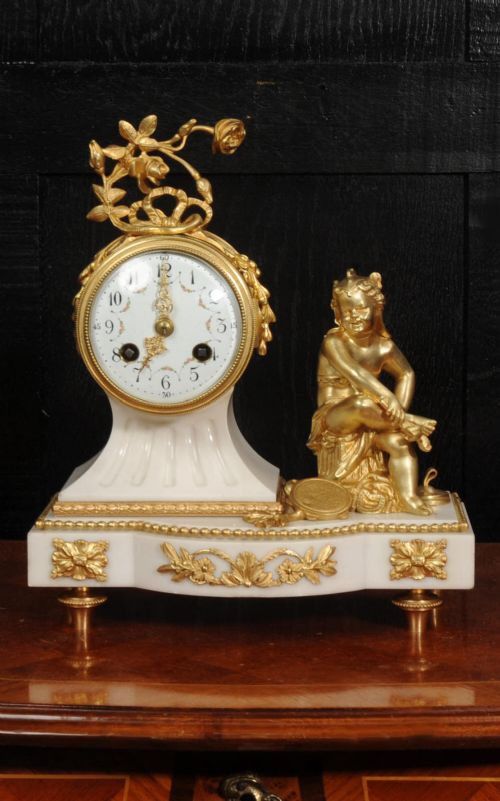
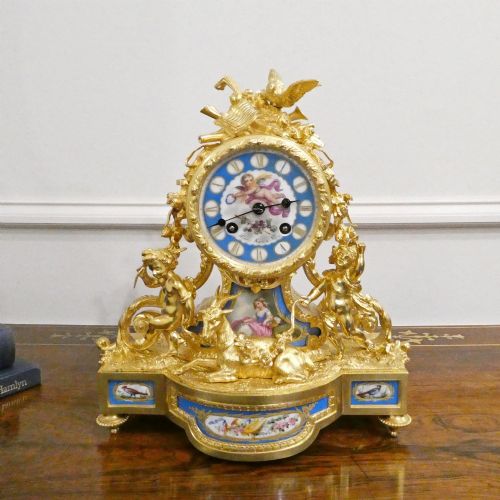
When you search for french bronze clock movement, you examine the mechanical hearts and architectural housings of nineteenth-century horology. These objects combine cast bronze cases with complex brass gear trains designed to measure hours reliably.
The versions most commonly met on this page span the nineteenth century, including pieces from the Regency era through to the eighteen-eighties. They typically take the form of mantel clocks or desk clocks incorporating decorative elements.
Makers integrated various materials into these assemblies, pairing patinated and gilt bronze with marble, porcelain, and glass. The resulting items reflect distinct historical aesthetics from French Rococo Revival to Empire and Victorian styles.
Quality and Craftsmanship
The distinction between tiers of work lies in the crispness of the bronze casting and the depth of the gilding. Master founders achieved sharp relief in ornamental motifs, whereas lesser examples display softer details and uneven finishes.
Complexity and signature of the movement also dictate standing. Signed mechanisms by established Parisian or provincial makers show superior finishing on the brass teeth and plates compared to unsigned, mass-produced alternatives.
The inventory records mantel clocks, desk clocks, and specialised fusee movements originating from both French workshops and London makers.
Japy Freres·Henry Marc·Philippes Paris·Achille Brocot and Delettrez·Hay London·Henry Berkeley Square London·FB Adams London·F Marti
The French Bronze Clock Movement Glossary
- Ormolu
- Gilded bronze produced by applying a mixture of gold and mercury to a cast bronze base. This technique creates a rich golden surface that defines many nineteenth-century cases.
- Silk suspension
- A method of hanging the pendulum from a fine woven silk thread rather than a metal spring. This fragile arrangement is typically found on earlier nineteenth-century movements.
- Fusee
- A conical pulley used in clock movements to maintain an even pull as the mainspring winds down. This device improves timekeeping accuracy across the power reserve.
- Japy Freres
- A prominent nineteenth-century French manufacturing firm known for producing reliable clock movements. Their works appear frequently in architectural mantel clocks of the period.
- Chinoiserie
- A decorative style reflecting European interpretations of Chinese and East Asian artistic traditions. It manifests in desk clocks and decorative mounts featuring exotic motifs.
French Bronze Clock Movement: Frequently Asked Questions
What is a french bronze clock movement?
A french bronze clock movement refers to the mechanical brass gear assembly housed within an ornate bronze case originating from France during the nineteenth century. These mechanisms drove the hands and often powered striking trains for hours and half-hours.
Collectors prize them for their mechanical ingenuity and the sculptural quality of their bronze housings, which often draw on Empire or Rococo Revival styles.
How do I wind an antique clock?
Antique clocks with mechanical movements require a specialised key inserted into winding holes on the dial face. You turn the key gently until you feel resistance, taking care not to over-wind the mainspring.
Different movements require different intervals, ranging from daily winds to eight-day cycles, depending on the complexity of the gear train and whether the piece includes a striking mechanism.
How do I date a french movement?
Dating relies on examining the maker stamps on the brass backplate, the style of the bronze case, and the type of pendulum suspension used. Silk suspension threads typically point to earlier periods, whereas steel springs became standard later.
Makers often stamped their medals and serial numbers directly onto the brass movement, allowing researchers to trace production eras through trade records.
Where were these clocks displayed?
These decorative objects served as centrepieces on drawing room mantelpieces, library desks, and boudoir consoles. Their grand bronze and marble cases were designed to display status and taste in domestic interiors.
Beyond keeping time, they functioned as sculptural art pieces that harmonised with the interior design themes of the Regency, Victorian, and revival periods.