


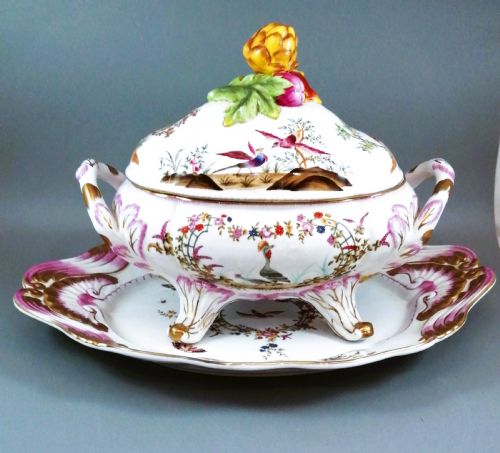


Rococo Style Porcelain Bowl
These rococo style porcelain bowl pieces bring extravagant 18th-century curves, asymmetric scrolls, and lively figurative modelling directly into your interior.
Rococo Style Porcelain Bowl
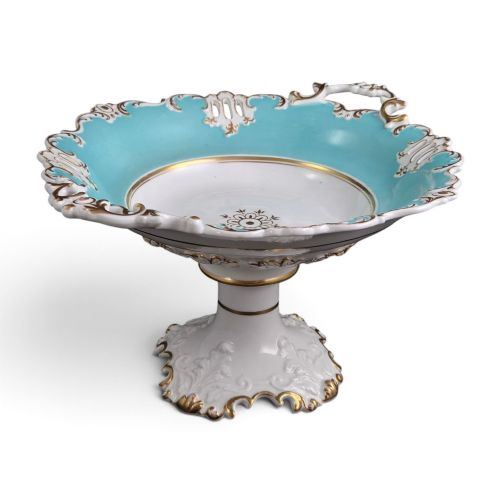
A rococo style porcelain bowl encompasses ornate centrepieces, tazzas, baskets, and decorative dishes shaped by asymmetrical scrolls and nature-inspired motifs. You will frequently encounter 19th-century interpretations alongside earlier Georgian and Victorian examples, reflecting sustained enthusiasm for exuberant Continental designs.
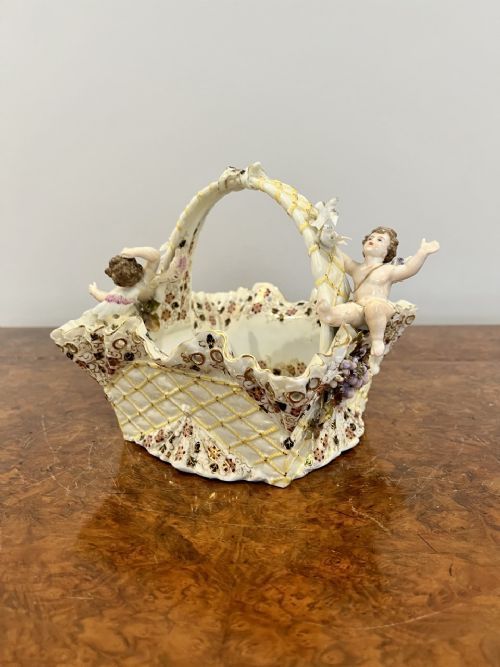
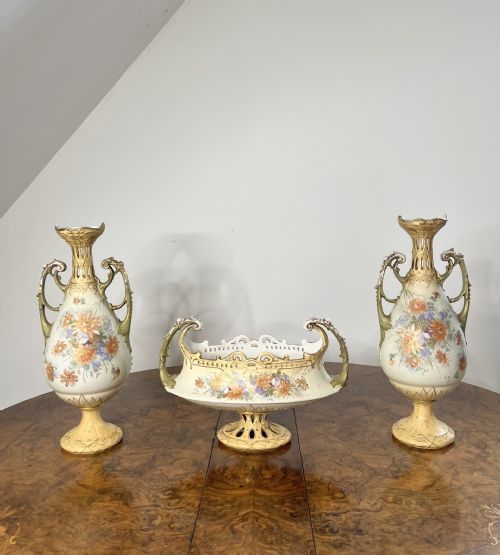
The selection ranges from German and French manufactories producing elaborate floral garnitures to English bone china tazzas featuring pierced openwork and gilding. These objects typically served as table centerpieces or decorative serving vessels, combining functional ceramic forms with sculptural ornamentation like cherubs and applied flowers.
How they were made
Potters shaped hard-paste and bone china porcelain bodies through casting and moulding, frequently incorporating delicate pierced lattice work for baskets and comports. Artisans then applied intricate hand-modelled elements such as cherubs, putti, and three-dimensional floral encrustations directly onto the damp clay before the initial firing.
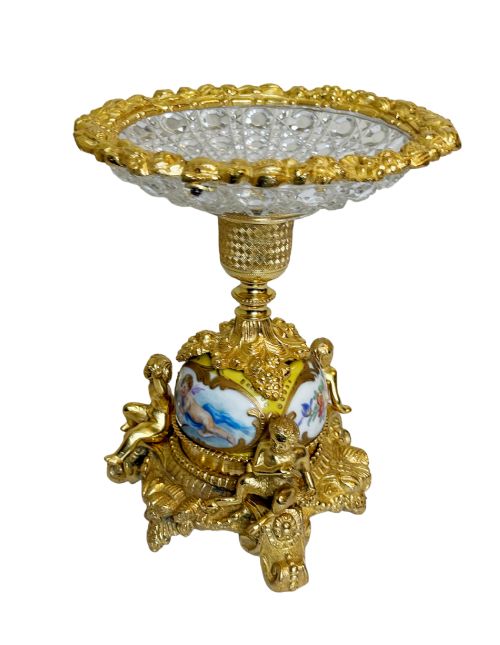
Decoration relied on hand-painted enamels combined with generous applications of gold leaf, gilding, and gilt bronze mounts. Subsequent low-temperature firings fixed these vibrant colours and metallic accents, creating the high-contrast lustre characteristic of the style.
Listings feature hard-paste porcelain, bone china, and gilt bronze across pieces dated from the Georgian era through to the early twentieth century.
What varies in quality
Gilding technique also dictates value, with burnished gold leaf and fire-gilt bronze mounts demonstrating superior craftsmanship compared to flat, dull metallic paints. The complexity of the structural form, particularly in large multi-tier centrepieces and openwork baskets, separates ambitious studio output from standard production.
Coalport·Derby·Paul Müller Selb·C.G. Schierholz and Sohn·Chelsea·Meissen
The Rococo Style Porcelain Bowl Glossary
- Tazza
- An ornamental shallow bowl or dish mounted on a stemmed foot or pedestal. It originates from Renaissance tableware and gained renewed popularity for dramatic fruit or floral display during the Victorian period.
- Gilt bronze
- A metalwork technique involving the application of finely ground gold mercury amalgam to a bronze base. It provides a durable, lustrous golden surface frequently used for mounts and stands on 19th-century porcelain.
- Hard-paste porcelain
- A true ceramic composition fired at very high temperatures using kaolin and petuntse. This formula creates a dense, impermeable white body that accepts brilliant enamel colours and resists scratching.
- Comport
- A decorative footed stand or dish used for serving fruit or sweets at formal dining tables. They often feature pierced borders and elaborate rococo scroll handles.
- Bonbonniere
- A small ornamental container or box designed for holding sweets, comfits, or confectionery. These delicate porcelain pieces frequently include fitted lids and hand-painted pastoral scenes.
Rococo Style Porcelain Bowl: Frequently Asked Questions
What is a porcelain centrepiece?
A porcelain centrepiece is an elaborate decorative vessel designed to sit in the middle of a dining table or sideboard. These statement pieces often incorporate openwork baskets, comports, or figurative groups.
Historically, they held fruit, flowers, or sweetmeats during formal meals, acting as visual focal points for the room.
How do I care for gilt porcelain?
Gilt porcelain requires gentle handling and should be dusted using a soft, dry brush rather than abrasive cloths. Avoid any chemical cleaning agents or submersion in water, particularly on pieces with cold-painted enamels or metallic leaf.
Keep these objects away from direct sunlight and areas prone to heavy humidity to protect the integrity of the glaze and gold.
How do I distinguish 18th-century from 19th-century pieces?
Distinguishing periods relies on examining paste composition, glaze characteristics, and factory marks beneath the base. Earlier Georgian pieces often exhibit softer body textures and subtle hand-painting nuances distinct from later Victorian revival output.
Factory marks evolved over time, providing reliable chronological markers when compared against standard reference literature.
Were these bowls used daily?
These decorative bowls and baskets were primarily reserved for special dining occasions, balls, and formal entertaining. Their delicate handles, applied flowers, and pierced rims made them impractical for robust everyday kitchen or dining use.
Instead, they remained displayed on side tables or cabinets when not gracing the dining table.