

Rococo Style Commode
A rococo style commode brings serpentine curves and elaborate mounts to a room, offering both generous storage and distinct period character.
Rococo Style Commode
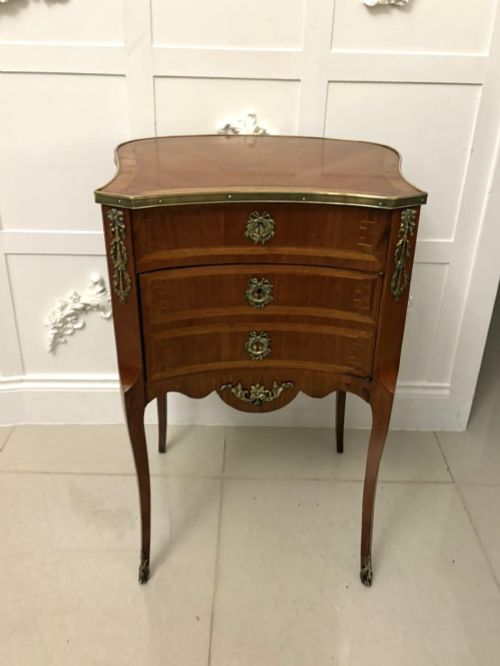
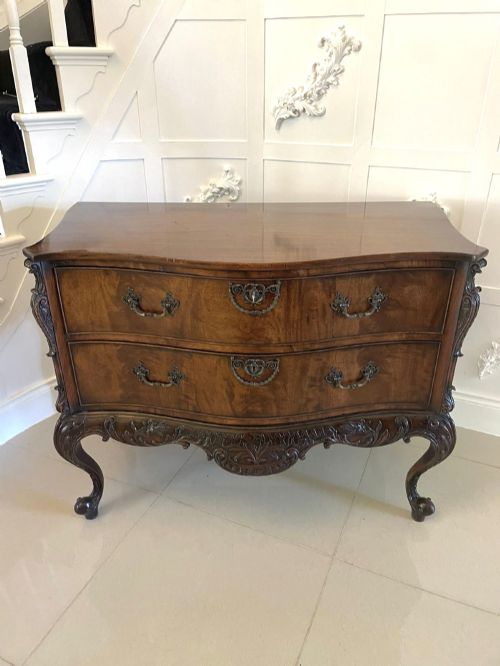
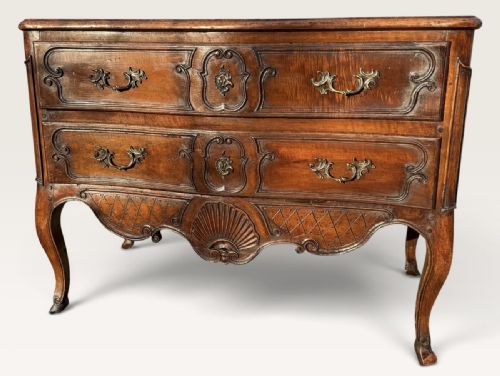
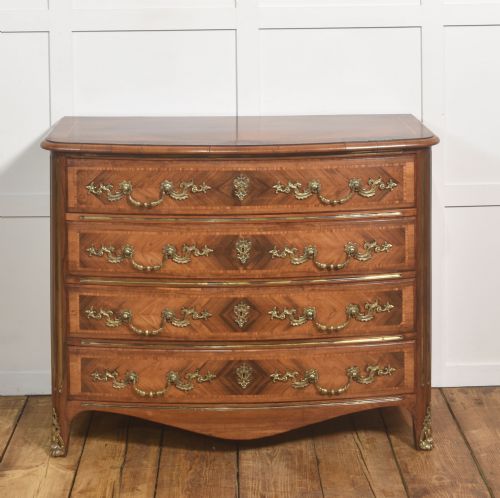
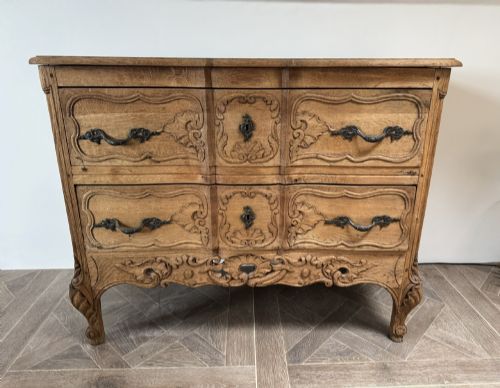
A rococo style commode is a low storage chest designed with flowing, asymmetrical lines and decorative mounts, appearing across this page in forms ranging from grand French revival pieces to simpler provincial cabinets. Buyers searching this phrase encounter variations spanning the eighteenth century through to the early twentieth century, reflecting enduring taste for continental cabinetmaking.
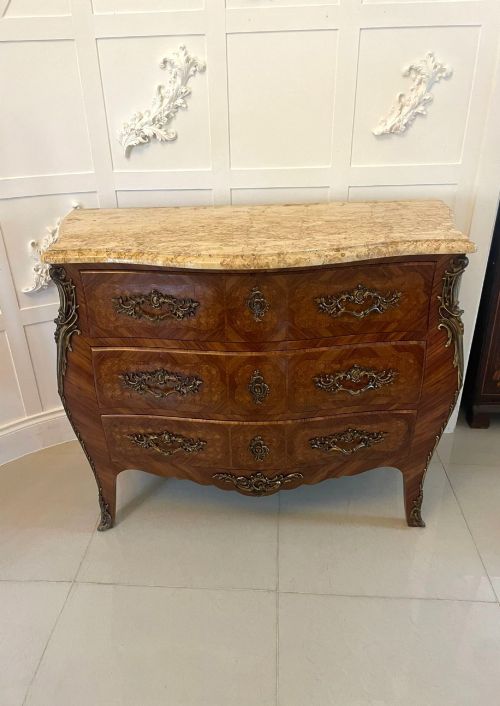
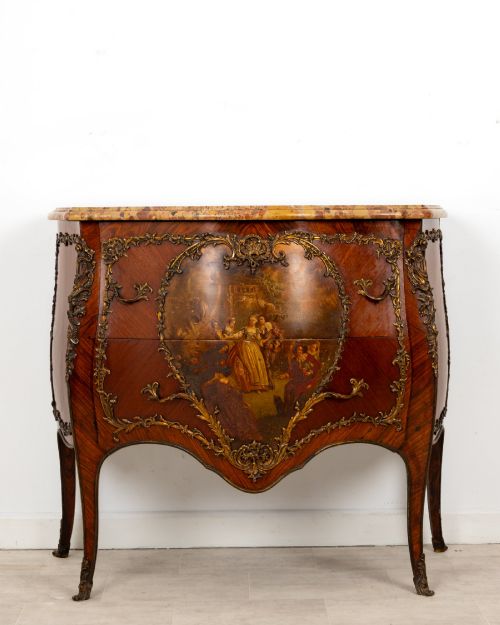
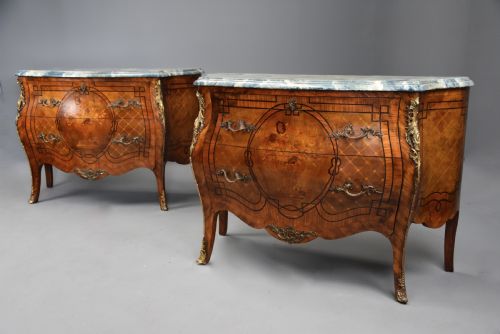
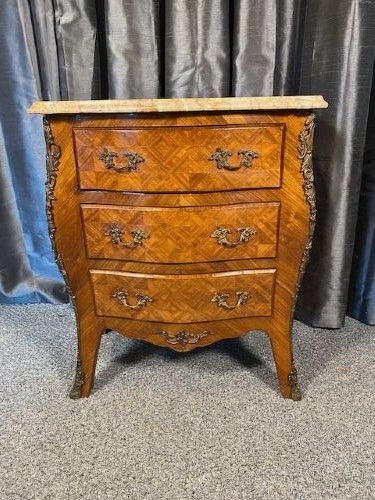
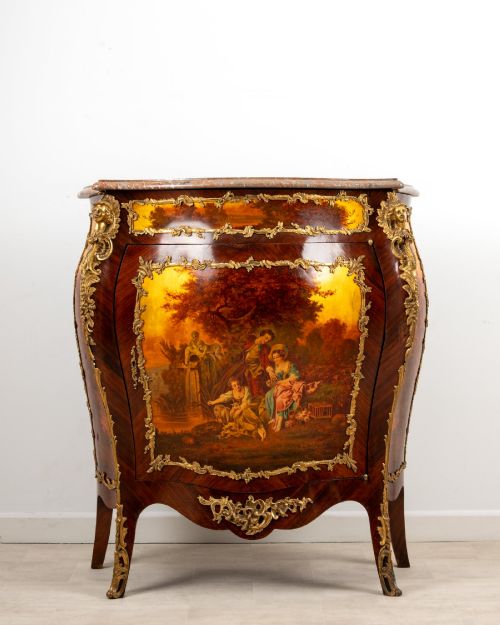
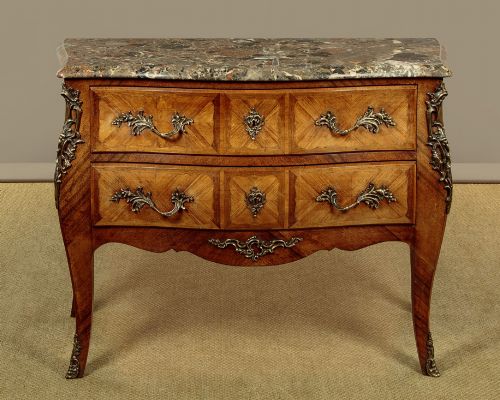
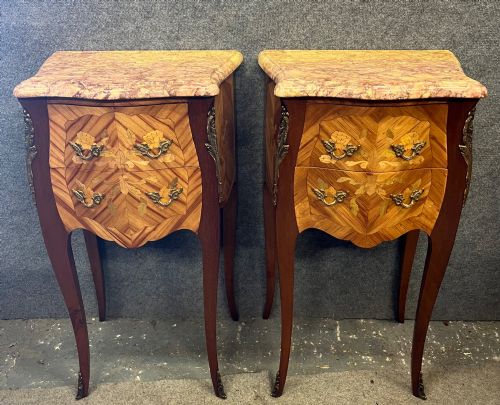
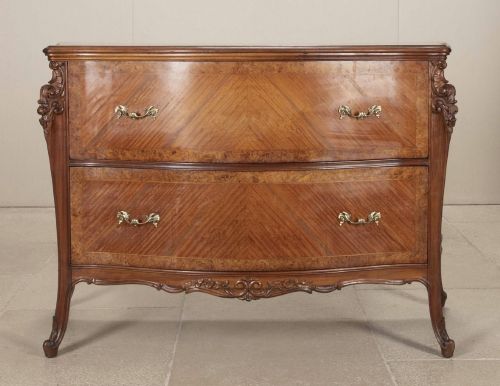
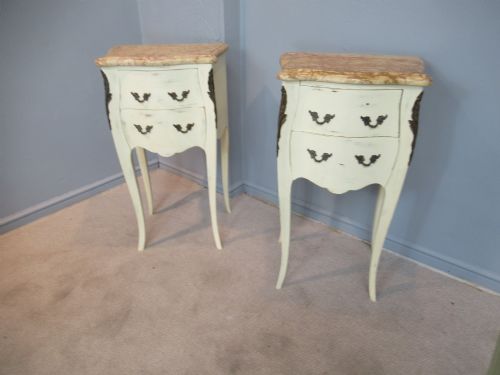
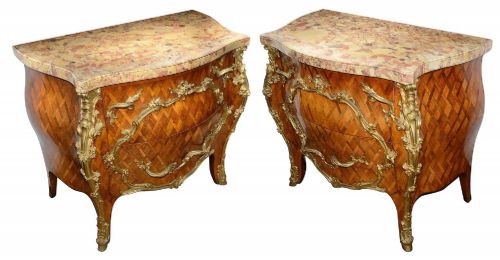
The selection here includes serpentine fronts, bombé silhouettes, and marble tops, alongside bedside cabinets and sideboards sharing the same decorative vocabulary. Most examples draw upon French Louis XV designs, executed either in continental workshops or by later revivalists utilising classic shapes.
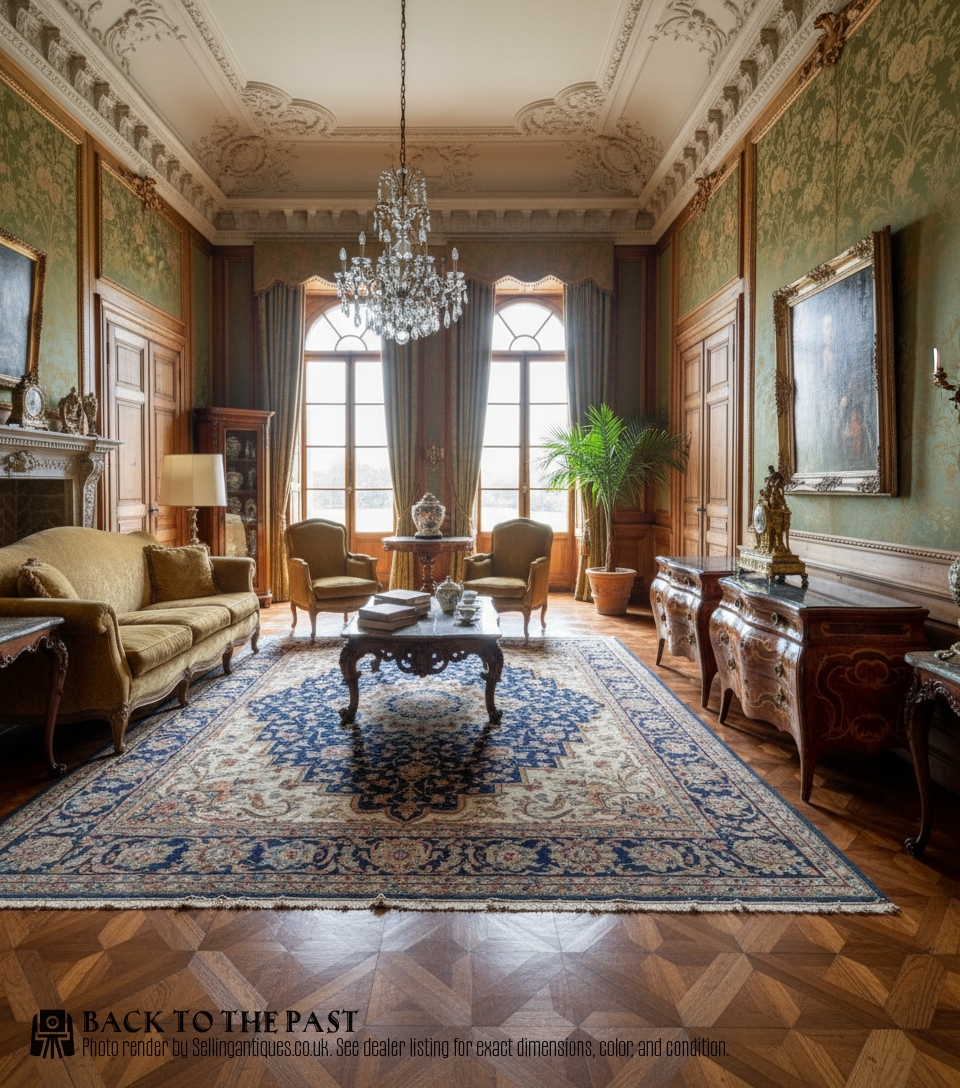
How they were made
Cabinetmakers built these pieces using structural timbers such as oak, walnut, or mahogany, applying decorative veneers like kingwood, satinwood, and burr walnut in intricate marquetry and parquetry patterns. Surfaces often received painted finishes, japanned lacquer, or Vernis Martin decoration to achieve rich visual depth.
Metalwork played a defining structural and ornamental role, with cast ormolu and gilt-bronze mounts fixed to corners, handles, and aprons. Heavy marble slabs, shaped to follow the serpentine or bombé contours of the wooden carcase, finished the upper surface.
Rococo Style Commode Retail Price Guide 2026
Typical asking prices for rococo style commode among the pieces listed under this phrase on Sellingantiques today, from the lower quarter to the upper quarter. They describe what is for sale here now, not the wider market.
Listings feature walnut, kingwood, and painted finishes across periods from the eighteenth century to the twentieth century.
What varies in quality
Quality rests in the precision of the cabinetmaker's geometry and the crispness of the cast mounts, where finer pieces show seamless alignment between wood and metal. The complexity of the veneer work and the integration of hand-painted scenes or lacquer further separate standard production from exceptional examples.
The weight and selection of the marble top, along with the depth of the carving in solid elements like oak or walnut, distinguish superior regional and revival work from simpler utility pieces.
The Rococo Style Commode Glossary
- Bombe
- A bulging, outward-curving chest or cabinet form characteristic of continental furniture. This silhouette requires advanced joinery to shape the timber frames accurately.
- Ormolu
- Gilt-bronze decorative mounts applied to furniture corners, feet, and drawer fronts. The technique involves finishing cast bronze with a layer of gold amalgam.
- Marquetry
- The art of applying decorative veneer pieces to form pictorial or geometric patterns on a wooden carcase. Craftsmen select contrasting timbers to create tonal variation.
- Vernis Martin
- A type of simulated Japanese lacquer developed in France during the eighteenth century. It employs multiple layers of resin varnish to achieve a translucent, polished finish.
- Serpentine
- A furniture front or top shaped with a central convex curve flanked by two concave sweeps. This undulating contour defines much of the rococo aesthetic.
Rococo Style Commode: Frequently Asked Questions
What is a rococo style commode?
A rococo style commode is a decorative chest of drawers characterised by curved lines, ornate metal mounts, and asymmetrical ornamentation inspired by eighteenth-century continental design.
These pieces function primarily as statement storage units or bedside tables in traditional and eclectic interiors.
Where were these commodes made?
While many originate from French workshops following Louis XV traditions, similar pieces were produced across Italy, Sweden, Denmark, and Britain during both the eighteenth century and subsequent nineteenth-century revival periods.
Local timber choices and painting styles often indicate the specific regional origin.
How do I care for marble top commodes?
Marble surfaces require regular cleaning with a damp cloth and mild, pH-neutral soap to prevent staining from acidic substances. Avoid abrasive cleaners that can dull the polished stone finish.
Wooden carcases benefit from occasional waxing appropriate to the specific veneer or painted surface.