





Rococo Style Centre Table
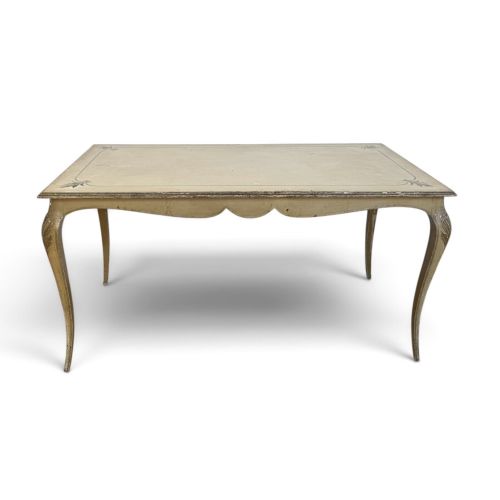
A rococo style centre table brings dramatic 19th-century French and Italian curves into a room, offering a freestanding showpiece with rich marquetry and marble.
Rococo Style Centre Table
A rococo style centre table is designed to be viewed from all sides, standing freely in the middle of a room rather than pushed against a wall. The selections here draw heavily on 19th-century revivals, alongside pieces from the 1920s and 1930s that echo earlier French and Italian aesthetics.
Forms span traditional centre tables and coffee tables to occasional tables, console tables, and writing tables. Walnut, burr walnut, and kingwood dominate the timber selection, frequently paired with shaped marble or onyx tops.
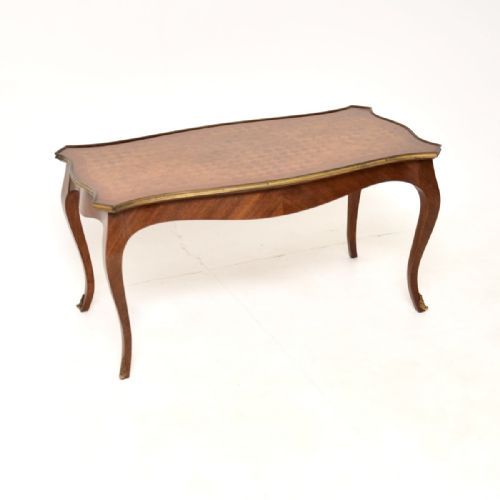
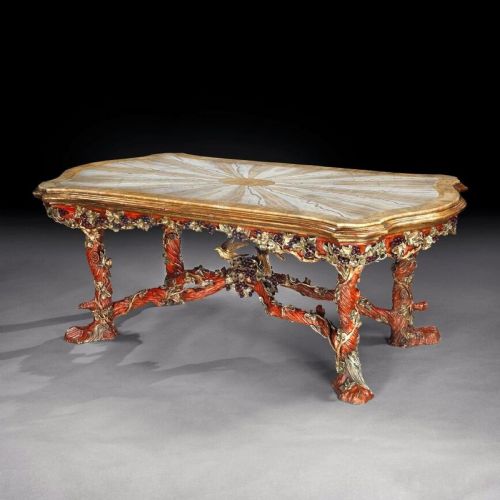
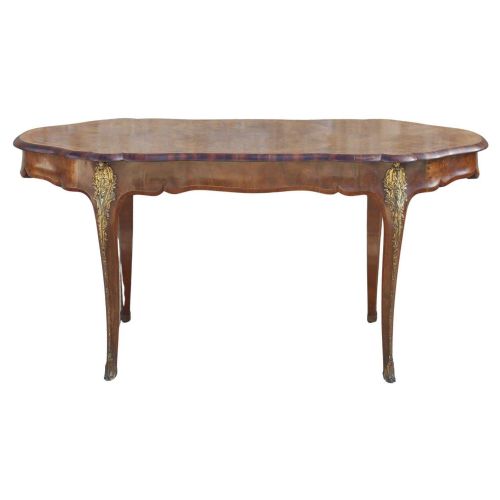
Stylistic influences range across French Rococo Revival, Louis XV styles, and Italian Baroque. These pieces rely on serpentine shapes, cabriole legs, and elaborate marquetry inlay to capture an ornate historical atmosphere.
Materials and construction methods
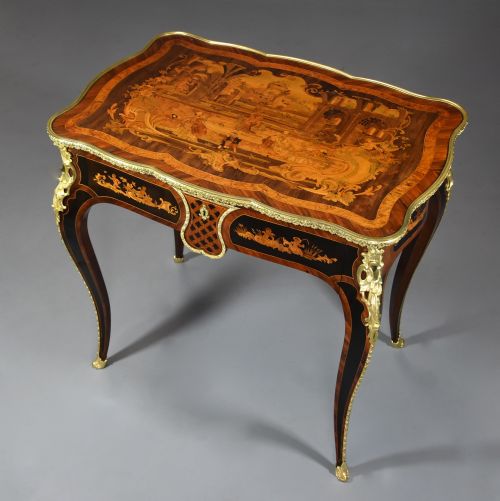
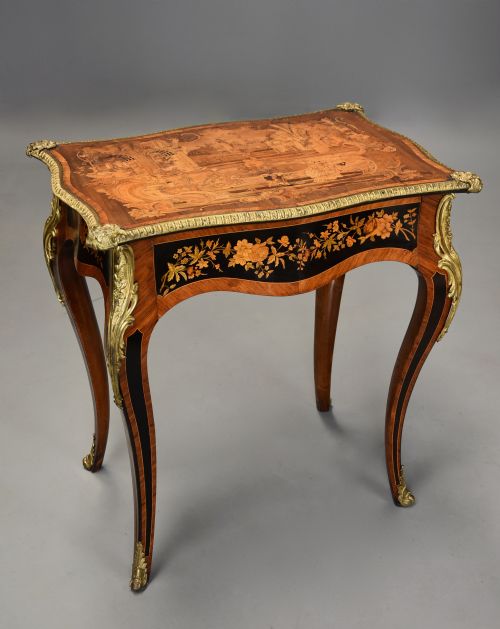
Cabinet makers utilised dense hardwoods like walnut, kingwood, satinwood, and mahogany as the structural base for these tables. Marquetry and parquetry veneers were meticulously sliced and laid in geometric or floral patterns across the tops and apron rails.
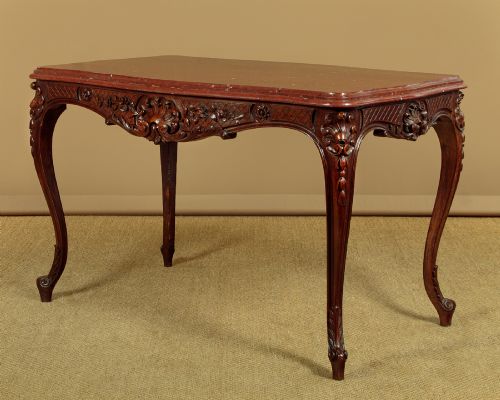
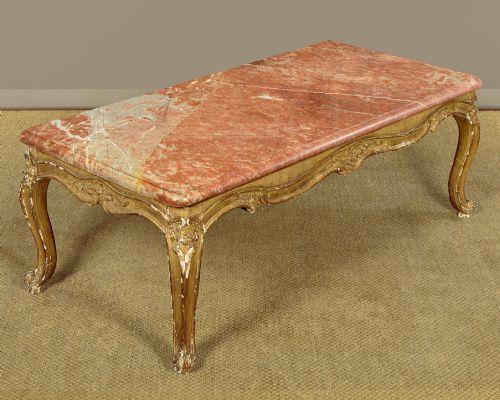
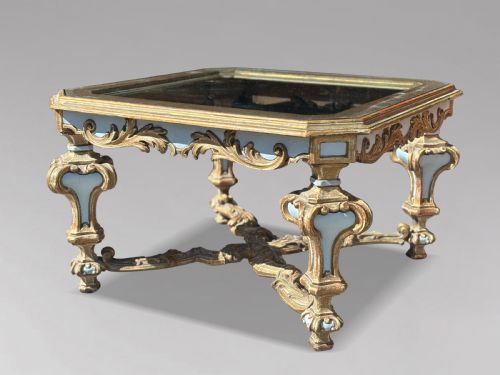
Cast bronze, ormolu, and gilt-brass mounts were applied to accent the corners, legs, and aprons, following the naturalistic curves of the design. Heavy stone inserts, specifically rouge marble and onyx, were shaped to fit precisely into recessed wooden table tops.
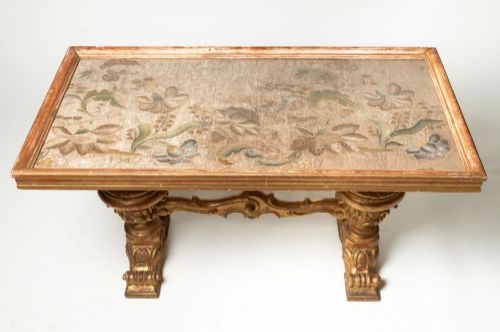
Carved giltwood and polychrome painted finishes appear on frames requiring intricate relief work. Cabriole legs were shaped directly from solid timber blocks to support the heavy stone and wood assemblies.
Several tables include hidden drop leaves and tilt mechanisms for impromptu dining.
Distinguishing quality in craftsmanship
Quality rests in the crispness of the bronze or ormolu mounts and the precision of the parquetry inlay. Finer examples display hand-chiselled detailing on metal mounts and tightly fitted wood veneers without visible gaps.
The integrity of the carved wooden elements and the weight and polish of the marble or onyx top set apart better pieces. Tables featuring signed maker attribution or distinctive regional carving reflect higher standards of period workshop production.
Amleto Bertoni·Eugene Clauss of Paris·Zwiener Jansen Sucesseur
The Rococo Style Centre Table Glossary
- Ormolu
- Gilded bronze mounts applied to furniture. This technique provides metallic highlights along the structural curves of revival pieces.
- Marquetry
- Inlaid wood veneers forming decorative pictures or patterns. Craftsmen use contrasting timbers to create floral or abstract motifs across the tabletop.
- Guéridon
- A small freestanding circular table. These often feature a marble top supported by a central pillar or three cabriole legs.
- Cabriole leg
- A furniture leg that curves out and then in, resembling animal legs. This shape is characteristic of Louis XV and rococo revival designs.
- Parquetry
- Geometric wood inlay patterns. Artisans arrange small wood tiles to form repeating checkerboard or cube designs.
Rococo Style Centre Table: Frequently Asked Questions
Where should a centre table go?
These tables are built to stand free in the open floor space of a room. They work well in the middle of a large drawing room or reception area where every side can be seen.
Because the decoration extends around the entire apron and legs, pushing the piece against a wall hides the intricate marquetry and bronze mounts.
How do I clean a marble top?
Wipe the surface with a soft, damp cloth using mild soap if necessary. Avoid acidic cleaners that etch the stone polish.
Dry the marble thoroughly afterwards to protect the natural finish and prevent water rings.
How do I spot a revival piece?
Nineteenth-century revival pieces emulate 18th-century French and Italian designs using machine-sawn veneers and mass-produced cast mounts. Look at the timber backing and screw types to confirm the age.
Makers often referenced Louis XV styles while incorporating contemporary 19th-century construction methods.