


French Inlay Accent Table
A french inlay accent table brings floral marquetry and warm exotic timbers into a room, offering a functional surface with distinctive continental decorative flair.
French Inlay Accent Table
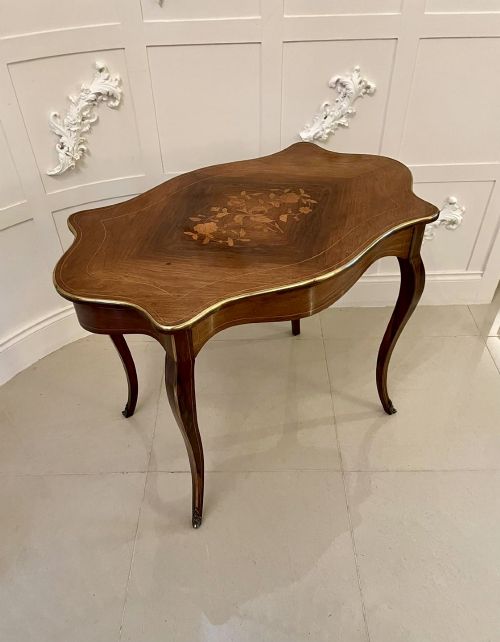
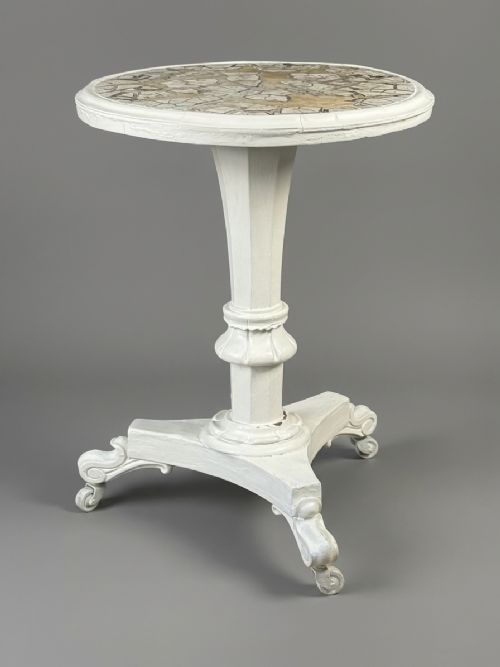
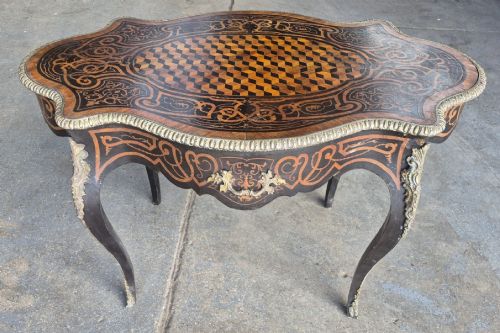
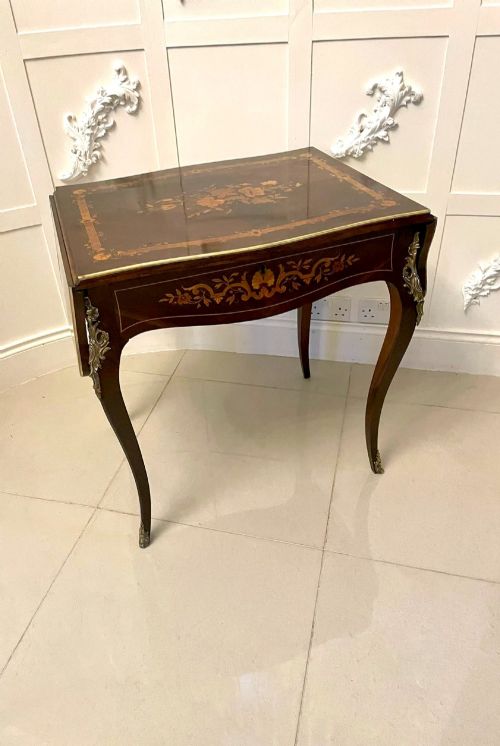
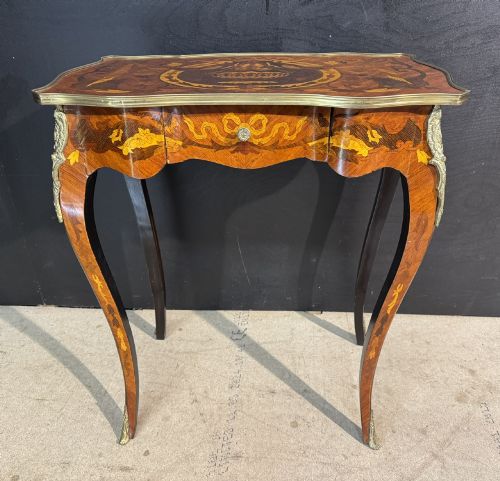
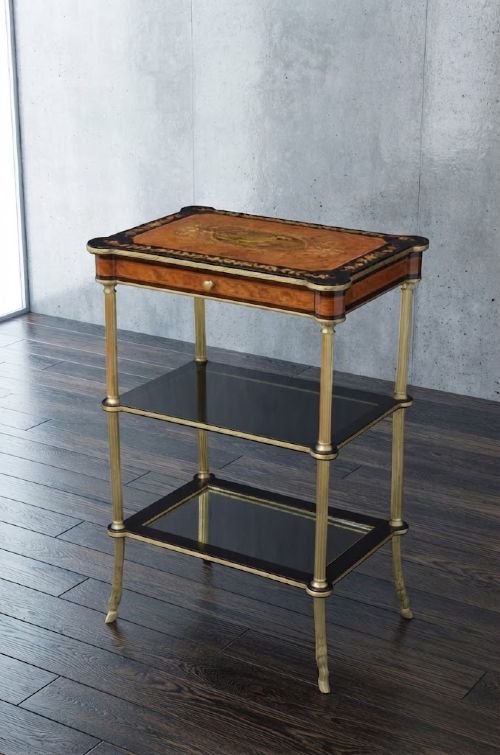
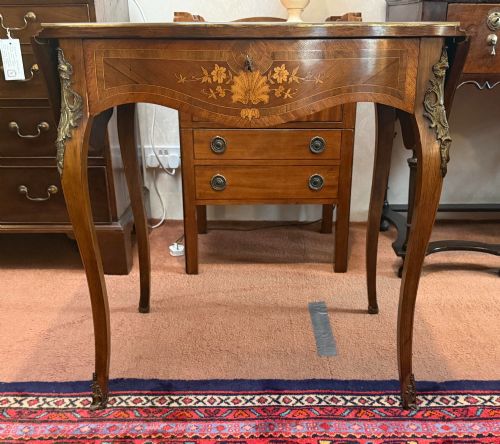
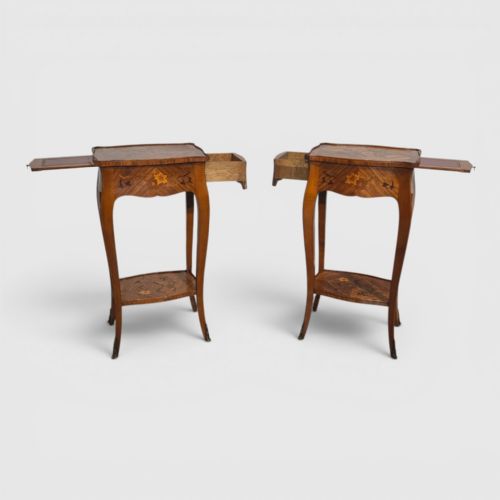
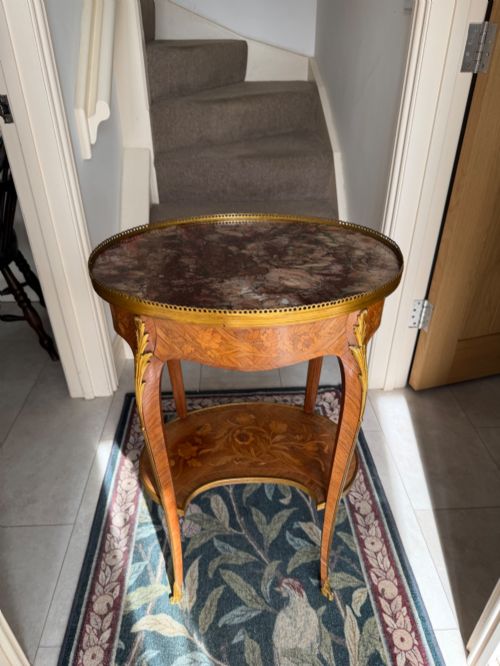
A french inlay accent table generally takes the form of an occasional table, side table, or small freestanding centre table designed for domestic utility and display. Most examples stem from the nineteenth century, reflecting revivalist tastes associated with Louis XV, Louis XVI, and Napoleon III periods.
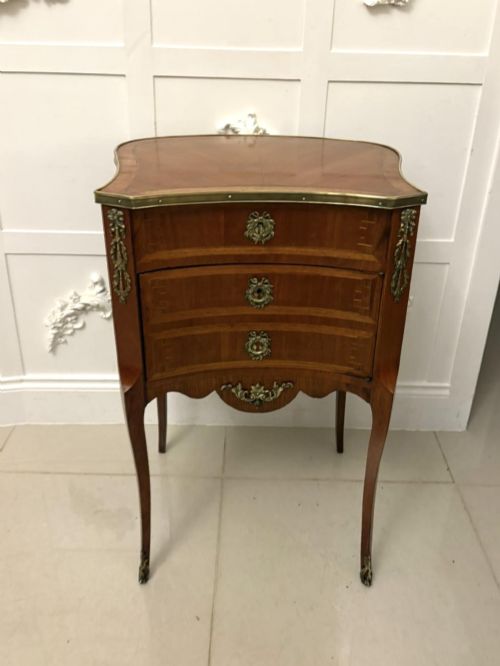
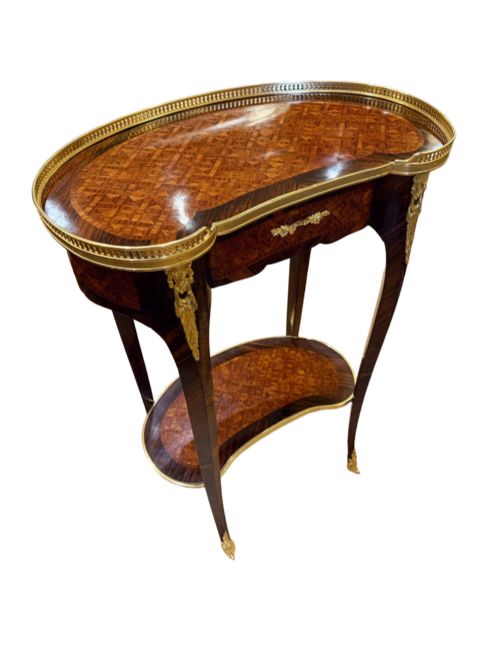
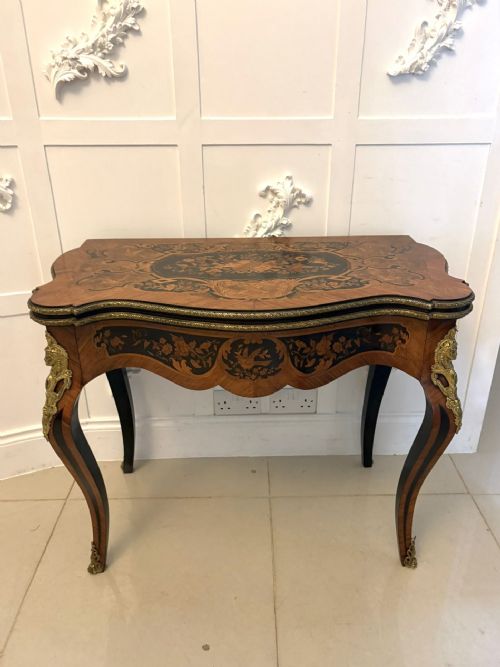
The selection ranges from kidney-shaped lamp tables and tiered etageres to card tables and nests of four tables. Walnut, kingwood, and rosewood form the primary bodies, whilst brass and ormolu mounts provide structural emphasis.
Makers recorded in the evidence include notable workshops such as Millet, Edwards and Roberts, and Gillows, alongside pieces attributed to the manner of Francois Linke and Haentgos Freres. These varied forms provide practical surfaces whilst showcasing detailed geometric parquetry and pictorial floral marquetry.
Materials and construction methods
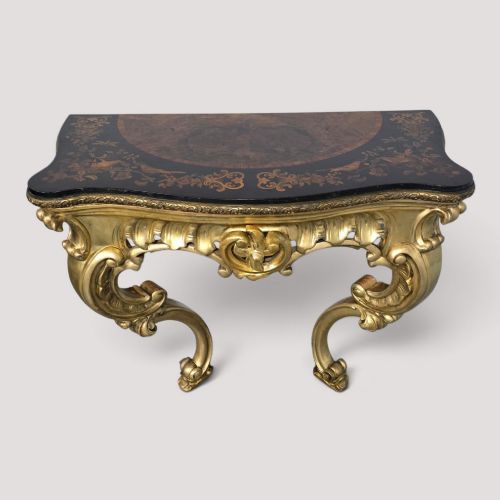
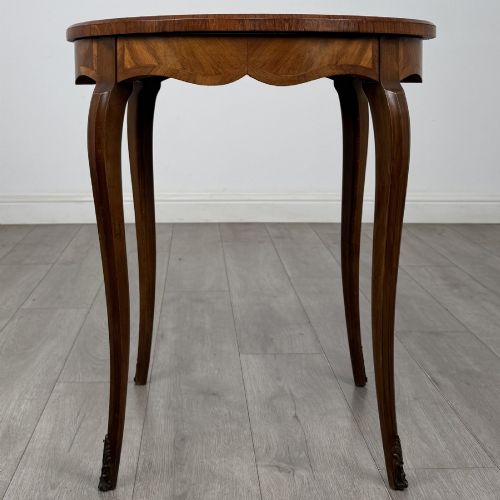
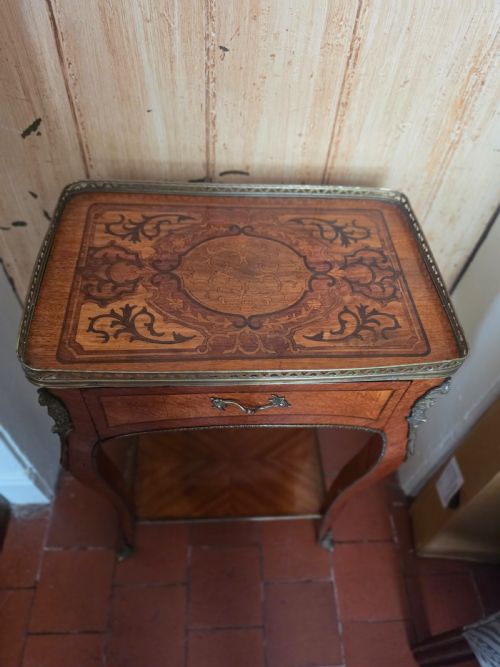
Cabinetmakers utilised dense exotic hardwoods, laying veneers of kingwood, rosewood, walnut, satinwood, and ebonised wood over solid core timbers. These contrasting veneers allowed artisans to create intricate parquetry cubes and floral marquetry panels across tabletops and friezes.
Cast bronze and ormolu mounts frame the edges, protect vulnerable corners, and accentuate cabriole or tapered legs. Brass stringing and occasional inlay of malachite or silvered bronze further define the structural lines of these tables.
French Inlay Accent Table Retail Price Guide 2026
Typical asking prices for french inlay accent table among the pieces listed under this phrase on Sellingantiques today, from the lower quarter to the upper quarter. They describe what is for sale here now, not the wider market.
The listings demonstrate a strong prevalence of nineteenth-century pieces executed in kingwood, rosewood, and walnut with brass or ormolu mounts.
Assessing quality and execution
Quality rests upon the precision of the veneer work and the crispness of the cast bronze mounts. Superior pieces exhibit seamless integration of floral marquetry where individual wood types retain distinct grain and natural colour without excessive reliance on surface staining.
The weight and detail of the ormolu mounts differentiate standard production from finer workshop output, such as pieces bearing signatures or attributions to recognised makers. Structural integrity, including the stability of tiered etageres and the alignment of drawers, governs the overall standard.
Millet·Edwards and Roberts·Gillows·Francois Linke·Haentgos Freres
The French Inlay Accent Table Glossary
- Marquetry
- The art of applying pieces of veneer to a structure to form decorative patterns or pictorial designs. Artisans cut various coloured woods to fit together precisely within the tabletop surface.
- Parquetry
- Geometric mosaic woodwork arranged in regular patterns such as cubes, diamonds, or chequers. This technique frequently appears on the tops of occasional and card tables.
- Ormolu
- Gilded bronze applied as mounts, feet, and decorative enrichment on furniture. It protects vulnerable edges and frames inlaid panels.
- Etagere
- A set of open shelves for displaying small objects or lamps. These structures often feature mirrored tiers or delicate brass galleries.
- P poudreuse
- A small dressing table fitted with compartments and folding mirrors. These pieces typically incorporate intricate marquetry across the lid and interior.
French Inlay Accent Table: Frequently Asked Questions
How do I identify a nineteenth-century piece?
Nineteenth-century examples frequently show revival styles referencing Louis XV or Napoleon III aesthetics, utilising dense timbers like kingwood and rosewood.
Examination of the underside and interior construction reveals period timber preparation and hand-cut joinery consistent with the era.
Where should I place an etagere table?
An etagere functions effectively beside a seating area or in a corner where its multiple tiers provide vertical display space for small decorative items.
Because these pieces are often finished on all sides as freestanding items, they also sit comfortably toward the centre of a room.
What is the difference between marquetry and parquetry?
Marquetry involves pictorial or floral designs assembled from varied wood veneers to create organic pictures across the surface.
Parquetry relies on geometric shapes like cubes or squares to form repeating patterns across tabletops.
How do I care for inlaid wood surfaces?
Keep these tables away from direct sunlight and heat sources to prevent the delicate veneer from drying out or lifting.
Dust gently with a dry cloth and avoid harsh chemical polishes that might degrade the French polish finish.