



Rococo Shelf Clock
A rococo shelf clock brings nineteenth-century French revival drama to a mantelpiece, combining gilt bronze and porcelain.
Rococo Shelf Clock
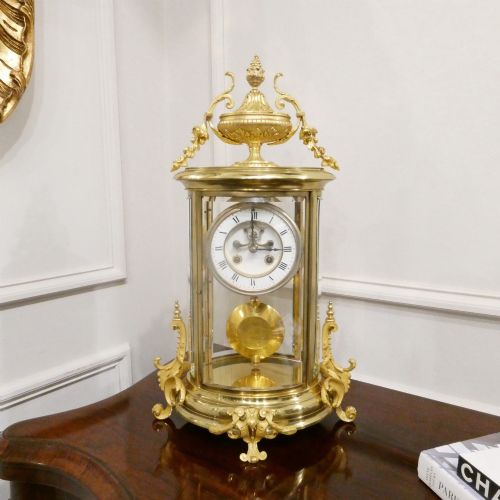
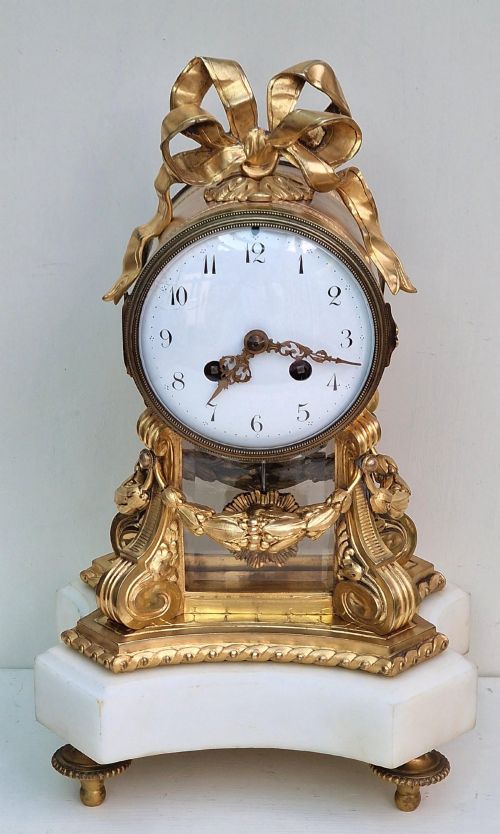
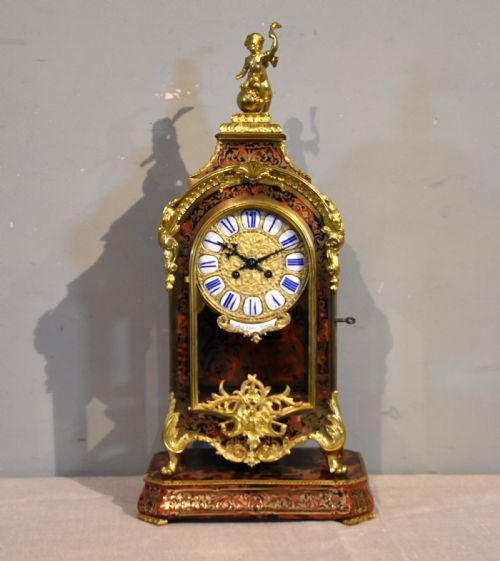
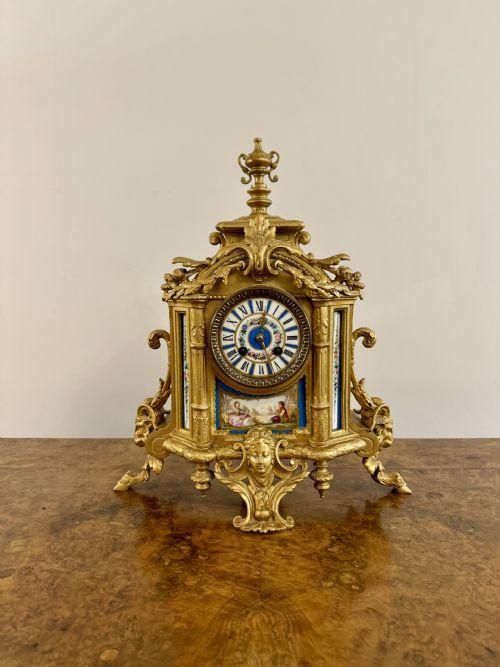
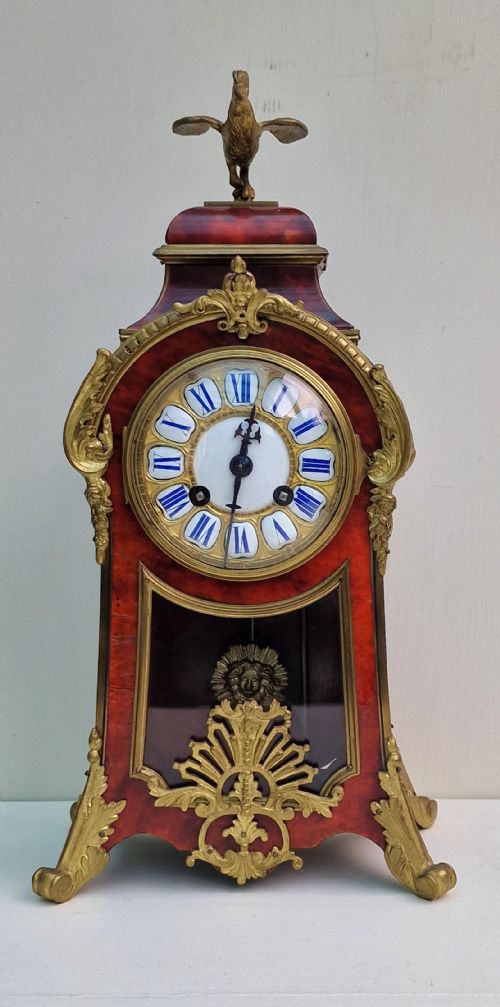
A buyer seeking a rococo shelf clock typically encounters nineteenth-century French mantel clocks created during the Victorian era and the Second Empire. These pieces reflect revival styles such as Louis XV and French Rococo, frequently taking the form of mantel or bracket clocks. The selection spans robust ormolu and gilt bronze housings alongside delicate porcelain and marble bodies.
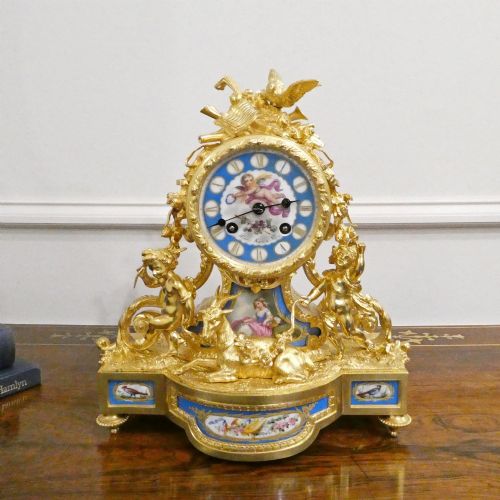
Most examples originate from French workshops active between the eighteen-sixties and the turn of the twentieth century. Common formats include four-glass designs, drumhead clocks, and sculptural cases depicting figures or musical motifs. The aesthetic relies heavily on asymmetrical scrolls, foliage, and ornate cast metalwork designed for prominent display on a shelf or mantel.
Materials and construction
The construction of these clocks depends upon cast metals combined with decorative inserts of porcelain, enamel, or marble. Ormolu and gilt bronze provide the structural chassis and elaborate surface ornamentation, while glass panels on four-glass variants expose the internal movement.
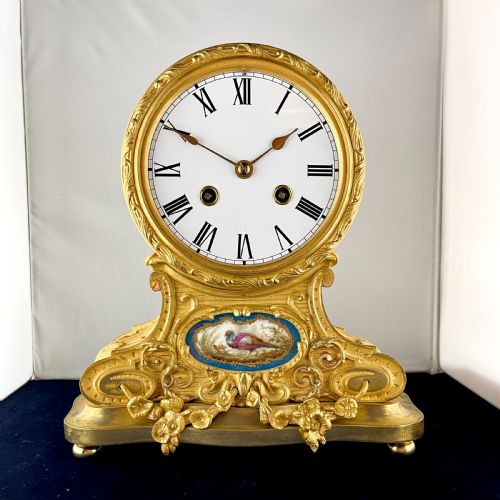
Dial faces frequently utilise white enamel with painted numerals, paired with finely pierced hands. Cases incorporate hand-painted porcelain panels depicting floral scenes or figurative subjects, set within heavy brass or bronze frames cast from intricate moulds.
Listings feature items from the nineteenth century, including Victorian pieces alongside French Second Empire and Edwardian examples.
Assessing craftsmanship
Quality in these clocks rests upon the crispness of the bronze casting and the depth of the gilding. Superior pieces display sharply defined scrollwork and sculptural detailing executed by skilled founders, whereas lesser items show softened edges and uniform plating.
The integration of materials also dictates standing, as seen in the precise fitting of porcelain plaques and the weight of the marble bases. Named makers and sophisticated movement mechanisms elevate certain examples above standard decorative production.
Samuel Marti·Henry Marc·Delettrez·Connell of London·Phillipe H. Mourey
The Rococo Shelf Clock Glossary
- Ormolu
- Gilded bronze produced by applying a mercury-gilt amalgam to a brass or bronze base. This technique creates a rich, durable golden surface characteristic of nineteenth-century French horology.
- Four-glass clock
- A mantel clock housed in a rectangular brass or bronze frame with bevelled glass panels on all four sides. This design reveals the pendulum and movement from multiple angles.
- Louis XV Revival
- A decorative style popular in the nineteenth century that imitates the asymmetry, C-scrolls, and naturalistic curves of the eighteenth-century French rococo period.
- Drumhead clock
- A mantel clock where the dial and movement are housed within a circular metal drum resting on a decorative plinth or base.
- Boulle
- A marquetry technique using brass and tortoiseshell inlaid in contrasting patterns, named after the cabinetmaker André-Charles Boulle and revived in later nineteenth-century clocks.
Rococo Shelf Clock: Frequently Asked Questions
How do I wind a rococo shelf clock?
Most antique mechanical clocks of this type use a key inserted into winding holes on the enamel dial to tension the spring-driven movement. Care must be taken not to over-wind the mainspring.
Moving the hands requires gentle adjustment, usually following the directional guidance of the specific movement type to avoid damaging the escapement.
Where should I place a heavy bronze clock?
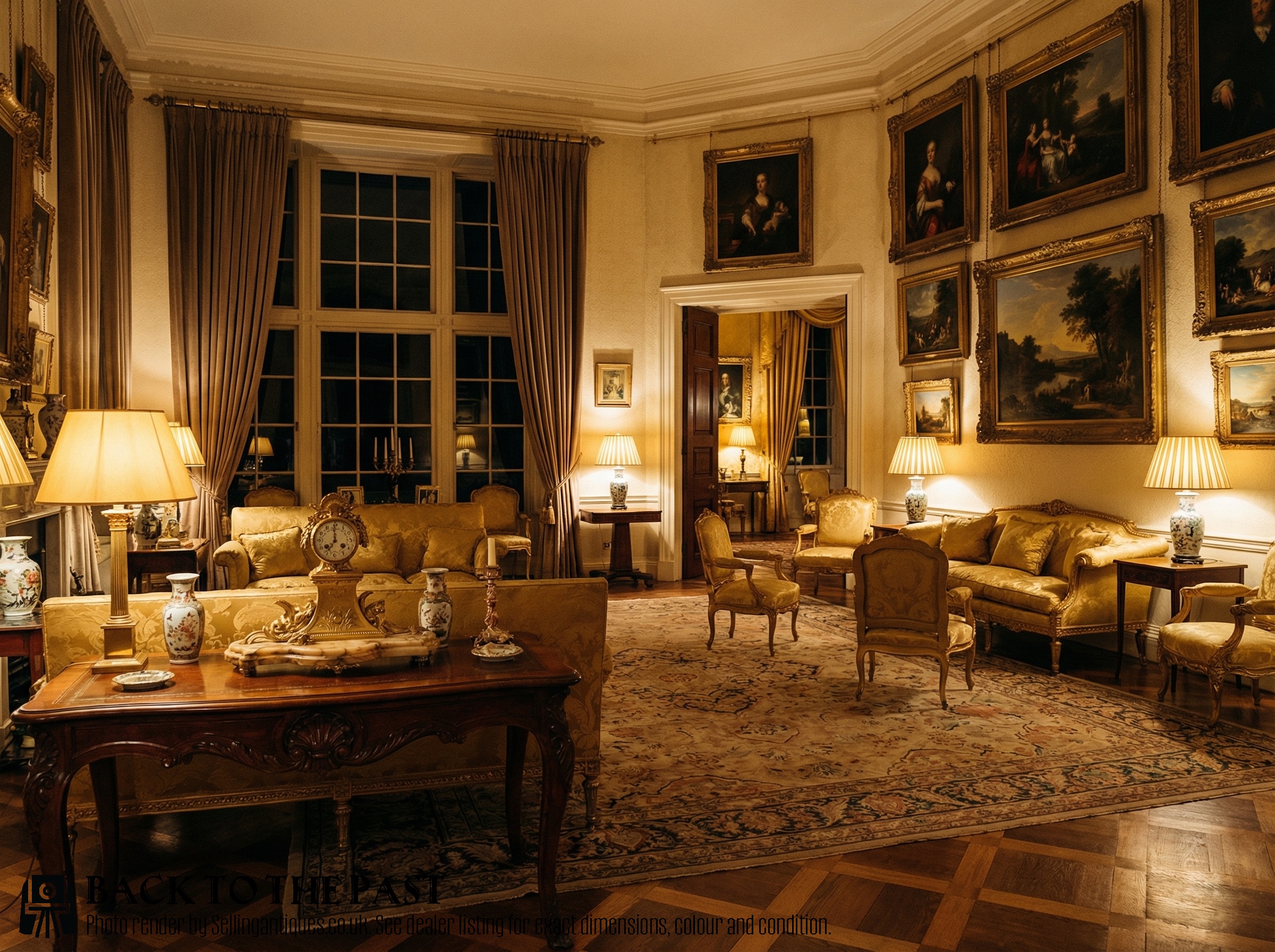
These clocks require a deep, sturdy mantelpiece or shelf capable of supporting significant weight, particularly for models featuring solid marble bases and thick cast bronze cases.
Placement should avoid direct sunlight and rapid temperature fluctuations to protect the delicate enamel dials, gilding, and internal oils.
How do I distinguish Louis XV style from Louis XIV?
Louis XV revival pieces utilise asymmetrical curves, C-scrolls, and organic floral motifs that avoid rigid symmetry. The overall silhouette feels fluid and dynamic.
Louis XIV style pieces rely on grand symmetry, classical architectural elements, and heavier, more restrained ornamentation that projects formal authority.
What maintenance do these clock movements need?
Mechanical clocks require periodic cleaning and oiling by a professional horologist to ensure the brass gears and pivots operate without excessive wear.
Keeping the clock level on its shelf is essential for maintaining a steady beat and preventing the pendulum from stopping.