

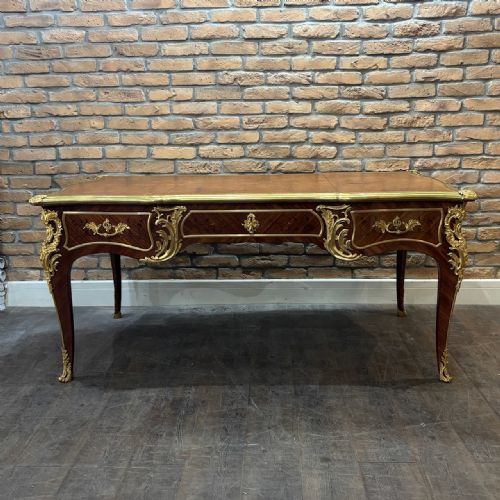


Rococo Revival Writing Table
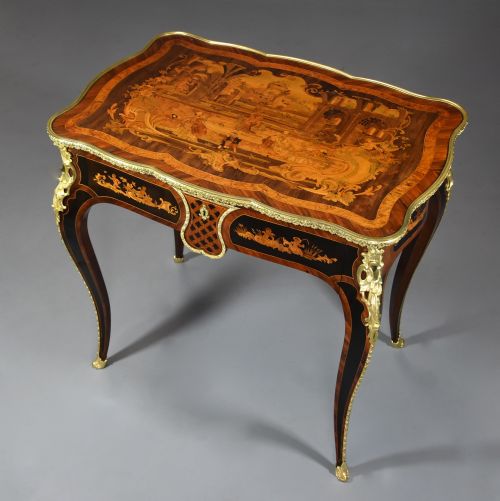
These rococo revival writing table pieces bring curvaceous nineteenth century flair and intricate marquetry directly into a study or drawing room.
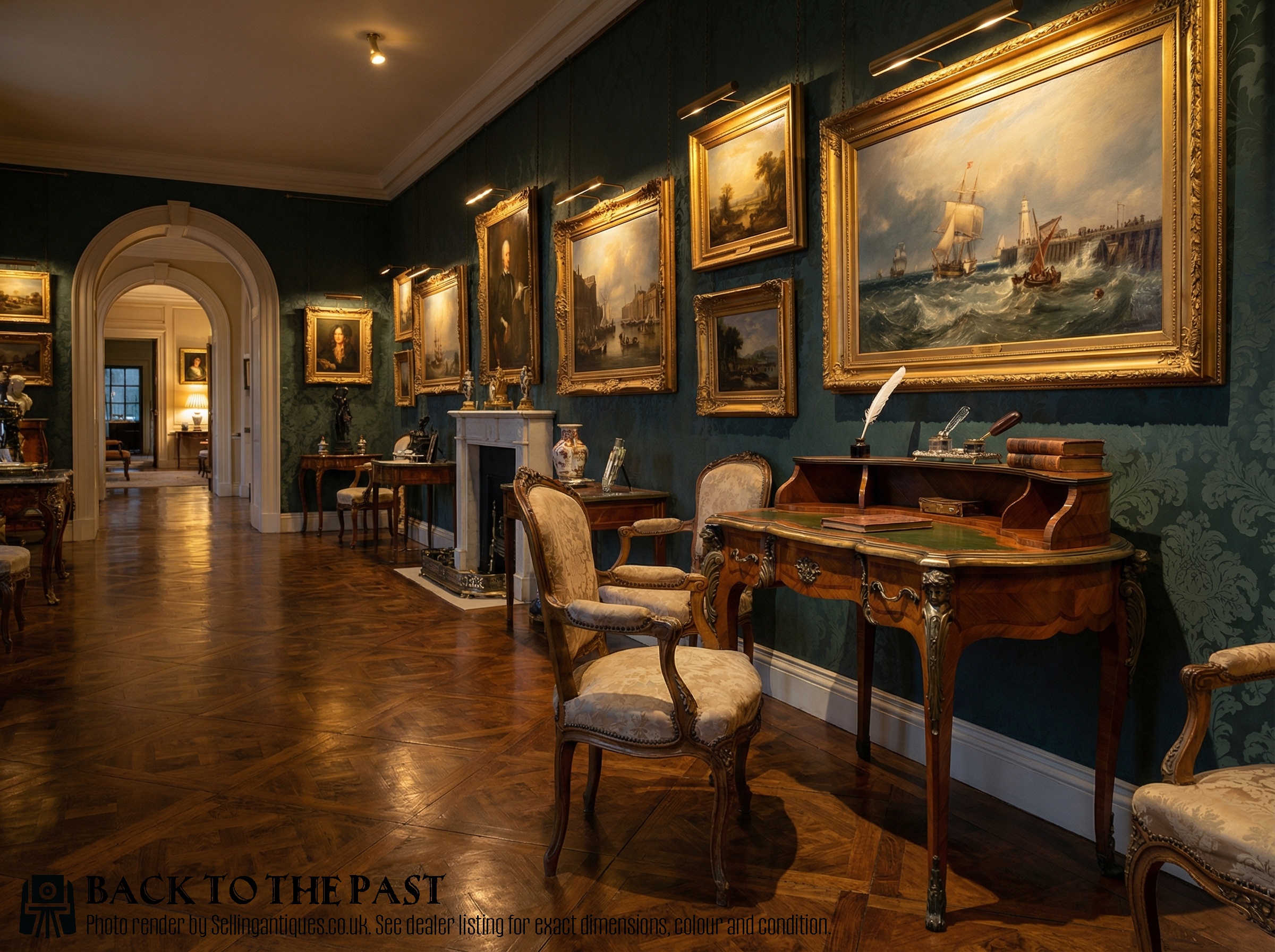
Rococo Revival Writing Table
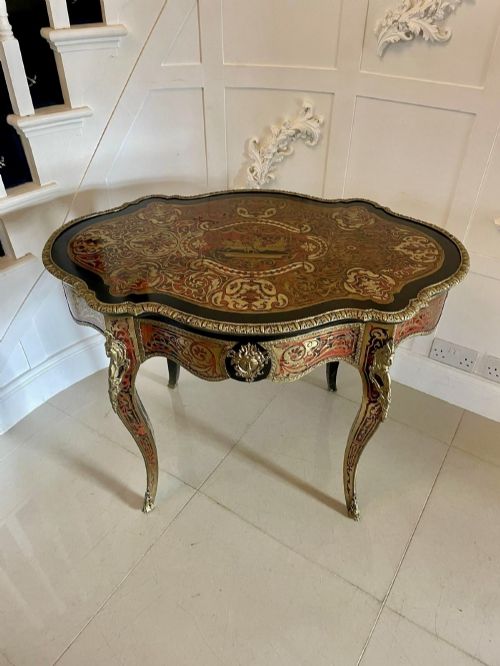
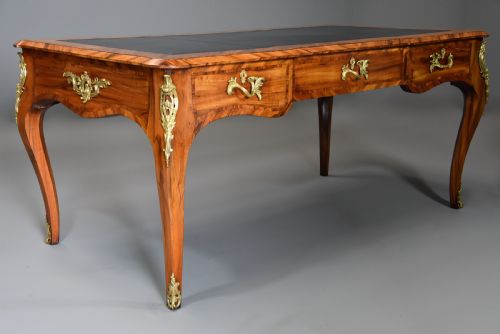
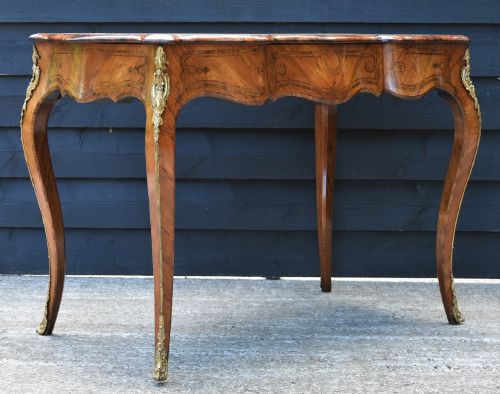
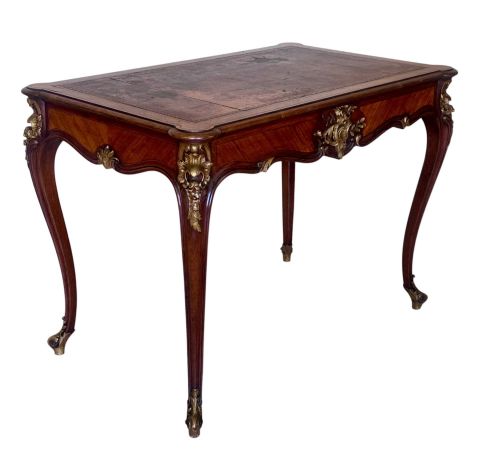
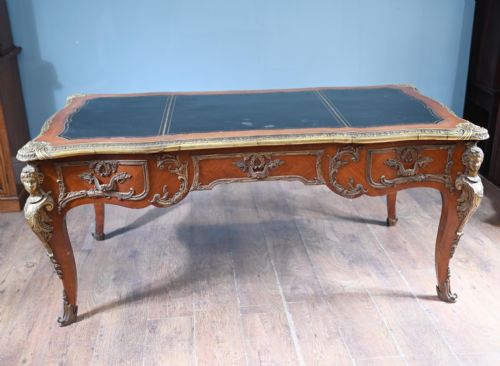
A rococo revival writing table embodies the flamboyant, asymmetrical design vocabulary of the mid to late nineteenth century, drawing heavily on earlier French models. Buyers seeking this phrase encounter bureau plats, kidney-shaped desks, and freestanding centre tables originating from Victorian British workshops and continental makers.
The forms range from compact lady's desks with serpentine outlines to grander proportions finished with leather inserts and multiple drawers. Most surviving examples date from the nineteenth century, reflecting a Victorian enthusiasm for reviving eighteenth century continental aesthetics.
Materials and construction
Cabinetmakers utilised exotic timbers such as kingwood, walnut, satinwood, and mahogany as foundations for intricate marquetry and parquetry patterns. Surfaces often combine contrasting veneers with applied ormolu and gilt bronze mounts that accentuate the sweeping curves characteristic of the style.
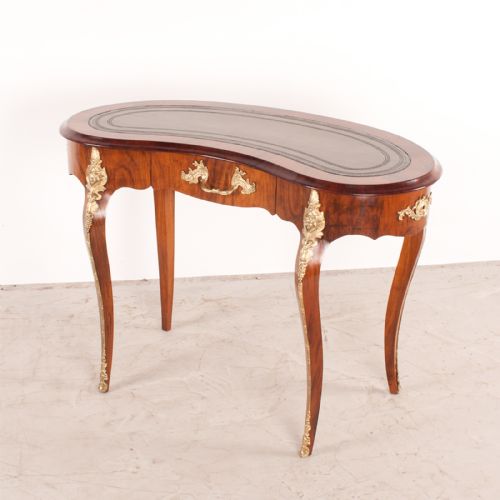
Many examples incorporate leather writing surfaces framed by wooden borders, alongside hand-cast bronze or brass mounts secured to serpentine legs and aprons.
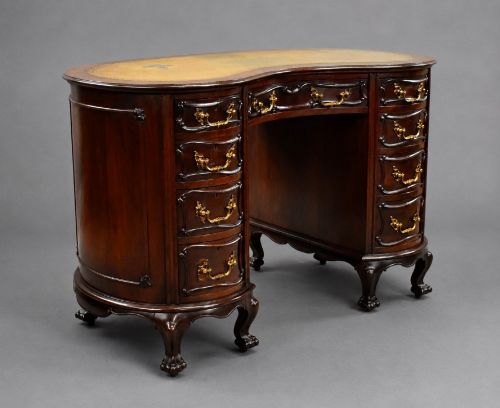
Kidney-shaped writing desks appear frequently among the Victorian pieces, alongside larger freestanding bureau plats.
Assessing quality
Quality rests upon the crispness of the cast ormolu mounts and the precision of the timber veneers used in the marquetry. Finer examples display meticulous hand-chasing on the bronze elements and seamless matching of grain across serpentine drawer fronts and tops.
The structural integrity of the frame, the depth of the carving on wooden elements, and the retention of original maker labels or signatures distinguish superior pieces from standard production work.
CH. Jeanselme & Co·Edwards & Roberts·Holland and Son·Maison Millet·Gillows
The Rococo Revival Writing Table Glossary
- Ormolu
- Gilt bronze mounts applied to furniture. This technique involves gilding a bronze base with gold leaf or mercury amalgam to create a bright metallic decoration.
- Bureau plat
- A flat-topped freestanding writing desk. These tables typically feature one or more drawers in the frieze and rest upon cabriole legs.
- Marquetry
- Decorative veneer patterns arranged in pictorial or geometric designs. Artisans cut thin slices of various coloured woods and fit them together into a paper-thin wooden mosaic.
- Serpentine
- A furniture line or front curved in a convex-concave-convex wave shape. This undulating profile requires considerable skill from the woodworker to shape accurately.
- Parquetry
- Geometric wood inlay forming patterns such as cubes, lozenges, or squares. It differs from marquetry by sticking strictly to repeating geometric tiling rather than pictorial scenes.
Rococo Revival Writing Table: Frequently Asked Questions
How do I care for leather desk tops?
Leather inserts require gentle cleaning with a slightly damp cloth and occasional treatment with appropriate leather dressings to prevent drying and cracking. Avoid using harsh chemical cleaners or placing hot cups directly on the surface.
Keeping the room humidity stable protects both the leather and the surrounding wood veneers from warping or shrinking over time.
Where should I place a centre table?
Centre tables are designed to stand in the middle of a room, viewable from all sides with finished backs and symmetrical detailing. They work well in entrance halls, large drawing rooms, or as freestanding library tables.
Ensure there is sufficient clearance to walk completely around the piece without disrupting the flow of the room.
How do I identify nineteenth century revival pieces?
Nineteenth century revival pieces display construction methods, secondary woods, and hardware consistent with Victorian or late nineteenth century manufacturing. Makers often utilised machine-sawn veneer backing alongside traditional hand-carving and hand-chased mounts.
Examining drawer linings, screw types, and any maker stamps or paper labels helps narrow down the exact decade of production.