


Rococo Revival Porcelain Plates
These rococo revival porcelain plates bring exuberant scrolls, hand-painted scenes and rich gilding straight to the table.
Rococo Revival Porcelain Plates
When searching for rococo revival porcelain plates, collectors encounter nineteenth-century decorative dishes, cabinet plates and dessert services created in the revivalist spirit. The selection here ranges from English cabinet pieces by Copeland, John Ridgway and Royal Worcester to continental European works from Meissen and Helena Wolfsohn.
These items take various forms, including square dishes, soup dishes and part dessert services designed for display or specialised dining. Copeland and Garrett, alongside French makers working in the Sevres manner, provide the core British and continental examples visible in the current inventory.
How they were made
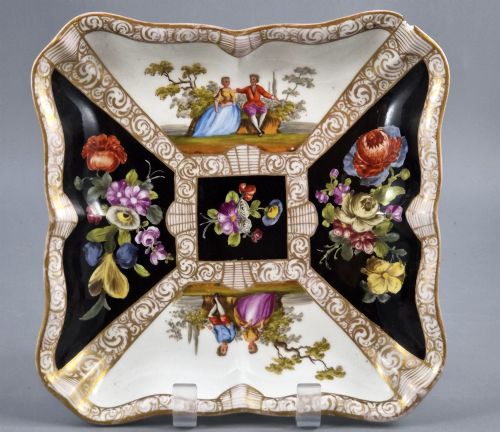
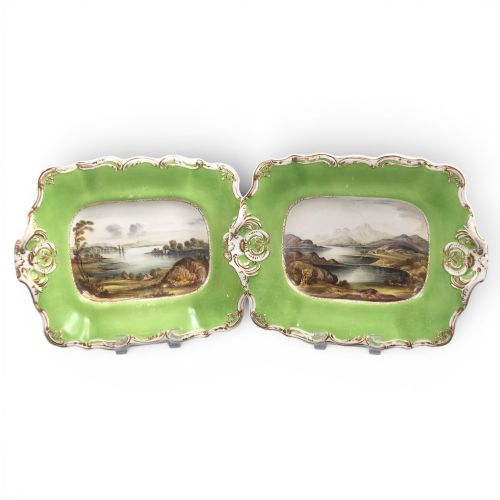
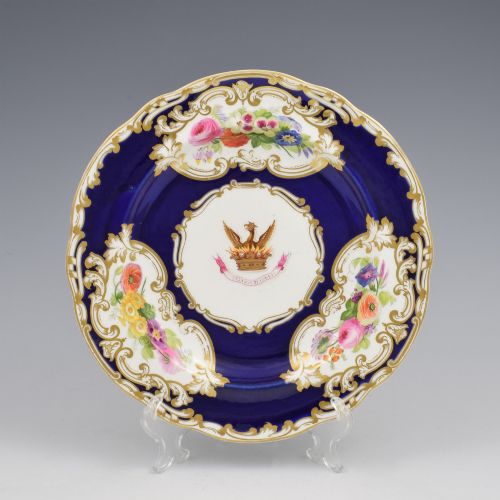
Potters utilised hard-paste porcelain and bone china as the primary ceramic bodies, shaping them into plates and dishes with moulded, scrollwork borders typical of the style. Artisans then applied enamel paints by hand to create intricate botanical subjects, armorial crests and Watteau or Boucher figure scenes.
Gilding completed the process, with gold leaf and applied gilt highlights accentuating the asymmetrical cartouches and raised moulding characteristic of nineteenth-century production. Specialised factories employed distinct pattern numbers and retailer marks, such as the Phillips of Oxford Street commission recorded on Royal Worcester bodies.
Listings feature nineteenth-century porcelain, bone china, hard-paste porcelain, gold leaf, enamel and paint across cabinet plates, square dishes and dessert services.
What varies in quality
Quality in these plates rests upon the crispness of the porcelain moulding and the skill of the enamel painting. Pieces featuring detailed hand-painted figure scenes after Boucher or Watteau, or finely executed armorial crests with phoenix motifs, stand apart from simpler floral designs.
The preservation of the gilding and gold leaf also dictates overall merit, alongside the prestige of the manufacturing house. Works originating from established factories like Meissen or Copeland demonstrate superior ceramic bodies and more confident brushwork compared to lesser-known contemporaries.
Meissen Porcelain·Copeland and Garrett·John Ridgway·Helena Wolfsohn·Royal Worcester
The Rococo Revival Porcelain Plates Glossary
- Cabinet plate
- A decorative plate intended for display on a wall, in a cabinet or on a stand rather than for daily dining use. These pieces often feature elaborate hand-painted scenes or rich gilding.
- Armorial
- A ceramic piece decorated with a family crest, coat of arms or heraldic insignia. Such items were frequently commissioned by prominent lineages.
- Hard-paste porcelain
- A durable ceramic material composed of kaolin and petuntse fired at high temperatures. It forms a dense, bright white body commonly found on continental European wares.
- Bone china
- An English ceramic body incorporating bone ash for added strength and a characteristic milky translucence. It became a preferred material for nineteenth-century table services.
Rococo Revival Porcelain Plates: Frequently Asked Questions
What is a cabinet plate?
A cabinet plate is an ornamental dish created primarily for display rather than functional use at the dining table. These items typically showcase elaborate hand-painted subjects, intricate moulding or rich gilding.
Cabinet plates span various nineteenth-century factories and often feature pierced borders or scenic reserves framed by scrollwork.
How do I identify a dessert service?
A dessert service consists of a matched set of plates and serving dishes designed specifically for the final course of a formal meal. Surviving examples on this page include part services featuring hand-painted views or floral decoration.
Collectors often acquire these sets either intact or as smaller groupings of complementary cabinet dishes.
Where were these plates made?
These pieces originate from prominent nineteenth-century ceramic manufacturing centres across England and continental Europe. English factories such as Copeland, Royal Worcester and John Ridgway produced them alongside continental houses like Meissen and Helena Wolfsohn.
Retailers such as Phillips of Oxford Street also commissioned specific porcelain bodies for their London clientele.
How should I display them?
These decorative plates suit display in wall-mounted brackets, dedicated display cabinets or on specialist plate stands. Their moulded scrollwork and gilded borders benefit from adequate lighting to highlight the relief work.
Placing them away from direct sunlight preserves the vibrancy of the hand-painted enamel scenes and gold leaf.