

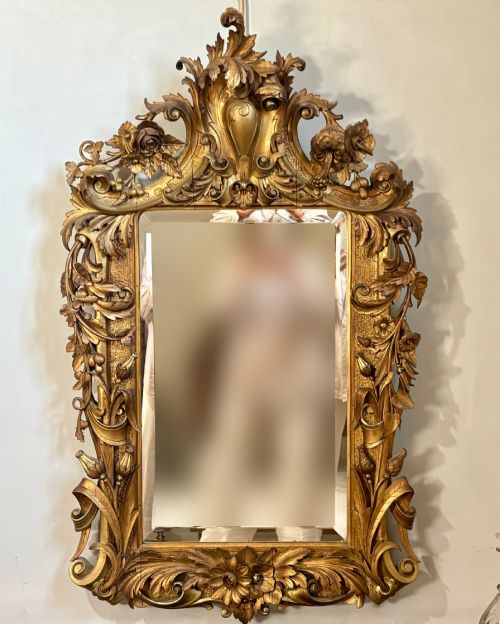
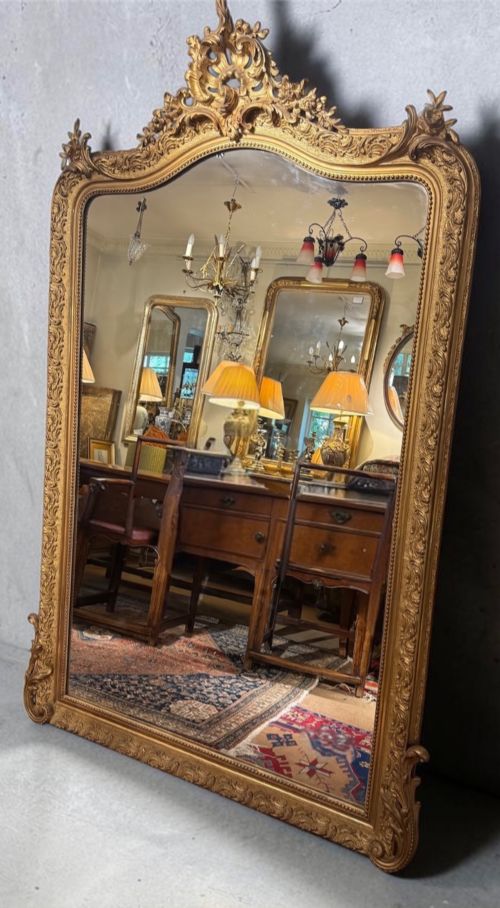
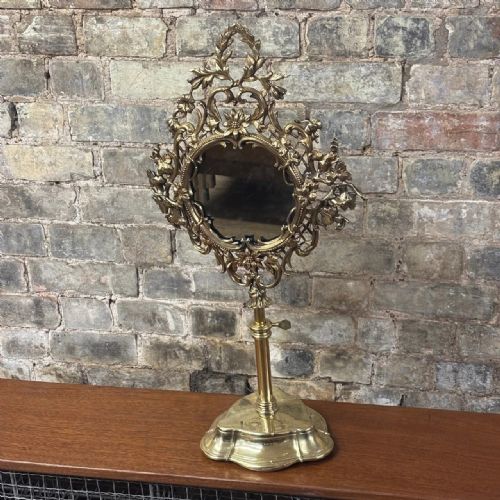
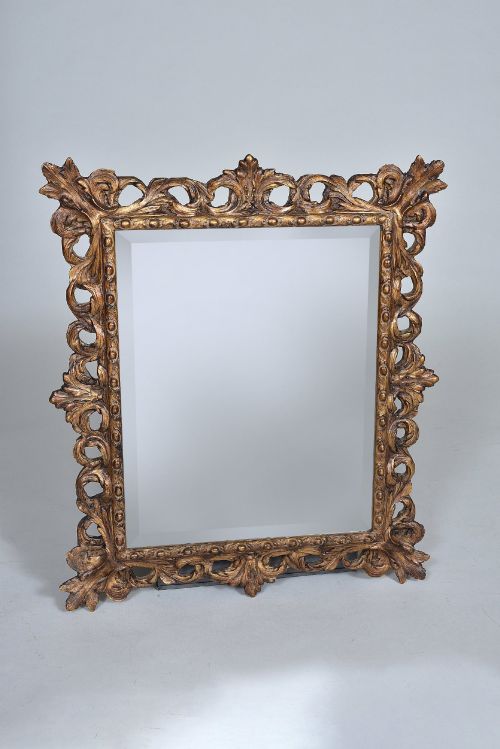
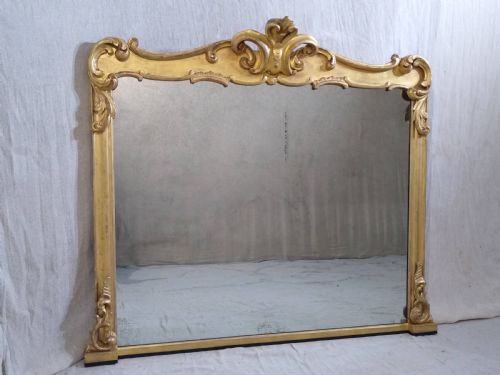
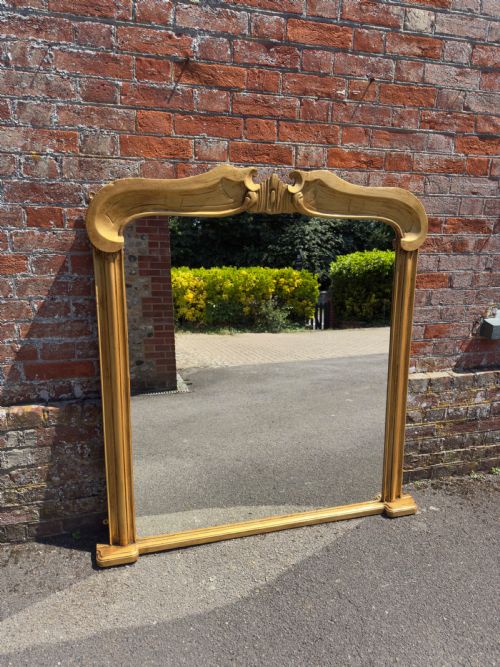
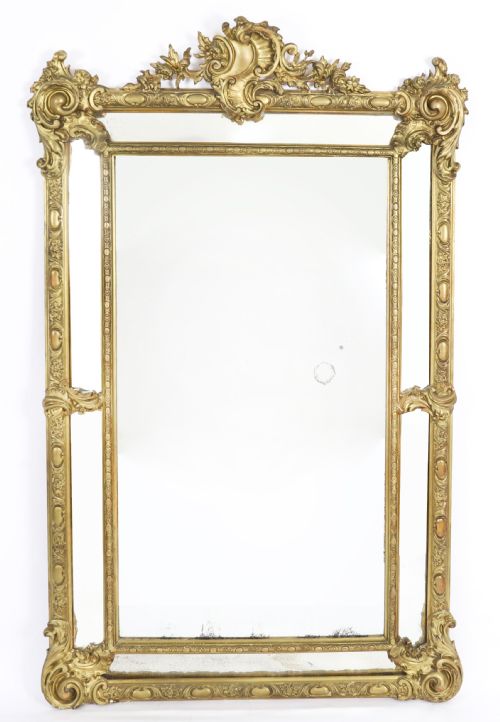
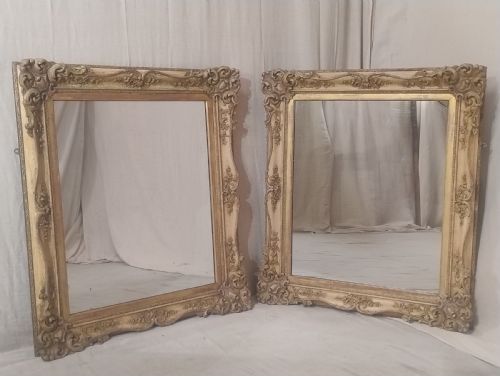


Rococo Revival Gold Mirror
A rococo revival gold mirror brings asymmetric scrolls and gilded warmth to a room, drawing the eye with nineteenth-century exuberance.
Rococo Revival Gold Mirror
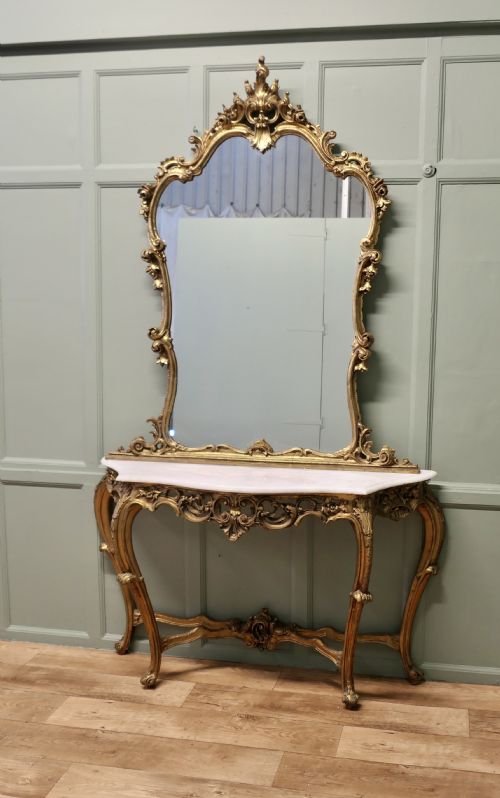
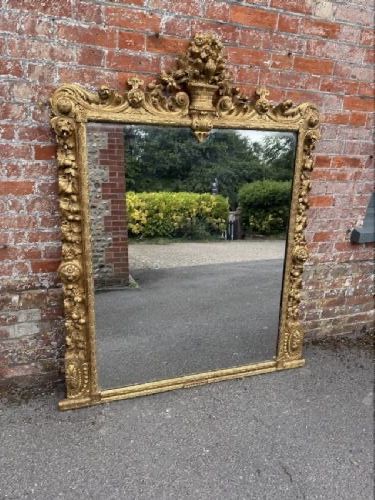
A rococo revival gold mirror captures the nineteenth-century passion for French eighteenth-century excess, appearing most frequently as large overmantle mirrors, wall mirrors, and dressing glasses.
The pieces on this page span the Victorian era, the Edwardian period, and the early twentieth century, showing English, French, and Italian origins.
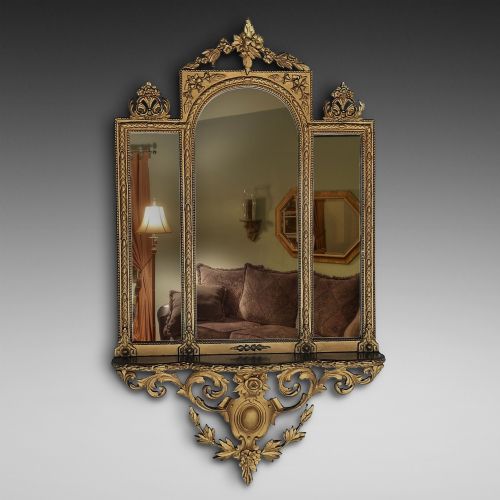
Makers shaped these items into cartouche, arched top, and cushion forms, applying ornate pediments and central cartouches alongside asymmetrical scrolling frames.
Materials and construction methods
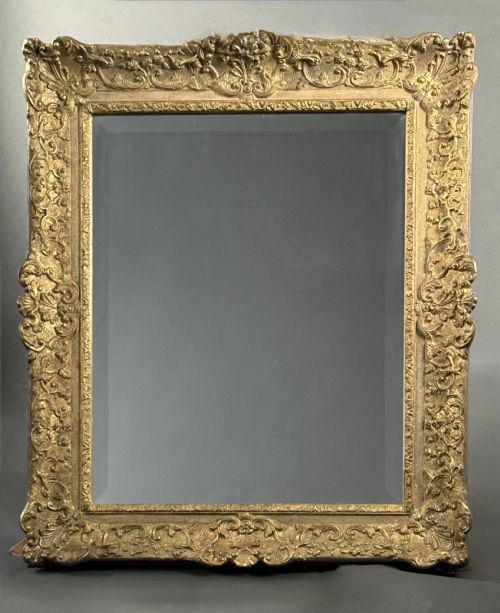
Craftsmen carved wooden frames from timber such as oak or pine, then applied layers of gesso to build up the intricate relief work of scrolls, leaves, and floral motifs.
Workers gilded these surfaces using gold leaf, paint, or composition applied to brass, wood, and gesso grounds to achieve a brilliant metallic sheen.
Makers integrated glass plates, including bevelled and mirror glass types, secured within deep frames and often paired with solid brass or parcel gilt details.
Listings feature items spanning the nineteenth century, Victorian era, and early twentieth century, utilising giltwood, brass, and gesso.
Distinctions in craftsmanship and design
The standard of carving defines the upper tier, where hand-carved wooden and gesso details exhibit crisp undercut foliage and depth, contrasting with simpler moulded composition frames.
Proportion and scale elevate certain examples, particularly monumental overmantle mirrors and large pier mirrors with well-balanced pediments and original mirror plates.
The Rococo Revival Gold Mirror Glossary
- Giltwood
- Wood that has been coated with gold leaf or gold paint. This technique provides the luminous surface characteristic of period frames.
- Gesso
- A plaster mixture applied to wood frames to create a smooth surface for carving and gilding. It allows for deep, highly detailed relief ornamentation.
- Overmantle Mirror
- A large mirror designed to hang above a fireplace mantel. These pieces often feature horizontal proportions or tall arched tops.
- Cartouche
- An ornamental frame or tablet resembling a scroll or rolled-up piece of paper. It frequently serves as the central focal point on mirror pediments.
Rococo Revival Gold Mirror: Frequently Asked Questions
Where should I hang a large overmantle mirror?
These mirrors anchor a room best when positioned directly above a fireplace mantelpiece, reflecting light and surrounding furnishings.
Ensure the wall fixings match the substantial weight of carved wood and gesso frames.
How do I identify a nineteenth-century piece?
Look for construction traits like hand-carved wooden elements beneath the gesso layers, traditional joinery, and heavy glass plates.
Periods like the Victorian era and the mid nineteenth century often show distinct regional carving styles.
What is the difference between gesso and composition?
Gesso is a liquid plaster mixture applied in layers for fine hand-carving, whereas composition involves moulded paste pressed onto the frame.
Finer mirrors utilise gesso for intricate, sharp relief work.
How do I care for antique gilt surfaces?
Dust the gilded frame gently with a dry, soft brush to avoid disturbing the fragile gold leaf or painted finish.
Keep the glass clean using standard window cleaner applied to a cloth rather than sprayed directly onto the frame.