


Rococo Revival Console
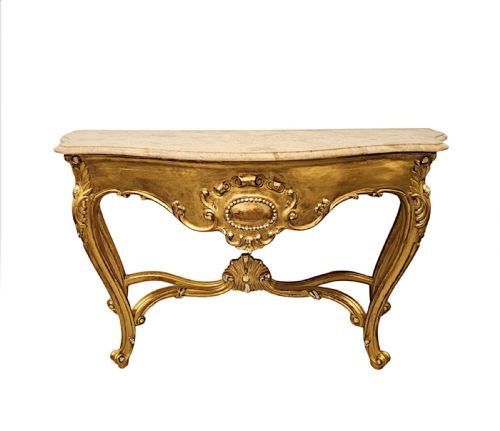
A rococo revival console delivers extravagant curves, heavy carving and polished marble surfaces straight from nineteenth-century parlours.
Rococo Revival Console
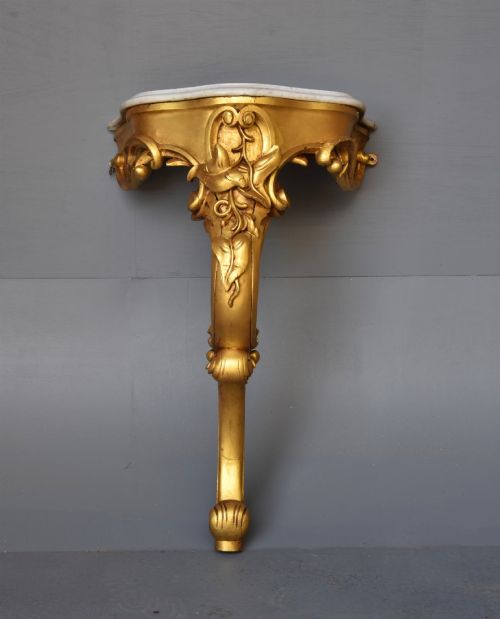
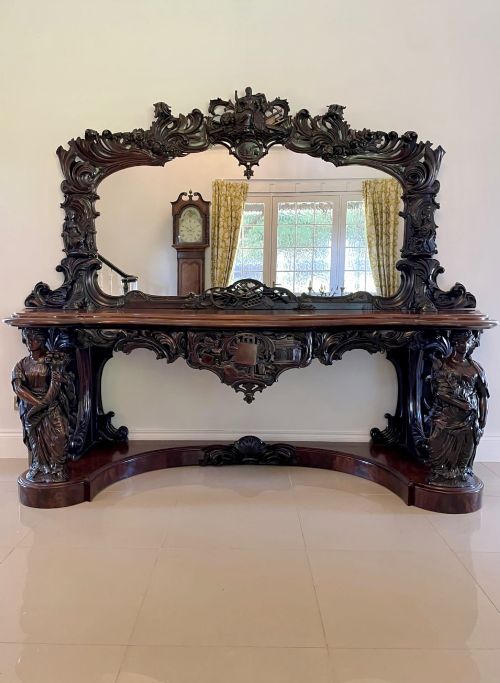
A rococo revival console table combines deeply carved wooden frames with smooth stone tops, drawing inspiration from mid-nineteenth-century European design. These pieces often appear alongside matching wall mirrors, occasional tables and card tables sharing the same flowing, asymmetrical lines.
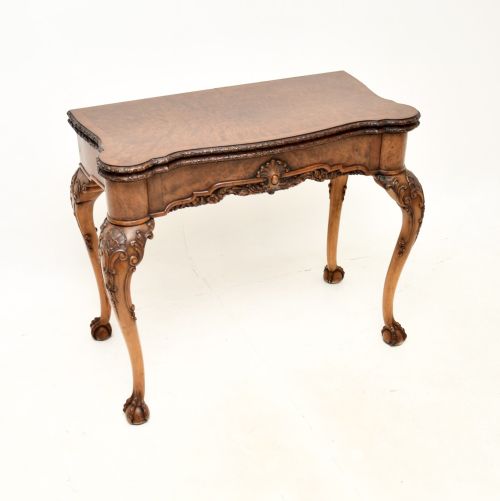
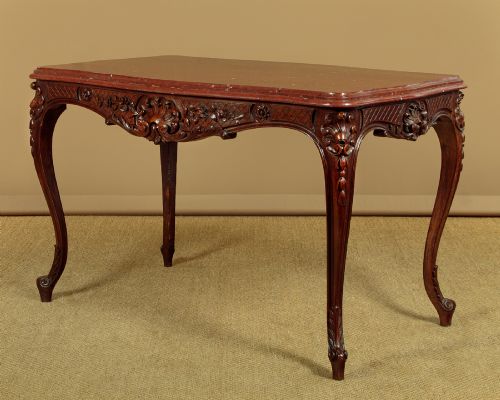
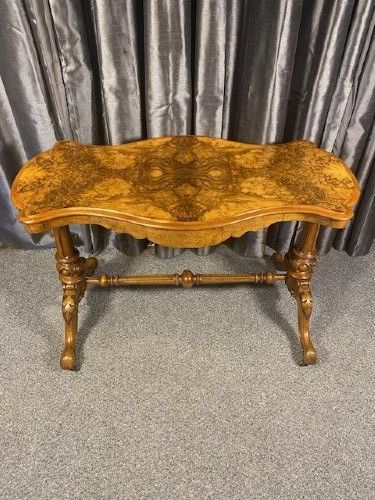
The version most commonly met on this page dates from the nineteenth century, built by makers working in Victorian and French revival styles. Walnut, burr walnut and giltwood dominate the structural forms, frequently paired with heavy marble inserts.
Makers of the period applied these revival aesthetics to console tables, centre tables and pier glasses destined for grand domestic interiors. Their serpentine borders and cabriole legs define the physical character of the group.
Distinctions in Quality
The distinction between ordinary and exceptional examples rests upon the depth of the carving and the quality of the timber selection. Finer pieces display crisp, hand-chiselled foliage and complex scrolling rather than shallow, mechanical moulding.
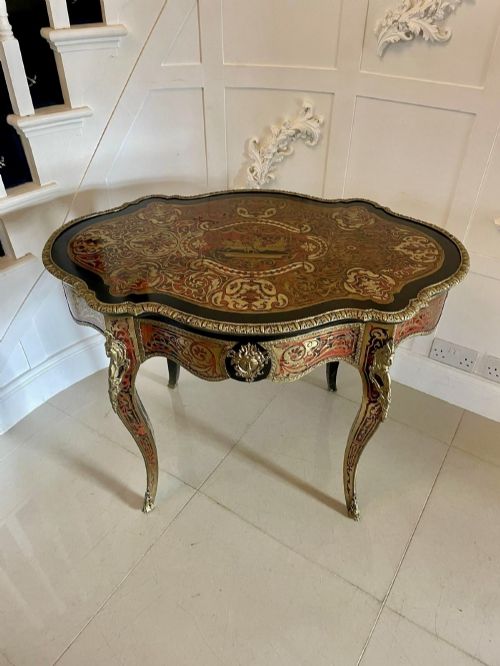
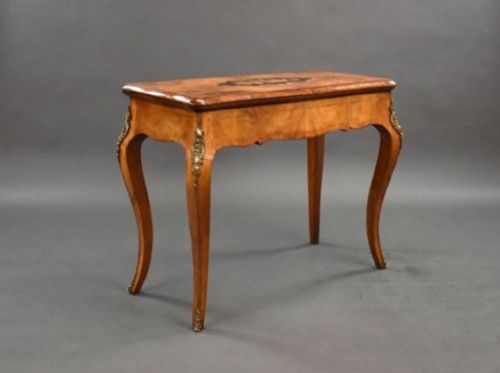
The integrity of the marble top and the precision of any marquetry inlay further separate standard production from exhibition-grade work. Maker attribution to established London firms elevates certain walnut and boulle tables above unmarked alternatives.
Rococo Revival Console Retail Price Guide 2026
Typical asking prices for rococo revival console among the pieces listed under this phrase on Sellingantiques today, from the lower quarter to the upper quarter. They describe what is for sale here now, not the wider market.
Nineteenth-century card tables hide folding mechanisms designed to conceal secret games of chance from polite Victorian visitors.
Maple and Co·Edwards and Roberts·Holland and Son
The Rococo Revival Console Glossary
- Console table
- A table designed to stand against a wall, frequently supported by wall brackets or front legs only. These surfaces historically held ornamental objects in reception rooms.
- Giltwood
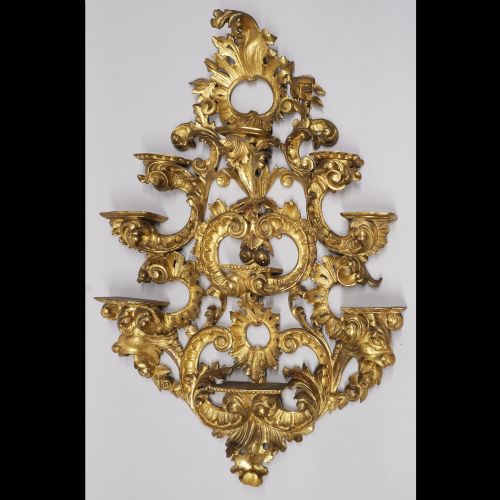
- Timber coated with gold leaf over a prepared gesso ground. This finish catches candlelight and natural illumination in Victorian interiors.
- Ormolu
- Gilded bronze mounted onto furniture or decorative objects. It provides metallic contrast against dark woods and marble.
- Marquetry
- Inlaid patterns formed from different coloured veneers fitted into a wooden ground. It decorates the tops of card and centre tables.
- Cabriole leg
- A furniture leg featuring a double curve mimicking an animal's leg, swelling outward at the knee and tapering inward at the foot.
Rococo Revival Console: Frequently Asked Questions
What is a rococo revival console?
A rococo revival console is a nineteenth-century wall table characterised by curved wooden frames, naturalistic carving and marble tops.
Craftsmen built these pieces to reflect eighteenth-century French aesthetics adapted for Victorian drawing rooms.
How were these tables used?
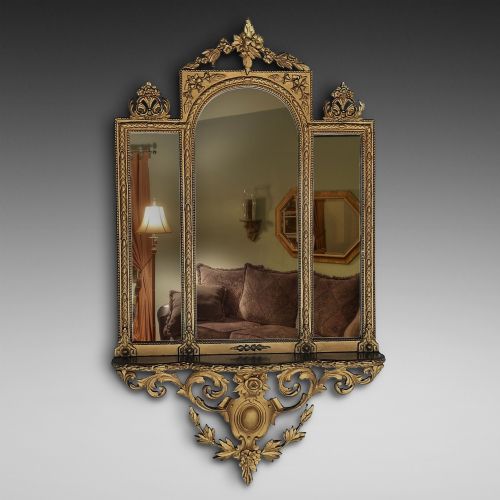
These tables stood flat against parlour and hall walls, frequently positioned beneath matching wall mirrors.
Owners placed ornamental ceramics, clocks or candelabra upon the marble tops.
How do I care for marble and giltwood?
Marble requires gentle cleaning with warm water to avoid chemical damage, while giltwood must be kept dry.
Dusting with a soft brush preserves the delicate gold leaf without wearing the surface.
How can I tell the period?
Nineteenth-century pieces show characteristic timber shrinkage, hand-cut joinery and traditional gesso preparation beneath gilding.
Stylistic markers like heavy walnut carving and serpentine marble edges point directly to the Victorian era.