






Rococo Porcelain Statues
Rococo porcelain statues capture graceful figures and pastoral allegories through intricate modelling and delicate enamelling.
Rococo Porcelain Statues
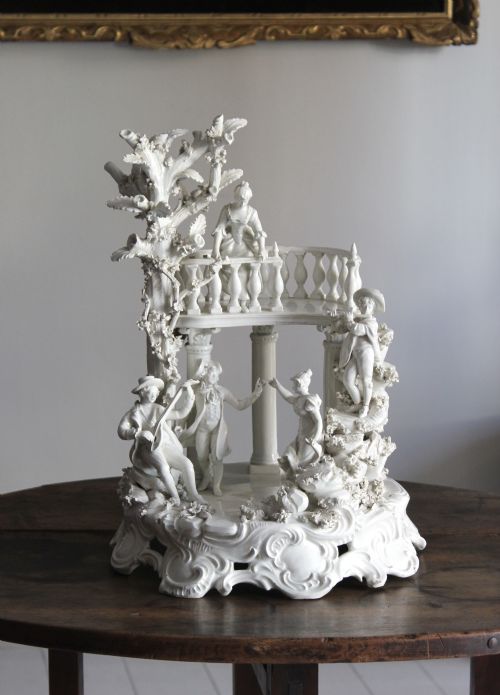
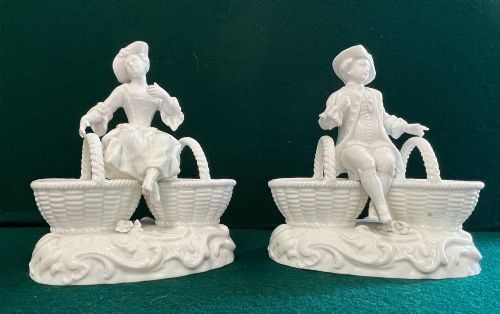
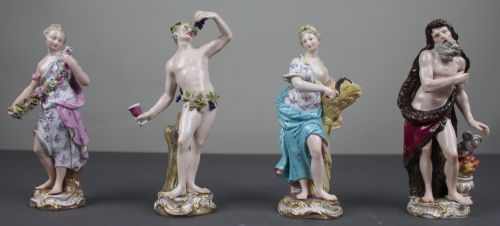
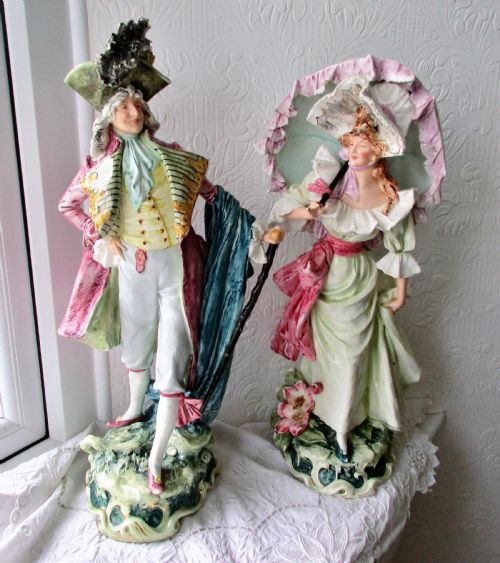
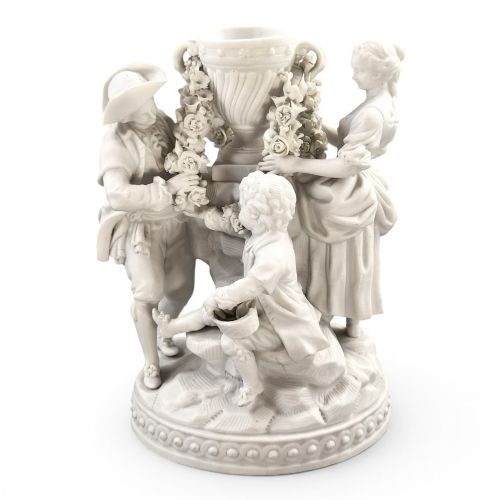
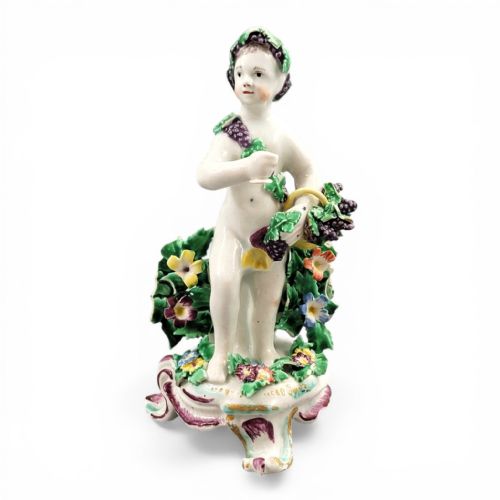
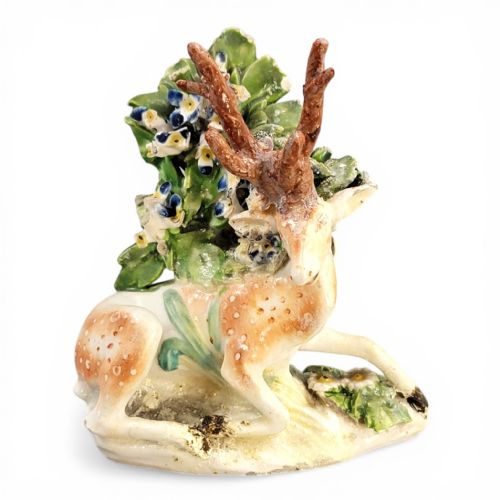
When searching for rococo porcelain statues, collectors encounter figures and sculptural groups produced in European manufactories during the eighteenth and nineteenth centuries. The objects depict gallants, musicians, shepherds, putti and allegorical subjects inspired by French taste and the Rococo Revival style.
The versions most commonly met on this page originate from German and English factories such as Meissen, Derby and Bow, alongside later nineteenth-century French and German reproductions or interpretations from makers like Samson and Volkstedt.
Forms range from single statuettes and pairs representing seasonal elements to large sculptural groups incorporating floral garlands and musical instruments.
What varies in quality
Quality rests upon the crispness of the initial model and the precision of the hand-painting, where superior examples exhibit subtle facial expressions, detailed fingers and carefully shaded garments. Early eighteenth-century pieces often show sharper relief and more spirited composition than mass-produced later revivals.
The delicacy of applied details such as lace, leaves and flowers also marks the distinction between workshop output, while the application of fire gilding or gold leaf reveals the artisan's control over finishing touches.
Listings feature porcelain figures spanning from the mid eighteenth century through the Victorian era, utilising hard-paste and soft-paste porcelain alongside biscuit and enamel.
Meissen·Derby·Bow·Volkstedt·Samson·Vion et Baury·KPM·Chelsea
The Rococo Porcelain Statues Glossary
- Biscuit porcelain
- Unfired or once-fired porcelain left unglazed to produce a matte, marble-like surface texture that highlights sculptural contours.
- Soft-paste porcelain
- An artificial porcelain composition fired at lower temperatures, popular in early English and French factories for its warm, slightly translucent body.
- Enamel
- Vitreous coloured decoration painted onto the glazed porcelain surface and fixed in a muffle kiln.
- Gilding
- The application of gold or gold leaf to highlights, borders and bases, sometimes burnished to a bright finish.
- Hard-paste porcelain
- A true porcelain made from kaolin and petuntse fired at high temperatures, known for its bright white body and durability.
Rococo Porcelain Statues: Frequently Asked Questions
How can I tell eighteenth century figures from nineteenth century copies?
Examination of the paste, glaze and painting style usually reveals the period of manufacture. Eighteenth-century pieces tend to show softer enamels and hand-formed nuances, whereas later revivals often exhibit harder glazes and distinct factory marks associated with nineteenth-century houses.
Factory marks must be treated with caution, as imitation marks frequently appear on nineteenth-century Continental copies intended to mimic earlier English and German production.
Were these figures meant for display or dining tables?
Most porcelain figures served as decorative ornaments for mantelpieces, sideboards and drawing rooms during the Georgian and Victorian eras. Elaborate sculptural groups often formed part of sophisticated table centrepieces before moving to permanent display cabinets.
Their intricate modelling and delicate painted surfaces made them conversation pieces for polite society rather than functional tableware.
What is the difference between hard-paste and soft-paste porcelain?
Hard-paste porcelain combines kaolin and petuntse fired at high temperatures to create a dense, vitrified body that resists scratching. Soft-paste porcelain utilises various glassy frits and clays fired at lower temperatures, yielding a softer texture and a slightly warmer glaze.
Early English factories primarily produced soft-paste bodies, while continental works like Meissen mastered hard-paste composition earlier in the eighteenth century.
How should I clean antique porcelain figures?
Dusting with a very soft, dry artist's brush removes surface particles without risking fragile applied elements like lace or floral garlands. Water and chemical cleaners should generally be avoided to protect delicate overglaze enamels and gold leaf.
When handling, support the piece by its base rather than extending arms or delicate accessories which are prone to stress fractures.