
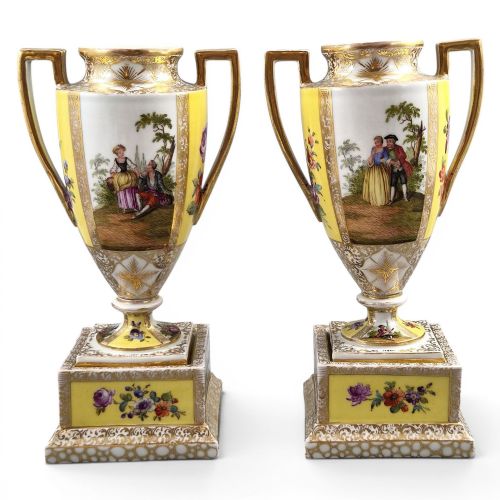


Antique German Porcelain Pair
When you search for an antique german porcelain pair, you encounter matched sets of figures, vases and candlesticks shaped by historic European kilns.
Antique German Porcelain Pair
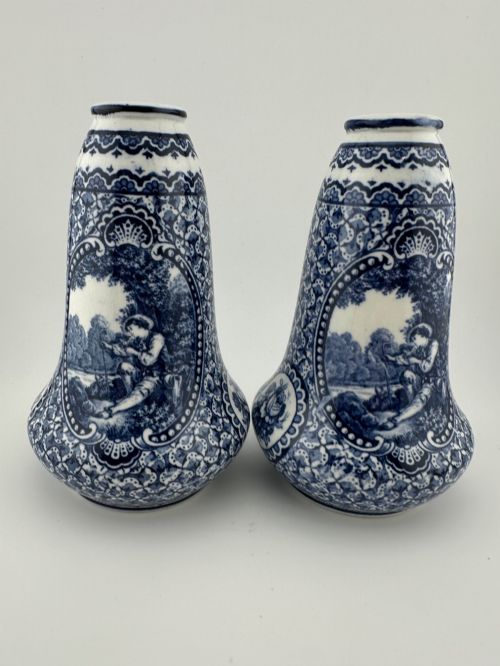
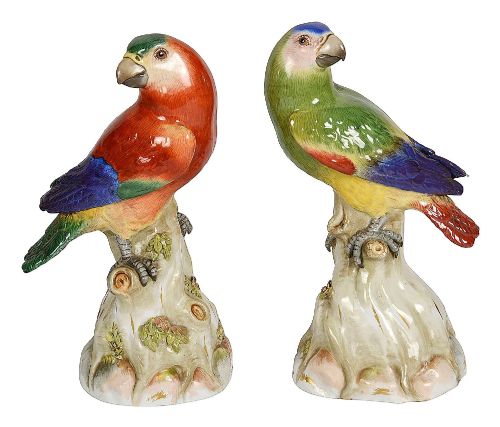
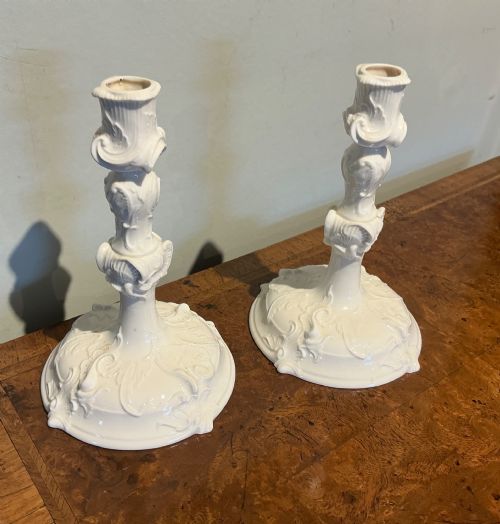
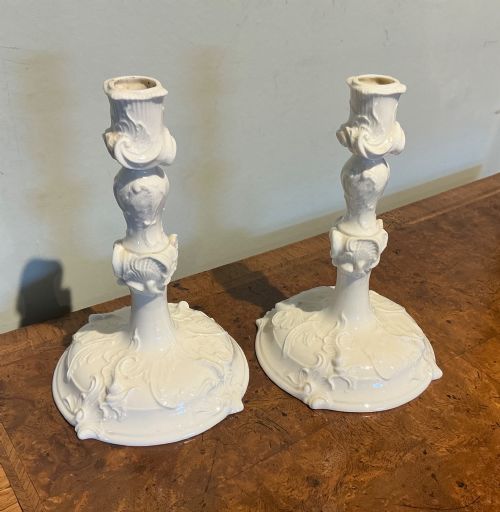
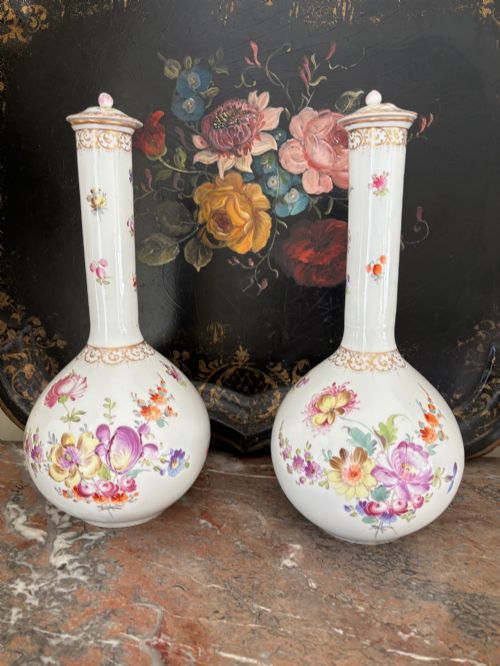
An antique german porcelain pair comprises matched sets of sculptural objects created for decorative display on mantels, side tables and cabinets. The selection spans utilitarian forms adapted for elegance, such as candlesticks, oil lamps and vases, alongside elaborate figural groups depicting gardeners, musicians, lovers and animals.
Most items you encounter belong to the nineteenth century, drawing heavily on earlier eighteenth-century Rococo and Neoclassical vocabularies. Factories including Meissen, Sitzendorf, Volkstedt and Nymphenburg dominate the output, producing mirrored pairs designed to sit symmetrically in formal rooms.
The objects range from modest cabinet plates and sweetmeat dishes to large, commanding candelabra and figural lamp bases. Many items incorporate functional elements like floral encrustations or pierced reticulation alongside their sculptural subjects.
How they were made
The foundation of these works lies in hard-paste porcelain, a durable ceramic body fired at high temperatures to achieve a dense, vitrified structure. Artisans coated this ceramic base in a smooth glaze that provided a glossy ground for subsequent painting.
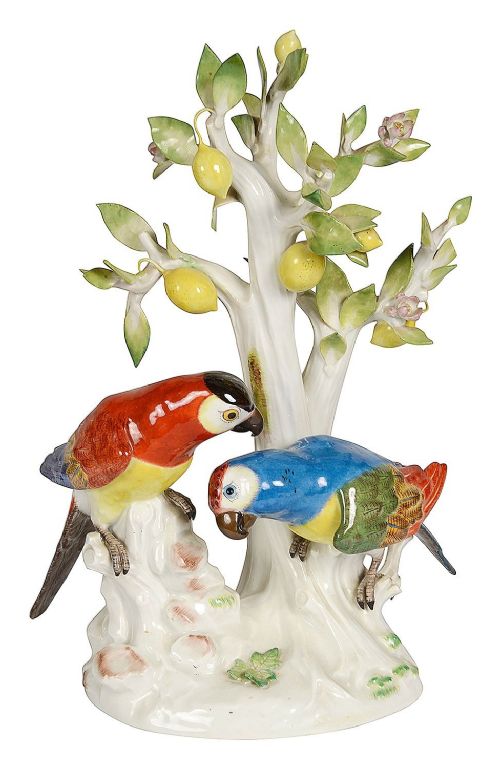
Decoration relied heavily on hand-painted enamel pigments applied in layers, often accented with gold leaf and detailed gilding. Complex figural compositions were assembled from multiple cast or modelled sections, sometimes enhanced with delicate applied porcelain flowers fashioned by hand.
Listings feature hard-paste porcelain pieces from the eighteenth to the twentieth centuries, spanning figures, vases and lamps.
What varies in quality
The standard of modelling determines the baseline of success in these works, separating lively, deeply undercut figures from stiff, simplified casts. Superior examples display anatomical precision, expressive faces and dynamic postures that bring the subject to life.
Painting execution forms the next major distinction, where careful brushwork, subtle shading and rich enamel colours elevate a piece far above hastily decorated production wares. The precision of applied details, such as individual petals on floral encrustations and crispness of gilding, further divides everyday factory output from masterworks.
Franz Anton Mehlem·Karl Ens·Nymphenburg·Meissen·Sitzendorf·Helena Wolfsohn·Volkstedt·Richard Eckert·C. G. Schierholz·Kister·Scheibe Alsbach·Berlin·Augustas Rex·Ludwigsburg·Carl Thieme·Gotthelf Greiner
The Antique German Porcelain Pair Glossary
- Hard-paste porcelain
- A durable ceramic composition fired at extreme temperatures, composed of kaolin and petuntse. This material forms the durable white body typical of continental European factories.
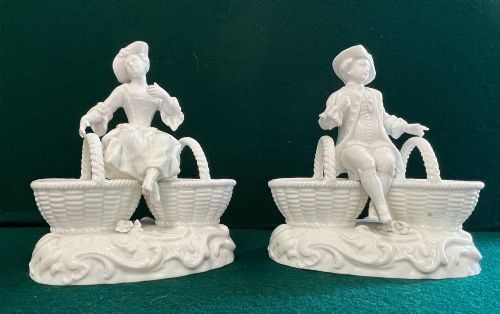
- Sweetmeat
- A small decorative dish or bowl designed for holding confectionery or sweet treats. These pieces often take figural forms holding baskets.
- Rococo
- An ornate artistic style characterised by asymmetric scrolls, C-curves and naturalistic motifs. It heavily influenced nineteenth-century revivals.
- Bouquetiere
- A specialised vessel designed to hold floral arrangements. They frequently appear paired with figures or as standalone decorative objects.
- Reticulation
- An openwork lattice pattern formed in the ceramic body before firing. This decorative pierced technique appears on various plates and vessels.
Antique German Porcelain Pair: Frequently Asked Questions
How do I identify a true pair?
True pairs consist of two complementary pieces, often mirrored in their posture, facing one another or sharing identical dimensions and decorative programs. Factories designed these items to be displayed symmetrically as a matched unit.
Examine the modelling, factory marks and overall dimensions to confirm the pieces were created together. Minor variations in hand-painted details are normal in antique ceramics, but the underlying form and clay body should match.
What subjects are most common?
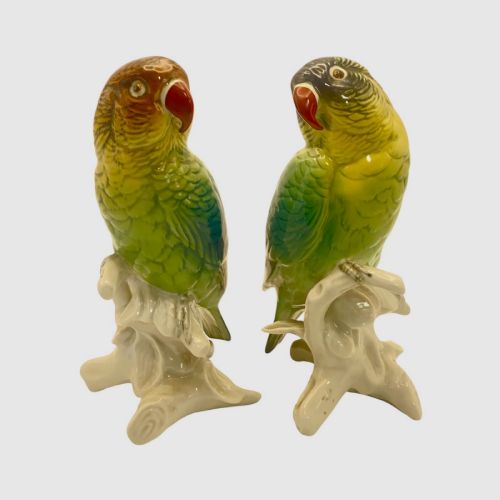
Popular subjects include pastoral figures such as gardeners, musicians and harvesters, alongside romantic couples and exotic animals like parrots and elephants. Mythological scenes and allegorical representations also appear frequently across various factories.
Many pieces draw inspiration from theatrical characters or courtly life, reflecting the tastes of the eighteenth and nineteenth centuries. Animals and birds are particularly sought after by collectors for their sculptural detail.
Are these pieces marked with factory symbols?
Many factories applied underglaze blue marks, impressed numbers or painted ciphers to their porcelain bodies. These symbols help identify the origin and approximate production period of the piece.
Common marks include crossed swords for Meissen and various initials or crowns for Thuringia and Dresden workshops. Unmarked pieces still occur, requiring stylistic analysis to determine their source.