

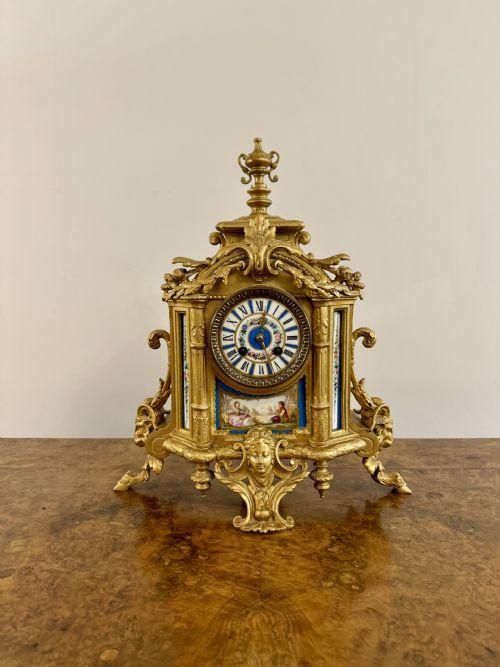


Rococo Porcelain Mantle Clock
These rococo porcelain mantle clock pieces bring together porcelain, ormolu and gilt metal in ornate nineteenth century forms that dominate any room.
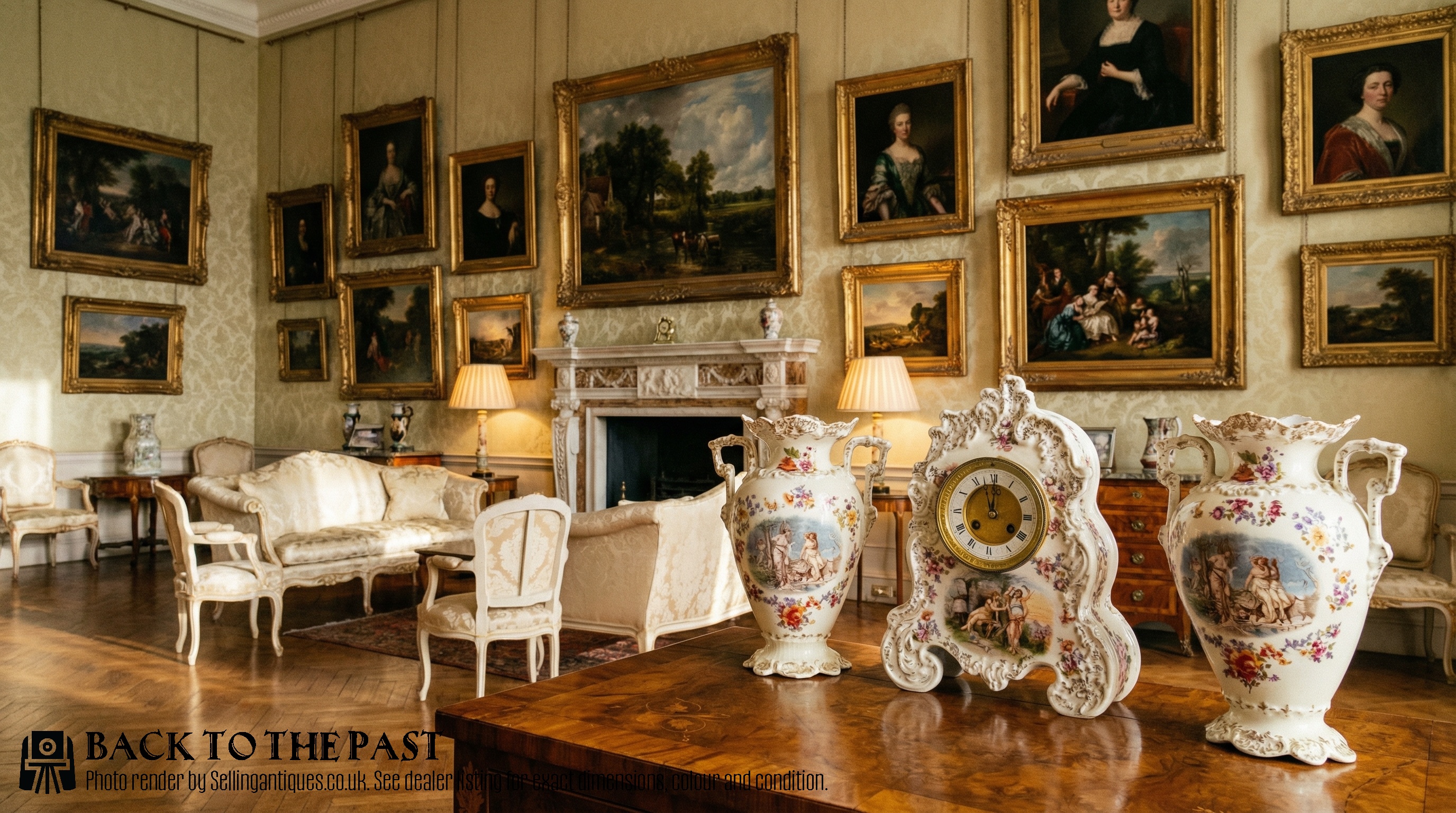
Rococo Porcelain Mantle Clock
A rococo porcelain mantle clock combines painted ceramic bodies with elaborate metallic mounts in French Revival and Victorian designs. Buyers seeking a rococo porcelain mantle clock encounter nineteenth century pieces spanning the Victorian era through to nineteen hundred.
Materials and construction
Cases combine porcelain and hand painted ceramic plaques with gilt bronze, ormolu, brass and gilt metal mountings. Artisans utilised gold leaf and enamel details alongside glass covers to protect delicate dials.
The manufacturing process required skilled porcelain painting combined with bronze casting and mercury gilding or modern electroplating techniques. Metal mounts were chased and fitted tightly to shaped ceramic bodies.
Materials recorded across the inventory include porcelain, gilt bronze, ormolu, brass, glass and gold leaf.
Assessing quality and execution
Quality rests upon the crispness of the bronze casting and the artistry of the hand painted porcelain panels. Finer examples display deeper gilding and more fluid organic rococo scrollwork without stiffness.
The presence of matching garniture pieces and recognised maker signatures elevates the status of a clock. Superior pieces integrate the ceramic and metallic elements into a unified sculptural whole.
Phillipe H. Mourey·P.H Mourey·Meissen·Palais Royal
The Rococo Porcelain Mantle Clock Glossary
- Ormolu
- Gilded bronze produced by applying an amalgam of gold and mercury to a bronze base and heating it. This technique creates a rich, durable golden surface seen on better nineteenth century clocks.
- Garniture set
- A clock accompanied by matching side pieces such as vases or candelabra. These sets were designed to sit symmetrically on a mantlepiece.
- Rococo Revival
- A nineteenth century design movement that reinterpreted the asymmetrical scrolls, C-curves and naturalistic motifs of the eighteenth century French style. It dominates the appearance of these clocks.
- Dial
- The face of the clock where the hours are indicated, frequently featuring enamel cartouches and delicate hands. Dials can be painted porcelain or brass.
- Portrait plaque
- A ceramic disc inset into the clock case featuring a painted likeness of a historical figure or scene. These plaques add a distinct decorative focal point.
Rococo Porcelain Mantle Clock: Frequently Asked Questions
What is a clock garniture?
A clock garniture is a matching set comprising a central clock and side ornaments like urns or candelabra.
These sets were created to provide a balanced decorative display on a fireplace mantle.
How do I date a porcelain clock?
Dating relies on stylistic clues, mounting techniques, dial construction and any maker marks present on the movement or case.
Victorian and nineteenth century pieces often show specific casting methods that help narrow down the decade.
Where were these clocks made?
The majority originate from French workshops in Paris alongside notable continental porcelain factories such as Meissen.
French makers specialised in combining intricate gilt metal mounts with painted ceramic panels.